


Zofia “Zosia” Tomczyk: Poland’s Sprinting Prodigy and the Record Books That Can’t Keep Up
There is a photograph that tells the story as well as anything: Zosia Tomczyk standing next to Natalia Bukowiecka — the Olympic champion, the world-record holder, the gold-medal anchor of Poland’s relay dynasty — grinning in a way that suggests she fully intends to follow in those footsteps. She was still a teenager in the photograph. She was still a teenager when she set the Polish national record. She was still a teenager when she stood on the podium at the World Under-20 Championships. At some point, the pattern becomes impossible to ignore.
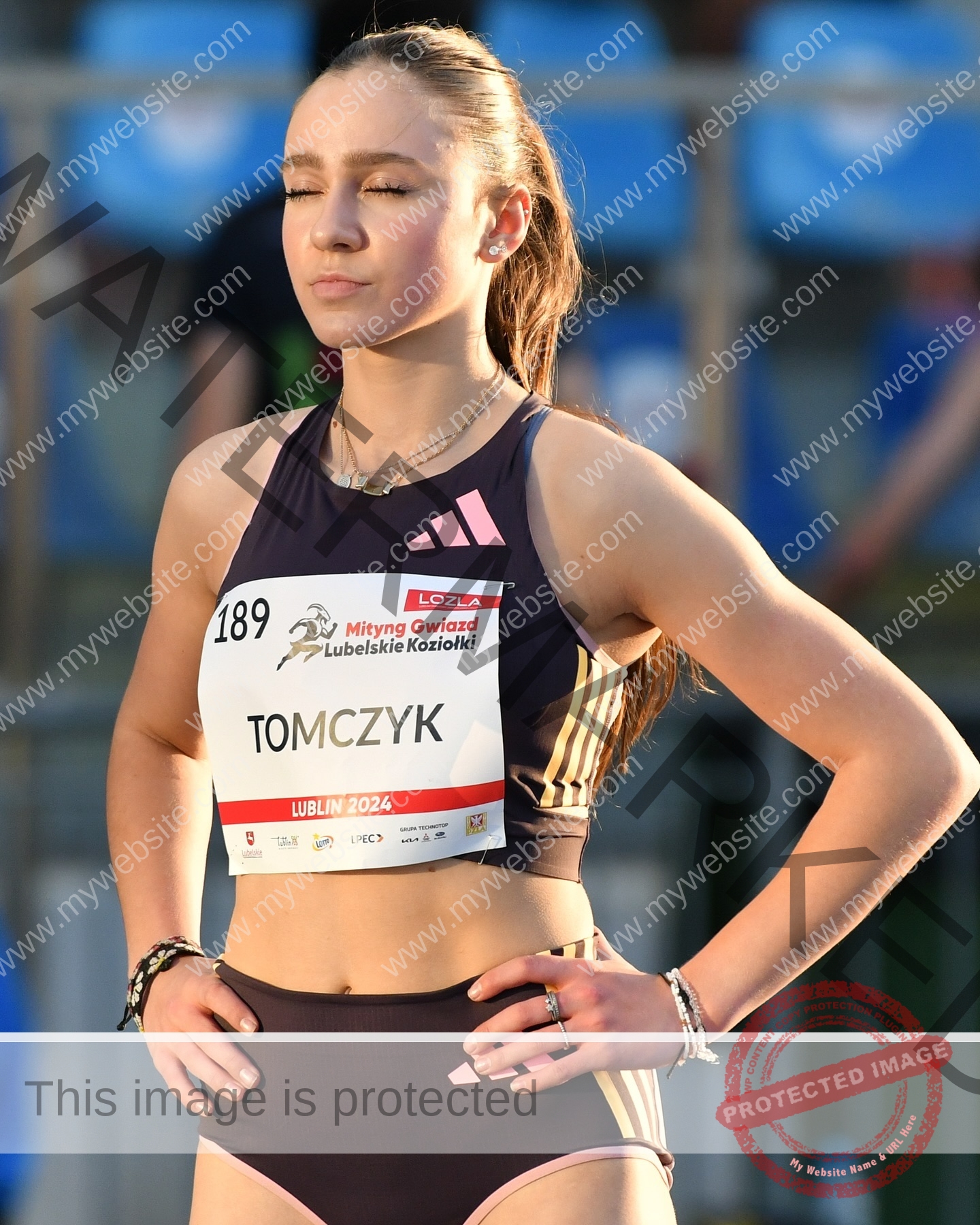
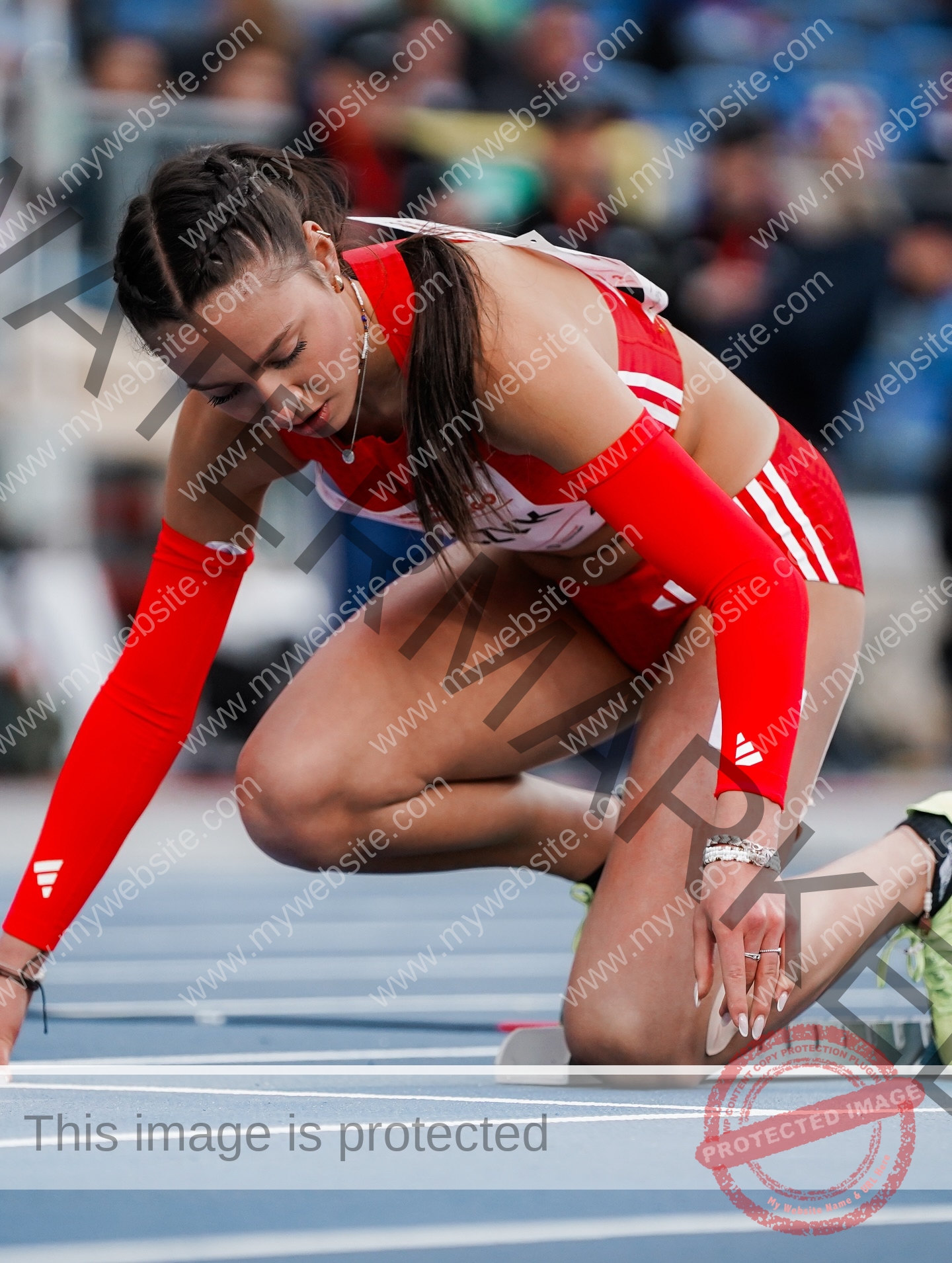
Zofia Tomczyk — known universally in Polish athletics circles as Zosia — was born on June 17, 2008, in Tomaszów Mazowiecki, a city in central Poland’s Łódź region. She is 17 years old. She already holds Polish national indoor records in the 200 meters and 300 meters in the under-18 category. She has won a silver medal at the European Under-18 Championships and another at the World Under-20 Championships, both in relay. Her World Athletics ranking in the women’s 400 meters — as of early 2026 — sits at number 375 in the world, at an age when most of her international rivals haven’t yet begun their senior careers.
Her coach, Marek Grabolus, has watched thousands of young athletes come through his training group at the Centralny Ośrodek Sportu in Spała. He is not given to hyperbole. He has chosen his words about Tomczyk deliberately: “Zosia to ogromny talent, gigantyczny, inaczej powiedzieć nie mogę” — Zosia is an enormous talent, gigantic, I can’t say it any other way.
A Hometown and a Family That Made Sport Inevitable
Tomaszów Mazowiecki sits roughly in the center of Poland, not particularly close to Warsaw’s national athletics infrastructure but well-positioned within the cluster of training and competition facilities that has made the Łódź region a productive source of Polish athletic talent. It is a city of modest size with a genuine sporting culture, and the Tomczyk family is embedded in that culture in ways that go far beyond a single outstanding daughter.
The family’s athletic history runs deep on both sides. Zosia’s mother, Sylwia — née Wielec — was herself a competitive athlete under Coach Grabolus, specializing in the long jump and triple jump with what her former coach describes as genuine sprinting potential. The connection between mother and daughter would eventually come full circle: Sylwia’s old coach became Zosia’s coach, a lineage that makes the training relationship feel less like a professional arrangement and more like a genuine continuation of something.
On her father’s side, the athletic heritage is even more notable. Her father’s sister — Zosia’s aunt Żaneta — won a gold medal in the 4×100 meters relay at the World Junior Championships in Moscow, a result that the family clearly regards as a benchmark rather than a ceiling. A second aunt, Iwona, competed at the 400 meters level. And Iwona’s husband is Dawid Kupczyk: a former track and field athlete who became a bobsleigher and competed at five Olympic Games — with the athletic thread in that family extended further still, as Dawid’s father Andrzej won Polish middle-distance titles and collected medals at European Indoor Championships in his own day.
Eurosport’s profile of Tomczyk put it well: “Jest kogo ścigać, a w sukcesach najlepiej prześcignąć” — there are people worth chasing, and ideally worth surpassing. For Zosia, that competition begins within her own extended family tree.
The Beginning: Spała, 2020
Zosia Tomczyk came to Marek Grabolus in 2020, at the age of twelve, brought by her parents to a training group at the COS facility in Spała. The Centralny Ośrodek Sportu — the Central Sports Centre — in Spała is one of Poland’s premier athletic development venues, a hub for elite preparation programs with facilities that serve national team athletes across multiple disciplines. It sits less than thirty kilometers from Tomaszów Mazowiecki, close enough to be part of daily life rather than a distant aspiration.
Coach Grabolus, whose coaching history also includes work with notable Polish athletes including high jump specialist Donata Jancewicz (European Championship silver medalist, Budapest 1998) and Tomasz Śmiałek (world junior championships bronze medalist in the high jump), has an experienced eye for raw talent. His assessment of Tomczyk after their first sessions together requires no interpretation: “Już po pierwszych zajęciach, na które przywieźli Zosię rodzice, było jasne, że to diament. Nawet nie po pierwszych zajęciach, a po pierwszych przebieżkach, wszystko było widać jak na dłoni.” Even after just those first runs, everything was visible at a glance — the naturalness, the lightness, the ease, the dynamism. Both physical and biomechanical talent. Tall, not yet 170 centimeters, but with proportions — long legs to torso ratio — that he described as ideal for running.
That first impression has not faded. It has been validated by five years of consistent development, record-setting, and international achievement.
The School Years and Daily Life
Tomczyk attends Zespół Szkół Ponadpodstawowych nr 1 im. Tadeusza Kościuszki in Tomaszów Mazowiecki — a secondary school named for the Polish national hero and revolutionary general, which Zosia attends in the military profile class (klasa o profilu wojskowym). The combination of a rigorous academic structure and athletic training in a group of similarly committed peers at Spała is, by all accounts, working: the logistics of Tomaszów Mazowiecki to Spała and back are manageable, and the training environment at COS provides both the facilities and the coaching continuity that youth development requires.
She trains in a large, mixed group of peers under Grabolus, a setup the coach values deliberately. The group provides competitive pressure, social cohesion, and the kind of daily comparison that keeps athletes honest about their actual level. It is also, in Grabolus’s framing, a managed environment: he is aware of the attention surrounding his young prodigy, aware of the “hype” that comes with record-setting at 15 and 16, and works actively to neutralize it. “Neutralizuję je, jak mogę, robię wszystko, by trenowała w spokoju i rozwijała się krok po kroku” — I neutralize the praise as much as I can, do everything to ensure she trains calmly and develops step by step. His observation that Zosia handles the attention reasonably well is delivered with the careful tone of someone who knows how quickly external pressure can disrupt even genuine talent.
Early Career Highlights: Records Before Anyone Was Watching
Tomczyk’s early competitive career established her quickly as an athlete operating well above her chronological age group. In the 2022-23 indoor season, competing in youth and junior categories, she won the Ogólnopolskie Czwartki Lekkoatletyczne (the national Thursday Athletics series) in the 300 meters and took the Polish U16 national title in the same event. More striking was her indoor 200 meters in the U16 category — a mark that stood as the best in Polish history for that age group.
Also in early 2023, she clocked an unofficial 38.35 in the 300 meters — a time that would have shattered the Polish and European records — but the result was not eligible for ratification because of a minor interference during the race when another person inadvertently entered the track. The potential was obvious. The records would come in due course.
The Breakthrough: February 2024 and a Record That Went Worldwide
On February 11, 2024, at the KGHM Ślęza Arena in Wrocław, Zofia Tomczyk ran the 300 meters in 37.98 seconds. The time improved the existing Polish indoor record for the U18 category — held by Kornelia Lesiewicz — by two hundredths of a second. It also made her the fastest 15- or 16-year-old woman over the distance anywhere in the world that year. Poland’s athletics federation confirmed both marks. She won the Polish U18 indoor championship on that day, crossing the finish line with a time that placed her second on the podium ahead of Anastazja Kuś — who would, within months, become a full Paris 2024 Olympian — by nearly a full second.
The win at the U18 indoor championships in Wrocław was covered by Polish sports media with the kind of attention usually reserved for athletes a decade older. PZLA’s official report noted that the time was not only a national record but the world’s best result among junior-younger athletes that season.
That winter also produced a 200 meters performance of note, and her emerging versatility across the sprint-quarter spectrum was becoming a subject of genuine discussion. How far over 100 meters? How short over 400? Coach Grabolus had a position on the question that he would state more explicitly in subsequent seasons: despite how she is categorized by the wider athletics world — as a 400-meter runner — his view is that Zosia is fundamentally a sprinter, and that the 400 meters is a future destination rather than her present home.
The 2024 Season: Silver in Slovakia, Silver in Peru
The summer of 2024 was Tomczyk’s international coming-out in the most literal sense: two international championships, two silver medals, a Polish national record, and a brush with Olympic contention, all at the age of fifteen turning sixteen.
European Under-18 Championships, Banská Bystrica (July 2024)
The 2024 European Athletics Under-18 Championships in Banská Bystrica, Slovakia, brought together the continent’s best athletes aged fifteen to seventeen for four days of competition from July 18 to 21. Poland fielded a strong team, and Tomczyk was named as part of the women’s medley relay squad — the event known in Polish athletics as the sztafeta szwedzka, a mixed-distance relay in which each of four legs covers a different distance (100m, 200m, 300m, 400m).
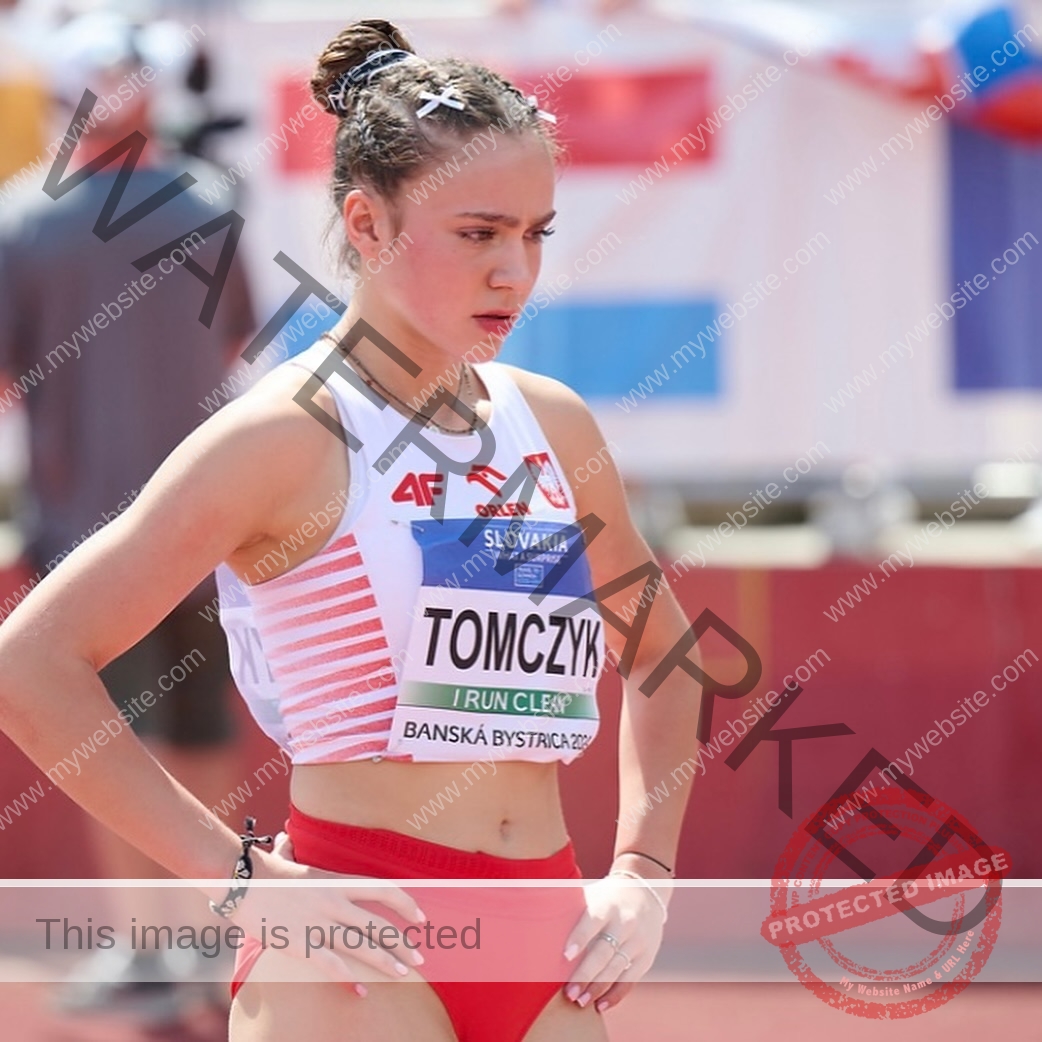
In the women’s medley relay final on July 21, Poland ran in the lineup of Oliwia Kasprzak (100m leg), Aleksandra Jeż (200m), Zofia Tomczyk (300m), and Anastazja Kuś (400m anchor). The quartet produced a time of 2:05.54 — not only the silver medal position, but a new Polish national under-18 record, improving the previous mark by nearly three seconds. Italy won gold in 2:05.23, with Elisa Valensin — who would become the dominant name in Italian junior sprinting that season — anchoring their squad to the winning time. The margin between gold and silver was less than a third of a second. Kuś, anchoring Poland, was outrun on the final leg but the result was still outstanding: a national record, a European silver medal, and international debut experience for a 15-year-old running the crucial 300-meter third leg.
Poland’s athletics federation emphasized the achievement both from a team perspective and individually: Tomczyk’s 300-meter split was a critical factor in Poland’s time, and her composed performance on the continental stage — under pressure, as part of a relay quartet competing for a medal — was noted by coaches at every level.
The Paris Setback — and Why It Matters
In the spring of 2024, before the European championships, there had been a different conversation happening. Coach Grabolus spoke openly, in retrospect, about having envisioned Tomczyk as a potential reserve for Poland’s 4×400 meters relay at the Paris 2024 Olympics. The senior squad, anchored by Natalia Kaczmarek (now Bukowiecka), was among the strongest relay units in the world, and the depth of the Polish women’s 400-meter cohort meant that a 15-year-old of Tomczyk’s standing was not a fanciful consideration.
Then, in May 2024, she strained her biceps femoris — a hamstring injury that sidelined her at exactly the wrong moment. The Olympics relay reserve went to Anastazja Kuś instead, who competed in Paris with distinction. Grabolus acknowledged the disappointment directly but without bitterness: “Posypało się, runęły te plany” — it all fell apart, those plans collapsed. The injury was a reminder that even the most exceptional talent operates within the constraints of a human body, and the timeline adjusted accordingly. What had been a potential 2024 Olympic story became a 2024 World U20 story instead.
World Under-20 Championships, Lima (August 2024)
The 2024 World Athletics Under-20 Championships ran from August 27 to 31 in Lima, Peru. Tomczyk competed in two relay events, with her most significant contribution coming on the opening day of competition in the mixed 4×400 meters relay final.
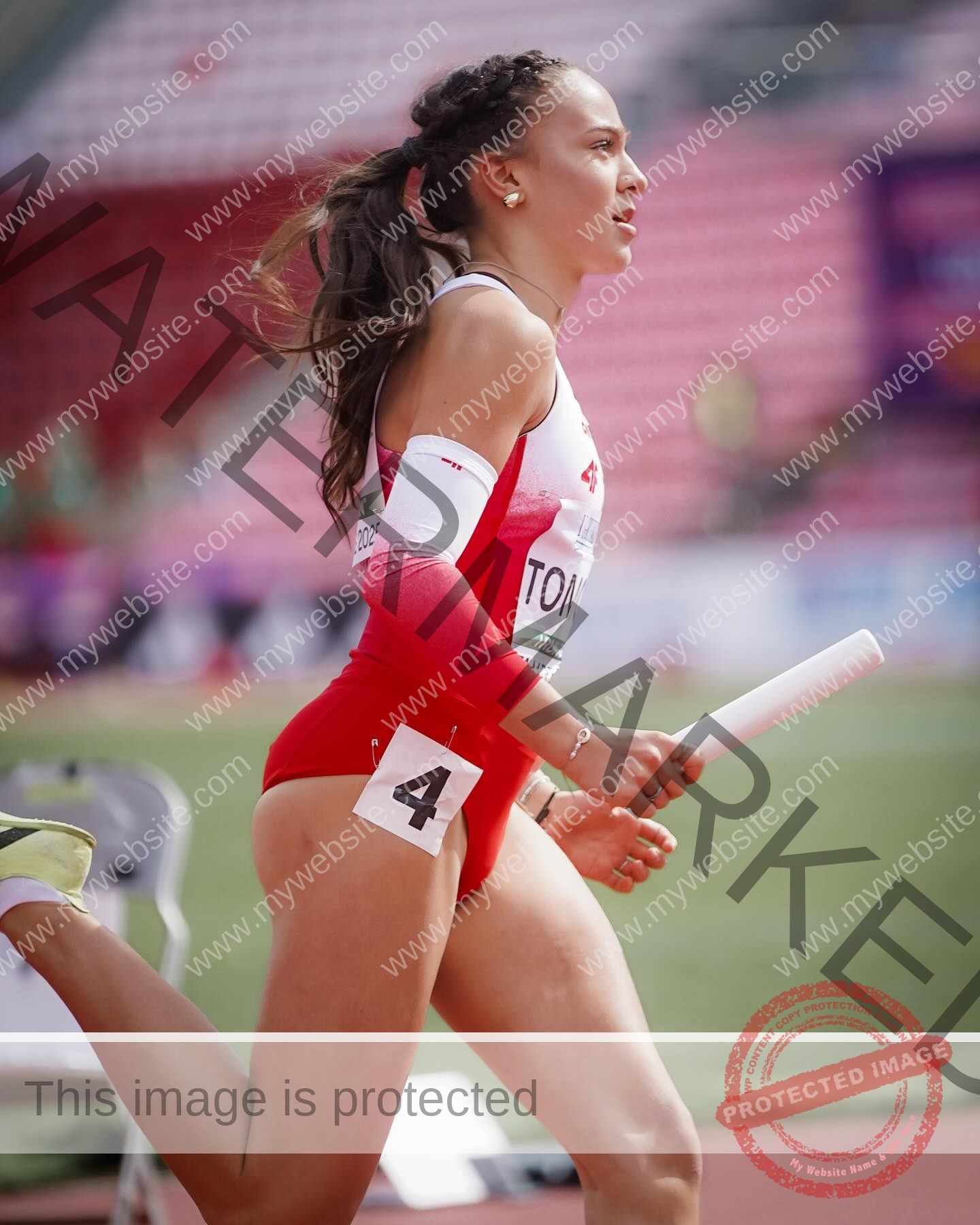
Poland’s mixed relay team ran in the lineup of Jakub Szarapo, Wiktoria Gajosz, Stanisław Strzelecki, and Zofia Tomczyk, anchoring the team home with a time of 3:20.44 — the silver medal, behind only Australia, who set a national U20 record of 3:19.27 to claim gold. China took bronze in 3:21.27. The Polish time of 3:20.44 was a season best and represented a genuinely outstanding relay performance: Australia was the superior team on the day, but Poland were clearly second best among the global field of junior relay runners.
The “Wybiegaj w Przyszłość” scholarship program, which had supported Tomczyk since its second edition, marked the occasion with celebratory language that captured how the achievement registered in Polish athletics’ grassroots community: “Zosia Tomczyk wybiegała wicemistrzostwo świata!” — Zosia Tomczyk ran her way to the world vice-championship. The program’s enthusiasm was understandable; they were watching a scholarship recipient claim a senior-equivalent world medal while still in school.
She also competed in the women’s 4×400 meters relay in Lima, where Poland placed fourth in the final — a result that, while just off the podium, underscored the depth of Poland’s junior women’s relay squad.
Indoor Records: The 200 Meters and January 2025
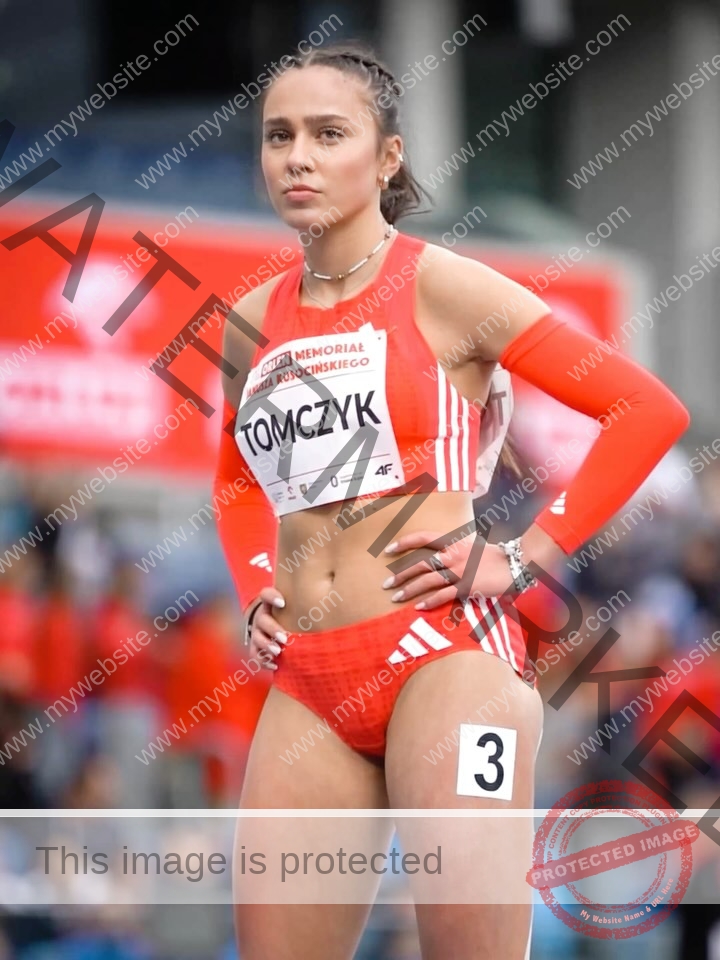
On January 25, 2025, at the Hala COS OPO in Spała — the same facility complex where she has trained since she was twelve — Zofia Tomczyk ran the indoor 200 meters in 24.01 seconds. The time improved the Polish indoor record for the U18 category by exactly half a second. The margin of improvement was large enough that it prompted Eurosport’s coverage to essentially pause: “Tak jest, o całe pół sekundy! Niesamowite. Niespotykane.” — Yes, by a full half second. Incredible. Unprecedented.
Coach Grabolus’s response was characteristically composed: he described it as not a particularly exceptional run, more of a distance test than a peak effort. Whether that reflects genuine understatement or tactical management of expectations, the time stands in the record books regardless. The Eurosport article published shortly after this performance — under the headline “Talent, 16-letnia Zofia Tomczyk bije rekord za rekordem” (Talent, 16-year-old Zofia Tomczyk breaks record after record) — became the most detailed public profile of Tomczyk to that point, and the one in which Grabolus gave his extended account of her background, family, and athletic future.
The 2025 Season: European U20 Championships and Continued Growth
The 2025 outdoor season saw Tomczyk compete at the European Athletics Under-20 Championships in Tampere, Finland (August 7-10), now elevated to the under-20 category after aging out of the allievi (U18) classification. The event was a significant stepping-stone, with Poland fielding a large team and the women’s 4×400 meters relay squad entering as one of the more competitive European units at the junior level.
The Polish women’s relay team — running in the heats with Aleksandra Przybylska, Wiktoria Gadajska, Lena Pajęcka, and Zofia Tomczyk — posted 3:37.26 to advance to the final. In the final, the composition shifted, with Anastazja Kuś anchoring the squad. Poland ran competitively and finished fourth — agonizingly close to the podium in a result that Kuś’s strong anchor almost converted into bronze. Tomczyk ran her leg as part of a squad that was knocking on the medal door, and the fourth-place finish was a genuine near-miss rather than a comfortable consolation.
Poland finished 13th in the overall medal table at Tampere, with eight medals in total. The women’s relay squad’s fourth place was among the more closely contested results in the entire championships, underlining both the quality of the competition and the credibility of Poland’s performance.
Personal Bests and Career Marks
As of early 2026, Zofia Tomczyk’s personal bests and key performances documented on the World Athletics database include:
- 300 meters (indoor): 37.98 seconds — KGHM Ślęza Arena, Wrocław, February 11, 2024 (Polish U18 national record; world-leading U18 mark that year)
- 200 meters (indoor): 24.01 seconds — Hala COS OPO, Spała, January 25, 2025 (Polish U18 indoor national record)
- 4×400 meters relay: 3:34.77 — August 30, 2024
- 4×400 meters mixed relay: 3:20.44 — World U20 Championships, Lima, August 27, 2024 (silver medal)
World Athletics lists Tomczyk’s primary events as the 300 meters (short track), 200 meters (short track), and 400 meters. Her global ranking in the women’s 400 meters stands at #375 — a position that, at 17 years old, is entirely consistent with an athlete who has yet to post significant outdoor 400-meter results as an individual rather than relay competitor.
The trajectory implied by these marks is significant. A 37.98 indoor 300m at 15 years old, combined with a 24.01 indoor 200m at 16 — both at the junior-younger (U18) level — projects toward serious international competitiveness in the 200 and 400 meters at the senior level. For context, the entry standards for major senior championships hover around 51-52 seconds for the 400 meters and 22.8-23.0 for the 200 meters; Tomczyk is still at least two years away from competing at the senior international level in individual events, but the developmental trajectory is clearly pointing in that direction.
Coach Grabolus and the “Sprinter or 400-Meter Runner” Question
One of the more interesting dimensions of Tomczyk’s career narrative is the philosophical disagreement — or at least tension — between how the wider athletics world perceives her and how her own coach sees her. The conventional framing, repeated across Polish athletics media, is that Tomczyk is a 400-meter runner in development, a quarter-miler whose training is building toward the event’s specific demands of speed endurance and race management.
Grabolus pushes back on this directly. His view is clear: “Zosia postrzegana jest jako czterystumetrówka, a dla mnie to ewidentnie sprintera” — Zosia is perceived as a 400-meter runner, but for me she is clearly a sprinter. He sees the 400 as something ahead of her, a future destination rather than a present home, and argues that the most important thing right now is health and calm development. The sprint events — 200 meters, and the longer sprint distances — are where he believes her natural gifts are most concentrated. His caution about labeling her too early as a quarter-miler seems connected to a desire not to push the specific physical demands of 400-meter training onto a still-developing athlete before she is ready for them.
It is worth noting that this tension between “sprinter” and “400 specialist” is not unusual for athletes of Tomczyk’s profile. Some of the greatest 400-meter runners in history — including Poland’s own relay champions — began their careers as sprint-oriented athletes who gravitated toward the longer event as their physical development deepened. Grabolus’s framing may be less a correction of a misperception and more a statement of developmental philosophy: sprint first, add distance as the body matures.
Scholarship, Sponsorship, and the Wybiegaj w Przyszłość Foundation
Tomczyk has been a recipient of the “Wybiegaj w Przyszłość” (Run Towards the Future) scholarship program since its second edition — a meaningful multi-year commitment that has provided both financial support and educational development across editions II, III, and IV of the program.
“Wybiegaj w Przyszłość” is a scholarship and education program established by Adriana Smokowska and her foundation, designed to support young Polish track and field athletes between the ages of 14 and 23 with financial stipends (ranging from 600 to 1200 zloty per month over a ten-month period), sports psychology workshops, mentoring, and media training. The program’s philosophy is explicitly dual-track: supporting immediate athletic development while building the skills and awareness for long-term career management, both in sport and after it.
Program partners in recent years have included Bank Pekao S.A., ORLEN (Poland’s state energy company), Lilou (a Polish jewelry brand), Salomon (the French outdoor sports brand), and Fundacja PVE Dobra Energia, with the program’s ambassadors and board members including Olympic champions Natalia Bukowiecka and Konrad Bukowiecki — the same Natalia Bukowiecka who appears in that photograph with Tomczyk, a connection that is less coincidental and more a genuine mentorship chain.
The official description of Tomczyk in the fourth edition’s scholarship announcement (2025) summarizes her accomplishments to that point in direct terms: “wicemistrzyni świata w biegu sztafetowym na dystansie 4 x 400 metrów, halowa rekordzistka Polski w biegu na 200 i 300 metrów, wicemistrzyni Polski w biegu na 400 metrów” — World vice-champion in the 4×400 relay, Polish indoor record holder in the 200 and 300 meters, Polish vice-champion in the 400 meters. A concise and accurate CV for a 16-year-old.
Tomczyk is also an Adidas athlete — her Instagram bio notes the affiliation with the global brand — making her one of the younger Polish sprinters to carry a major equipment sponsorship.
Social Media and Public Presence
Tomczyk maintains an Instagram presence under the handle @tomczyk.zosia, where she had accumulated approximately 8,800 followers as of early 2026. Her bio describes her straightforwardly: “@adidas athlete @wybiegajwprzyszlosc representative 🇵🇱” alongside the contact email to********@***il.com, and the self-described accolades “World medalist 🥈 European medalist 🥈 national medalist.” The account is active and documents competition appearances, training, and the program-related events that the Wybiegaj w Przyszłość community organizes throughout the year. In September 2024, she appeared as a special guest at the 1MILA athletics meeting in Poznań alongside fellow scholarship athlete Wiktoria Gadajska, meeting fans and participating in the event alongside amateur runners.
Into 2026: What Comes Next
The 2026 indoor season opened with Tomczyk competing at the Polish Indoor Championships (Toruń, late February 2026) as part of the national-level relay program — competing in the 4×200 meters and the 4×400 meters mixed relay at the senior championships, an indication that she is already moving between junior and senior competition structures. She also competed at the Polish U18/U20 Indoor Championships in Rzeszów (February 2026), where she was entered in the 200 meters category among the U20 field.
The summer of 2026 carries significant stakes for the Polish junior athletics generation that includes Tomczyk: the World Athletics Under-20 World Championships, to be held in Eugene, Oregon, USA, will be the next major target for a cohort that has already demonstrated its collective quality at Lima 2024 and Tampere 2025. For Tomczyk specifically, the Eugene championships represent an opportunity to compete as a 17-year-old at the highest junior global stage — the same stage where her aunt Żaneta once stood on a podium in Moscow — but with significantly more individual experience and a physical development curve that her coach believes still has its most important chapters ahead.
There is also the European Athletics Under-18 Championships coming to Rieti, Italy, in 2026 — an event that was announced as a future host at the same Banská Bystrica championships where Tomczyk made her European debut in 2024. Whether she will be eligible depending on her exact age-category standing at the time of competition is a question of calendar arithmetic, but the proximity of Rieti to Poland’s relay tradition in that event is not lost on anyone watching her career.
And then, eventually, the Olympic horizon. Paris 2024 was a near-miss, in the most hypothetical sense. Los Angeles 2028 is four years away. Tomczyk will be nineteen years old when those Games open. It would be premature to call anything inevitable in track and field. But in Polish athletics, a country that has built one of the most formidable relay programs in world athletics and a deep tradition in sprint events, the pipeline from Tomaszów Mazowiecki through Spała to the national team is well-trodden. Coach Grabolus sees a sprinter. The record books see a teenage phenom. The question — the one worth following over the next several seasons — is who’s right, and how far she can go.
Career Summary
- Full name: Zofia Tomczyk (known as Zosia)
- Born: June 17, 2008, Tomaszów Mazowiecki, Poland
- Club: UMLKS Pegaz Opoczno
- Coach: Marek Grabolus
- Training base: Centralny Ośrodek Sportu, Spała
- World Athletics code: 14963991
- World ranking: #375, women’s 400 meters (early 2026)
- Key honors: World U20 silver medalist (mixed 4×400 relay, Lima 2024); European U18 silver medalist (medley relay, Banská Bystrica 2024); Polish U18 indoor record holder, 200m (24.01) and 300m (37.98); Polish U20 silver medalist, 400m
- Sponsors: Adidas; “Wybiegaj w Przyszłość” scholarship program (Fundacja Wybiegaj w Przyszłość, partners: ORLEN, Bank Pekao S.A., Lilou, Salomon, Fundacja PVE Dobra Energia)
- Instagram: @tomczyk.zosia
