
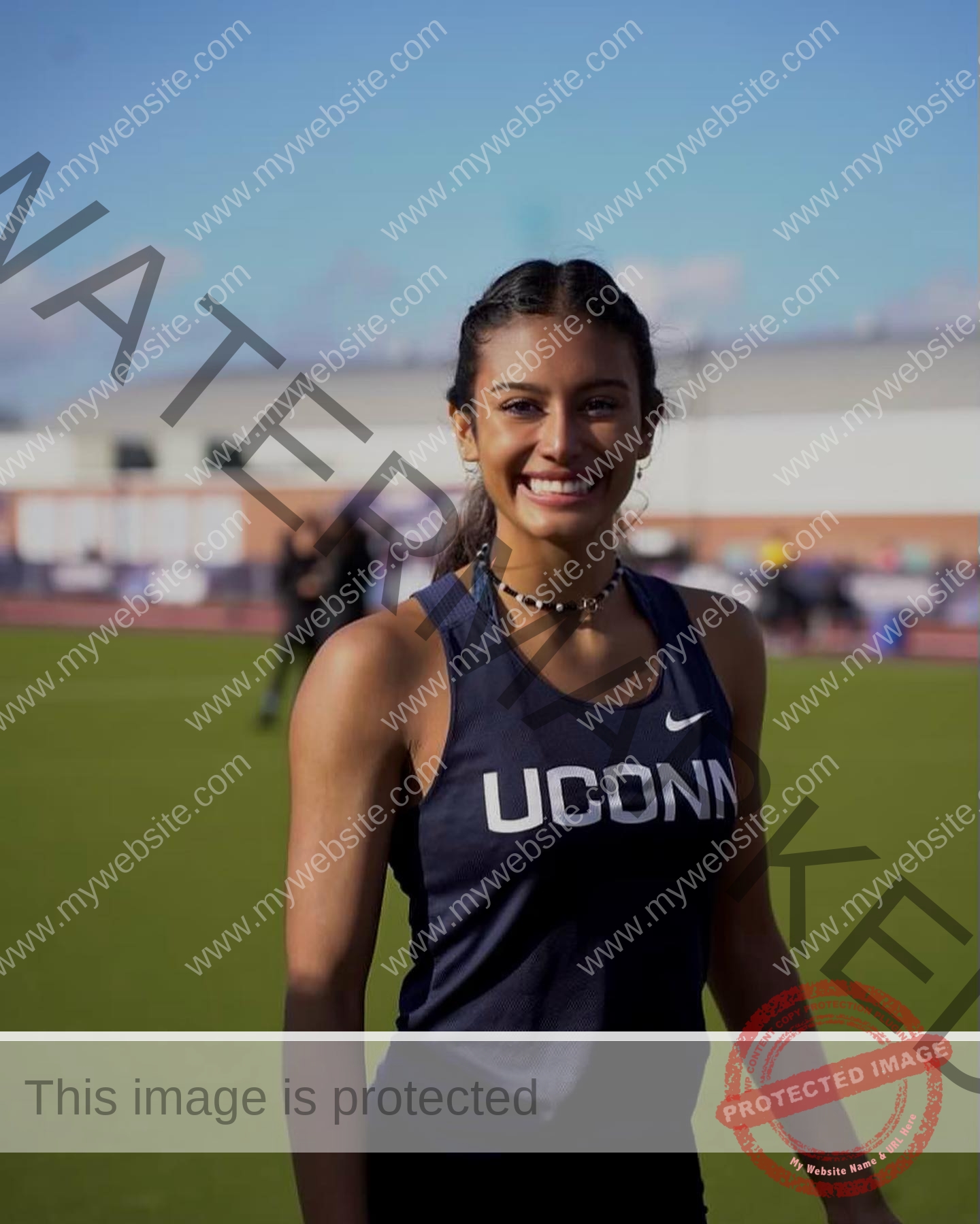
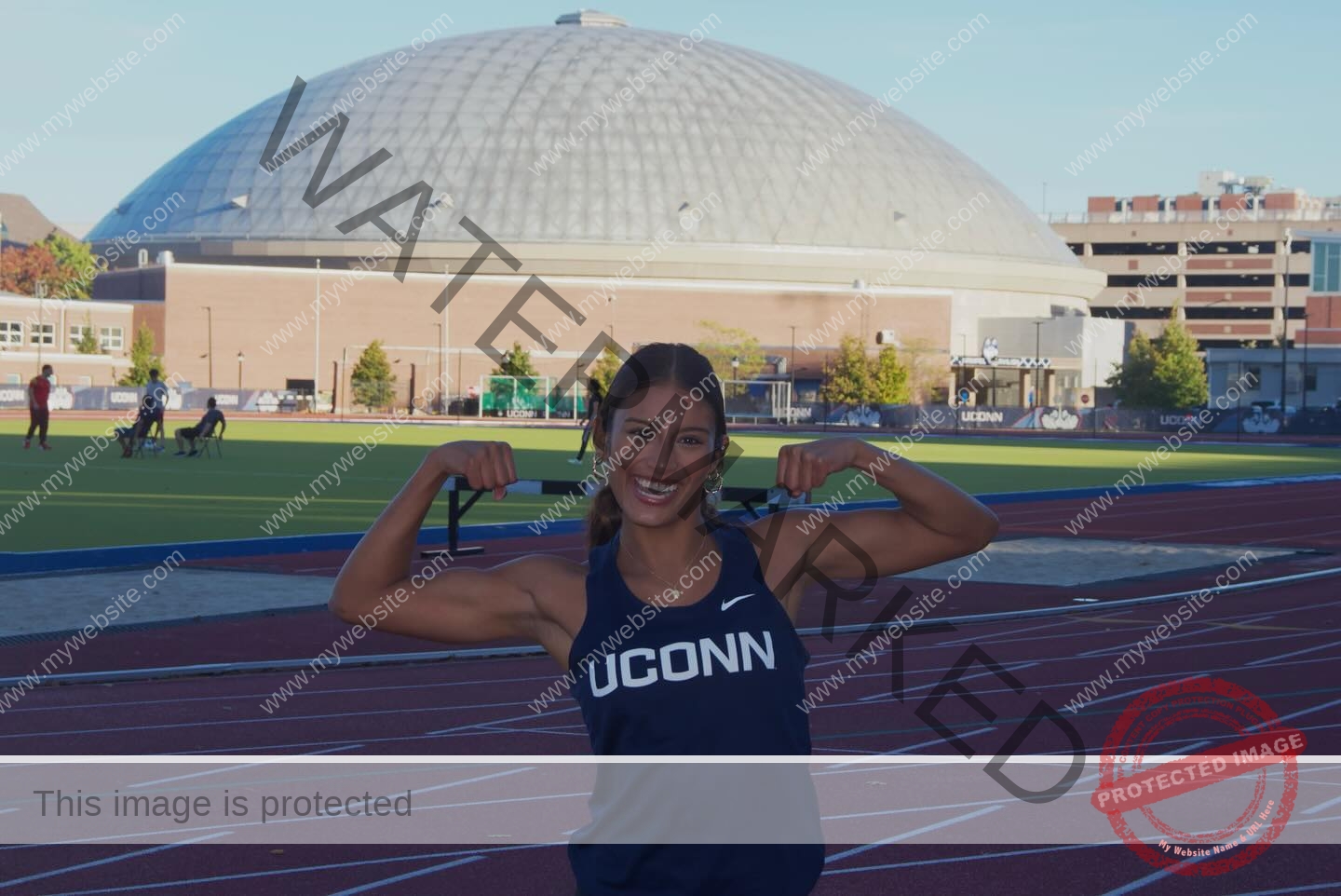
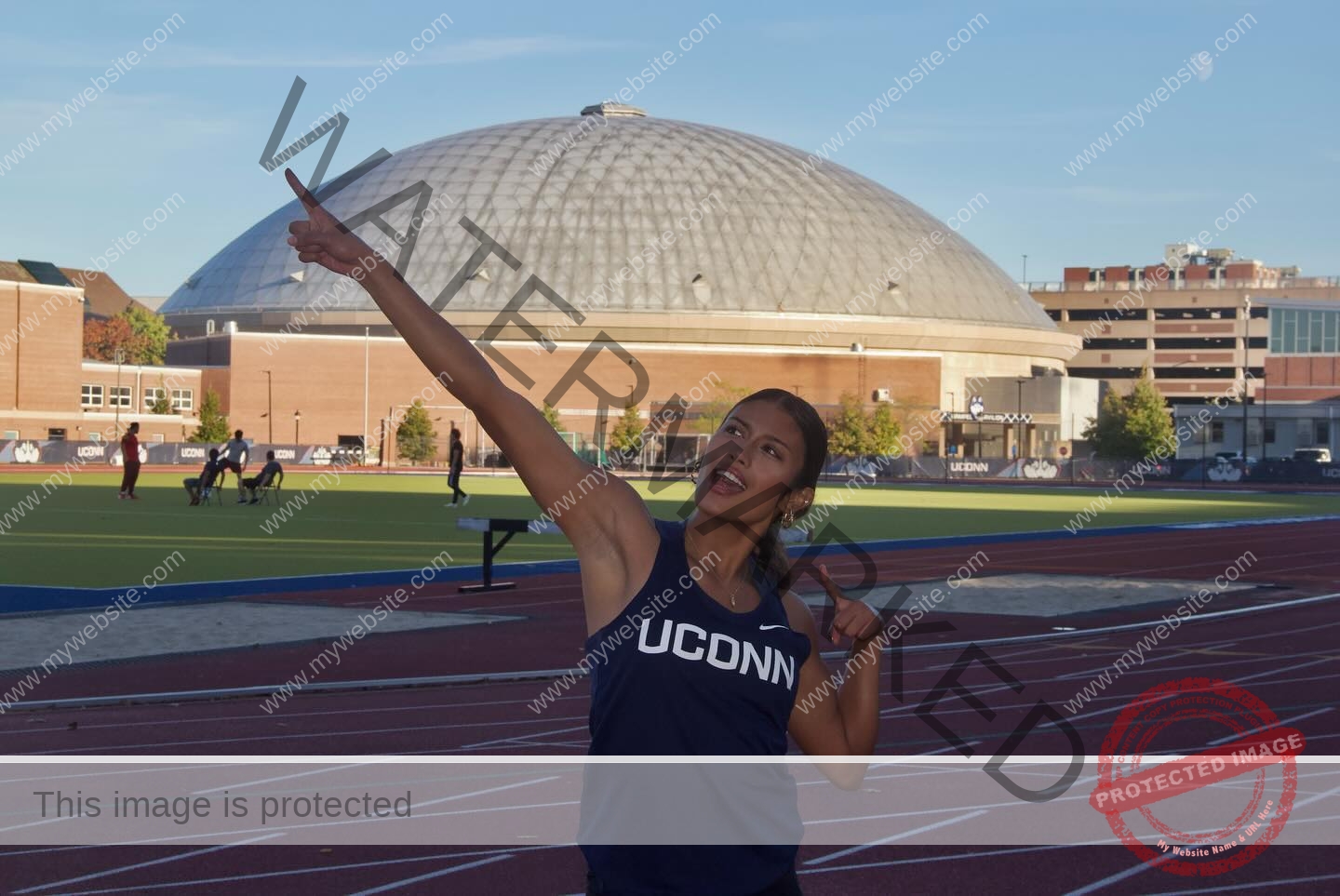
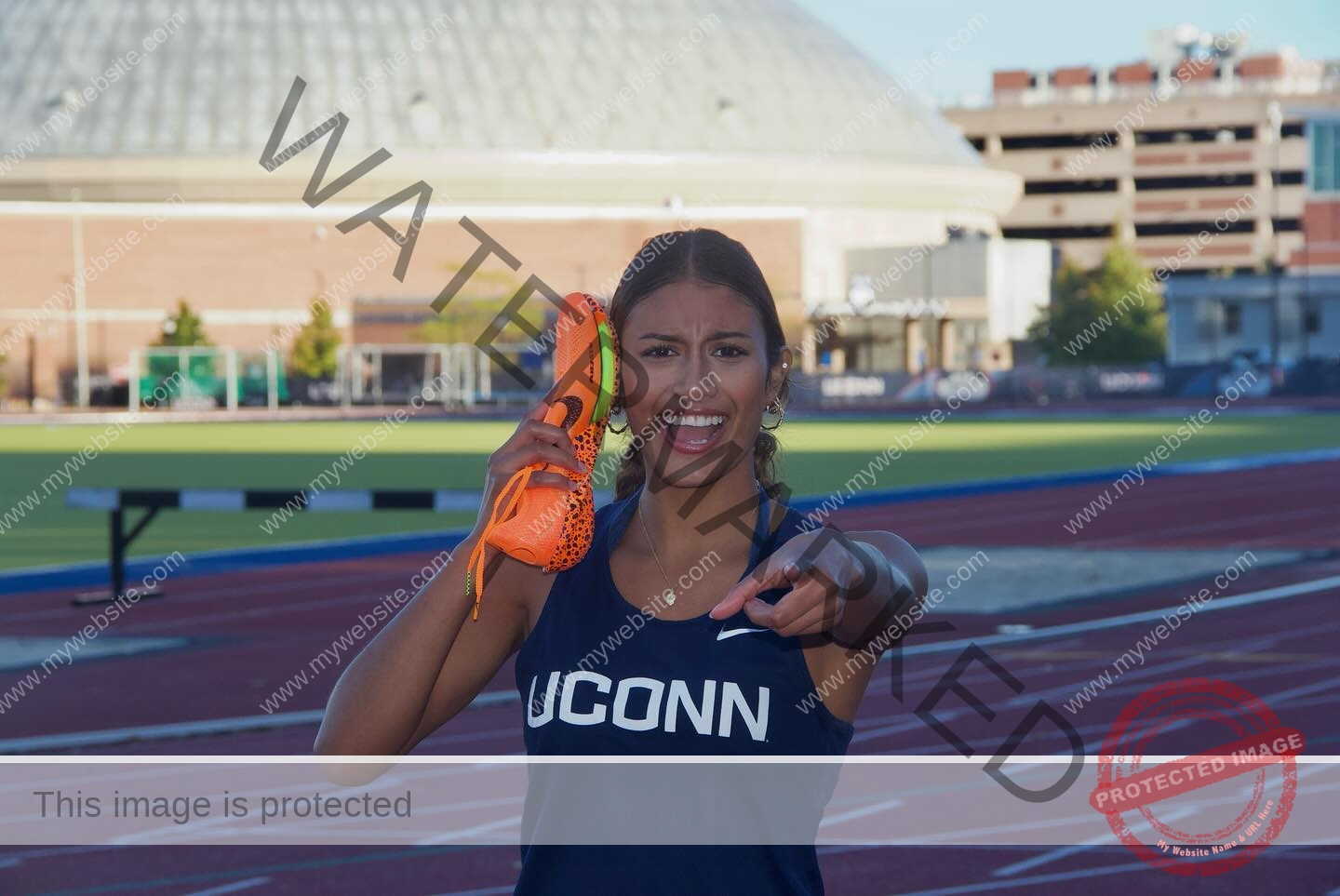


Mary Jasmine DeVivo: The Girl from Storrs Who Runs for Palau
There are athletes who represent a flag, and then there are athletes who embody a story. Mary Jasmine DeVivo — hurdler, sprinter, journalist-in-training, equity advocate, and current student at the University of Connecticut — falls squarely into the second category. A Connecticut girl with deep roots in one of the world’s most remote and beautiful island nations, she has spent her athletic career bridging two worlds: the wind-swept track meets of New England and the international stage where she runs proudly for the Republic of Palau. That combination makes her one of the more distinctive figures in American collegiate club athletics, and arguably the most accomplished female track and field athlete in Palauan history.
Palau and Connecticut: Two Worlds, One Athlete
Mary Jasmine DeVivo grew up in Storrs, Connecticut — a university town in Tolland County, home to the main campus of the University of Connecticut. It is a college-town environment, intellectually rich and culturally diverse, and one where the adjacent E.O. Smith High School sits literally adjacent to the UConn campus, sharing something of the energy and ambition of the research university next door.
Her ties to Palau, the island archipelago in the western Pacific Ocean roughly 500 miles east of the Philippines, run deep — and she wears those ties proudly. Her Instagram bio, which identifies her simply as studying journalism and global studies at UConn, includes both the Palauan and American flags side by side. In one characteristically self-aware post, she notes: “pls don’t ask me how close Palau is to Hawaii i’ll crash out.” It is the kind of line that captures something essential about her: grounded enough to joke about the geographic confusion that comes with representing a nation that most people couldn’t locate on a map, confident enough in her identity to run under its flag regardless.
Palau is a nation of approximately 18,000 people, spread across more than 300 islands in Micronesia’s Pacific archipelago. It has one of the most remarkable natural environments on earth — famous for its clear turquoise waters, abundant marine life, and Jellyfish Lake — but its athletics program is modest by necessity. A nation this small has limited infrastructure for competitive sport development, and its track and field athletes must often train and compete far from home. DeVivo represents precisely the kind of diaspora athlete who becomes the face of a national program: raised and educated abroad, but connected to the homeland by family, identity, and choice.
E.O. Smith: Discovering the Hurdles
DeVivo attended Edwin O. Smith High School in Storrs, competing for the Panthers in track and field. E.O. Smith is the sole high school in Regional School District 19, drawing students from the towns of Ashford, Mansfield, and Willington. It has a long and distinguished tradition of academic achievement — including the unique opportunity for students to take college-level courses at UConn for credit — and a community that prizes both learning and sport.
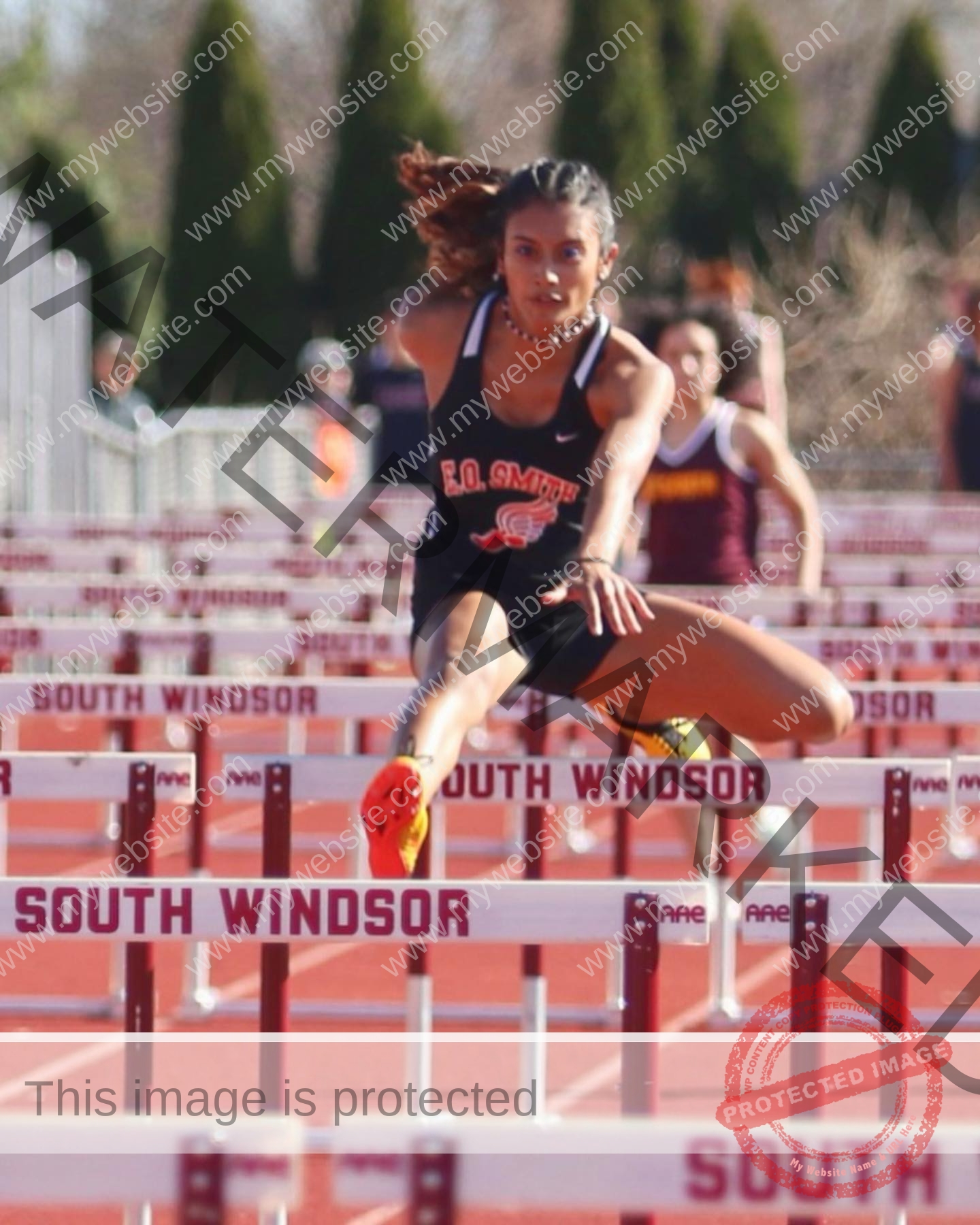
Running had been a constant in DeVivo’s life since childhood. In her own words from her college recruiting profile, her goal was always primarily academic, but running was something that had stayed with her consistently as she grew up. The event that would define her competitive career came through a coach’s insight rather than her own initial plan. Her track coach recognized something in her mechanics and athleticism and introduced her to hurdling — and as DeVivo herself described it, they discovered it was something she had a genuine knack for, especially in the 100 meters hurdles.
The results backed up that assessment quickly. She placed first at the CCC East (Central Connecticut Conference East Division) championships in the 100 meters hurdles — a strong performance against Division I conference competition — and finished second in the 300 meters hurdles at the same meet. These were her league championships, and winning in that context as a young hurdler was a meaningful benchmark.
At the CIAC Class L State Championships — Connecticut’s second-largest classification, encompassing schools of her enrollment size — she placed eighth in the 100 meters hurdles. She was candid in her own account of that day: she fell during the race, a frustrating but not uncommon experience for young hurdlers still mastering the technical demands of the event. Rather than dwelling on the setback, she was already looking forward, describing herself as ready for a comeback in the following season. That kind of resilience — the capacity to assess honestly and move forward constructively — would prove to be a hallmark of her athletic character.
Off the track at E.O. Smith, DeVivo was equally active. She was involved in student government and senate. She took on a project that speaks volumes about her sense of fairness: when she noticed that the school’s track record wall recognized only boys’ performances, she began working to get a girls’ record wall established. She also contributed to the design of a cultural center at the school. These weren’t casual extracurricular activities — they were sustained commitments to making her school’s environment more equitable and more reflective of all its students. For a teenager juggling academics, athletics, and a part-time job, this level of engagement is notable.
Coming to UConn: Campus, Classroom, and Club
The choice of UConn for her university career was both a natural fit and, in some ways, a homecoming — Storrs is where she grew up, and the university campus had been part of the landscape of her entire childhood. She enrolled in a dual program studying journalism and global studies, a combination that reflects both her intellectual curiosity and her long interest in international affairs and her own transpacific identity.
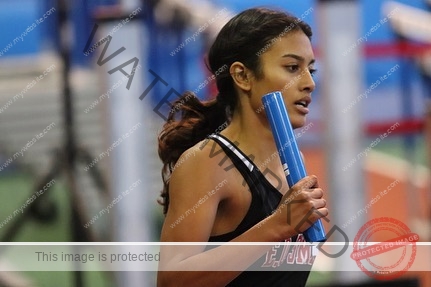
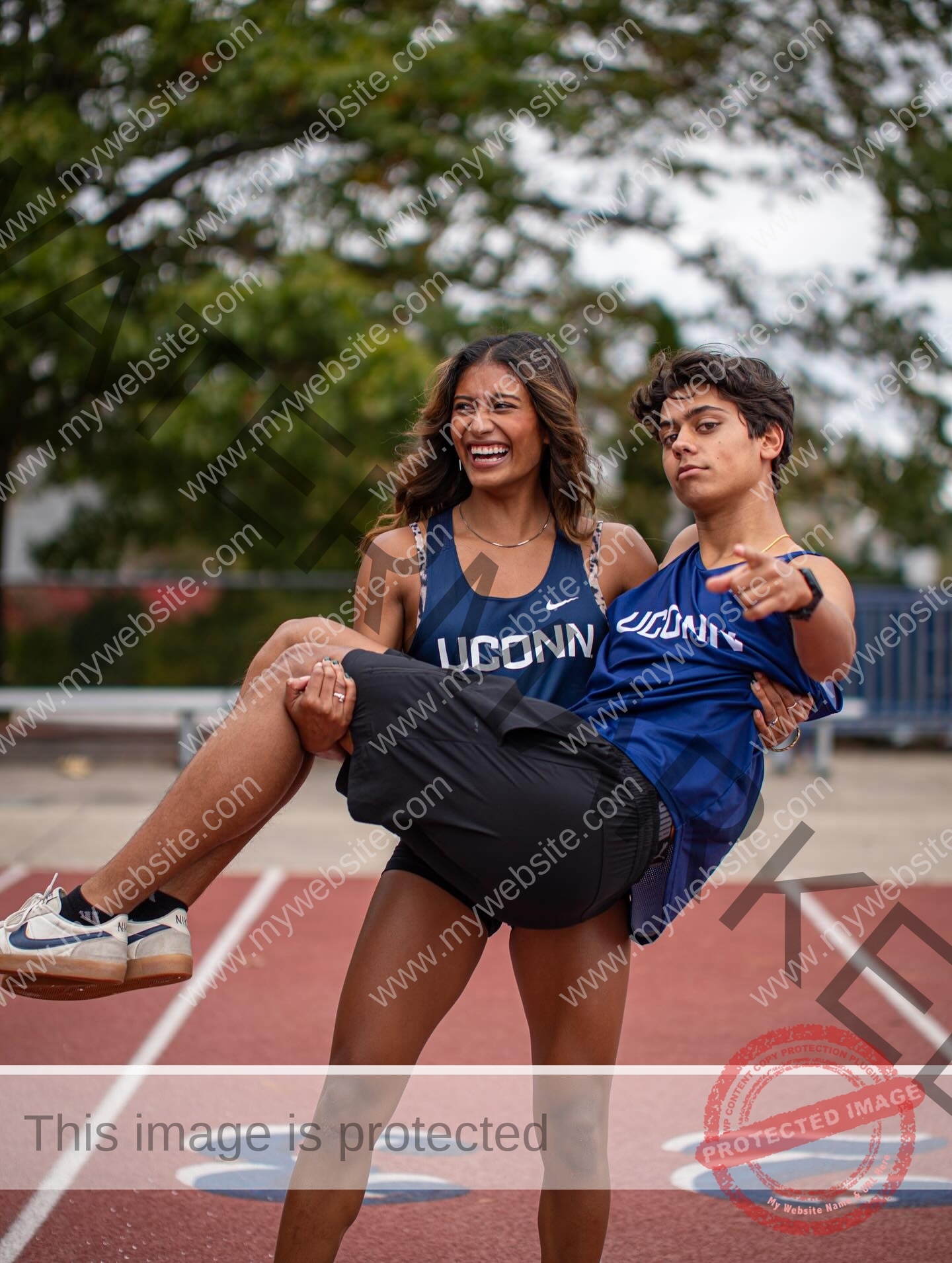
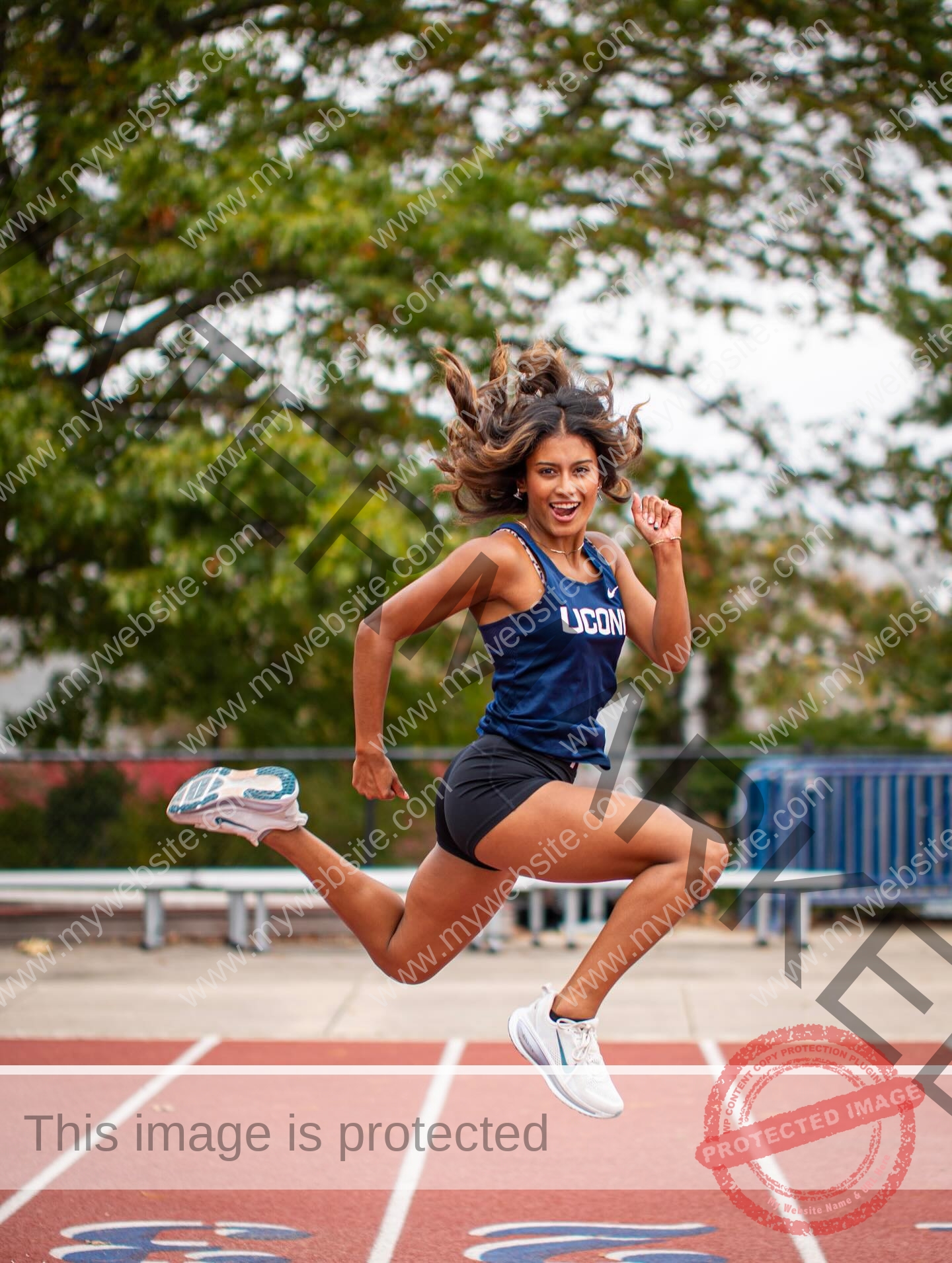
At UConn, DeVivo competes not for the varsity Huskies program but for the UConn Club Track and Field team, which competes in the NIRCA (National Intercollegiate Running Club Association) circuit — the competitive club athletics tier that runs parallel to and separately from NCAA varsity competition. NIRCA allows athletes who may not be competing at the varsity level to continue pursuing their sport at a genuinely competitive level, including regional and national championships. For DeVivo, club track has been the vehicle for some of the most impressive performances of her collegiate career.
In the 2025-26 indoor season, she emerged as one of the standout performers on the UConn club squad and one of the most intriguing names in NIRCA competition broadly. She was a key member of the UConn club women’s 4×200 meter relay team — alongside Natalia Anagnostou, Kayla Smith, and Chrystelle Fignole — that set a new collegiate club record with a time of 1:44.81, run at the short-track distance on an indoor track. The performance was significant enough to draw attention from national club track observers, and it positioned DeVivo as one of the fastest women in the NIRCA field heading into the 2026 NIRCA National Championships at Penn State.
At those championships, DeVivo was the top seed in the women’s 60 meters — carrying a seed of sub-10 seconds, which placed her among the fastest collegiate club sprinters in the country in that event. She was also the top seed in the 200 meters, coming in with a time of 27.00 seconds (with a personal best of 26.77 on her ledger). In the 400 meters, she was seeded at 1:00.00 flat, a remarkable entry for an athlete who, by some accounts, had never run an open 400 meters before at the collegiate level — her experience in the event being through the 400 meters hurdles, where her personal best of 1:07.56 (67.56 seconds) had established her as a genuine barrier event specialist. She was entered in multiple events across the meet, and the NIRCA preview publication described her as a clear favorite in the 60 meters and the face of a UConn versus Penn State rivalry that animated the women’s sprints division at the championship.
Going International: Racing for Palau
The most extraordinary dimension of DeVivo’s athletic story is her international competitive career, conducted under the flag of the Republic of Palau. She is registered with World Athletics (athlete code 15166646) as a Palauan national and has competed at the senior international level in the 100 meters, 100 meters hurdles, 400 meters hurdles, and as part of a 4×100 meters relay team.
In late June 2024, she competed in international track and field competition representing Palau, producing results that became national records for the island nation. Over the course of those three days, she ran the 100 meters in 12.65 seconds (a legal mark) and 12.4 seconds hand-timed (unofficial), the 100 meters hurdles in 15.67 seconds, the 400 meters hurdles in 1:06.78, and contributed to a 4×100 meters relay squad that ran 54.02 seconds. Both the 100 meters hurdles and 400 meters hurdles marks were designated as Palau National Records on the World Athletics database — the “NR” designation making clear that she had established the definitive standards for women’s hurdling in her country.
These are not marginal marks. A 15.67 in the 100 meters hurdles and a 1:06.78 in the 400 meters hurdles represent real, competitive performances at the senior level — marks that reflect genuine technical development and a strong athletic foundation. For Palau, a nation without a deep hurdling tradition, these represent a significant step forward in what the country can show on the international stage. DeVivo’s decision to compete under the Palauan flag is not simply symbolic. It is a contribution to the growth of a national athletics program that, without athletes like her, would have little international presence at all.
The 2025 Pacific Mini Games — held on home soil in Koror, Palau, from June 29 to July 9, 2025 — were a landmark moment for Palauan sport. Palau won 29 medals including 5 gold medals, its best result in total medals at any Pacific Mini Games in the country’s history. The Games were held at the recently refurbished Palau National Stadium, which had undergone a track upgrade in preparation for the event. For any Palauan athlete with ties to the community, competing at home — on the island itself, in front of a home crowd, at a venue that was prepared specifically for the moment — represents an opportunity unlike any other in the regional athletic calendar.
The Journalist, the Advocate, the Global Citizen
DeVivo’s life at UConn extends well beyond the track surface. She serves as an assistant director at UCTV, the student-run television station operated by undergraduate students at the Storrs campus. In that role, she works with teammates to film packages, edit content, report, and train new members in production skills — work that directly advances her academic focus in journalism. She has gained credentials experience, including working with a Fox61 broadcast crew at a UConn basketball game, where she produced content and expanded her hands-on media skills.
She has also been featured by UConn’s Experiential Global Learning program — the university’s study abroad and international education division — suggesting that her connection to international experience goes beyond her own personal heritage. For a student of global studies with family ties to Palau, the perspective she brings to questions of Pacific culture, identity, and international relations is not abstract or academic. It is personal in a very direct way.
Her work at Dog Lane Cafe, a local establishment in the Storrs community, adds another layer to the portrait of a student who is simultaneously managing a packed schedule of academic work, club athletics, broadcast journalism, and international competition. Doing all of these things requires the same organizational discipline and tolerance for complexity that makes a good hurdler: the ability to think about multiple things at once and execute each with precision.
Social Media and Presence
Mary Jasmine DeVivo maintains a presence on Instagram at @mjdevi_4, where she shares a window into her life as a student-athlete with dual national identity. Her LinkedIn profile confirms her studies in journalism and global studies at UConn, her assistant director role at UCTV, and her work experience at Dog Lane Cafe. Her World Athletics profiles — one under the Republic of Palau and one under the United States — reflect the genuinely dual nature of a career that spans two competitive systems and two national identities. No known commercial sponsorships have been identified at this stage of her career, which is typical for a collegiate club athlete, though her growing profile in NIRCA and on the international stage may invite future opportunities.
Personal Bests and Career Highlights
- 100 Metres: 12.65 (legal) / 12.4h* (unofficial hand time) — June 20, 2024
- 200 Metres: 26.77 — December 7, 2024, Ocean Breeze Athletic Complex, New York (indoor)
- 100 Metres Hurdles: 15.67 — June 21, 2024 (Palau National Record)
- 400 Metres Hurdles: 1:06.78 — June 22, 2024 (Palau National Record)
- 4×100 Metres Relay: 54.02 — June 21, 2024 (Palau)
- Part of UConn Club 4×200 metres relay team that set a new collegiate club record (1:44.81) — 2025-26 indoor season
- Top seed in women’s 60 metres at 2026 NIRCA National Championships (Penn State)
- Top seed in women’s 200 metres at 2026 NIRCA National Championships
- Palau National Records in both the 100 metres hurdles and 400 metres hurdles (as of 2024)
- CCC East Conference Champion, 100 metres hurdles, E.O. Smith High School
- 2nd place, CCC East Conference, 300 metres hurdles, E.O. Smith High School
- CIAC Class L State Championships participant, 100 metres hurdles
What Comes Next
The arc of Mary Jasmine DeVivo’s athletic career is still being written. She is a student, a club athlete, and a national representative all at once — competing in NIRCA meets at Penn State on Friday and potentially preparing for international Oceania competition in the summer months. That kind of dual-track life is unusual, and it demands a level of self-management and purpose that most athletes don’t develop until well after their undergraduate years.
What makes her story compelling is not just the performances — though the Palauan national records and the NIRCA championship seedings are genuine markers of quality — but the context surrounding them. She is building a journalism career. She is a student of global affairs. She is connected to a tiny Pacific island nation through bonds of family and identity that have led her to represent that nation at the senior international level. She is an advocate who pushed for equal recognition of women’s athletic achievement before she ever lined up on a collegiate track.
Palau is a country of 18,000 people that sent a team to the Pacific Mini Games. Mary Jasmine DeVivo is one of the reasons that team can compete in the hurdles. That is, in its own right, a remarkable thing — and a story worth telling in full.
