
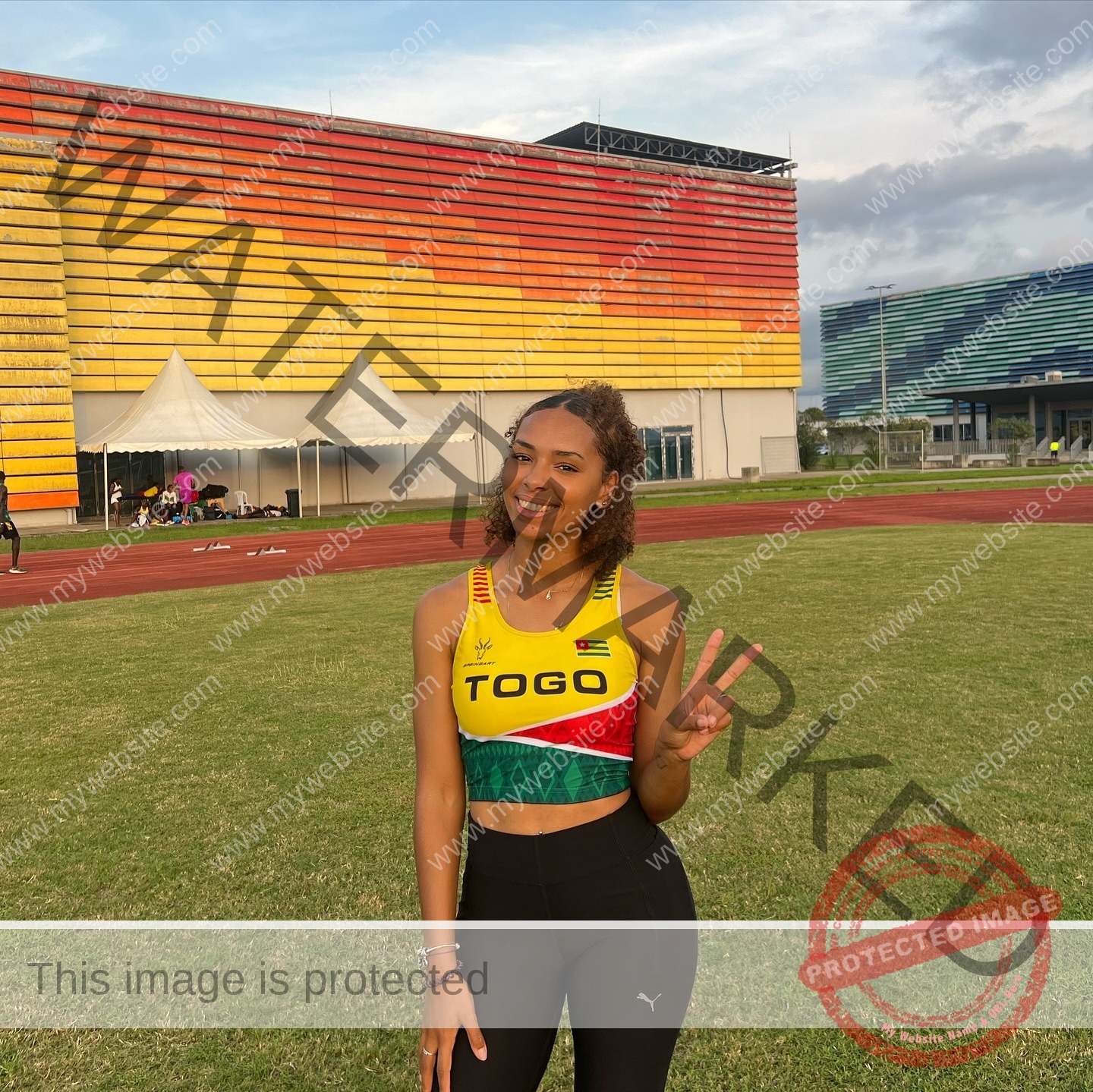
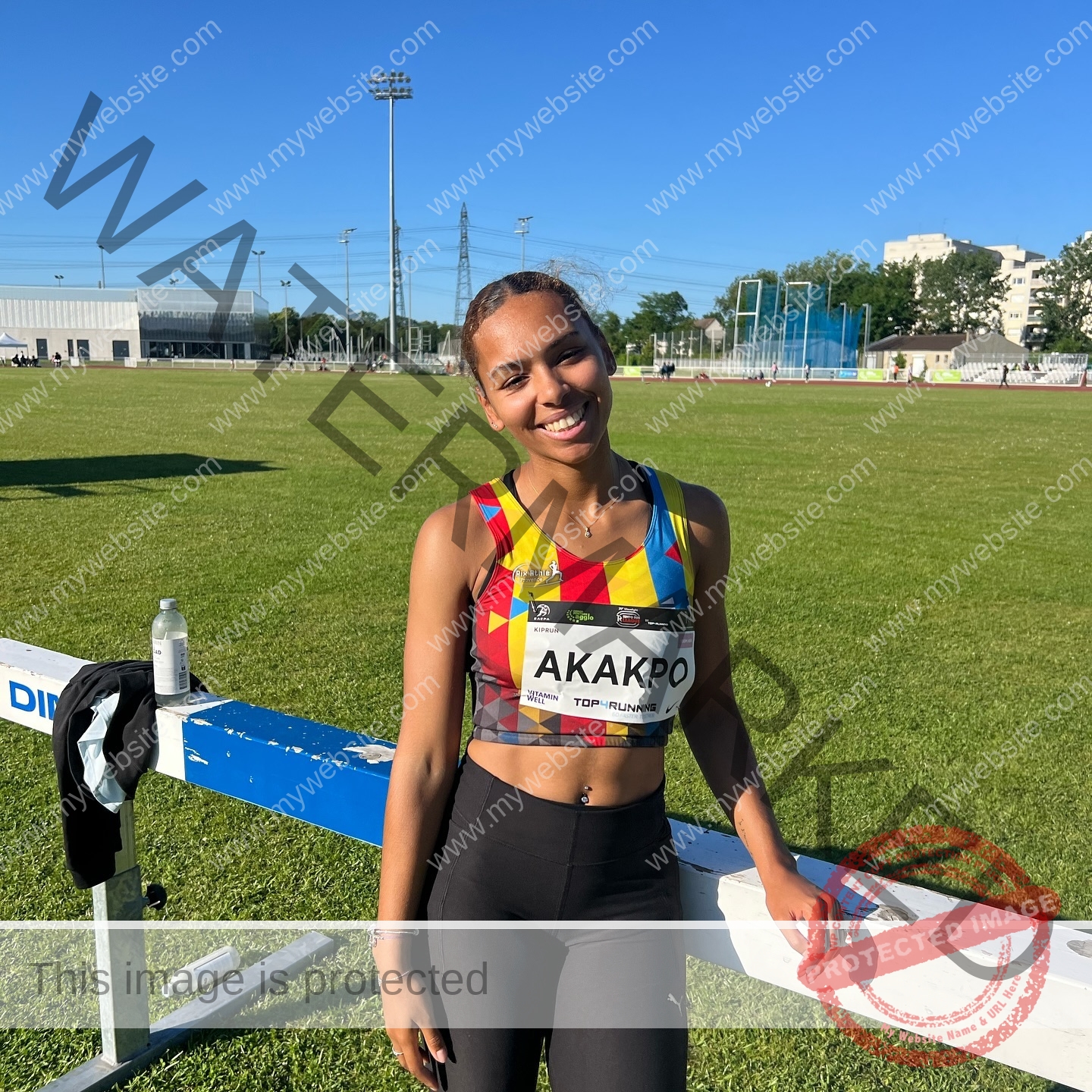
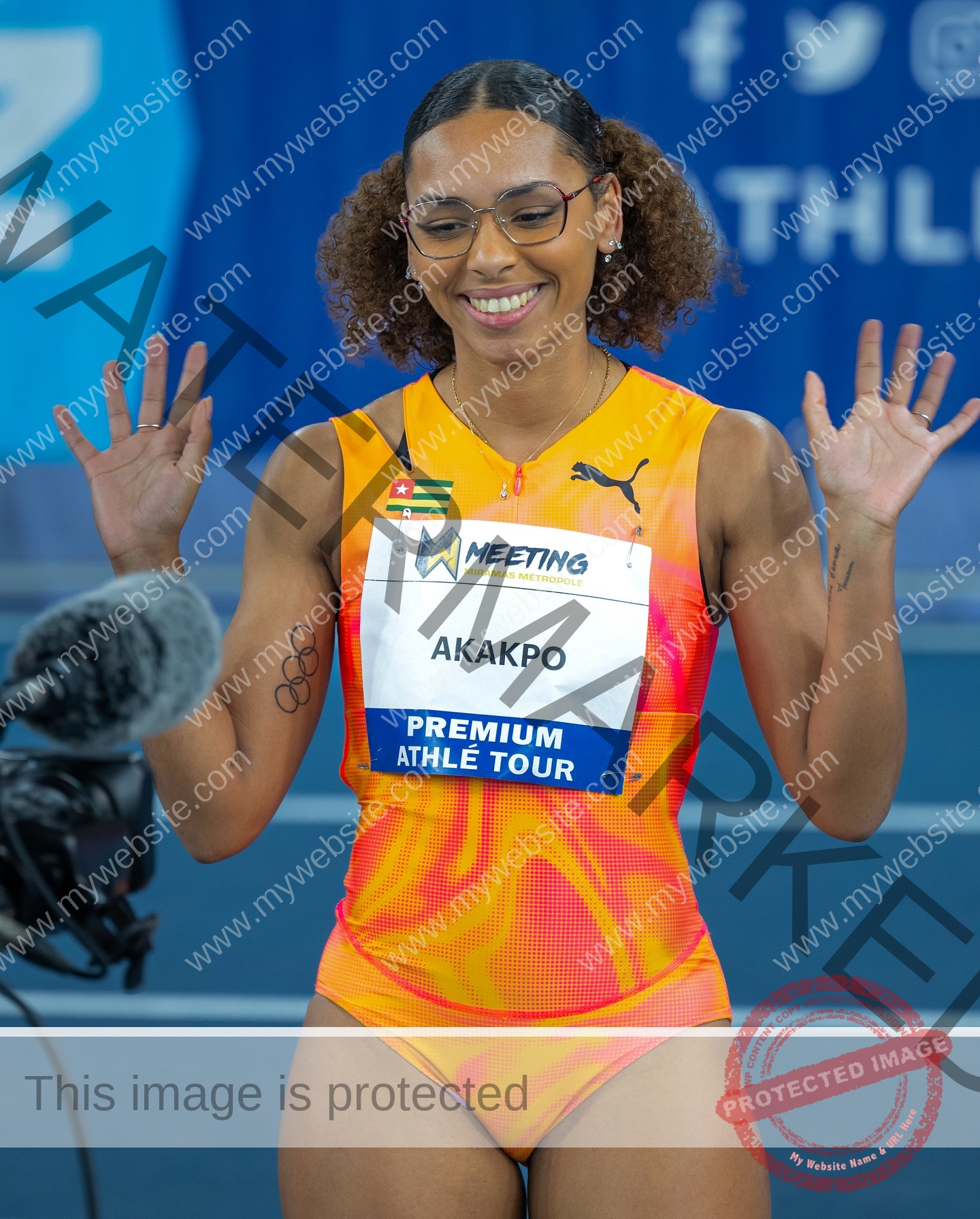
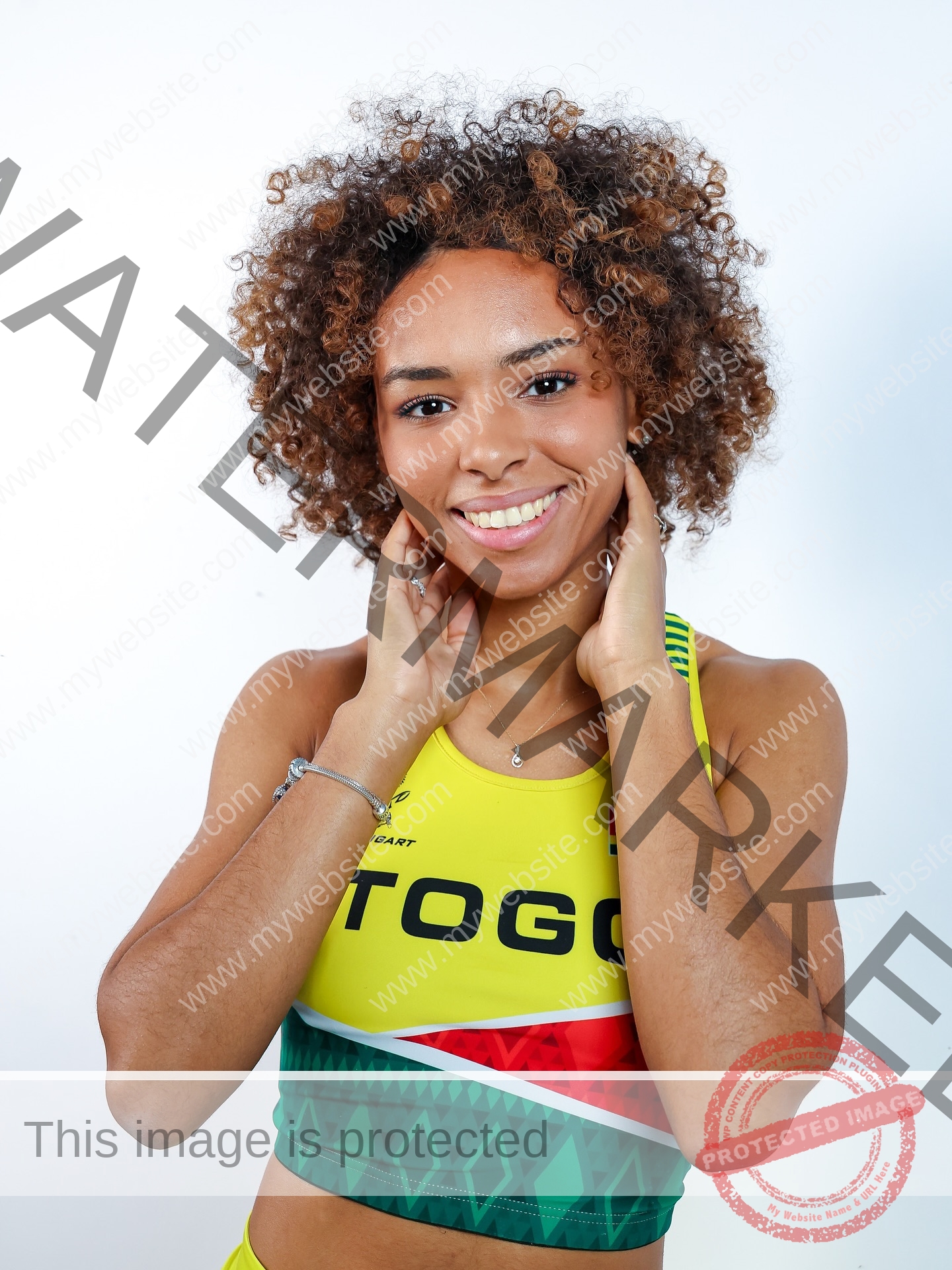
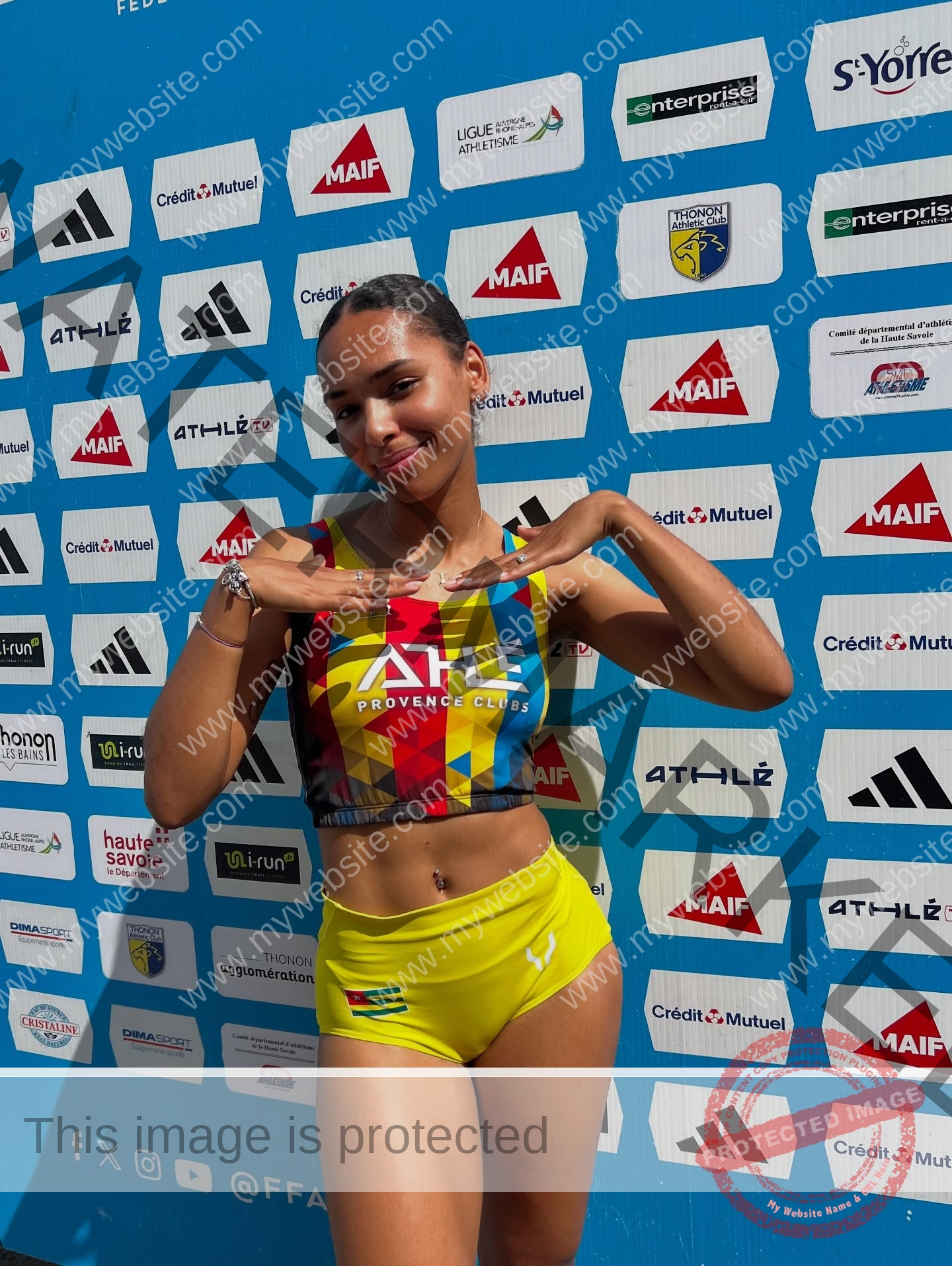
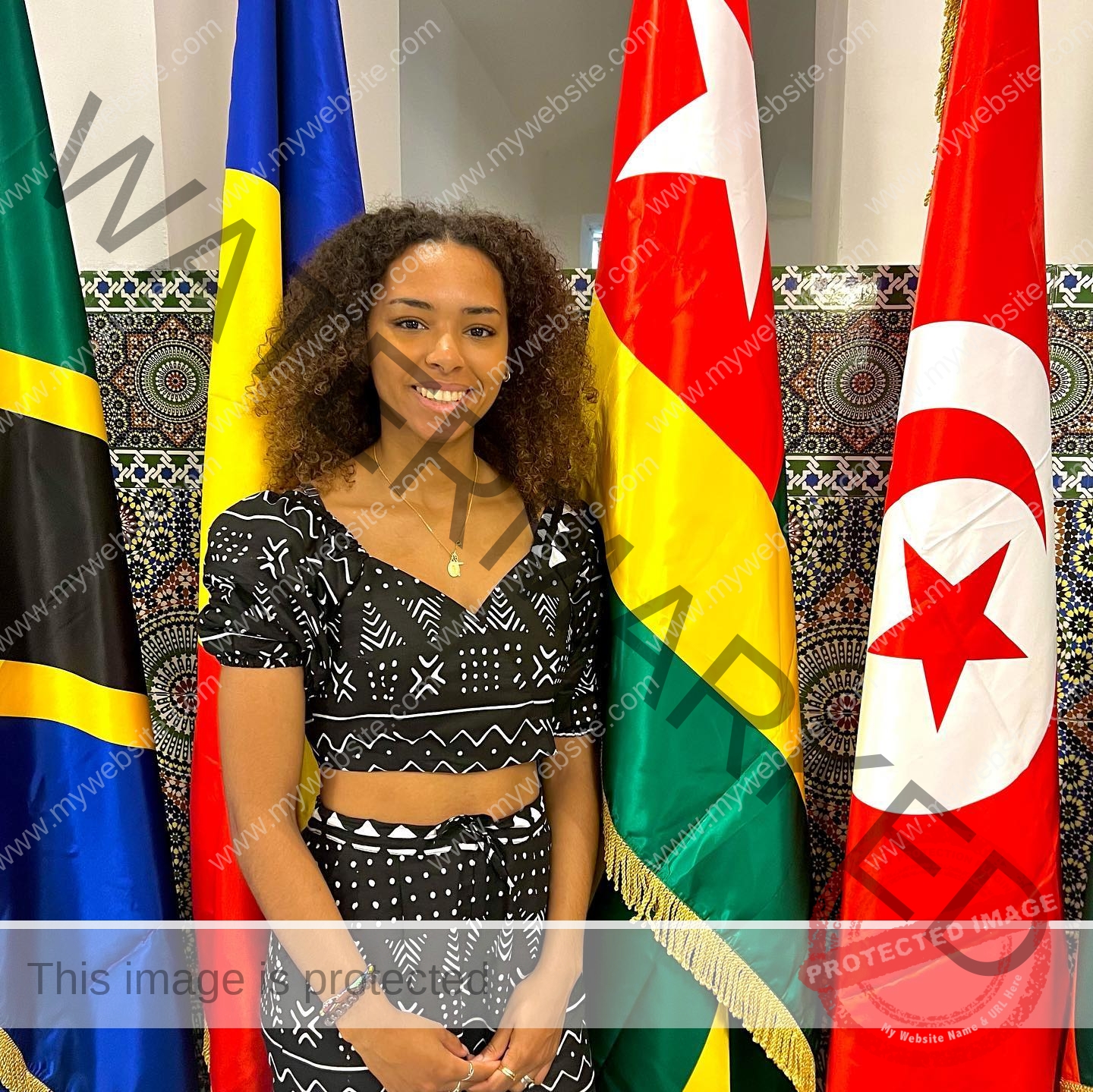
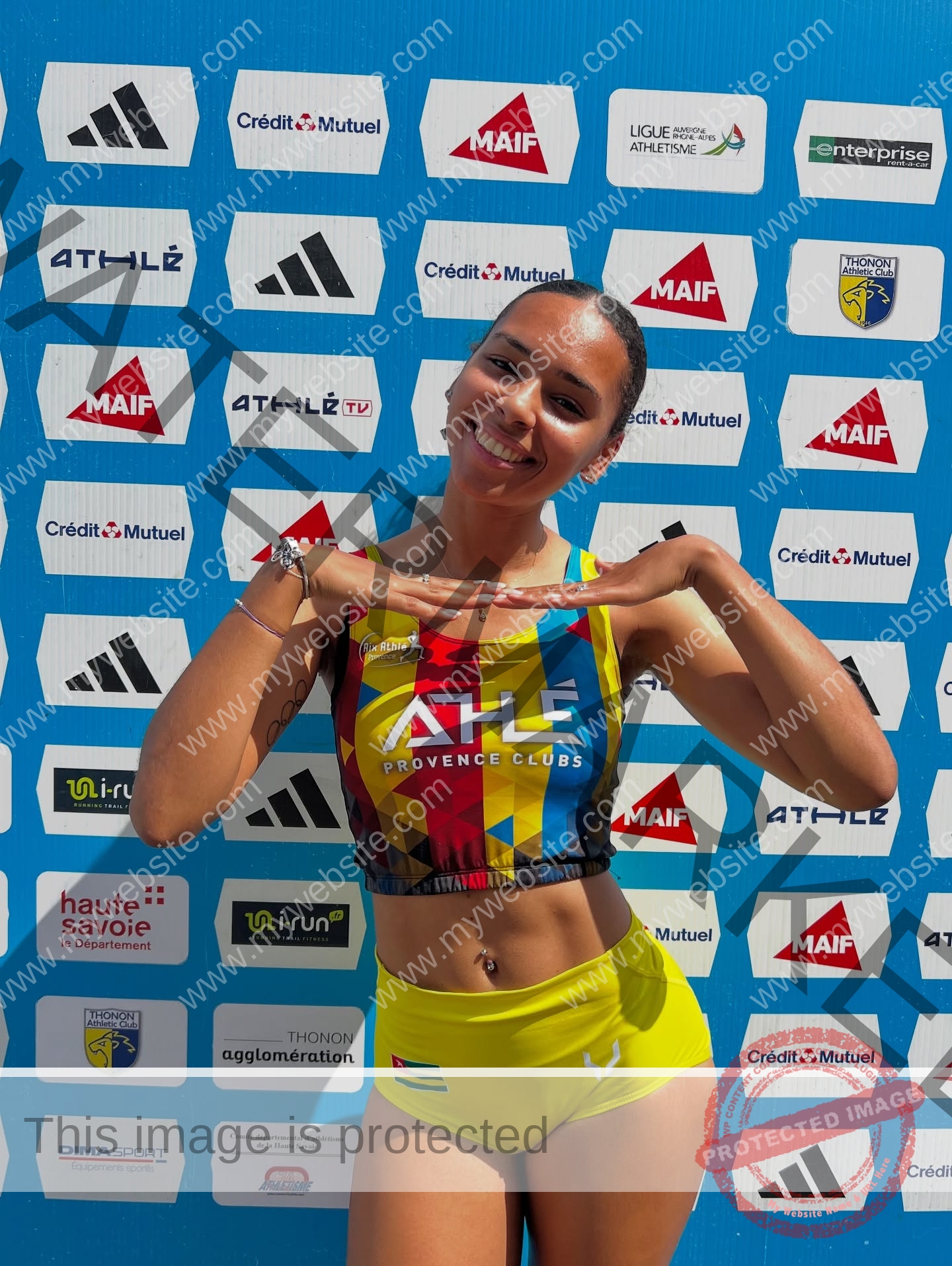
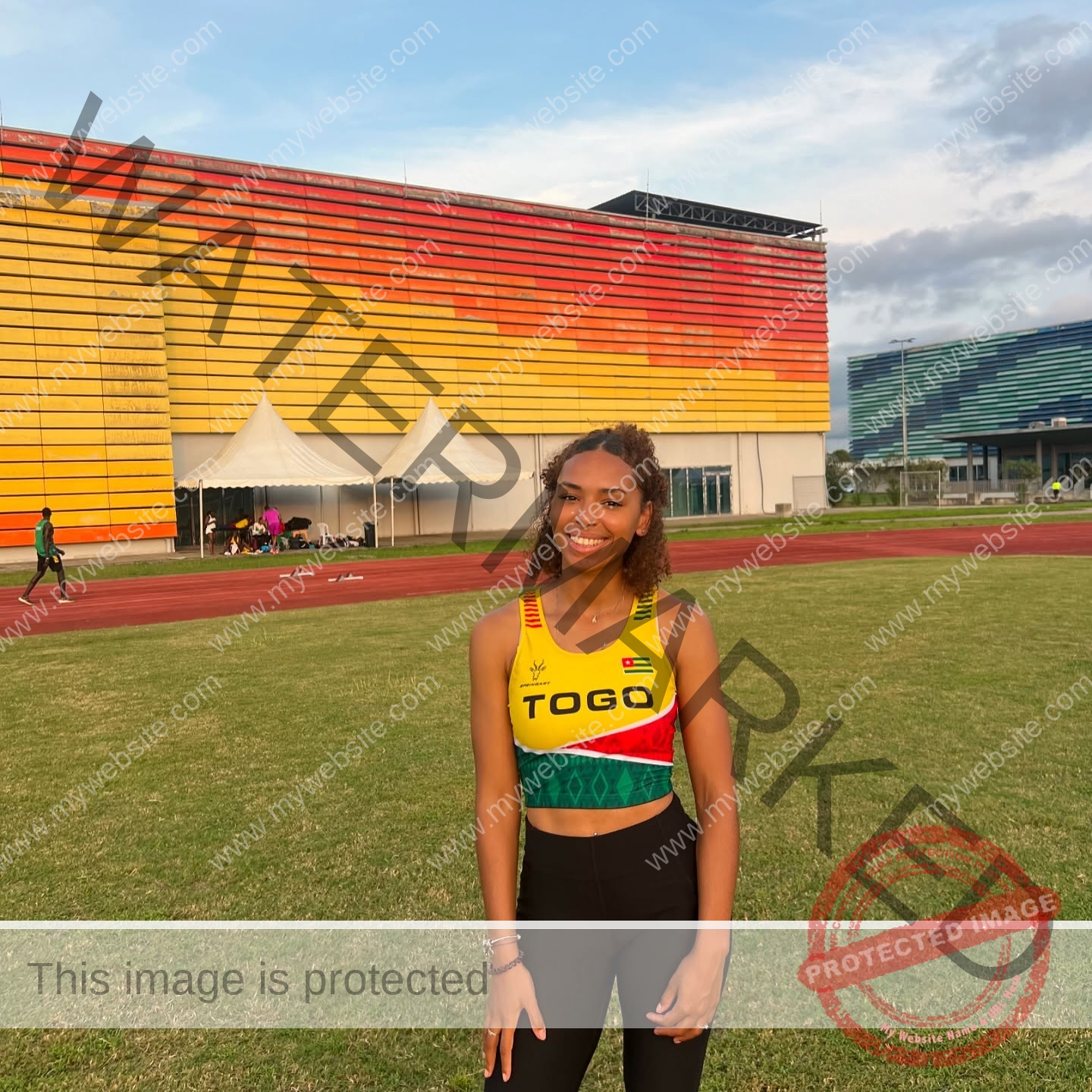
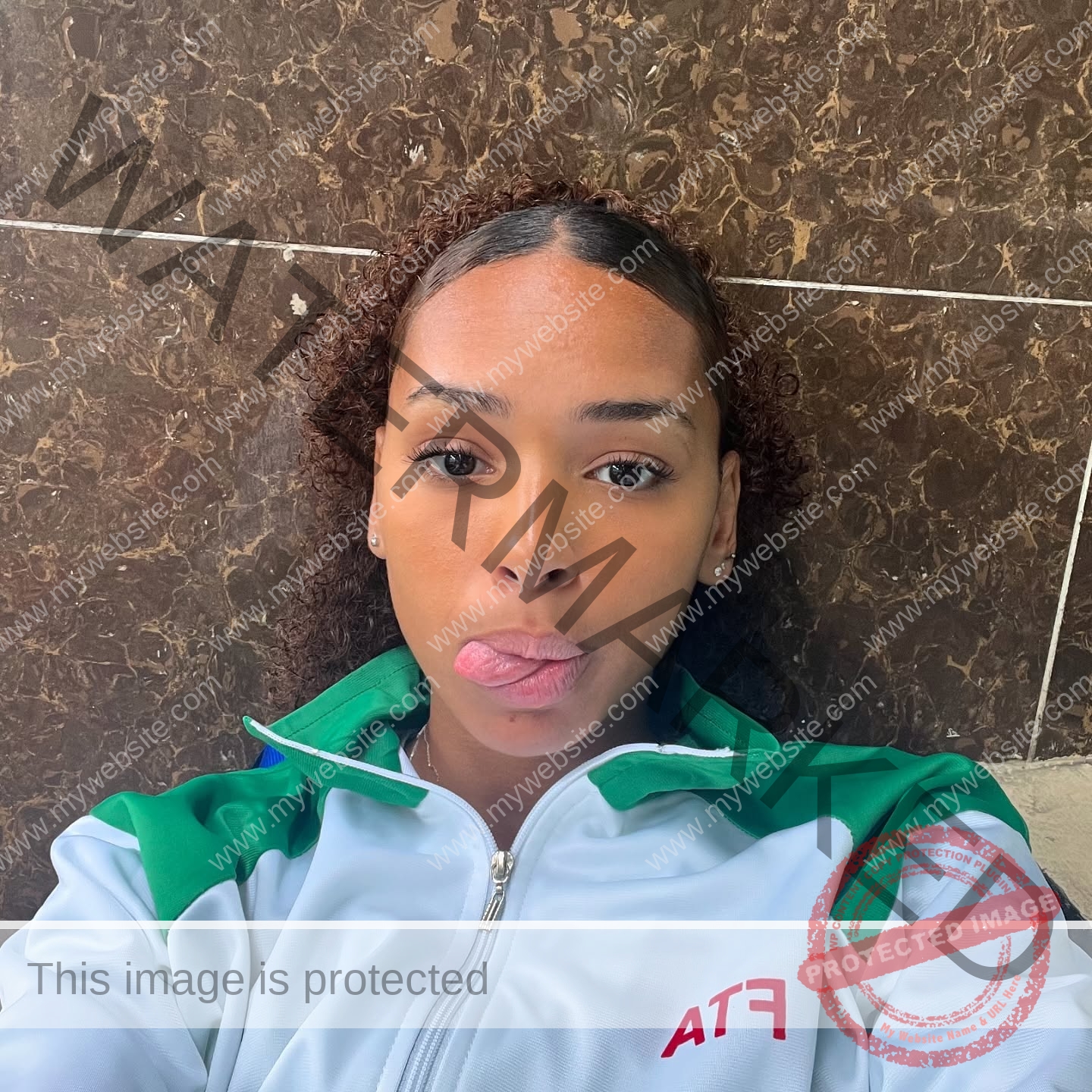
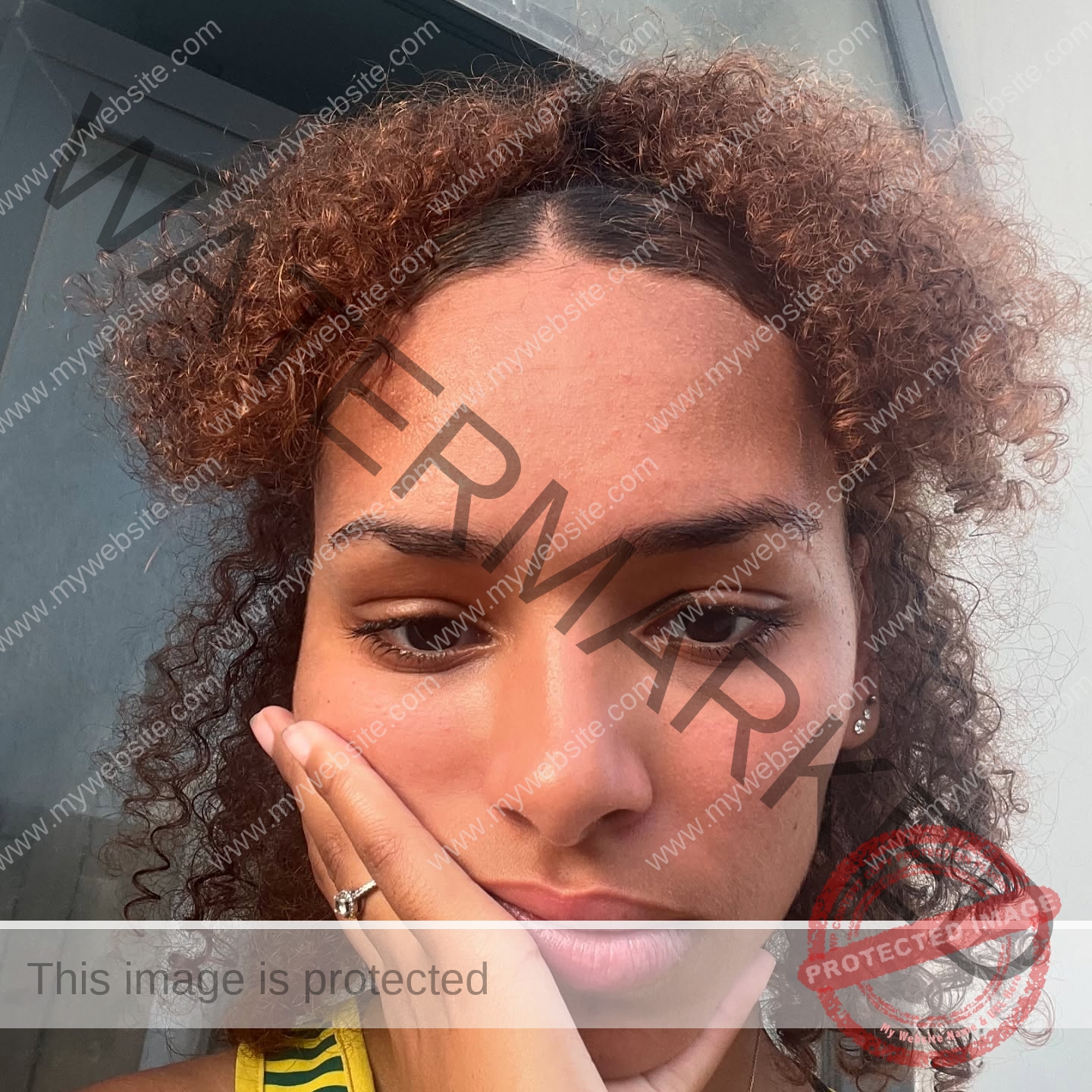
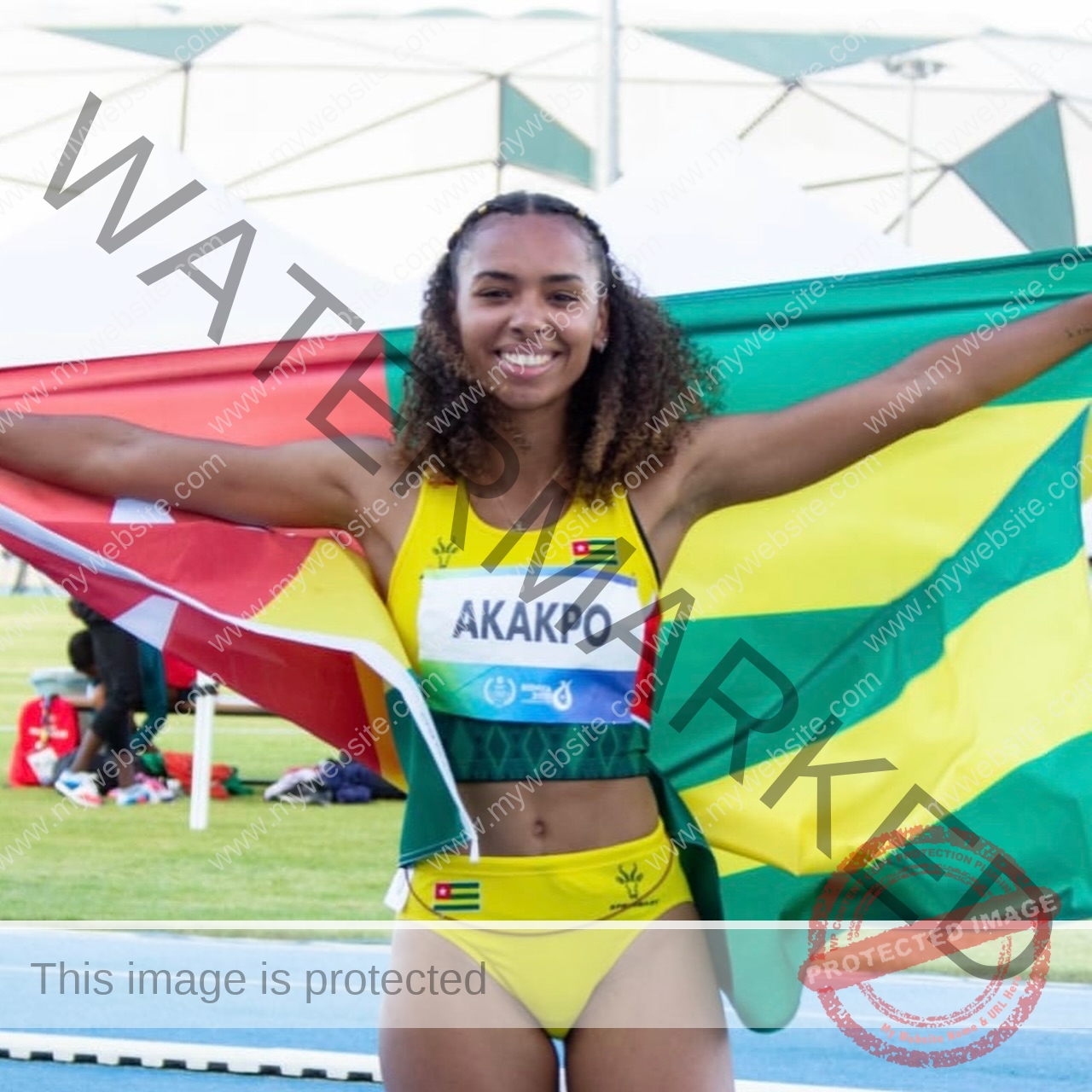
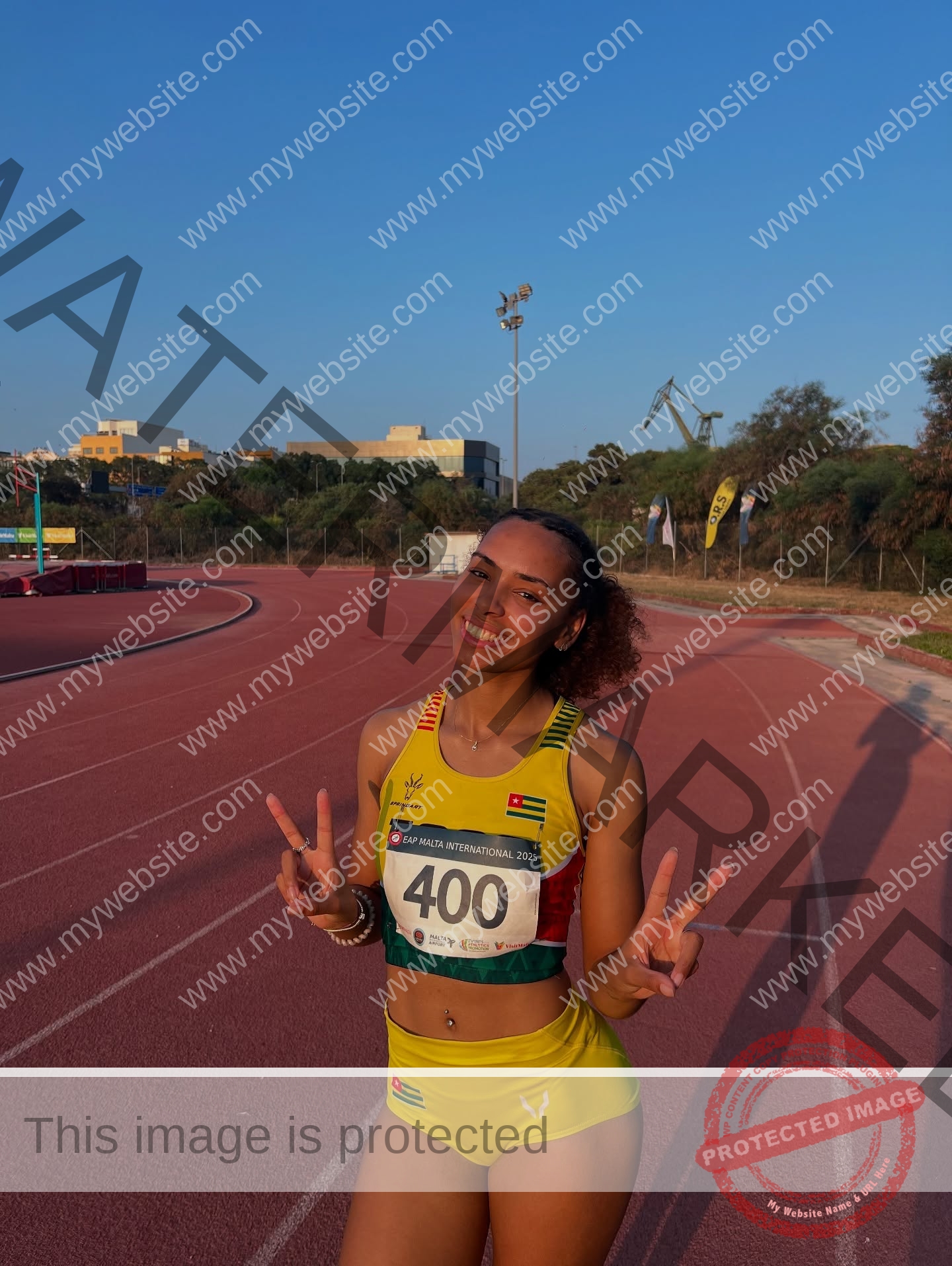
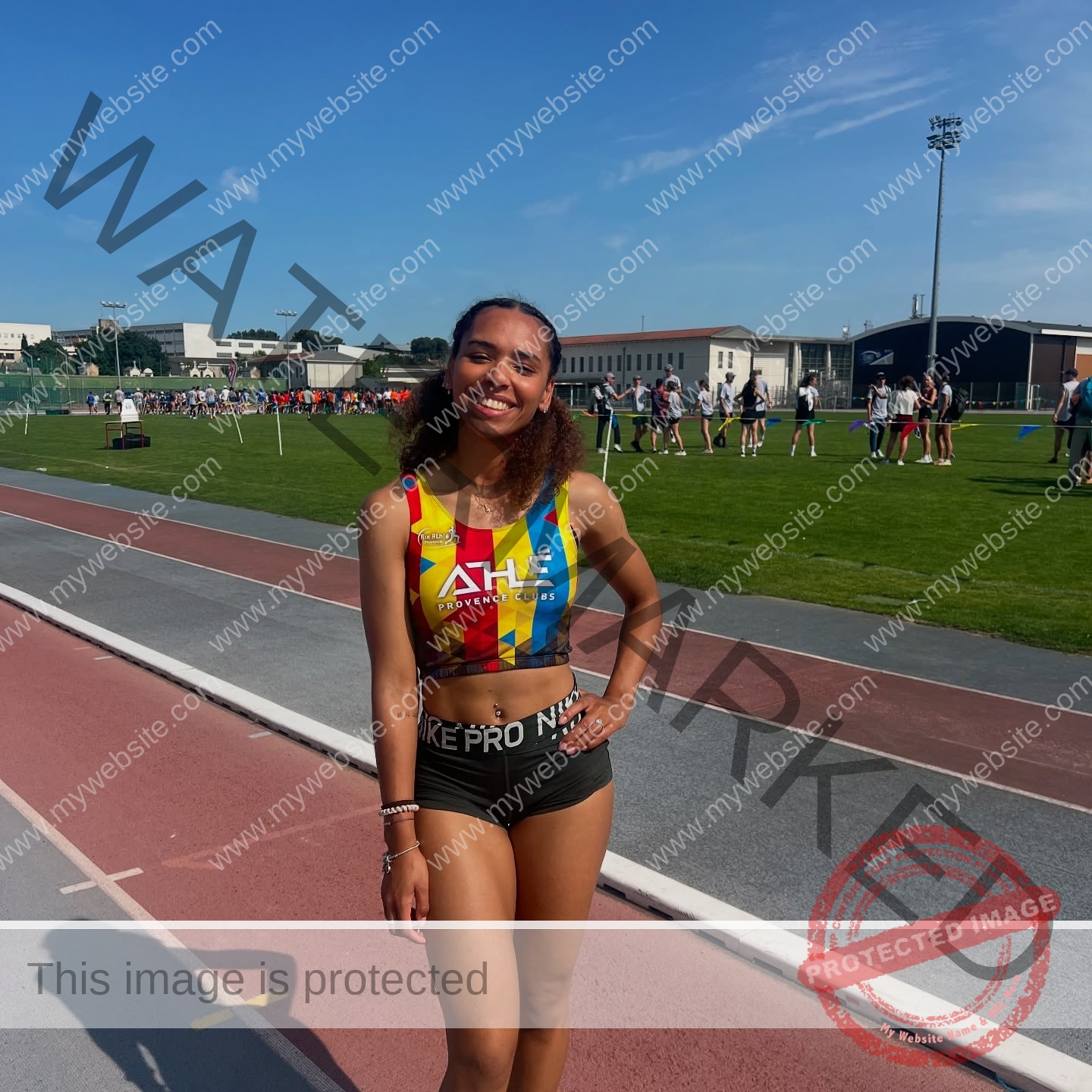
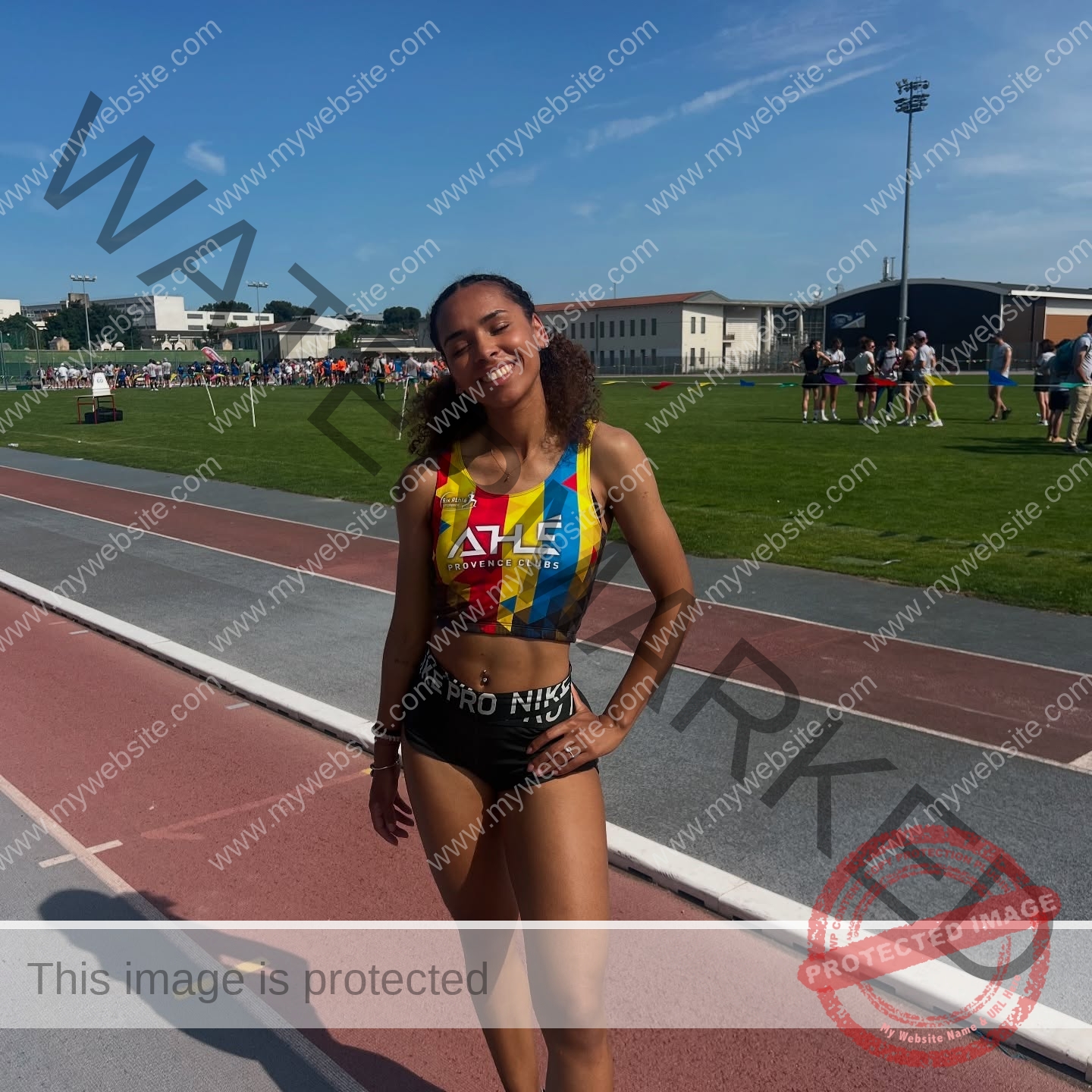
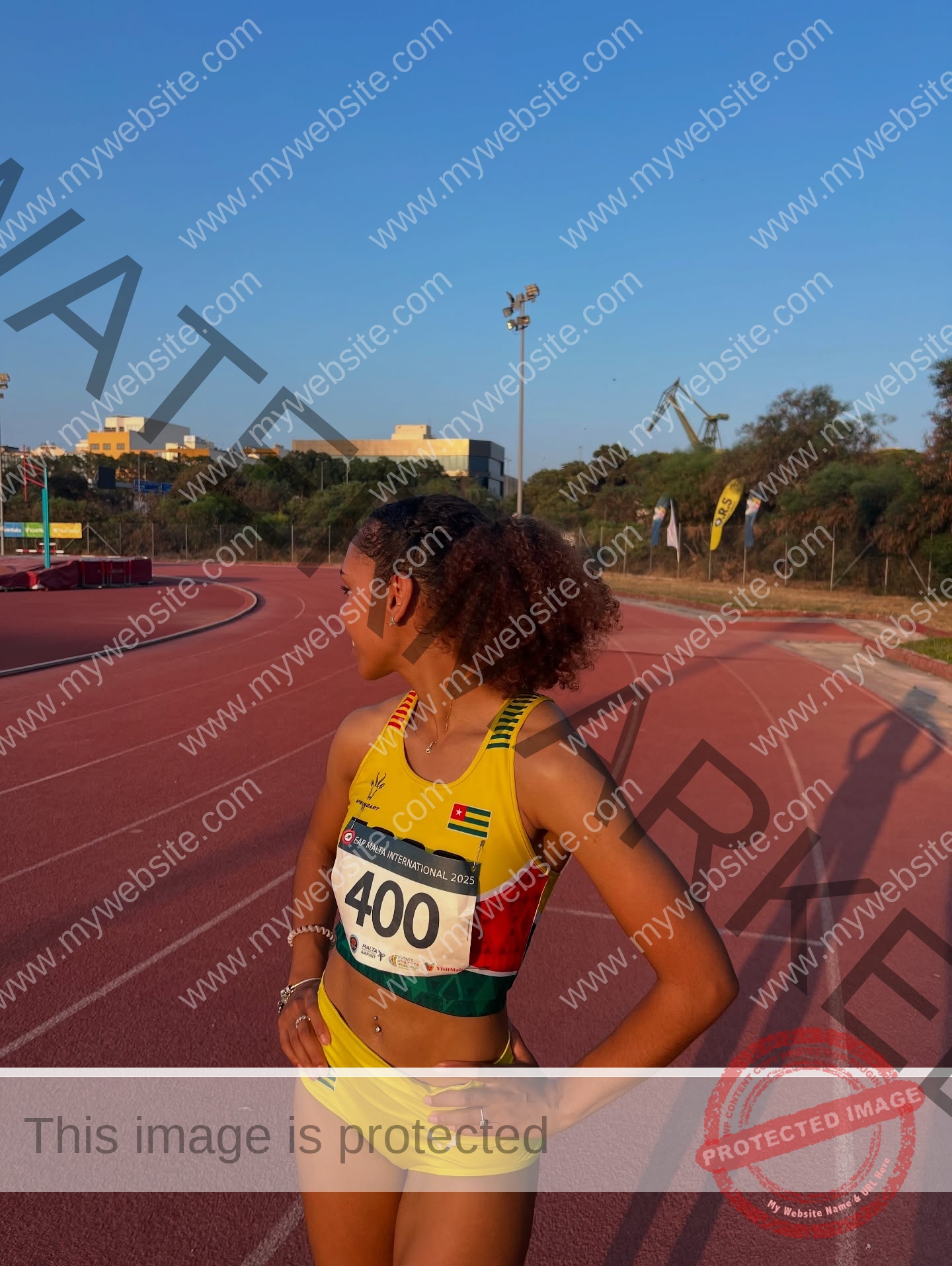
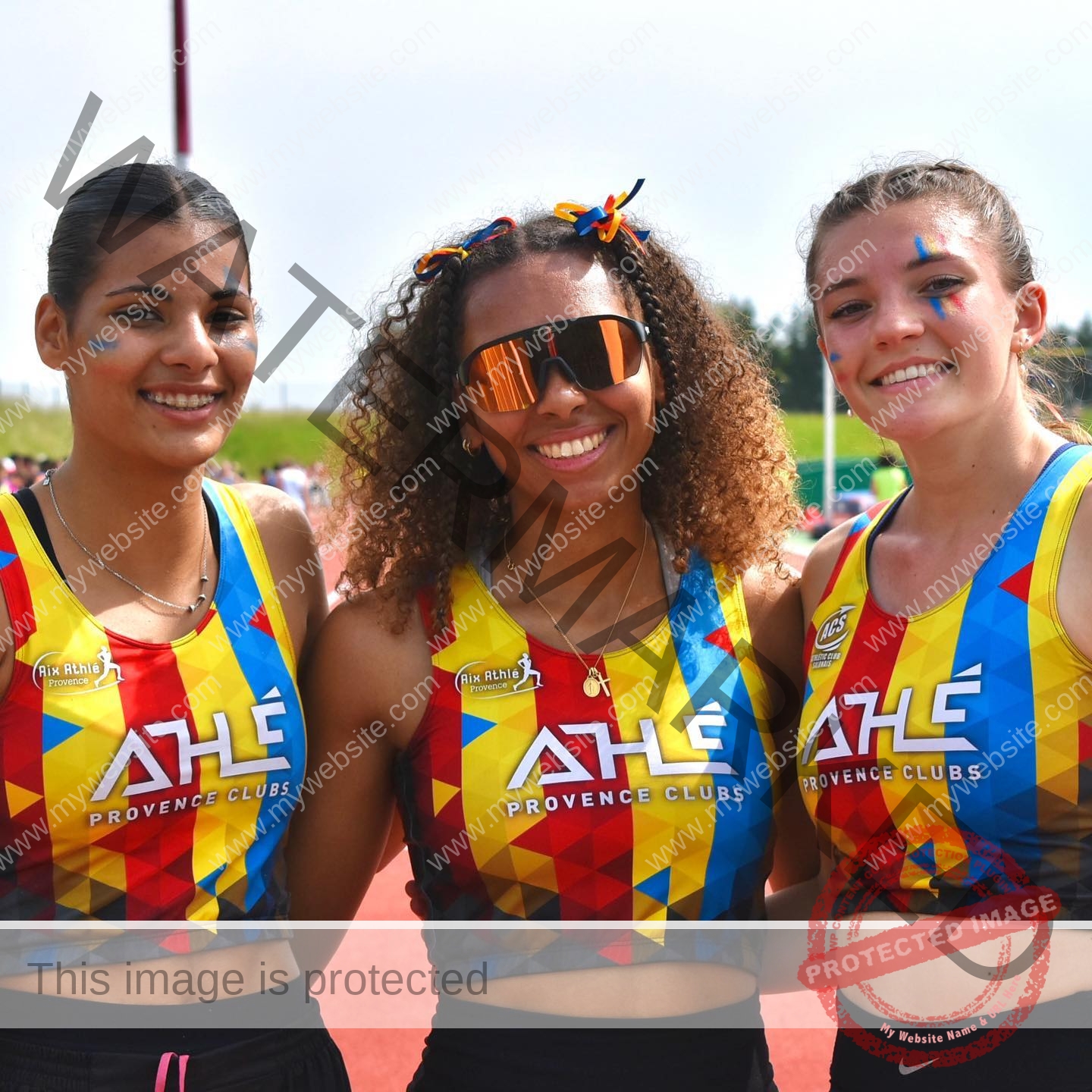
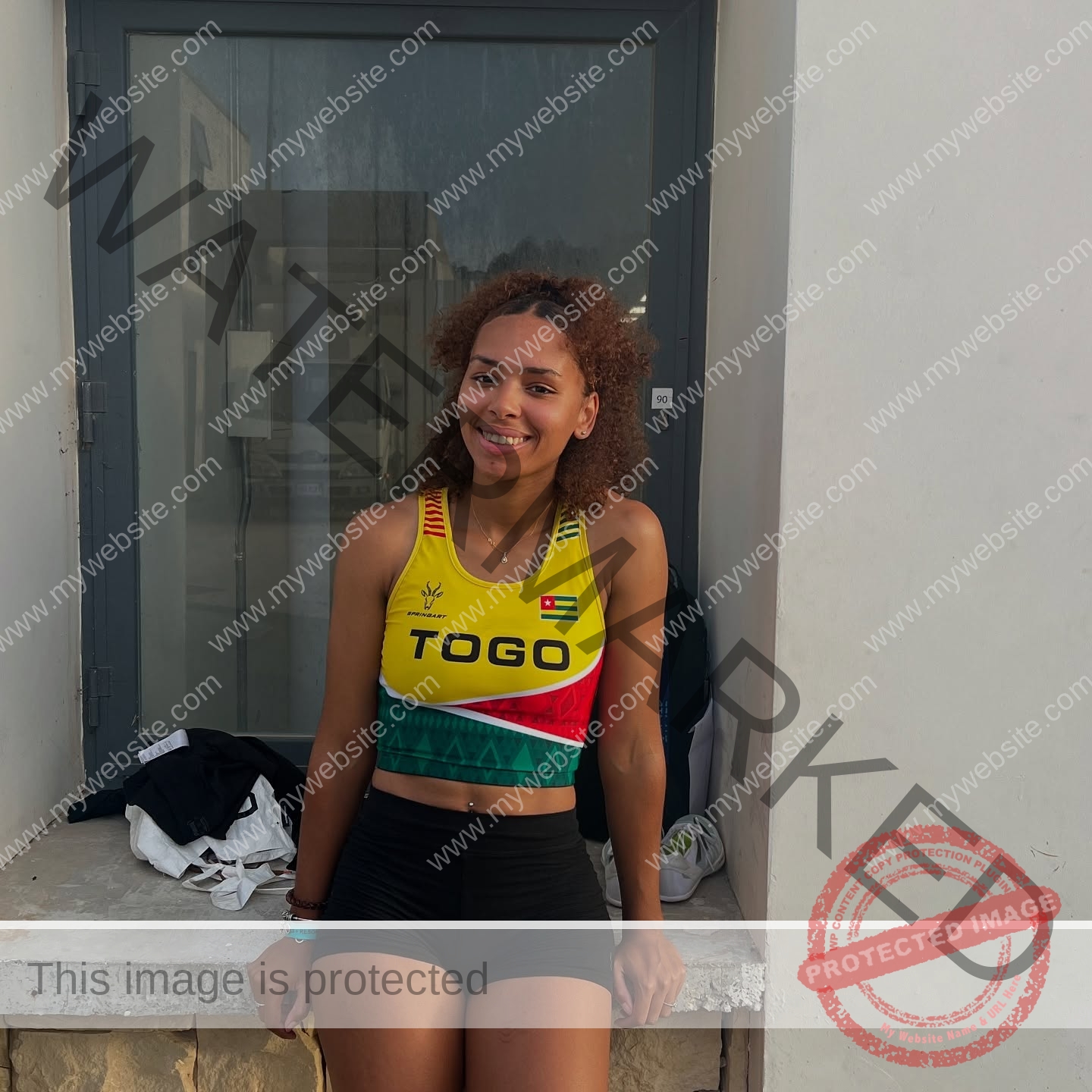
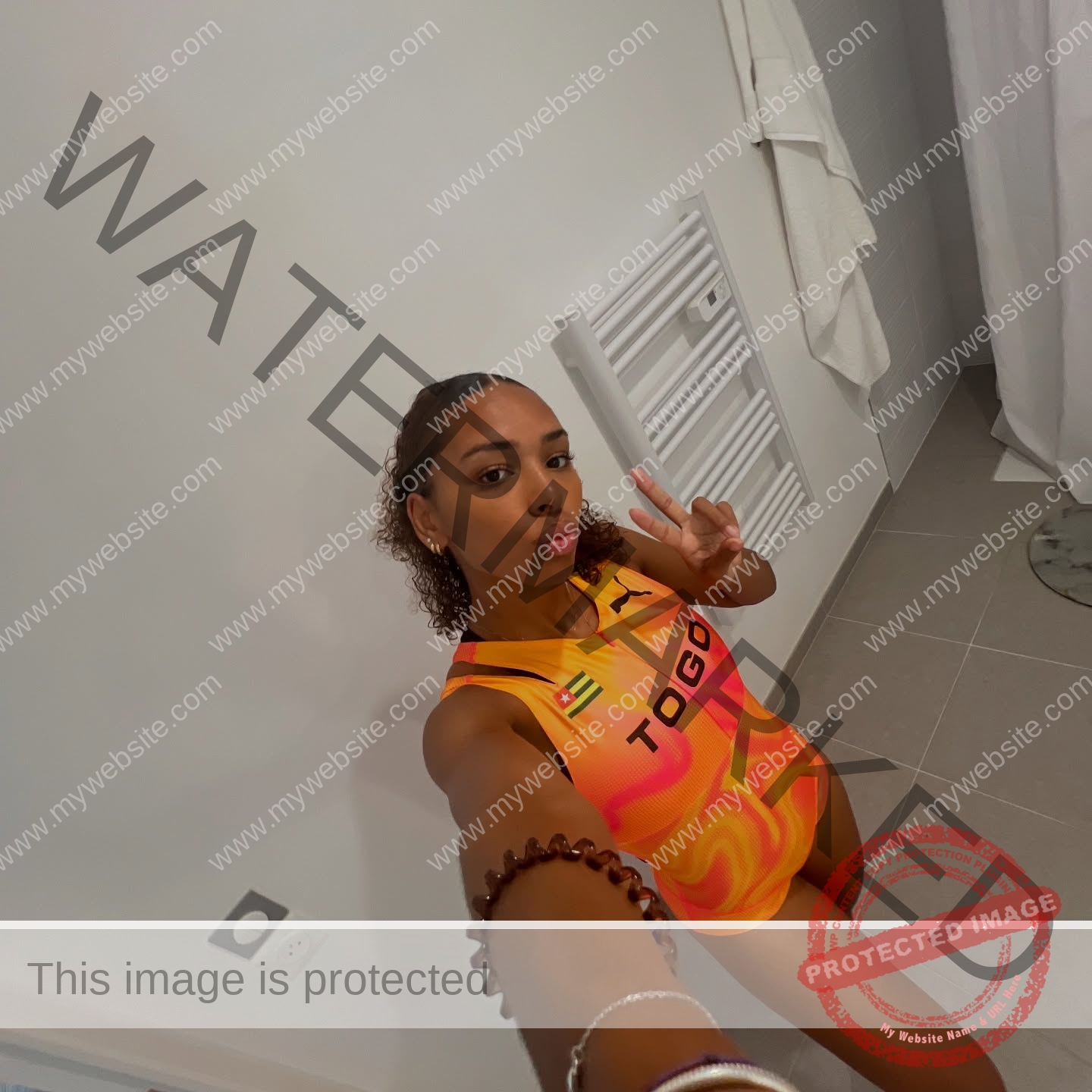
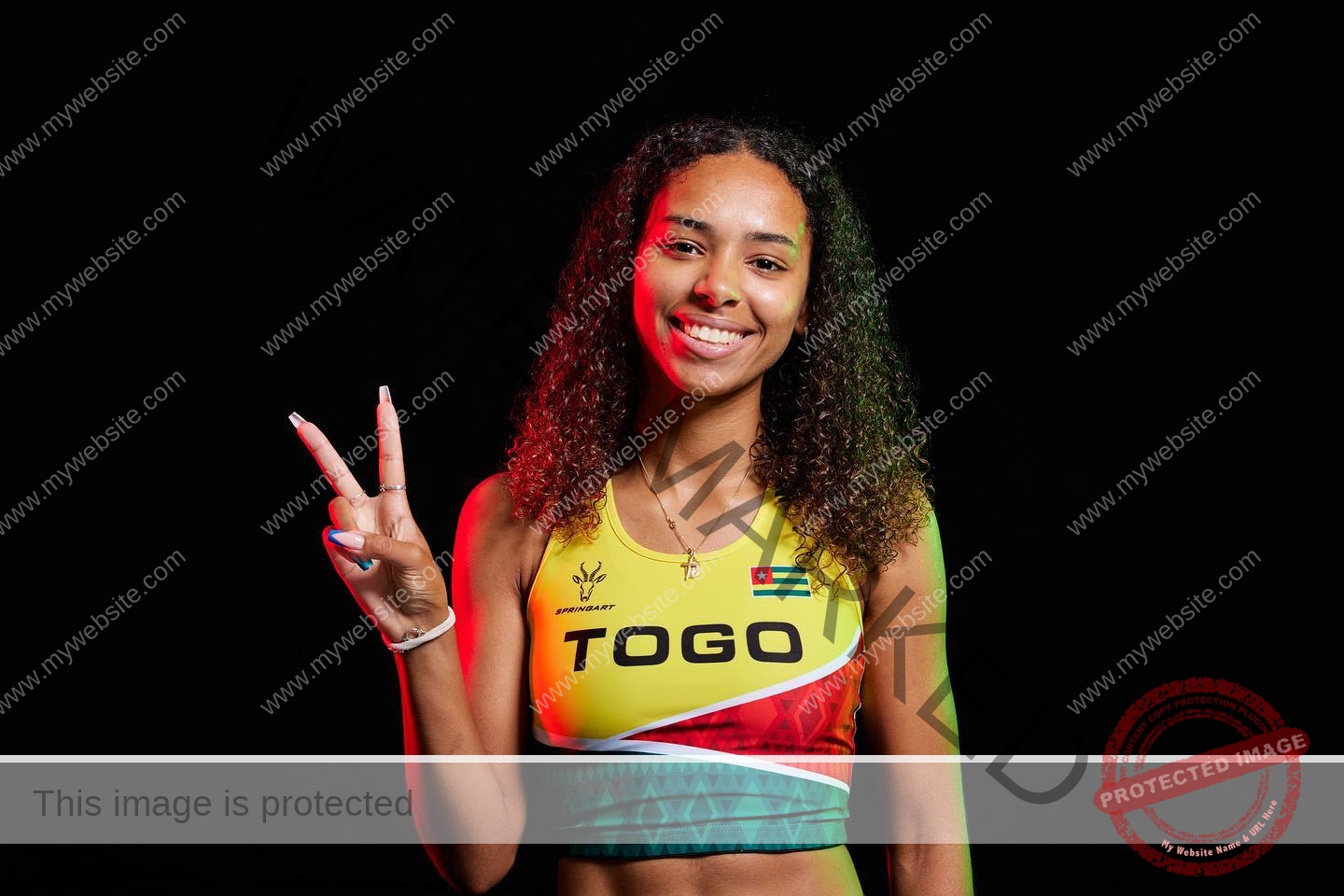
Naomi Akakpo: Togo’s Flag-Bearer, Hurdler, and Champion Beyond the Track
There is a particular kind of athlete whose significance extends well beyond whatever the stopwatch records — someone whose presence at a major championship carries a weight of purpose that mere times and places cannot fully capture. Naomi Akossiwa Élise Akakpo is that kind of athlete. Born on December 17, 2000, in Paris, France, the French-Togolese hurdler has spent the past several years building something that matters to a lot of people: a legitimate, competitive international athletics career flying the green, yellow, and red flag of Togo, a country she has made it her mission to put on the global sporting map.
She is, at the time of this writing, the national record holder for Togo in the women’s 100 meters hurdles, a Paris 2024 Olympian, and one of the more compelling human stories in West African athletics. She is also — in a combination that says a great deal about who she is — a qualified dietitian-nutritionist and a Food Security Champion of the United Nations, appointed by the UN Convention to Combat Desertification (UNCCD) to its Sport4Land campaign. The hurdles she clears on the track are, in a way, a metaphor for everything else she is trying to do.
Roots: Paris, Aného, and a Bicultural Identity
Naomi Akakpo was born and raised in Paris, the daughter of a Togolese father and a French mother. Her family roots in Togo trace to Aného, a coastal city in the Maritime Region in the far south of the country, historically significant as one of Togo’s former colonial-era capitals and a place of deep cultural heritage along the Gulf of Guinea. Though she grew up in France and received her education and athletic training there, she has always described herself as having been raised fully in both cultures — French and Togolese simultaneously — and that dual identity has been central to her story.
She has spoken warmly about Aného in interviews, expressing a deep wish to visit, to connect with the people there, and to draw energy from her ancestral roots. That connection is not performative. When she eventually chose to represent Togo athletically rather than France — a decision she made deliberately and with conviction — it was rooted in something genuine: a sense that Togo deserved to be seen, and that she might be the person to help make that happen.
A Sporting Childhood: Gymnastics, Dance, and the Road to Athletics
Sport was part of Naomi Akakpo’s life from an early age, though not always the sport she would eventually make her own. As a child she practiced rhythmic and artistic gymnastics (GRS) and dance — disciplines that develop the coordination, body awareness, and proprioception that translate well into athletics at the highest levels. It was her mother who, noticing something in the way her daughter moved, made the call to redirect her toward track and field.
As Akakpo has recounted with clear affection: her mother told her she had good legs for running fast, and decided to put her in athletics. She laughed remembering it, noting that her mother turned out to be right — eleven or twelve years later, she was still there, still running, and still enjoying it. That origin story, told with humor and warmth in multiple interviews, speaks to a family environment that supported athletic development and saw potential where it existed.
Her first contacts with athletics as a structured discipline took place in France, in the club environment of the south of France, a region that would remain central to her competitive development. The diversity of training that athletics offered — different events, different physical demands, different skill sets — was part of what drew her in and kept her engaged from the start.
Multi-Event Foundation and Early French Career
Akakpo’s early career in French athletics was marked by genuine breadth. Before settling definitively into the 100 meters hurdles, she competed at a national level in France across multiple disciplines, including high jump and combined events — the heptathlon format that tests seven different skills over two days. That background in combined events is significant: it shaped her into a complete athlete rather than a narrow specialist, and it gave her the technical range that would eventually make her a genuine competitor in the hurdles.
The hurdles, she has said, were something of an accident — a happy one. While competing in combined events, she found herself in the 100 meters hurdles as one of the component disciplines, and finished third in the French junior (U20) Championships in 2019. She had not expected that result. It was a moment of revelation: she recognized potential in herself in an event she had not prioritized, and she began to build around it.
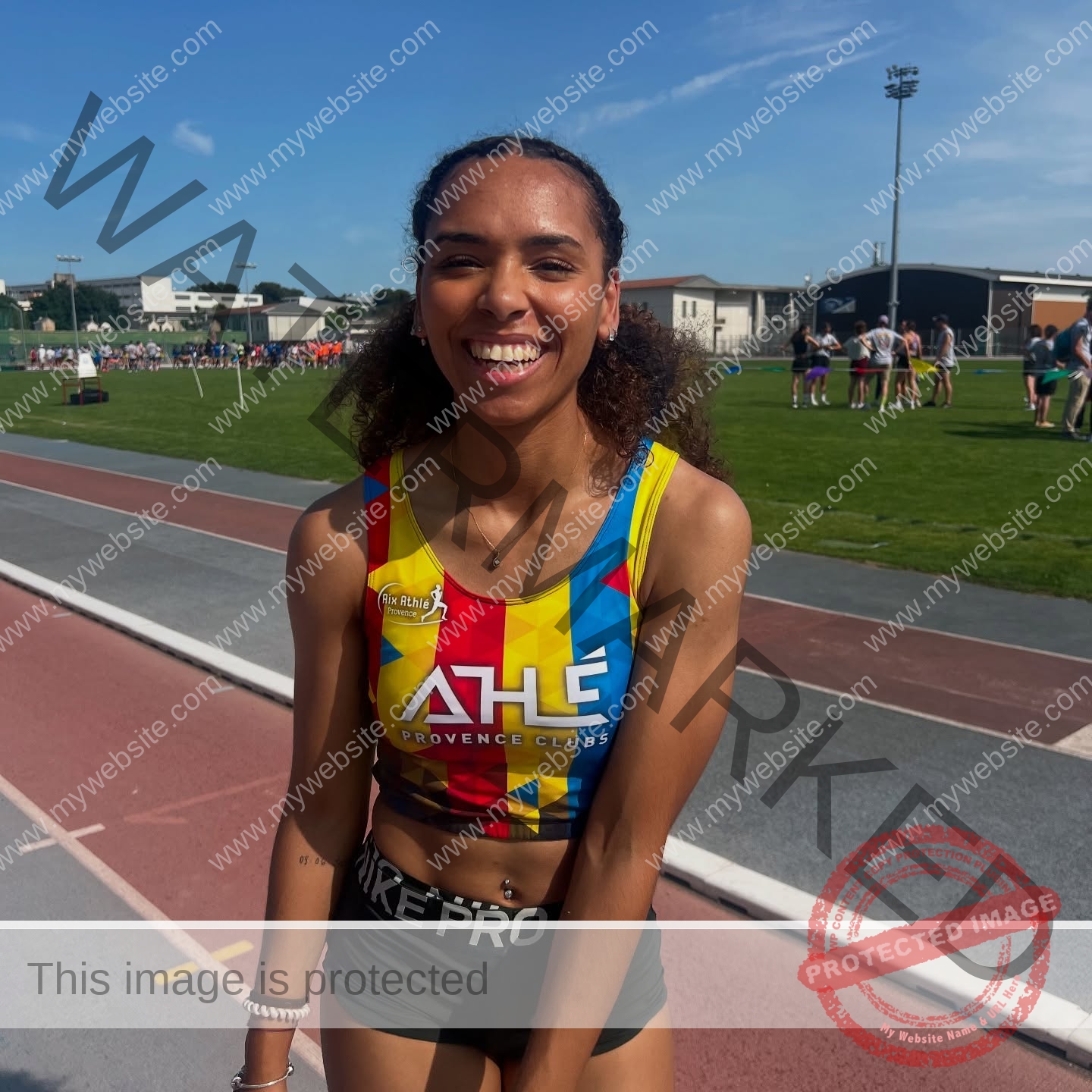
In 2019, the same year she took that bronze medal at the French U20 Championships in the 100 meters hurdles, she also received a prize from the City of Aix-en-Provence for young outstanding athletes — a recognition of her standing within the competitive athletics community of southern France. She was based in the Aix-en-Provence and Miramas area, competing at the Stadium Miramas Métropole and other venues in the Provence-Alpes-Côte d’Azur region, and she was developing under the coaching of Franck Né, who would continue to guide her through her international career.
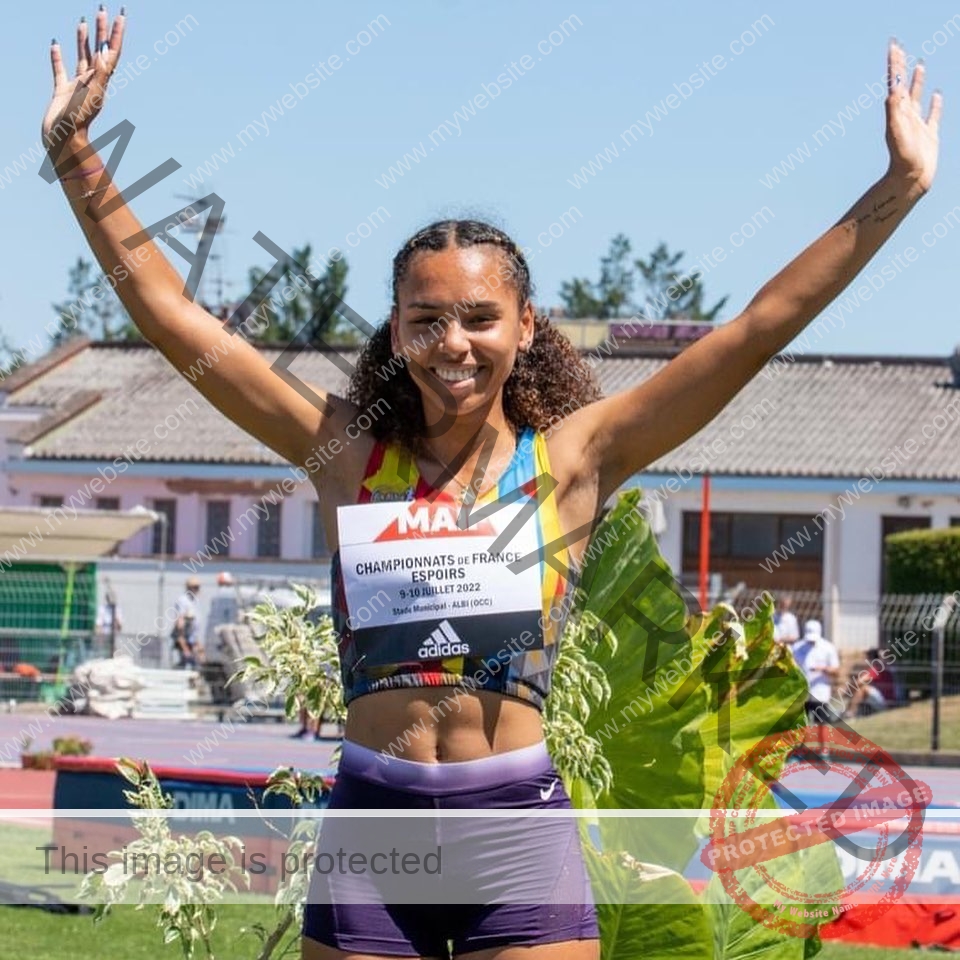
By 2022, the progression had accelerated. She won the silver medal at the French U23 (Espoir) Championships in the 100 meters hurdles, adding to her 2019 junior bronze and demonstrating that her development in the event had been steady and genuine. She had reached a level of domestic competition where she was finishing on podiums against France’s best young talent in her event — a country with one of the deepest athletics programs in Europe.
The Defining Choice: Representing Togo
The decision that changed everything came around 2020, when Akakpo made the formal commitment to represent Togo in international athletics rather than France. It was a decision she has described as coming from a place of clarity and purpose rather than calculation. Her eligibility to compete for Togo was confirmed through World Athletics procedures, with her transfer of allegiance from France to Togo taking effect on May 16, 2022.
She has articulated the reasoning behind the choice in several interviews with a frankness and emotional directness that is hard to dismiss. At the heart of it was a frustration: when she watched major international athletics competitions on television, she did not see Togo. The country was not represented. The flag was not there. And she believed she could change that.
In her words, from an interview with the Togolese National Olympic Committee after her first international medal: “I decided to represent Togo because, to my great disappointment, I found that Togo was not represented at all. At major sporting events, on television, you didn’t often see our flag. I told myself that maybe I would manage to make our country known to the people around me, through athletics, through my performances.”
She has also spoken about the bicultural dimension of the decision with a nuance that goes beyond mere national pride: she was raised in both cultures and it was important to her to honor both. France had given her the infrastructure and the competitive environment to develop. Togo had given her family, identity, and heritage. Representing Togo was a way of completing the circle.
In a separate reflection ahead of the Paris 2024 Olympics, she wrote publicly that her goals went beyond personal performance: to promote Togo, its culture, and its people internationally; and to inspire young girls in Togo, Africa, and France to take up sport, to flourish through it, and to use it to become “the leaders of tomorrow.” That last phrase — “I am convinced that the future will depend on strong, confident and committed women” — is not athletic boilerplate. It is the statement of someone who has thought seriously about what sport is for.
2022: A Breakthrough Year in Two Acts
The year 2022 was the most consequential of Akakpo’s career to that point, and it unfolded in two distinct acts that together established her as a genuine presence in Togolese athletics history.
The first act came in Konya, Turkey, in August 2022, at the 5th Islamic Solidarity Games — a multi-sport competition bringing together athletes from the world’s Muslim-majority nations. It was only Akakpo’s second international competition representing Togo, and it was where she won her first international medal: silver in the women’s 100 meters hurdles. She ran under the Togolese flag, stood on an international podium, and did something that had rarely been done before for Togolese athletics on that stage.
Her reaction, captured in an interview with the Togolese National Olympic Committee shortly afterward, was a mixture of pride and restless ambition: “I am super happy, super proud. As you say, it’s a first international medal for me. It’s just unbelievable! I can’t get over it.” But in the same breath, she added: “I remain a little disappointed, because I would have liked to be in first place so that we could hear our national anthem.” That combination — genuine celebration of what was achieved alongside honest dissatisfaction that there is more to get — is the competitive temperament of someone who is not close to finished.
She also issued a call in that interview to Togolese diaspora athletes in other countries: “I would say to all dual nationals, especially those originally from Togo, to come and compete for our country. Come with us. We need to be strong to create a large delegation for the years ahead.”
The second act of 2022 came at the World Athletics Championships in Eugene, Oregon — Hayward Field, on the campus of the University of Oregon, the showcase venue of American track and field. Akakpo was selected to represent Togo in the women’s 100 meters hurdles heats, competing on a wild card allocation, placing her in Heat 1 alongside some of the world’s best hurdlers, including Nia Ali of the United States, Britany Anderson of Jamaica, and Anne Zagré of Belgium. She ran 13.64 seconds — not enough to advance to the semifinals, but a performance she described afterward with unmistakable emotion: “It was incredible, with a formidable atmosphere and a fantastic public. I have no words to describe the joy and motivation it created in me. I’m glad that, despite all these emotions, I managed to stay focused and run fast.”
Her outdoor personal best in the hurdles that year reached 13.60 seconds, set on June 26, 2022 — a Togolese national record at the time. And on August 11, 2022, she ran 13.40 seconds in a time that was flagged as not legal under wind regulations, but which indicated the physical capability she was carrying into those competitions.
2023: Building on the Foundation
The indoor season of 2023 produced Akakpo’s best-ever performance in the 60 meters hurdles: 8.40 seconds, set on February 11, 2023, at the Stadium Miramas Métropole — the very venue where she had built much of her domestic competitive career. That time placed her third at the French Espoir (U23) indoor championships in the 60 meters hurdles, earning her yet another domestic medal and setting a new Togolese national record in the indoor discipline. Her 60 meters flat personal best of 7.82 seconds, also set at Miramas in January 2023, confirmed that her raw sprinting speed was a genuine asset.
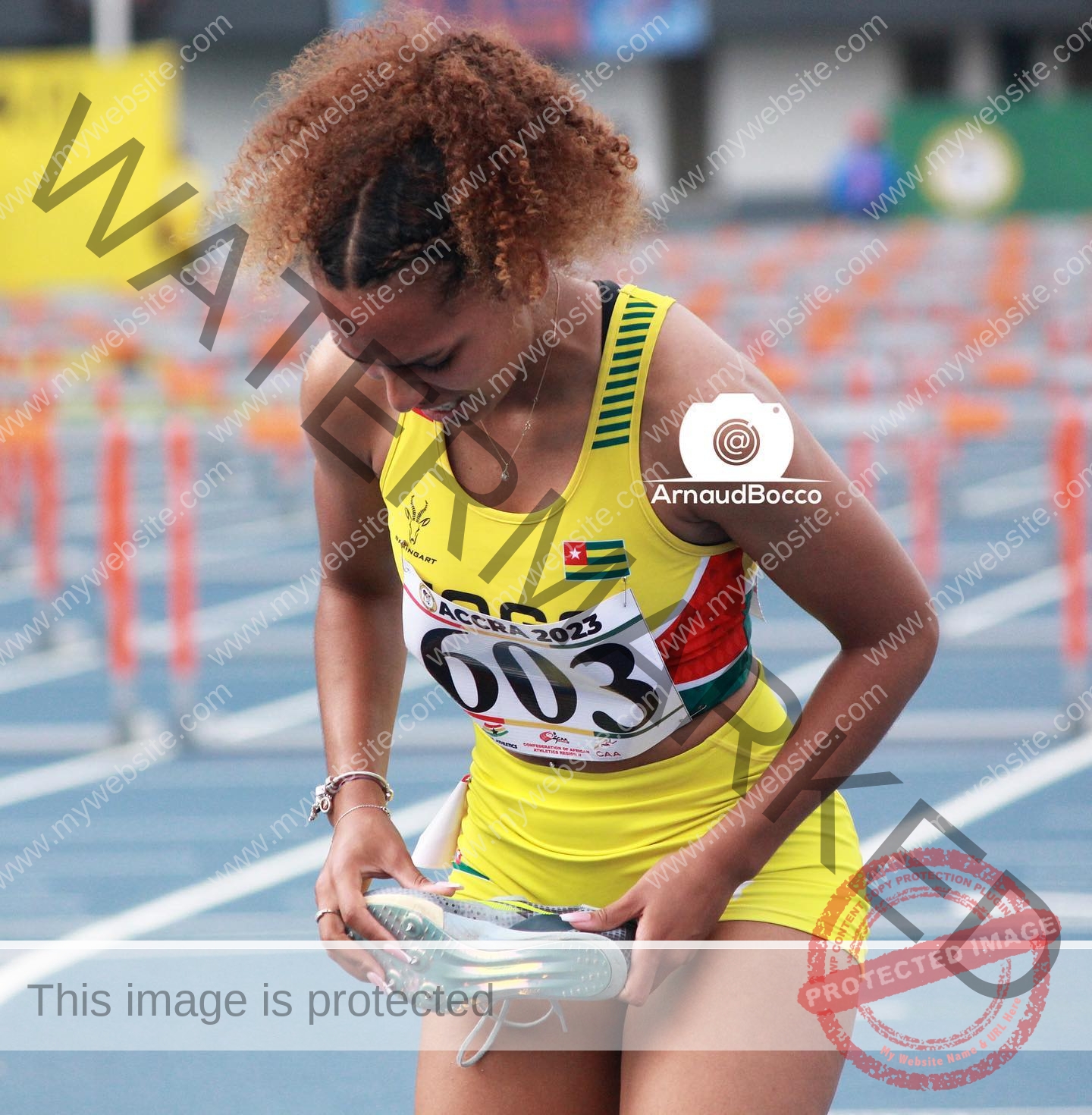
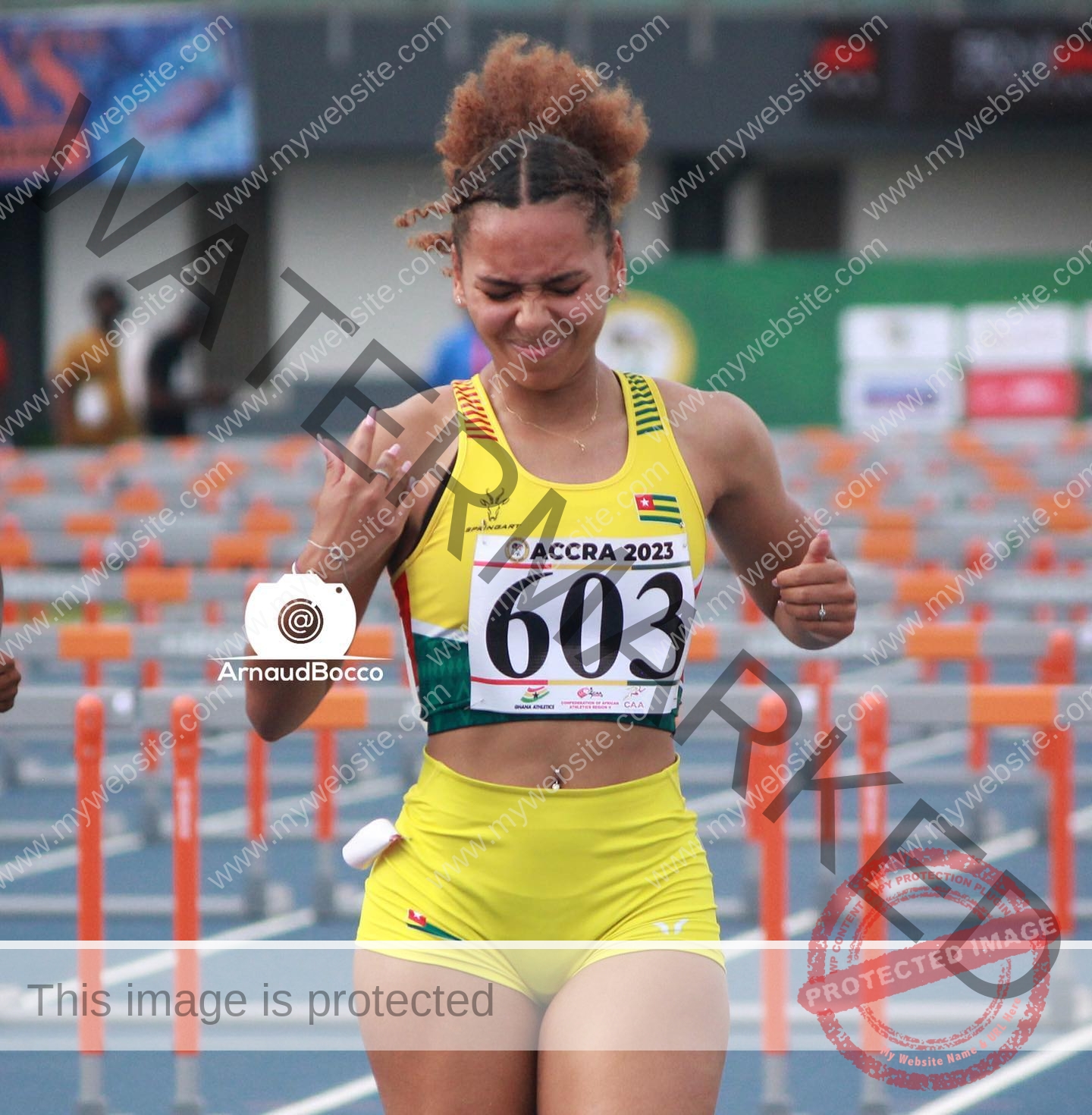
In the summer of 2023, she competed at the African Games in Accra, Ghana (held in March 2024 after delays from the originally planned 2023 dates), representing Togo in the 100 meters hurdles where she finished seventh. She also earned a silver medal at the 2023 West African Championships in the 100 meters hurdles — her second international medal, further cementing her status as one of the top hurdlers in West Africa. Her relay work continued as well; a 4×100 meters relay result of 46.96 seconds achieved in Dijon in May 2023 reflected her contribution as part of a relay squad in French club competition.
2024: The Olympic Dream Realized in Paris
If there is a single year that has so far defined Naomi Akakpo’s career, it is 2024 — and not only because of what happened on the track. It is because of where it happened, and what it meant for Togo, and for her.
The Paris 2024 Summer Olympics took place in her birth city. She had begun athletics at a stadium just a few kilometers from the Stade de France, she would later say — and now she was competing there, at the Olympics, under the Togolese flag. She had trained for this specifically. She had worked through “physical and emotional complications” over the preceding two years, by her own acknowledgment, and had made it through to the other side.
She did not qualify for the Olympics in her primary event, the 100 meters hurdles — the standard there being extremely demanding. Instead, the Togolese National Olympic Committee entered her in the women’s 100 meters flat under the universality allocation, which allows national Olympic committees to nominate athletes who would not otherwise meet qualification standards but who represent their country at the highest level. It was a route to the Games, and she took it.
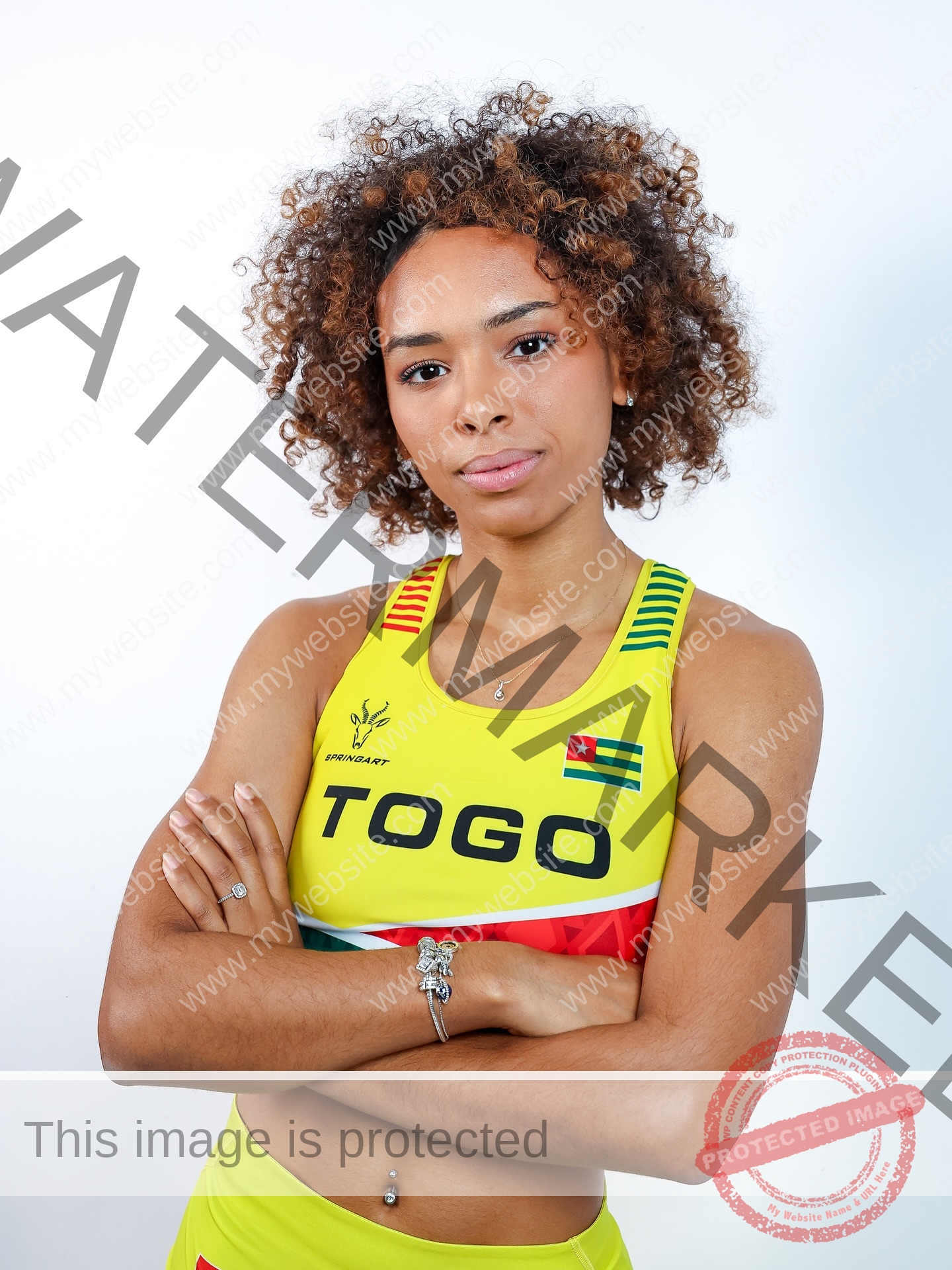
On the opening day of competition, July 26, 2024, Naomi Akakpo walked down the Seine River at the opening ceremony as one of Togo’s two flag-bearers, sharing the honour with triathlete Eloi Adjavon. The image of a French-born Togolese woman, raised in the suburbs of Paris, carrying the green, yellow, and red of Togo down the iconic waterway of her birth city, in front of a global television audience, was the kind of moment that an athlete’s career only occasionally produces.
On August 2, 2024, she took to the blue track at the Stade de France. In her heat, starting from lane 5 under conditions made difficult by a heat wave and recent storms, she ran 12.34 seconds — a personal best in the 100 meters flat, improving on her previous best of 12.39 seconds. She finished fifth in her heat, which was not enough to advance to the semifinals, finishing 19th overall in the field. But she had run a personal best at the Olympic Games, in her birth city, under the flag she had chosen, and she had done it on one of the biggest stages in world sport.
Her reaction to the result was characteristically honest: “When the time came, I was a little disappointed, even though I had beaten my record. I expected better.” And then: “But then I told myself, ‘you’re at the Games, you did it.'” Already, she was looking forward — specifically to the 2028 Los Angeles Olympics, where she has stated her intention to qualify in the 100 meters hurdles, her primary event.
She also competed at the 2024 African Championships in Athletics in the 100 meters hurdles, finishing tenth with 14.39 seconds.
Athletic Profile and Personal Bests
The core of Akakpo’s competitive identity is the 100 meters hurdles, and it is there that her most significant marks reside. Her outdoor personal best of 13.40 seconds (wind-assisted, set August 11, 2022) and her legal outdoor Togolese national record of 13.60 seconds (set June 26, 2022) represent the standards she has established for women’s hurdling in her adopted athletic nation. Indoors, her 60 meters hurdles best of 8.40 seconds, set in February 2023, is also a Togolese national record.
Her sprinting range extends across multiple distances. Her 60 meters flat best of 7.82 seconds and her 100 meters best of 12.34 seconds — achieved on the biggest stage of her career — indicate genuine short-sprint speed. Her relay experience in the 4×100 meters adds another dimension to her athletic profile.
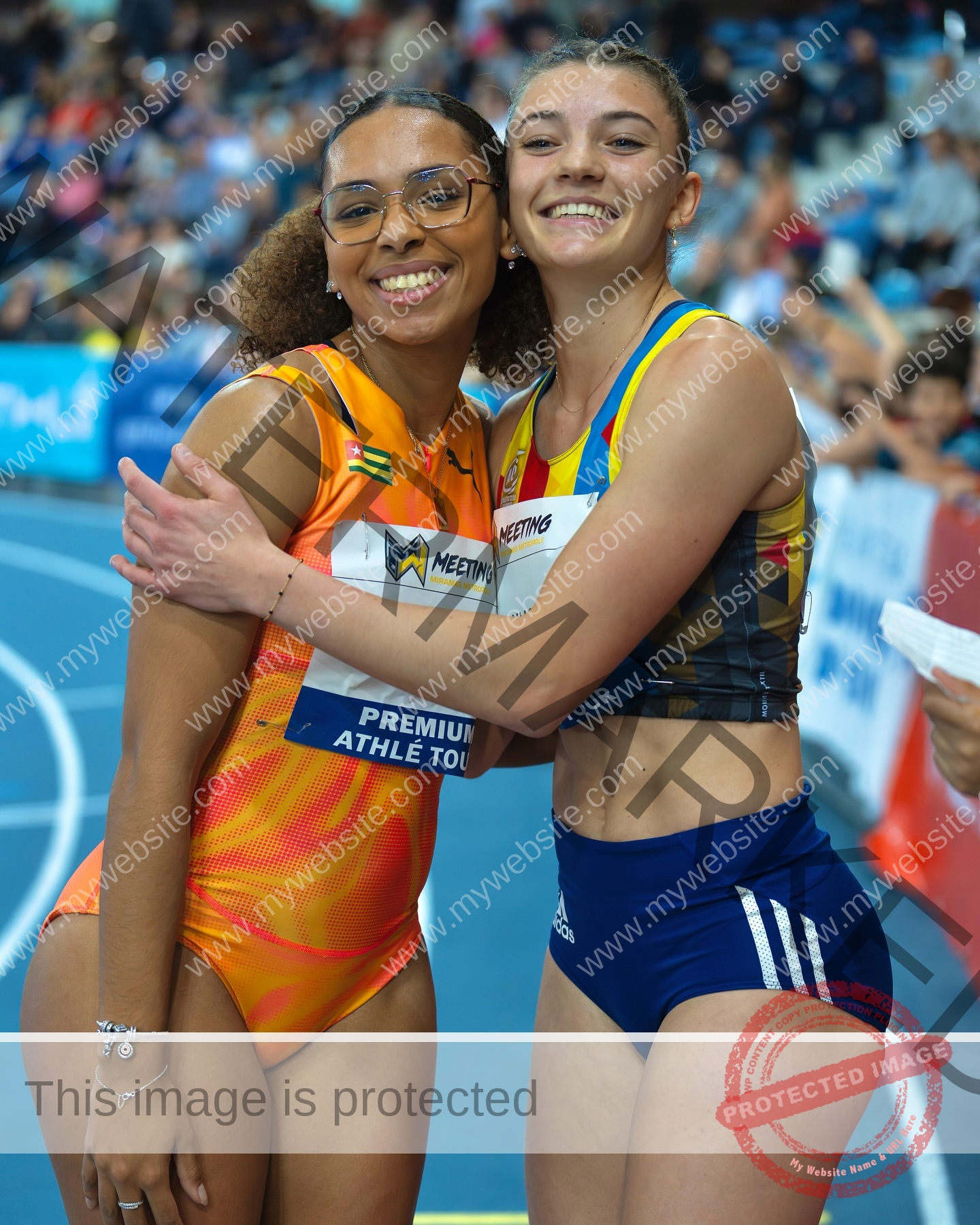
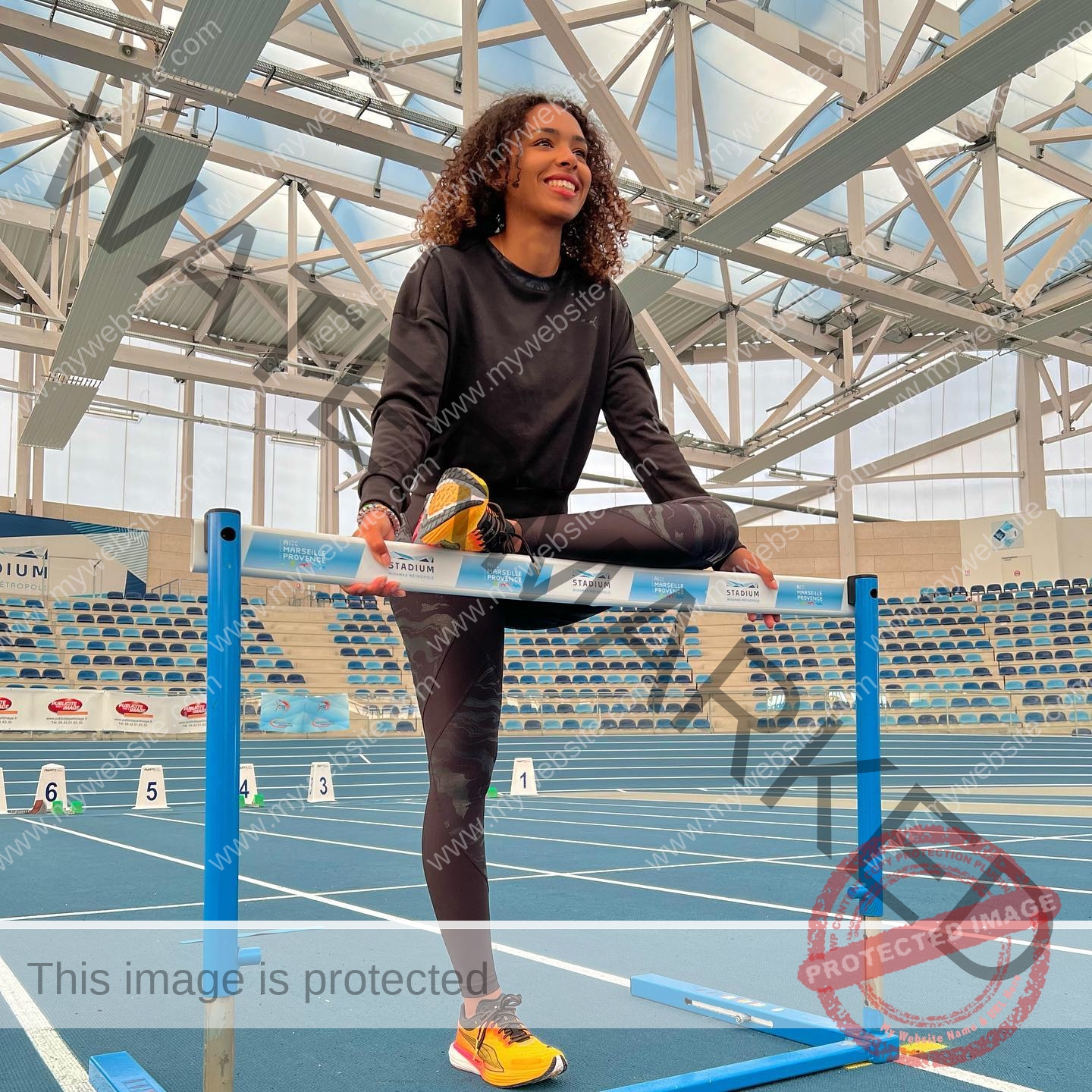
She trains in southern France, at the Stadium Miramas Métropole in Miramas, where the Meeting Élite de Miramas is one of the more prestigious indoor athletics meetings on the French domestic calendar. Her coach, Franck Né, has guided her development through the transition from domestic French competitor to international Togolese representative. The Miramas facility has been her primary training environment, and the consistency of her performances there over several seasons reflects the quality of preparation she has received.
Beyond the Track: Nutrition, Food Security, and Public Service
Naomi Akakpo holds a professional qualification as a dietitian-nutritionist, having studied at EDNH (École de Diététique et Nutrition Humaine), one of France’s dedicated nutrition schools. She is not merely a credentialed professional in a passive sense — she has put that qualification to active use in community settings, running nutrition education workshops for children in disadvantaged neighborhoods, focusing on topics like the nutritional value of foods, sustainable eating practices, and anti-food-waste cooking. Reports from associates describe workshops she organized in Marseille communities with children — teaching them to think about food, then actually cooking with them.
This work caught the attention of the United Nations Convention to Combat Desertification (UNCCD), which appointed her as a Champion for Food Security within its Sport4Land campaign — a global initiative that deploys the reach and credibility of athletes to advance environmental and food-security objectives. She is one of only a small number of athletes globally to hold this designation, and it is clearly not an honorary role: the UNCCD describes her as “deeply committed to advancing food security in Togo — tackling malnutrition and working to improve access to healthy, sustainable food.”
Her own framing of this work is direct: “Land is more than a resource — it is our foundation.” That is not a slogan she has picked up from a press release. It reflects a set of genuine convictions about the connection between physical health, environmental stewardship, and community resilience that runs through everything she does outside the track.
She has also established NA Consulting, a professional practice through which she delivers nutrition consulting and training — blending her sports performance background with broader public health education. Her LinkedIn profile, under “Naomi Akakpo (OLY)” reflects an athlete who takes the business and advocacy dimensions of her career as seriously as the athletic ones.
The Woman She Is: Advocacy, Identity, and the Long Game
In a radio interview ahead of Paris 2024, Akakpo described her decision to represent Togo with a phrase that has been quoted widely in Togolese and West African sports media: “I was raised with both French and Togolese cultures, and it was important for me to represent Togo in athletics because I felt that our presence was not marked enough.” She added that the choice was “definitive” and made “without regret.”
She has also been candid about the challenges. The physical and emotional complications she mentioned in her Paris Olympics statement were not elaborated in detail publicly, but the acknowledgment of them was honest in a way that athletes often are not. Building an international career representing a small West African nation, without the institutional support infrastructure that athletes from larger federations take for granted, requires a different kind of resilience. She has called, with characteristic directness, for more substantial support from Togolese sports authorities for athletes of her level.
Her message to young Togolese and African athletes, delivered in her interview with the Togolese National Olympic Committee, deserves to be quoted: “Believe in yourselves, believe in your dreams, go for it, never give up, always fight for what you want. Even if you tell yourself that you won’t make it or that you’re not good enough, change the language, change the way of thinking. You have to believe in yourself, always move forward and the results end up showing up. I was not an athlete who was destined from the beginning to run fast. I was not among the best. But by working again and again and believing in it, today I have reached this level and succeeded in winning a medal for my country. Believe in yourselves and never let go!”
That is the voice of someone who came up not as a prodigy but as someone who saw potential in herself, chose to develop it, and built something meaningful out of an unexpected third-place finish in a combined-events hurdles component at a junior championship in France. There is a lesson in that, and she is aware of it, and she is not shy about saying so.
Social Media and Public Presence
Naomi Akakpo maintains an active and engaged social media presence across several platforms. On Instagram she posts as @naomiakakpo, where her bio identifies her as an Olympian, hurdler and Togolese national record holder, dietitian-nutritionist, Food Security Champion of the United Nations, and creator of a YouTube channel. Her Instagram account had approximately 28,000 followers as of early 2026, a following that reflects genuine interest in her across the Togolese diaspora, the West African athletics community, and the broader constituency she has built through her advocacy work. On TikTok she also posts as @naomiakakpo, sharing content related to her athletic life and Togolese identity. She is active on LinkedIn as Naomi Akakpo (OLY), where she engages both athletically and professionally, with over 500 connections, and uses the platform to share her advocacy work and professional activities.
No formal commercial sponsorships are publicly disclosed, which is consistent with an athlete at her stage of development representing a small national athletics federation with limited commercial exposure. Her professional identity — Olympian, national record holder, nutritionist, UN champion — is the platform she is building, and it is one with long-term value well beyond her athletic career.
Looking Ahead: Los Angeles 2028 and Beyond
Akakpo’s stated ambition is clear and specific: to qualify for the Los Angeles 2028 Olympics in the 100 meters hurdles — her primary event, the one she has built her identity around, and the one in which she holds Togo’s national record. That is a four-year project that requires continued improvement in her hurdles time toward the qualifying standards that World Athletics will set for that cycle.
She was 23 when she competed at Paris. She will be 27 when Los Angeles opens. That is an athlete in the prime years of a sprinting and hurdling career, with four years of continued development ahead. The trajectory that has taken her from a surprising bronze at a French junior championship to an Olympic flag-bearer and national record holder is not a trajectory that has reached its ceiling.
Togo’s athletic history at the Olympic Games has been modest in scope — the country has been represented across multiple summer Games, primarily in athletics, but without the major medal haul that some larger African nations have accumulated. Akakpo has made it her business to change not necessarily that medal count, but the visibility and presence. Every time the green, yellow, and red appears at a major championship that it might otherwise have missed, that is something she has done.
It is a project she takes seriously, and she is far from finished.
Naomi Akakpo — Career Snapshot
- Full name: Naomi Akossiwa Élise Akakpo
- Date of birth: December 17, 2000
- Birthplace: Paris, France
- Togolese heritage: Aného, Maritime Region, Togo
- Nationality/allegiance: Togo (representing TOG from May 16, 2022; previously FRA)
- Primary event: 100 Metres Hurdles
- Outdoor PB / Togolese NR (100mH legal): 13.60m — June 26, 2022
- Indoor PB / Togolese NR (60mH): 8.40s — Miramas, February 11, 2023
- 100m flat PB: 12.34s — Stade de France, Paris, August 2, 2024 (Olympic Games)
- Coach: Franck Né
- Training base: Stadium Miramas Métropole, Miramas, France
- Professional qualification: Dietitian-Nutritionist (EDNH)
- UN appointment: Food Security Champion, UNCCD Sport4Land campaign
- Key achievements: Silver medal, 2021 Islamic Solidarity Games (Konya); Silver medal, 2023 West African Championships; Flag-bearer, Paris 2024 Olympics; Paris 2024 Olympian (100m)
- Instagram: @naomiakakpo (~28k followers)
- TikTok: @naomiakakpo
- LinkedIn: Naomi Akakpo (OLY)
- YouTube: Nao Akakpo
