


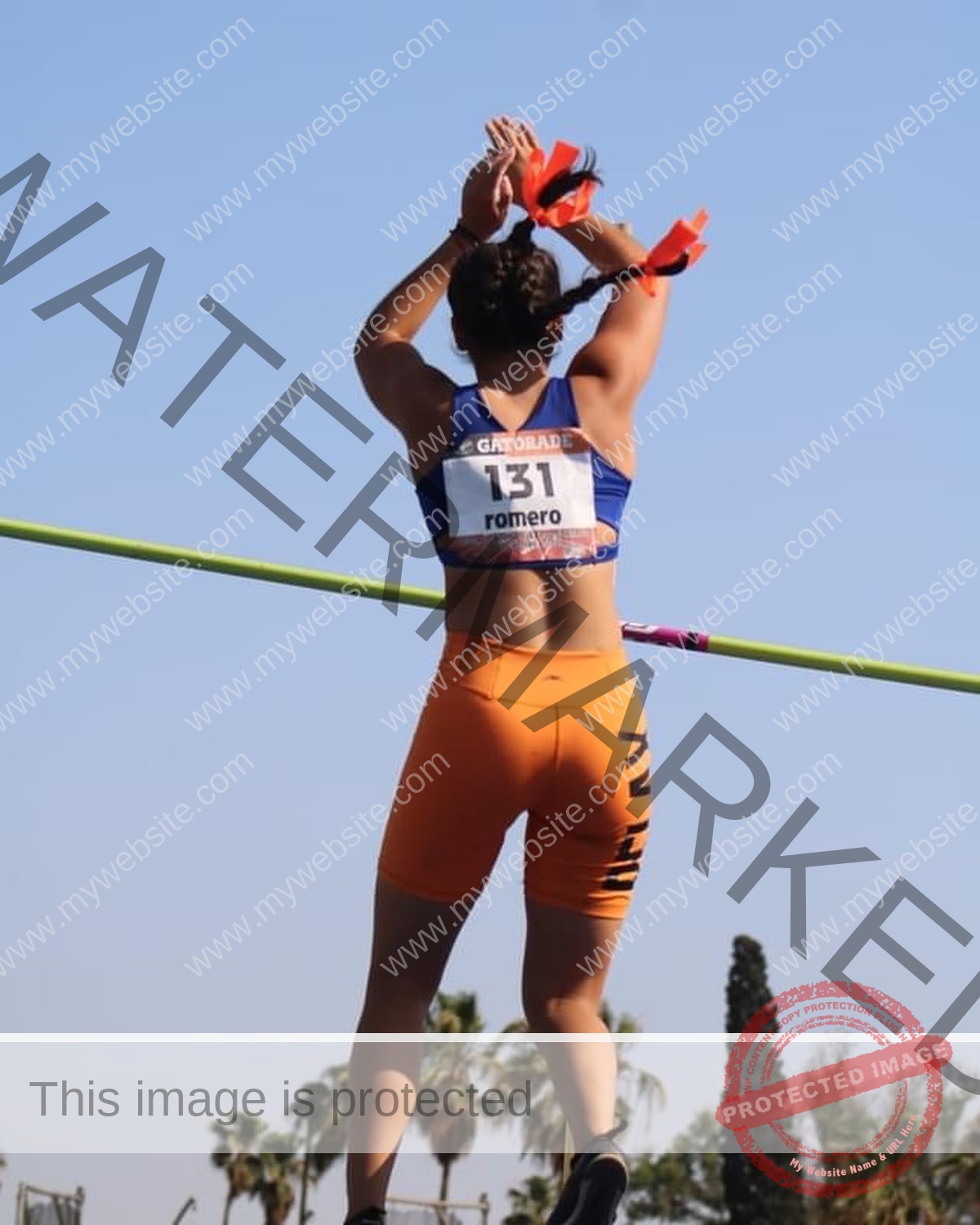
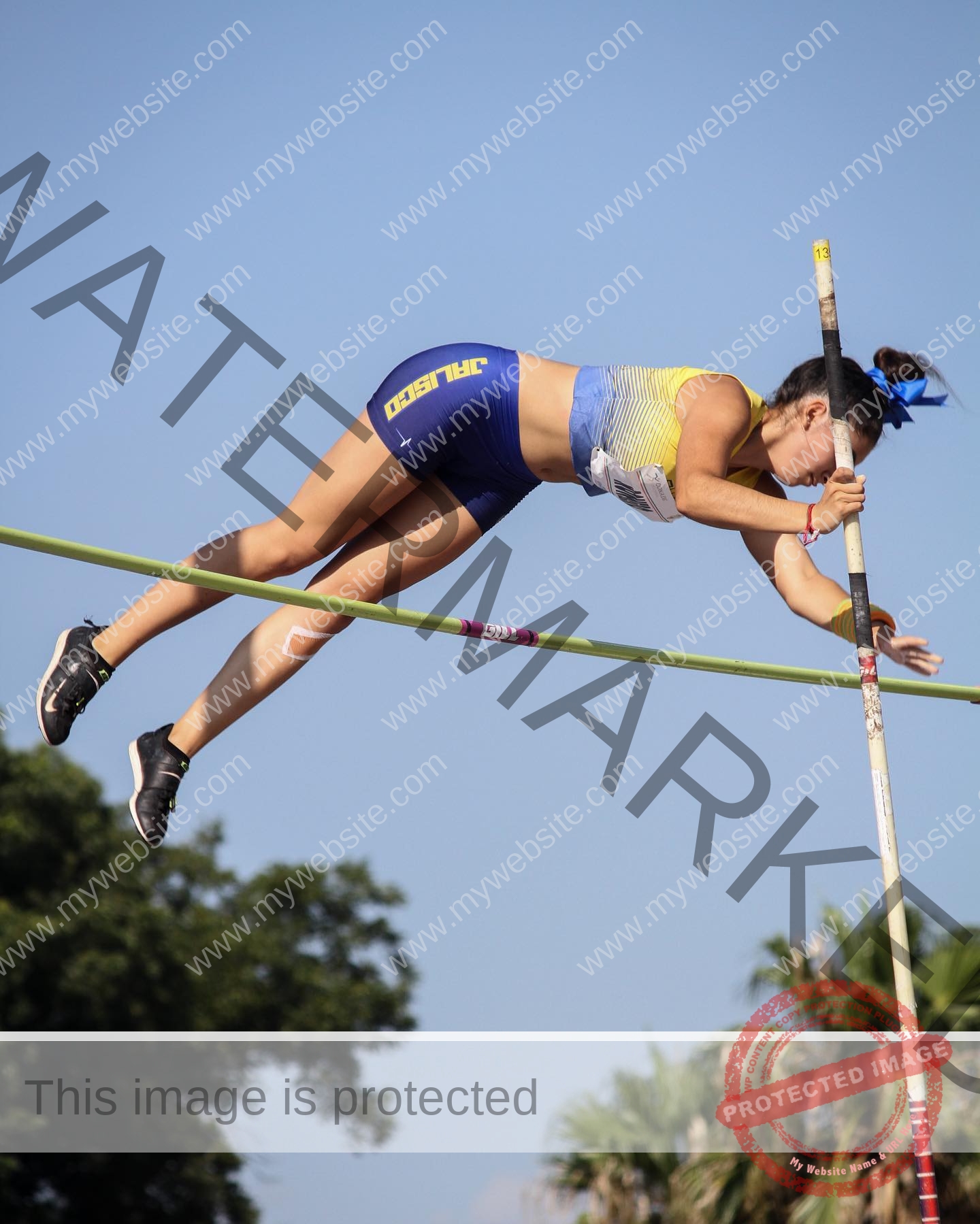
Frania Romero Barba: Tepatitlán’s Vaulting Pioneer Takes Her Pole to the Pacific Northwest
In the rolling landscape of Los Altos de Jalisco — a region of central Mexico known for its dairy farms, its proud traditions, and its quietly competitive culture — the city of Tepatitlán de Morelos has never been particularly associated with elite athletics. That distinction began to change when a family named Romero Barba raised two daughters who would not only take up the pole vault but bring it back to their hometown and leave a permanent mark on it.
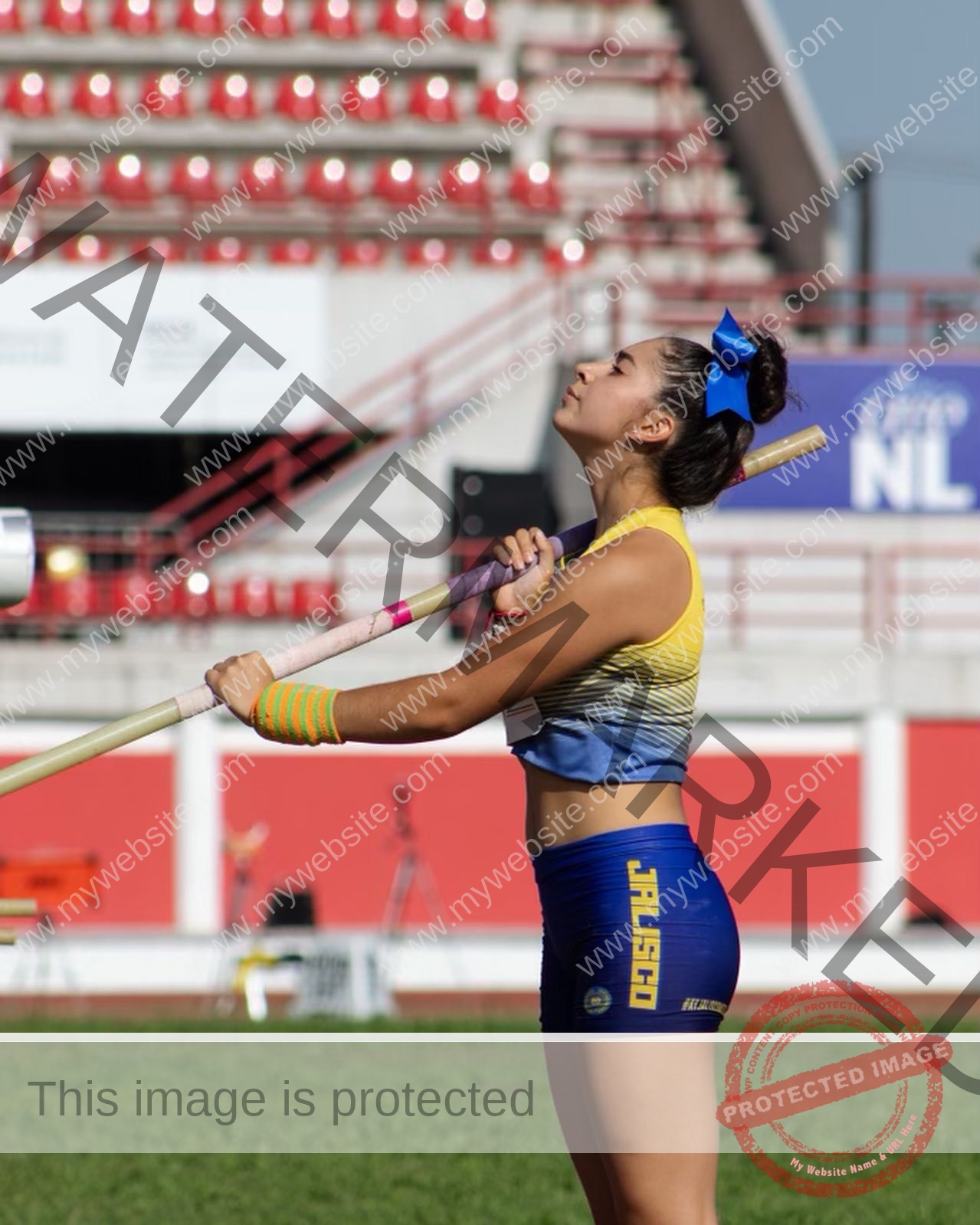
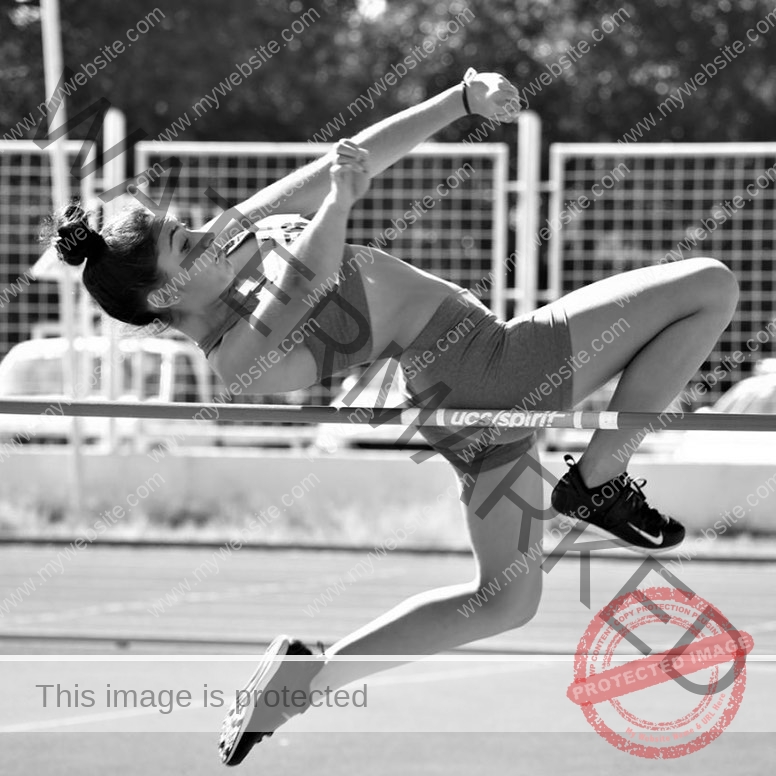
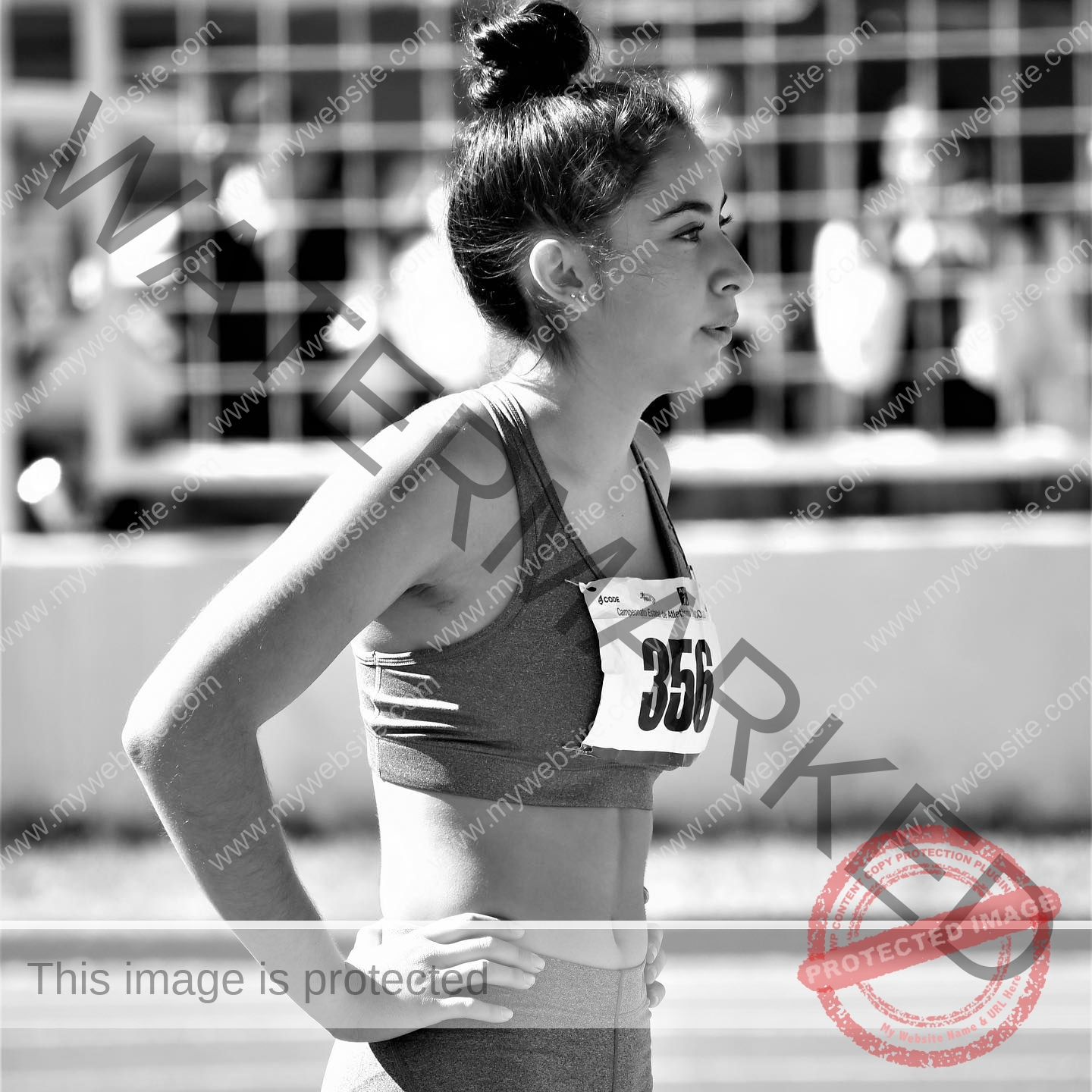
Frania Romero Barba — pole vaulter, NCAA collegiate athlete, and one of the two sisters who quite literally helped build the sport of pole vaulting in Tepatitlán — is the younger of those daughters. She grew up in Tepatitlán de Morelos, the principal city of the Los Altos Sur region in the state of Jalisco, in a household where athletic ambition ran deep and competitive sisterhood ran deeper. Today she competes for Eastern Washington University in the Big Sky Conference, studying Accounting and pursuing a personal best she gets closer to with each passing season.
Family Roots: Francisco, Norma, Diana, and Frania
Frania is the daughter of Francisco Romero and Norma Barba, whose dual surnames their daughters carry as Romero Barba — a double-barreled identity that appears in competition records in various orders (Romero-Barba, Barba-Romero) depending on the context. Her older sister Diana, born on February 3, 2002, preceded Frania at East Tennessee State University and became one of the most accomplished pole vaulters in ETSU program history. The chronological gap between the sisters placed them at the same university at the same time during the 2023-24 and 2024-25 academic years — a rare and remarkable situation in NCAA athletics, two sisters from the same small Mexican city competing on the same collegiate track and field team in the same event.
The family’s contribution to athletics in Tepatitlán goes beyond mere participation. In March 2021, when the city hosted the “Primer Encuentro SPERTIX” — the first competitive pole vault invitational held in Tepatitlán, drawing athletes from Nuevo León, Querétaro, Baja California, Mexico City, Jalisco, and Veracruz — the city’s municipal president presented a formal recognition plaque to the Romero Barba family. The citation acknowledged their role in the creation of the local vaulting facility and named Diana and Frania as pioneers of the sport in their city. It was an official acknowledgment that this family had done something genuinely unusual: helped establish infrastructure for a technically demanding Olympic event in a city where none previously existed.
At that same 2021 invitational — held under COVID-19 safety protocols, with masks required except for athletes in competition — Frania competed in Group B, while Diana represented the higher Group A. Both were representing their hometown club, Spertix, affiliated with the Escuela Municipal de Atletismo de Tepatitlán. The moment, in retrospect, marks one of the earliest documented competitive appearances for Frania in a context that connected directly to the international record she would later build.
Tepatitlán and the Sport of Pole Vault
To understand why the Romero Barba family’s contribution to their city’s athletic culture matters, it helps to understand what the pole vault requires. It is one of the most technically complex and equipment-intensive events in all of track and field: athletes must combine the speed of a sprinter, the strength and flexibility of a gymnast, and the timing and coordination of an acrobat, all while managing a 4-to-5-meter fiberglass pole at full running pace. The event requires a specialized facility — a vaulting pit with precise dimensions, a planting box, landing pads — and equipment that can cost hundreds of dollars per pole. For a mid-sized Mexican city to develop a competitive tradition in this event requires both the physical infrastructure and individuals willing to develop that infrastructure. The Romero Barba family contributed both.
The picture that emerges of Frania’s pre-collegiate development is one of a young athlete who grew up not just participating in a sport but helping to create the conditions for it to exist in her community. That kind of foundational involvement in a sport before it becomes established tends to produce athletes with an unusual intrinsic motivation — people who compete not because the environment was handed to them but because they helped build it.
Arriving at ETSU: The Freshman Year (2023–24)
When Frania enrolled at East Tennessee State University in Johnson City, Tennessee, for the fall of 2023, she was following in the footsteps of Diana, who had already completed her freshman and sophomore seasons with the Buccaneers. The context of that recruitment is worth noting: Diana’s presence at ETSU, established by the time Frania was selecting a college, very likely made ETSU a natural landing point for the younger sister. Joining an already-familiar environment — same coaches, same facilities, same team culture — reduced the usual friction of transitioning from Mexico to a university in the American South.
As a true freshman, Frania competed exclusively in the pole vault during both the indoor and outdoor seasons of 2023-24. Her results from that first year reflect a vaulter finding her footing in the NCAA environment: she opened her outdoor campaign at the Charlotte 49er Classic in March 2024 with a clearance of 3.15 meters, then steadily built through the spring season. Her marks improved at the Lee University Fast Break Invitational (3.35m, sixth place), the UNC-Asheville Bulldog Invite (3.45m, first place — her first career collegiate gold medal), and the Catamount Classic (3.40m, fourth place).
That win at the Bulldog Invite was notable. ETSU’s athletic coverage noted that Frania “joined her sister as Buccaneers to win gold in the pole vault this season” — in the same week that Diana was setting the ETSU school record with a vault of 3.96m at the same Catamount Classic. The parallel achievements of the two sisters competing on different days at the same event produced a moment of genuine symmetry.
Frania closed her freshman outdoor season with a seventh-place finish at the Southern Conference Outdoor Championships in May 2024, clearing 3.40m. For a first-year vaulter establishing her collegiate baseline, the progression through the season — from 3.15m in March to 3.45m at peak — indicated the right direction.
Sophomore Year at ETSU: Growth and a First Indoor Gold (2024–25)
Frania’s sophomore season at ETSU showed meaningful improvement across the board. The indoor campaign opened at the Finn Pincus Invitational in Salem, Virginia, in January 2025 — and Frania won it. Clearing 3.65m on her first attempt, she claimed the pole vault title when no competitor could match her at higher marks. ETSU’s coverage noted it was her second collegiate gold medal overall and specifically her first career indoor gold. The performance was a genuine step forward from her freshman marks.
She followed the Finn Pincus win with back-to-back second-place finishes at the VMI Invitational (3.50m) and the Camel City Sprints (3.50m), maintaining her competitive presence through the indoor portion of the season before the Southern Conference Indoor Championships concluded the winter campaign.
Outdoors in spring 2025, Frania opened with a seventh-place finish at the Charlotte 49er Classic in March (3.41m) before improving progressively: eighth at the Vertklasse 2025 (3.47m), first place at the Asheville Bulldog Invitational in April (3.59m, a personal best), second at the Catamount Classic (3.55m), and a fourth-place showing at the Southern Conference Outdoor Championships (3.55m). The outdoor personal best of 3.59m, set in Asheville, represents the ceiling of her ETSU career — a mark that crossed the 11-foot-9 barrier and signaled genuine collegiate development.
Personal Bests and Collegiate Marks
Frania’s career college bests as of the end of her time at ETSU and into her transfer season at Eastern Washington:
- Outdoor Pole Vault: 3.59m (11′ 9.25″) — April 11–12, 2025, Asheville Bulldog Invitational
- Indoor Pole Vault: 3.75m (12′ 3.5″) — February 5–7, 2026, Riverfront Invitational & Multis (competing for Eastern Washington)
The 3.75m indoor mark represents a significant leap and her current career best in any format, set in her first indoor season at Eastern Washington. That mark — 12 feet 3.5 inches — places her in meaningful Big Sky Conference territory and reflects the continued upward trajectory of her development.
The Transfer to Eastern Washington
Following two seasons at ETSU, Frania entered the transfer portal and ultimately enrolled at Eastern Washington University in Cheney, Washington, for the 2025-26 academic year. Eastern Washington competes in the Big Sky Conference — a step up in competitive level compared to the Southern Conference — and the program’s pole vault tradition made it a logical destination for a vaulter with Frania’s trajectory. She is listed on the EWU roster as a junior in Accounting, having carried her academic standing through the transfer.
At EWU, she competes under her name reorganized as “Barba-Romero” in some institutional records, though the athlete is the same Frania Romero Barba from Tepatitlán. The Big Sky conference houses some of the West Coast’s most competitive mid-major track and field programs, and the competitive environment represents a meaningful upgrade for an athlete who outgrew the Southern Conference’s pole vault field over the course of two seasons.
Her first indoor season at Eastern Washington demonstrated the transfer was paying dividends immediately. In January 2026, she posted a no-height (NH) at the Lauren McCluskey Memorial before finding her footing with a third-place finish at the Inland NW Invitational (3.44m) and then a breakthrough: third place at the Riverfront Invitational & Multis (3.75m, February 5–7, 2026), a career best by a significant margin. She followed that with a seventh-place finish at the Husky Classic (3.55m) and then ninth at the Big Sky Conference Indoor Championships (3.43m). The 3.75m mark in February stands as the headline performance of her EWU career so far.
Competing Alongside Diana: A Unique Sisterhood Story
One of the more compelling human elements of Frania’s story is simply the fact that for two seasons at ETSU, she competed on the same team as her older sister in the same event. That kind of sibling dynamic in collegiate athletics is genuinely uncommon in the pole vault, where the pool of elite competitors is smaller and the technical demands make it unusual for multiple members of the same family to reach the collegiate level in the event.
Diana Romero Barba’s career at ETSU was decorated: she broke the school pole vault record with a vault of 3.96m, won the Southern Conference Outdoor Championship in 2024, and became only the second woman in ETSU history to win the SoCon title in the event. She graduated following the 2024-25 season. Frania’s time at ETSU overlapped with Diana’s final two seasons — meaning Frania trained alongside, competed alongside, and was measured against a sister who was simultaneously setting program records.
That context has both advantages and challenges for a younger athlete. The infrastructure Diana helped establish at ETSU — the coaching relationships, the training environment, the general familiarity with Johnson City and the ETSU athletics culture — was waiting for Frania when she arrived. But competing in the same event as a record-setting older sister also means every mark is implicitly compared. For Frania, the trajectory of her collegiate career suggests she has navigated that dynamic productively: her performances improved year over year, and her 2026 career best at EWU shows she is developing on her own terms.
Their story begins, as noted above, in a family that helped build a sport in a Mexican city where it hadn’t previously existed in any competitive form — a detail that adds a layer of unusual depth to what might otherwise be a conventional story of two sisters from the same family playing the same sport.
Tepatitlán de Morelos: La Perla de los Altos
Tepatitlán de Morelos sits in the highlands of east-central Jalisco, roughly 85 kilometers east of Guadalajara. Known regionally as “La Perla de los Altos” — the Pearl of the Highlands — it is a city of approximately 135,000 people built around agriculture, livestock, and a conservative Catholic culture that has shaped the region’s identity for centuries. It is the commercial and cultural capital of the Los Altos Sur subregion, a part of Jalisco where livestock traditions, food production, and pride in local achievement are intertwined.
It is not, on its face, the kind of place that produces NCAA collegiate pole vaulters. But the Romero Barba family changed that, at least for their corner of it. When municipal officials recognized the family in 2021 for their role in establishing the vaulting track that became the Escuela Municipal de Salto con Garrocha, they acknowledged something real: that institutional athletic infrastructure doesn’t appear from nowhere, and that two young women from a Jalisco highland city had not only mastered an Olympic discipline but helped their community establish the means to pursue it.
Academic Profile
Frania is pursuing a degree in Accounting at Eastern Washington University. Her academic path reflects the serious dual-commitment that characterizes many international student-athletes competing in American NCAA programs. The practical demands of an Accounting major — numerically rigorous coursework, analytical study requirements — sit alongside the physical demands of training and competition in a conference-level track and field program. This kind of academic-athletic balance is a consistent feature of how international athletes navigate the American collegiate system, and Frania’s enrollment in Accounting suggests a long-term vision that extends well beyond her athletic career.
NIL and Commercial Activity
While at ETSU, Frania participated in the university’s NIL (Name, Image, and Likeness) program through Athlete’s Thread, the officially licensed merchandise platform for ETSU student-athletes. Athlete’s Thread offered a Frania Romero Barba product line through its ETSU-affiliated NIL store — slide sandals, apparel, and related items. This was one of the earliest forms of NIL commercialization available to ETSU women’s track and field athletes, reflecting both the broader expansion of NIL rights across collegiate athletics and Frania’s status as a recognizable athlete within the ETSU program.
No broader commercial sponsorship arrangements have been publicly disclosed at the time of writing.
Current Season and Looking Ahead (2025–26)
Now a junior at Eastern Washington and competing in the Big Sky Conference, Frania is in the middle of her most competitive season to date. Her 3.75m indoor career best from the Riverfront Invitational in February 2026 represents a 16-centimeter improvement over her prior indoor best and a 16-centimeter improvement over her outdoor best as well — both cleared in the same winter campaign. That kind of jump suggests that her transition to Eastern Washington, new coaching environment, and likely refined technical work have combined to unlock a level of performance that her years at ETSU were building toward.
The Big Sky Conference presents a genuine competitive challenge: it is a conference with a track and field tradition significantly deeper than the Southern Conference, housing programs from Montana, Idaho, and the Pacific Northwest with established histories in the event. Frania’s ninth-place finish at the Big Sky Indoor Championships (3.43m) in February 2026 showed the level of the field she now navigates — a field that pushed her below her personal best in a championship context, which is a normal feature of stepping up in competition. The outdoor season ahead will give a fuller picture of where she stands at this level.
Frania is 21 years old and holds two years of NCAA eligibility remaining (junior and senior). With her career best now at 3.75m and improving consistently across five collegiate seasons, the outdoor season of 2026 represents a genuine opportunity to consolidate the gains of the 2026 indoor campaign and potentially establish new personal bests in the warmer-weather format that historically suits pole vaulters.
What She Represents
Frania Romero Barba’s story is in some ways a straightforward one: a young athlete from a small Mexican city, raised by a family with athletic ambitions, recruits herself into an American university on an athletic scholarship and develops through the collegiate system. That story is told thousands of times each year across NCAA campuses.
But the specific details make it something more than routine. She is part of a family that helped create a sport in a place where it didn’t exist. She competed alongside a sister who became a program-record holder in their shared event. She transitioned from a smaller conference to a bigger one and immediately set a career best. She studies Accounting, maintains eligibility in a demanding academic program, and does all of it as an international student from the highlands of Jalisco, thousands of miles from the city where she and her sister first planted a vaulting pole into the ground and decided to see how high they could go.
La Perla de los Altos has reason to be proud.
