
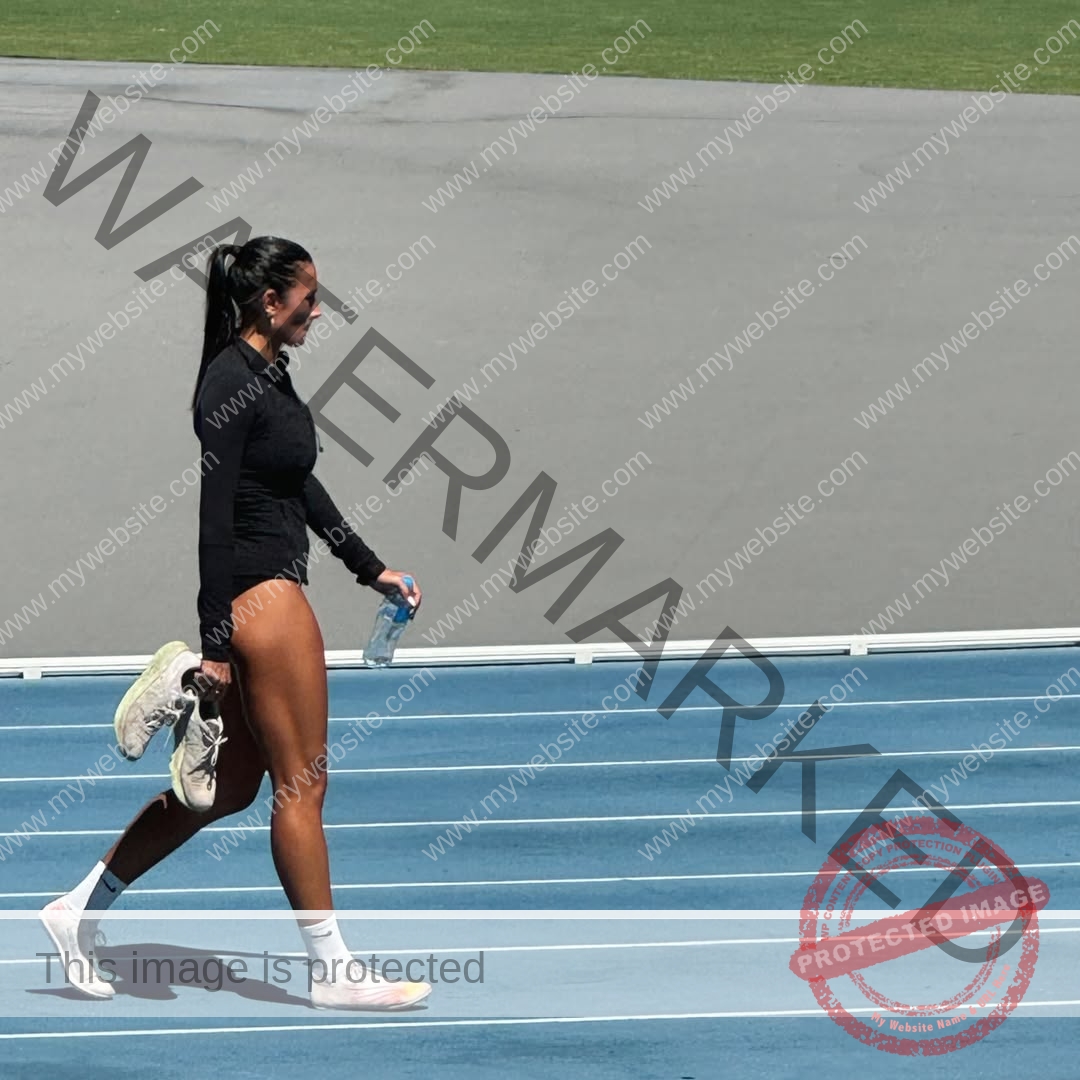

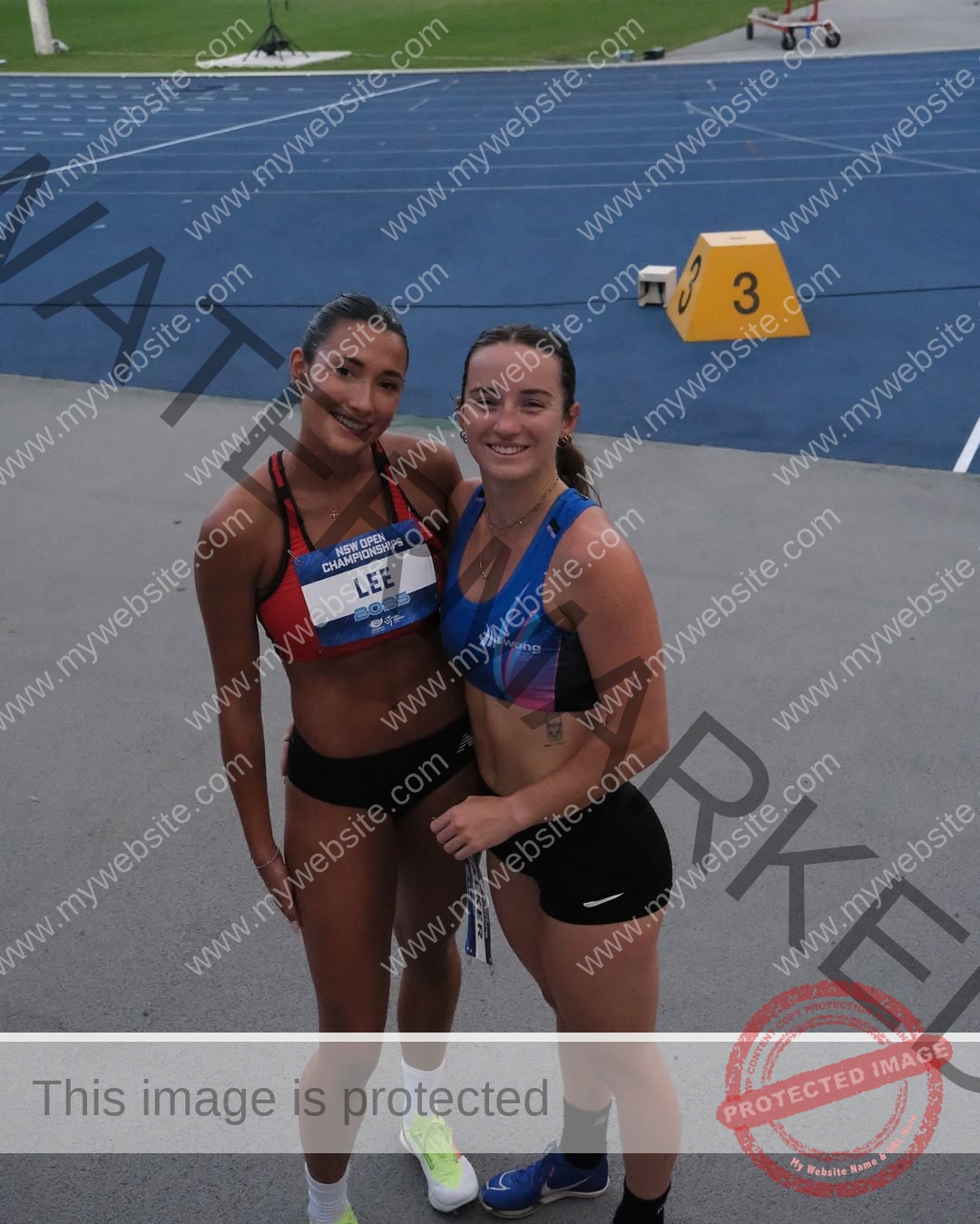
From the Shire to the Starting Blocks: The Story of Australian Sprinter Emma Lee
In the postcard suburbs of Sydney’s Sutherland Shire, where the bush meets the coast and local sporting clubs are woven into the fabric of everyday life, a lot of young athletes start their journeys. Most eventually move on to other things. A few discover that running is not just something they do — it’s something they are. Emma Lee belongs firmly in that second category.
Born on March 31, 2005, Lee is a sprinter of genuine national pedigree, a two-time Australian national champion before she had even finished high school, and a young woman whose love for the sport has been evident from the earliest age. At just 21, she has already accumulated a record in the junior ranks that most athletes would be proud of at any age — and her best times are still coming, suggesting that the most interesting chapters of her career may be just beginning.
The Sutherland Shire and the Beginning of a Career
Emma Lee grew up in the Sutherland Shire, the sprawling southern Sydney region that juts out toward the Royal National Park and the Illawarra escarpment. It is an area with a strong community sporting culture, particularly in athletics, where the Sutherland Little Athletics Club and the Sutherland District Athletics Club have produced a steady stream of competitive state and national-level competitors across the decades.
It was through Sutherland Little Athletics that Emma first laced up a pair of spikes, taking up sprinting at approximately eight years old. The sport stuck immediately. There was something in the clarity of it — the lane, the distance, the gun, the finish line — that suited her. Within a couple of years it was clear she had more than just enthusiasm; she had talent that needed to be developed properly.
That development fell into the hands of coach Davina Strauss, who has worked with Emma for the better part of a decade — a coaching partnership that began when Emma was roughly eight or nine years old and has been the constant through her entire competitive career. Strauss is one of the Sutherland Shire’s most recognisable sprint coaches, a respected name in the NSW athletics coaching community who has mentored a generation of athletes through the Sutherland District Athletics Club. Under Strauss’s guidance, the foundations of Emma’s sprint mechanics and competitive instincts were laid methodically through the youth ranks.
Emma attended Inaburra School in Bangor, an independent co-educational school in the heart of the Sutherland Shire. Inaburra is a school that takes sport seriously without allowing it to dominate — a balance that suited Emma’s temperament. She has spoken about the support she received from the school in juggling her training commitments and her academic workload, and the school’s PDHPE department, led during her senior years by Simon Wadds, was clearly an enthusiastic backer of her athletic ambitions.
The Youth Career: Building a Record One Race at a Time
Emma’s early competitive results through the NSW athletics system began showing up in earnest in the under-16 age group. At the 2020 NSW Junior Championships, she placed third in both the 100 metres and the 200 metres at the under-16 level, recording times of 12.23 and 24.73 respectively — solid foundations for a 15-year-old, and times that suggested she was already mixing it with the best young sprinters in the state.
The 2021 season was where things took a substantial leap forward. At the NSW Junior Championships that year, Lee produced a standout performance, winning both the 100 metres and 200 metres at the under-17 level. Her 100 metres time of 11.82 seconds was particularly notable: it was just 0.02 seconds outside the qualifying standard for the World Under-20 Championships, a margin that underscored both how close she was to the top echelon and how much headroom remained for improvement. The 200 metres win in 24.73 added to a growing sense that she was one of NSW’s most promising short sprinters in her age bracket.
The 2021 Australian Track and Field Championships, held at the Sydney Olympic Park Athletics Centre, gave Lee her first national stage. She lined up in the Under-17 Women’s 200 metres, one of a strong NSW contingent chasing the top prize. In the under-17 200m final, Lee ran 23.92 seconds — a significant personal best, and a time that met the World Under-20 Championships qualifying standard. She was among a group of NSW juniors who posted World U20 qualifying marks around that same period, a reflection of the strength of the state’s sprint programme in the early 2020s. Her 100 metres result at those same championships, clocking 11.82 — which she would also achieve later at the NSW Junior Championships — placed her among the fastest 15-year-olds in the country.
The December 2021 NSW All Schools Athletics Championships, held at Sydney Olympic Park, provided another major moment. Competing in the 16-year girls events, Emma swept the sprint double — winning the 100 metres final in 12.14 seconds (into a 2.6 m/s headwind, conditions that made the performance even more impressive technically) and backing it up with victory in the 200 metres. Athletics NSW captured the moment on video and shared it widely; the double was highlighted as one of the standout performances of the championships weekend. The Sutherland District Athletics Club also shared the news on their website, noting the feature that had appeared in the Daily Telegraph about their club sprinter — a teenager already attracting attention from Sydney’s mainstream sports media.
In that Daily Telegraph feature, the teenage Lee offered a glimpse into what makes her tick as an athlete. The quotes have aged well. “Running makes me happy 100%,” she said. “It’s just something I love to do. It’s an illuminating feeling. I like a lot of things about running. I get this feeling which I can’t really describe when I run. It’s really good. It’s not adrenaline but it feels great.” It is the kind of uncomplicated joy for the sport that is rarely faked, and rarely wrong about an athlete’s long-term commitment.
The Crowning Season: 2022 and Double National Gold
By the time the 2021–22 Australian summer athletics season arrived, Emma Lee was in Year 12 at Inaburra and entering the final months of her secondary schooling — a pressure-loaded period for any student, let alone one trying to compete at the national level. She handled it with the kind of focus her coaches had come to expect.
In January 2022, she ran 11.81 seconds for the 100 metres, a marginal personal best that suggested her form was tracking well into the season. In March 2022, she stepped up to compete indoors at the 60 metres, clocking a legal personal best of 7.64 seconds — a solid indoor performance that reflected her ability to transfer her outdoor speed into the abbreviated indoor format.
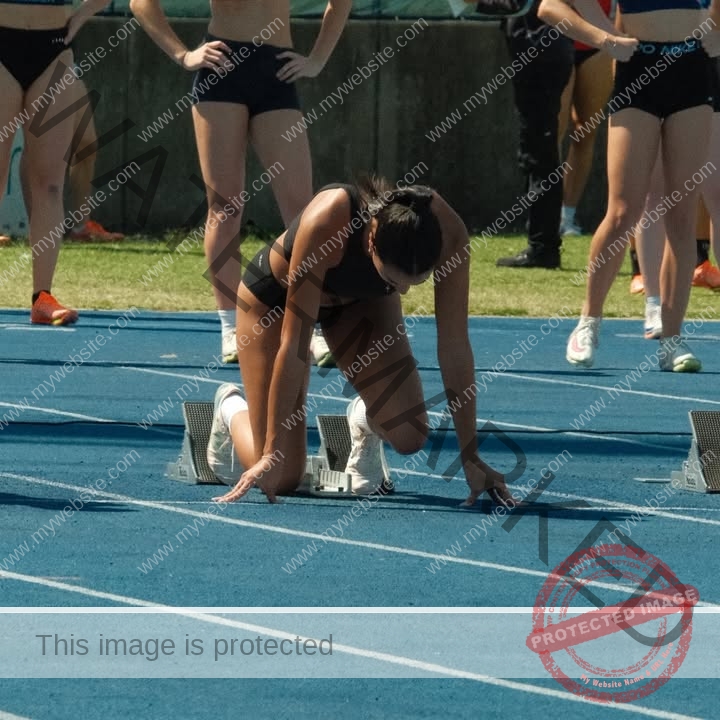
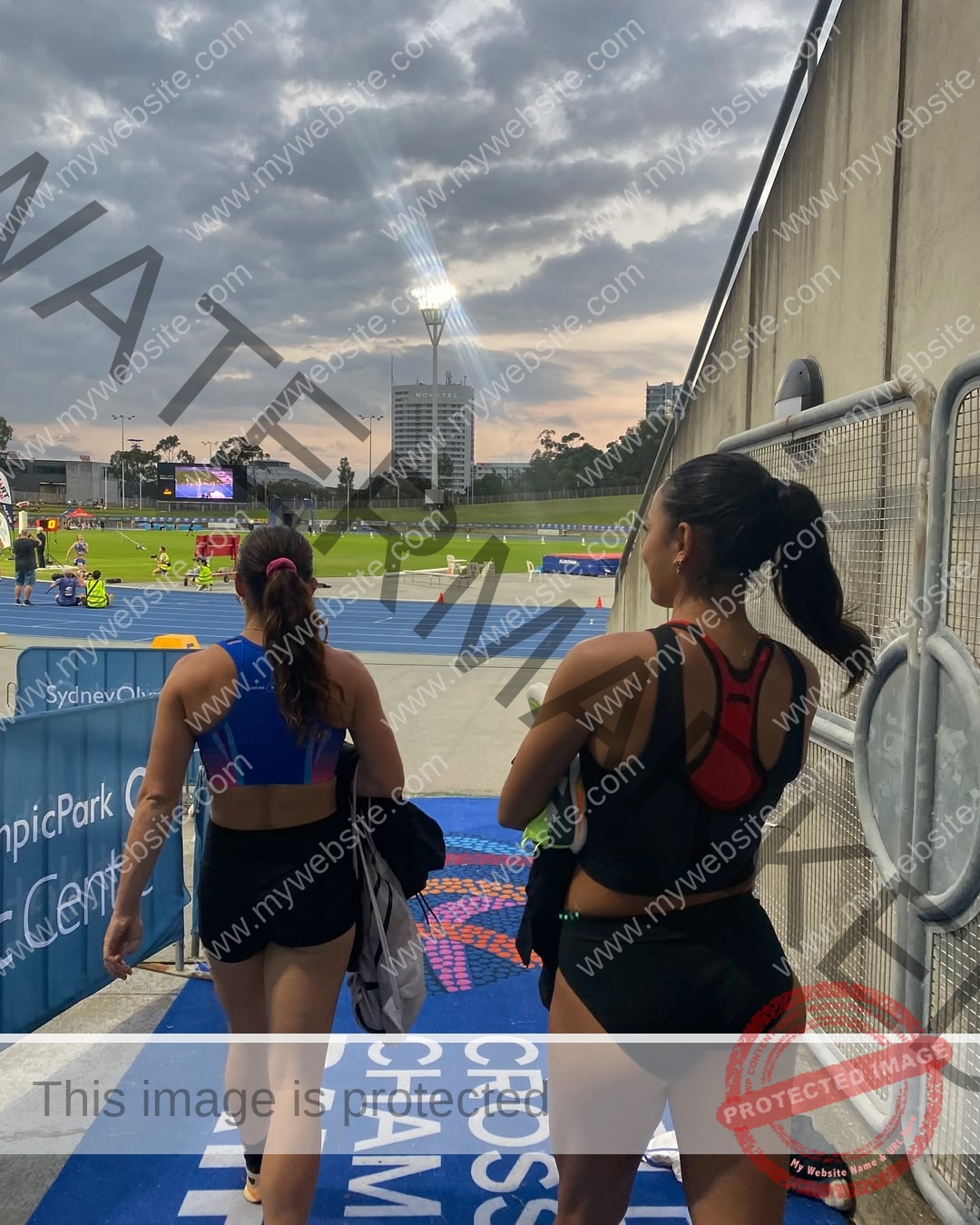
Then came the Australian Track and Field Championships in early April 2022, held at the Sydney Olympic Park Athletics Centre. It was Emma Lee’s defining junior performance to date, and it arrived in some style.
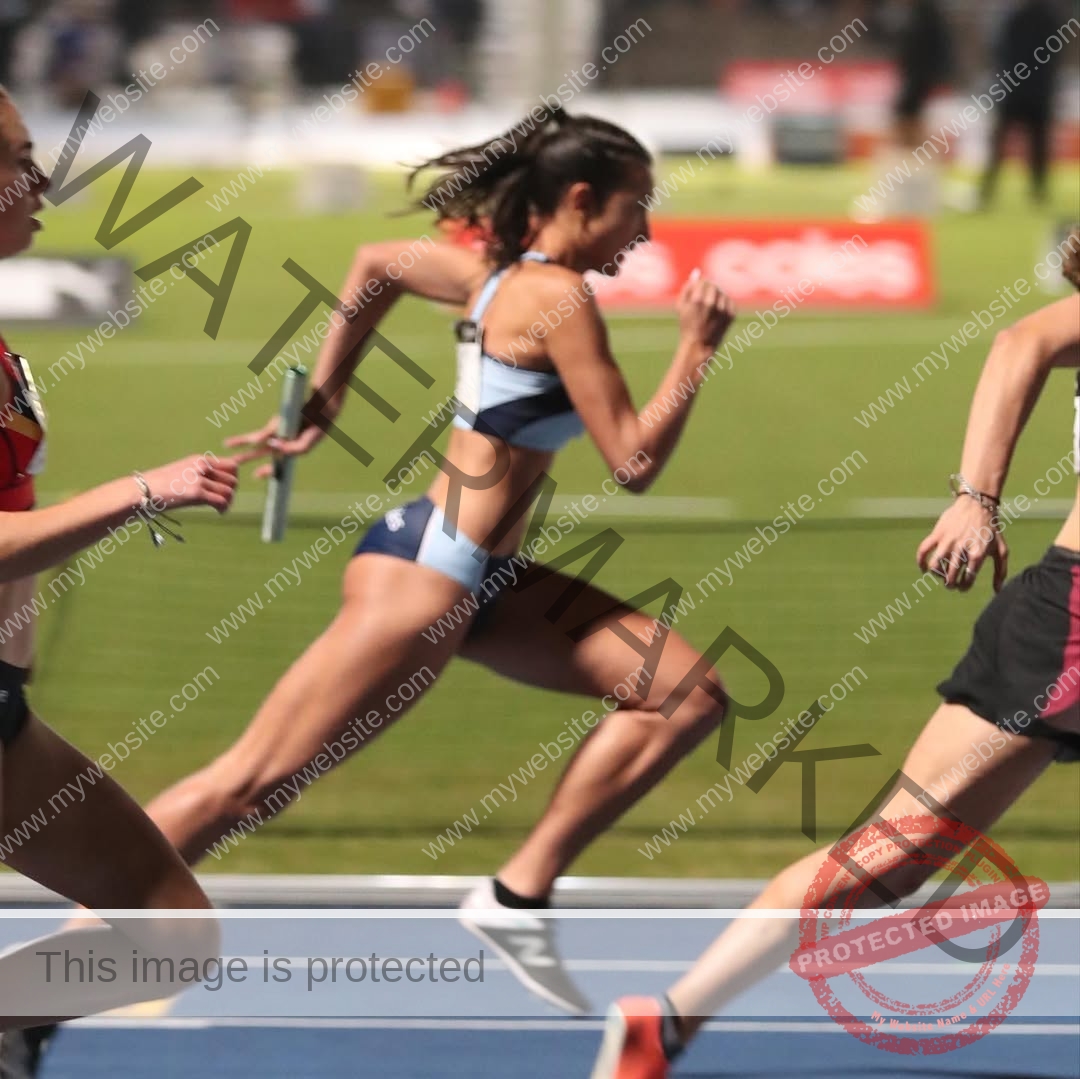
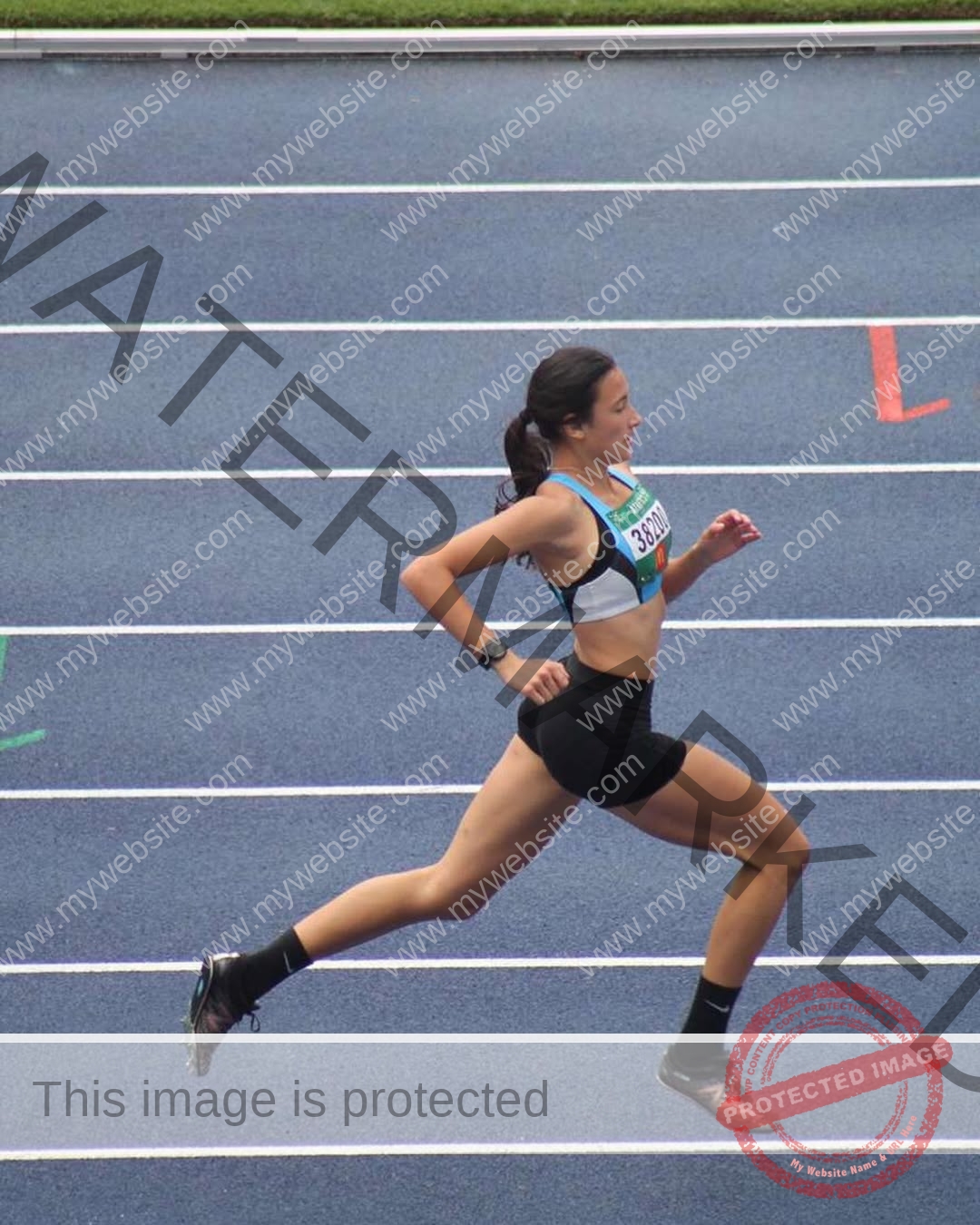
In the Under 18 Women’s 200 metres, she took the national title outright — gold, national champion, the best Under-18 200 metre runner in Australia. She then backed up that individual gold by running a leg in the Under-18 Women’s 4×100 metres relay, where the NSW team clocked 45.77 seconds to claim another national title. As if two gold medals from a single championship were not enough, she also collected a bronze medal in the highly competitive Under-18 Women’s 100 metres event, rounding out a three-medal haul that made her the undisputed headline act of NSW’s junior sprint contingent.
The reaction from her school was immediate and warm. “Emma has been building up to this event with some great wins at the end of last year in the NSW All Schools Athletics Championships,” said Simon Wadds, the Inaburra PDHPE head. “Her determination to continually better herself is outstanding and we are extremely proud of her efforts.” Emma’s own reflection on the result was characteristically grounded: “I am grateful for the encouragement and support offered by my school in order for me to pursue my goals and balance my workload and training commitments.”
The local community response was equally enthusiastic. The St George and Sutherland Shire Leader, the regional paper that covers the communities Emma calls home, ran a story celebrating her double national title under the headline “Lee becomes double national champion” — local pride in full voice for a Shire kid who had gone all the way to the top of Australian junior athletics.
Shortly after the April national championships, Emma competed at the 2022 Melbourne Track Classic, one of Australia’s most prestigious open track meetings, where she raced in the 200 metres — an experience of competing at senior open level that provided exposure to a higher standard of competition and the atmosphere of a major international track meet.
The Senior Transition: 2023 to Present
With her HSC completed and her junior titles in hand, Emma Lee moved into adult athletics carrying substantial expectations — and the knowledge that transitioning from junior to senior competition is one of the most challenging passages any young sprinter faces. The national age-group protections fall away, the fields get faster, and the margins for error shrink.
Her World Athletics profile, tracking her competitive history from 2021 onward, documents her continued presence on the Australian athletics circuit through 2023, 2024, and into the 2025–26 summer season. The profile registers results across the 100 metres, 200 metres, 60 metres, 400 metres, and 4×100 metres relay — a breadth of event coverage consistent with a developing senior sprinter still exploring the best configuration of her schedule.
The most recent landmark in her progression came on January 3, 2026, when she recorded 11.73 seconds for the 100 metres — a new personal best that stands as the fastest legally recorded 100 metres of her career to date. Measured against her previous legal best of 11.81 from January 2022, the improvement represents meaningful development in the senior ranks. She also competed in New Zealand in early February 2026, running 11.75 for the 100 metres at a Gold Coast–area meet that attracted trans-Tasman competition.
In February 2026, she also ran 7.48 seconds for the 60 metres — a wind-assisted mark — further evidence of her continued progress in the acceleration-heavy short sprints. Her legal 60 metres personal best of 7.64 stands from March 2022.
As of mid-2026, Emma Lee holds a World Athletics ranking of approximately #1140 in the women’s 100 metres globally — a meaningful number for a 21-year-old athlete who is still climbing the performance curve and navigating the demands of senior international competition for the first time.
Personal Bests and Career Statistics
The following marks represent Emma Lee’s career best performances through early 2026:
- 100 metres: 11.73 (January 3, 2026)
- 200 metres: 23.92 (April 19, 2021, Sydney Olympic Park)
- 60 metres: 7.64 (March 12, 2022)
- 4×100 metres relay: 45.77 (April 3, 2022, Sydney Olympic Park — Under-18 national title)
Coach, Club, and Community
Throughout her career, Emma Lee has remained rooted in the same athletics community that first nurtured her. She continues to compete for the Sutherland District Athletics Club, the same organisation she has been part of since her Little Athletics days — a loyalty that speaks to the strength of her local athletic community and to the continuity of the coaching environment Davina Strauss has provided.
Strauss’s influence over nine-plus years of coaching represents one of the longer and more stable coaching partnerships in NSW junior athletics. The results produced across that span — from a first competitive season as an eight-year-old to national titles and senior international marks — suggest a relationship built on more than just technical instruction. It is the kind of mentorship that shows up in an athlete’s longevity and consistency, not just their peak moments.
The Sutherland Shire itself has remained central to Emma’s story. The Sutherland District Athletics Club continues to maintain news about her on their website, celebrating her performances with the same community pride that a local club always affords its most talented members. The club’s sprint culture — which also produced other prominent NSW juniors during the same era — has clearly been a productive environment for developing the particular demands of short-sprint competition.
Social Media
Emma Lee maintains an Instagram presence under the handle @emma.lee1, where she documents her training, competition appearances, and life as a young elite sprinter. The account reflects the intersection of athletics and everyday life that characterises the social media presence of most young Australian athletes — a window into both the serious work and the lighter moments of her career.
Looking Forward
At 21, Emma Lee sits at what many sprint coaches regard as the critical developmental phase for women’s short sprinting — the years where the gains made in junior competition either translate into senior competitive sustainability or stall as the fields around them mature and deepen. The signs, on balance, are positive. Her 100 metres personal best has moved from 11.82 in early 2021 to 11.73 in early 2026, a progression that is steady rather than explosive but moves in the right direction. The 200 metres, her traditional strength and the event on which she won national gold, offers scope for further improvement from her 23.92 best — a mark that was set when she was just 15 years old and competing in an under-17 national final.
The Australian women’s sprint scene in the mid-2020s is considerably more competitive than it was even five years ago, with talents like Torrie Lewis, Mia Gross, Jessica Milat, and others raising the standard of domestic competition substantially. For Emma Lee, this is the environment in which she must now prove herself as a senior athlete — faster fields, higher stakes, and no age-group protections to soften the competitive edge.
What she has shown through her junior career is the right combination of attributes: genuine speed, a love for the sport that does not appear to wane, a stable coaching environment, and a community behind her that has followed her progress since she was an eight-year-old at Sutherland Little Athletics. Those foundations are not a guarantee of anything at the senior level, but they are a strong platform from which to mount a serious attempt. The Sutherland Shire’s own double national champion is not finished with making headlines yet.
Career Highlights at a Glance
- Born: March 31, 2005, New South Wales, Australia
- Hometown: Sutherland Shire, Sydney, NSW
- Club: Sutherland District Athletics Club
- Coach: Davina Strauss
- School: Inaburra School, Bangor (graduated 2022)
- Events: 100m, 200m, 60m, 4x100m relay
- Instagram: @emma.lee1
Personal Bests:
- 100m: 11.73 (January 3, 2026)
- 200m: 23.92 (April 19, 2021, Sydney Olympic Park)
- 60m: 7.64 legal (March 12, 2022); 7.48w (February 8, 2026)
- 4x100m relay: 45.77 (April 3, 2022, Sydney Olympic Park)
Major Honours:
- Australian Under-18 200m Champion, 2022
- Australian Under-18 4x100m Relay Champion, 2022
- Australian Under-18 100m Bronze Medallist, 2022
- NSW All Schools 16 Years 100m Champion, December 2021
- NSW All Schools 16 Years 200m Champion, December 2021
- NSW Junior Championships 100m Champion (U17), 2021
- NSW Junior Championships 200m Champion (U17), 2021
World Athletics Rankings (2025–26): approximately #1140 women’s 100m; #1228 women’s 200m
