

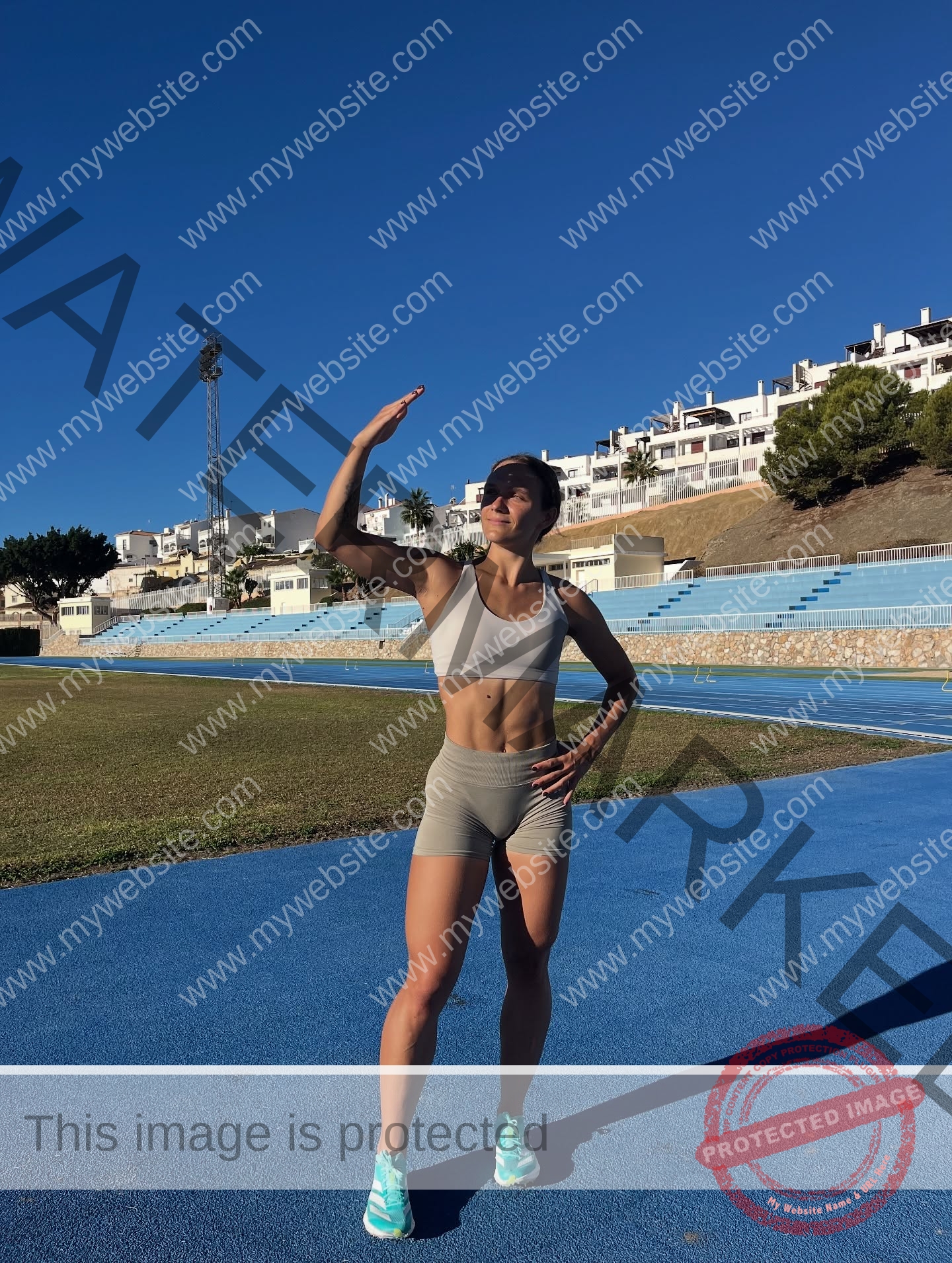

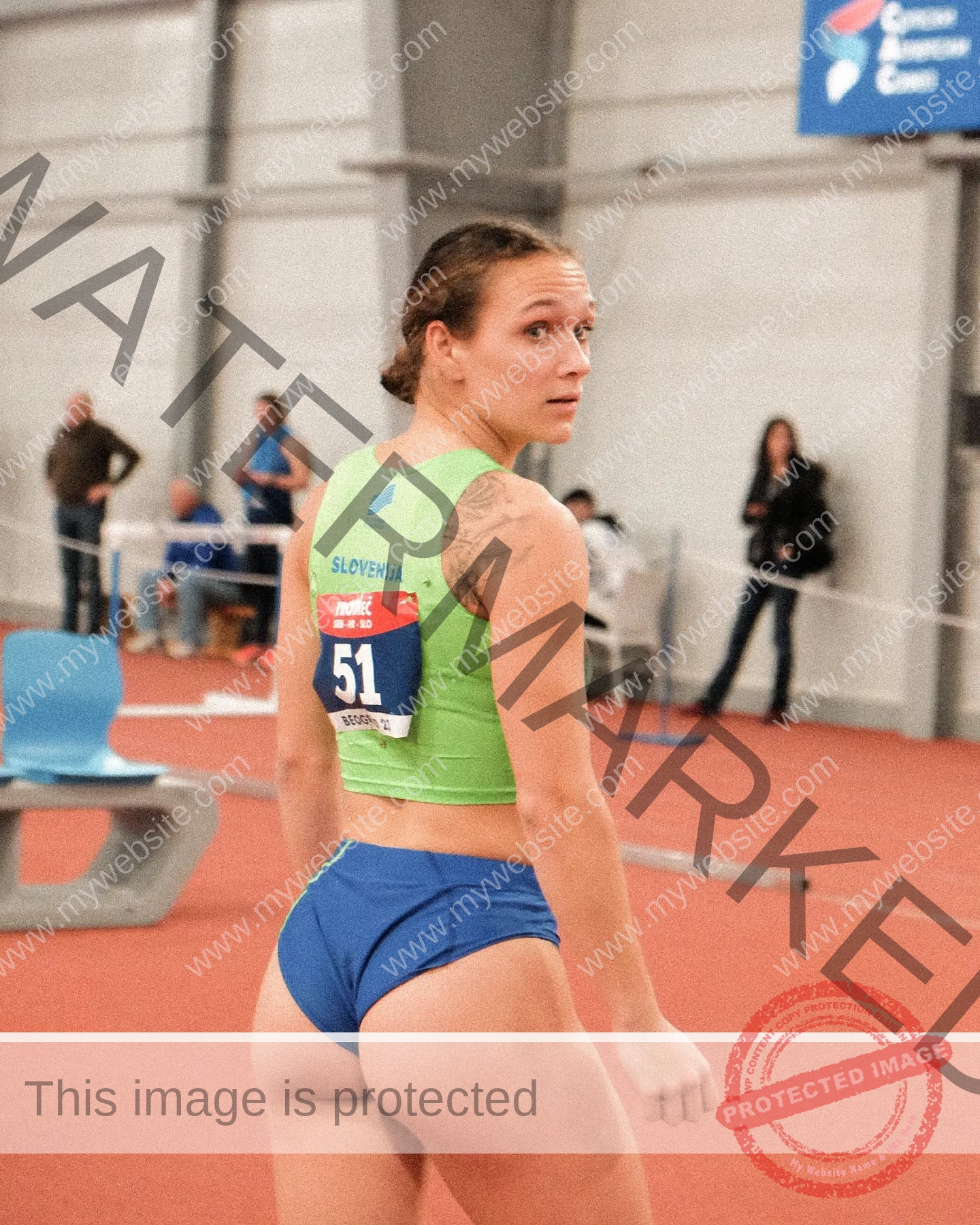
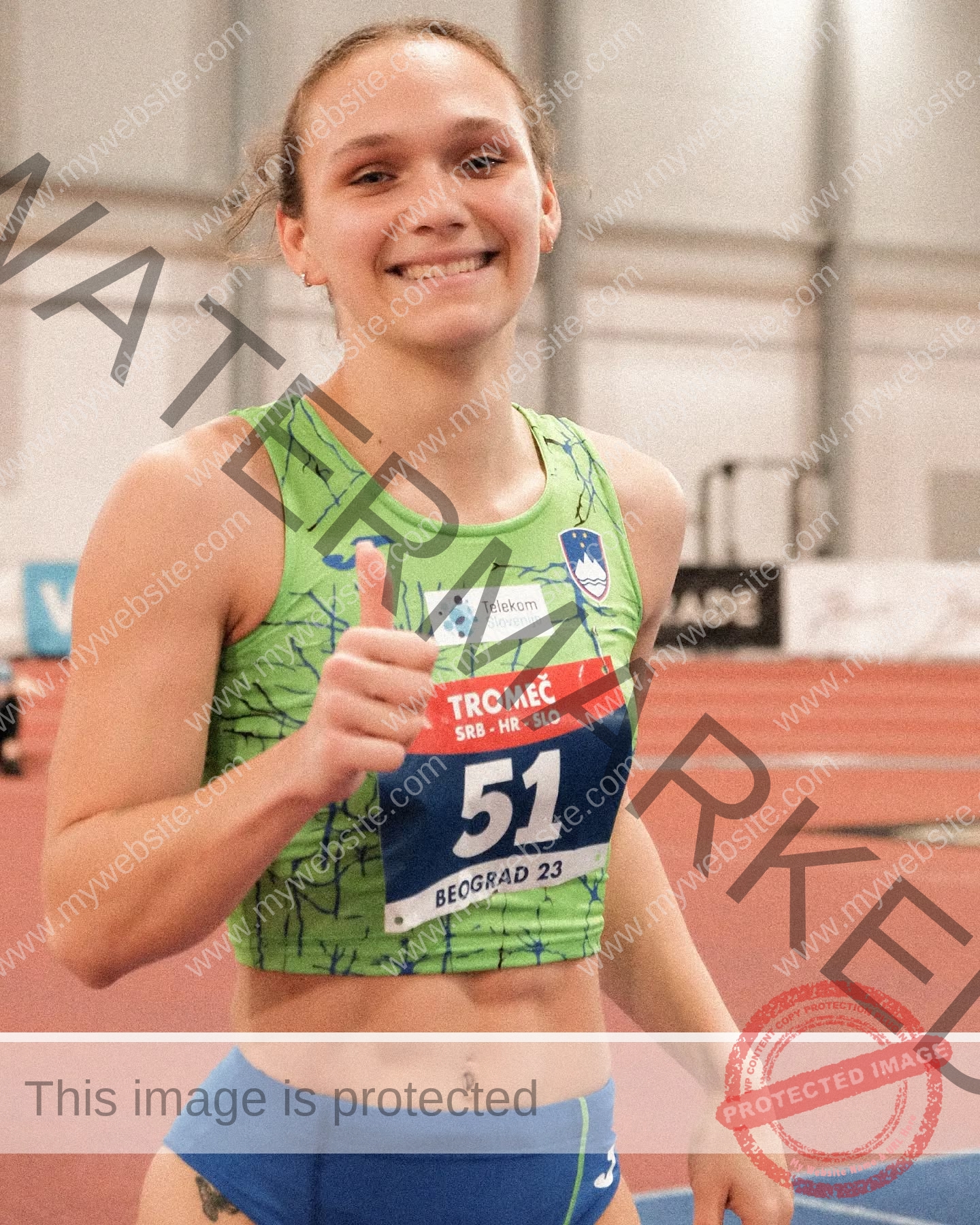

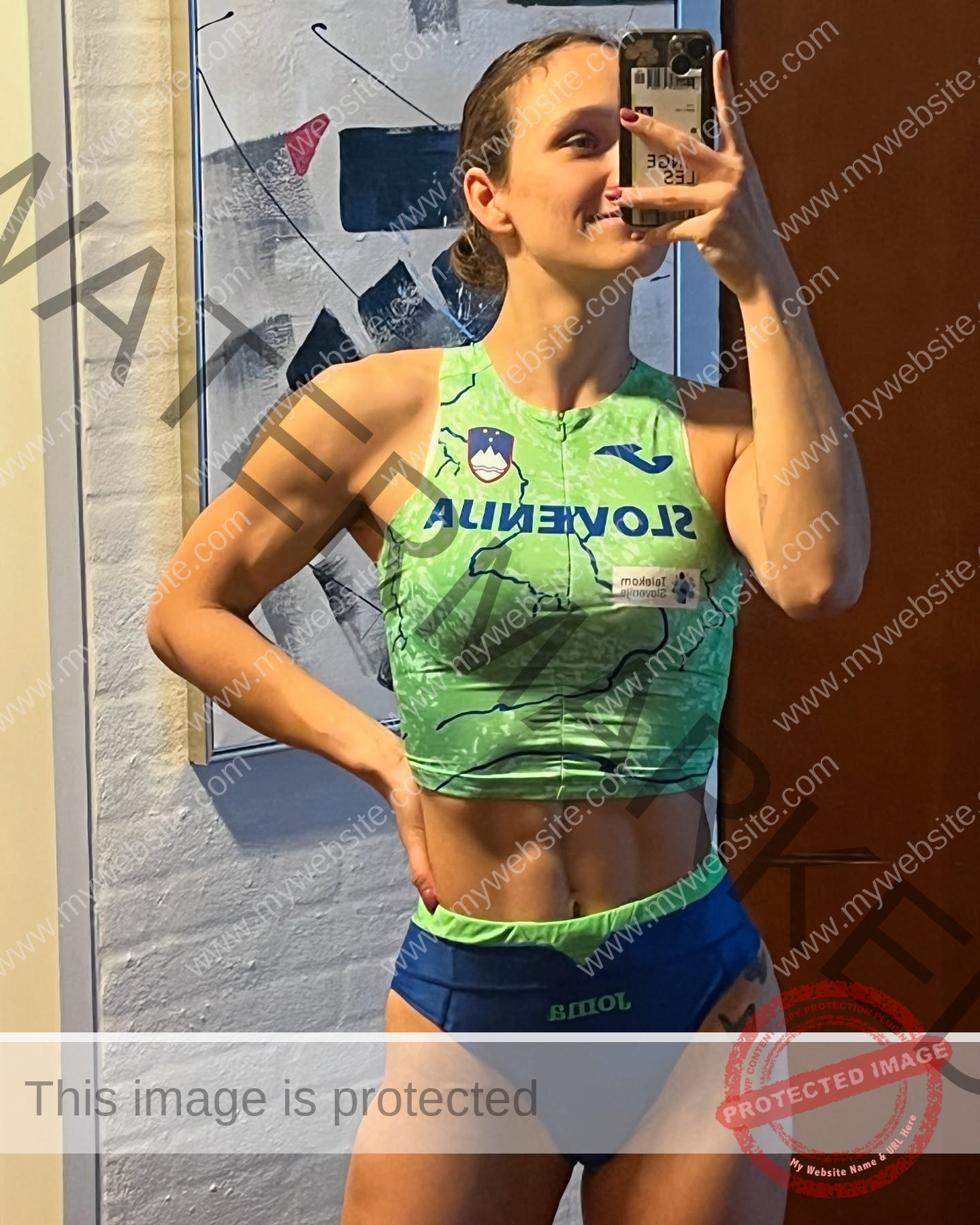


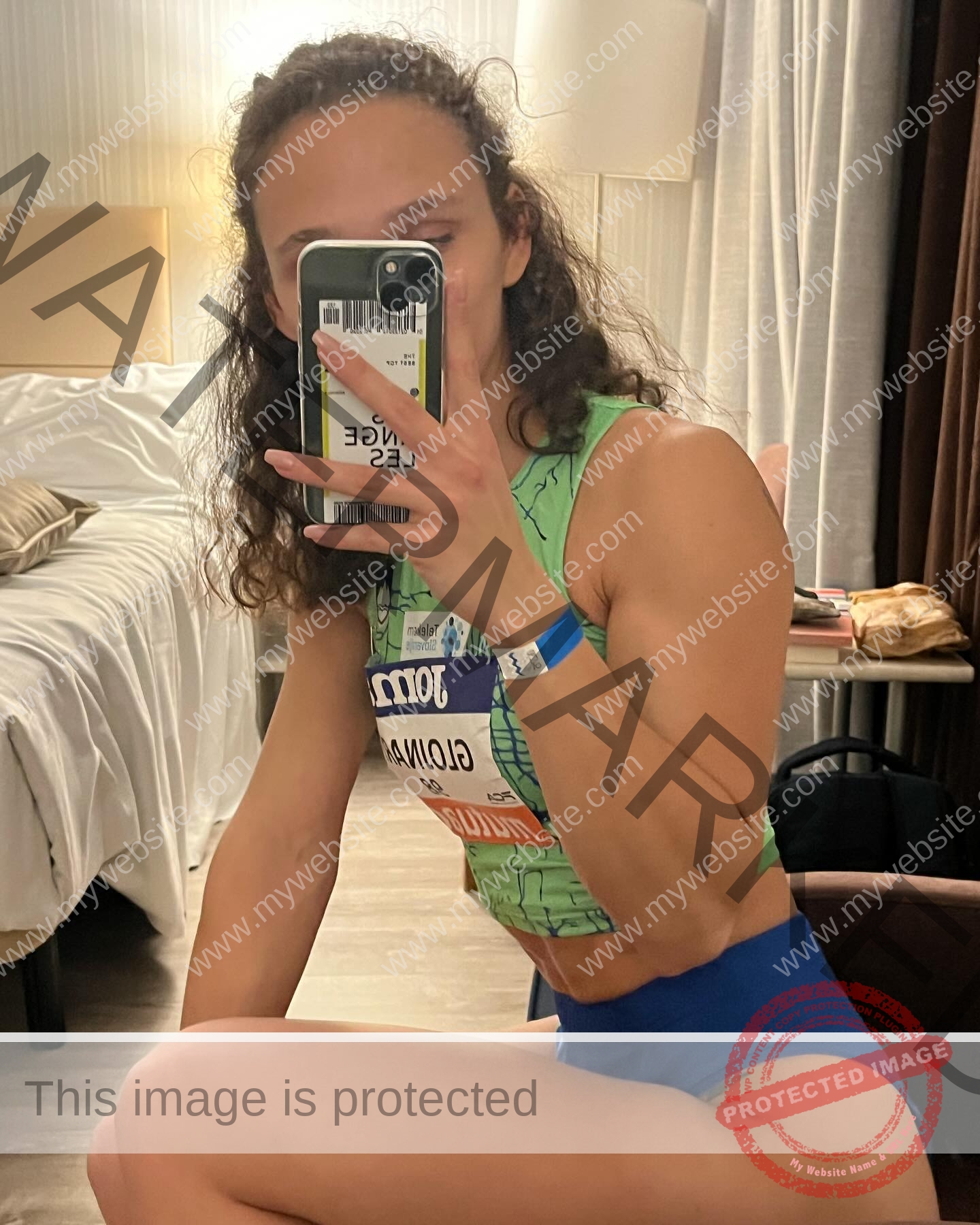
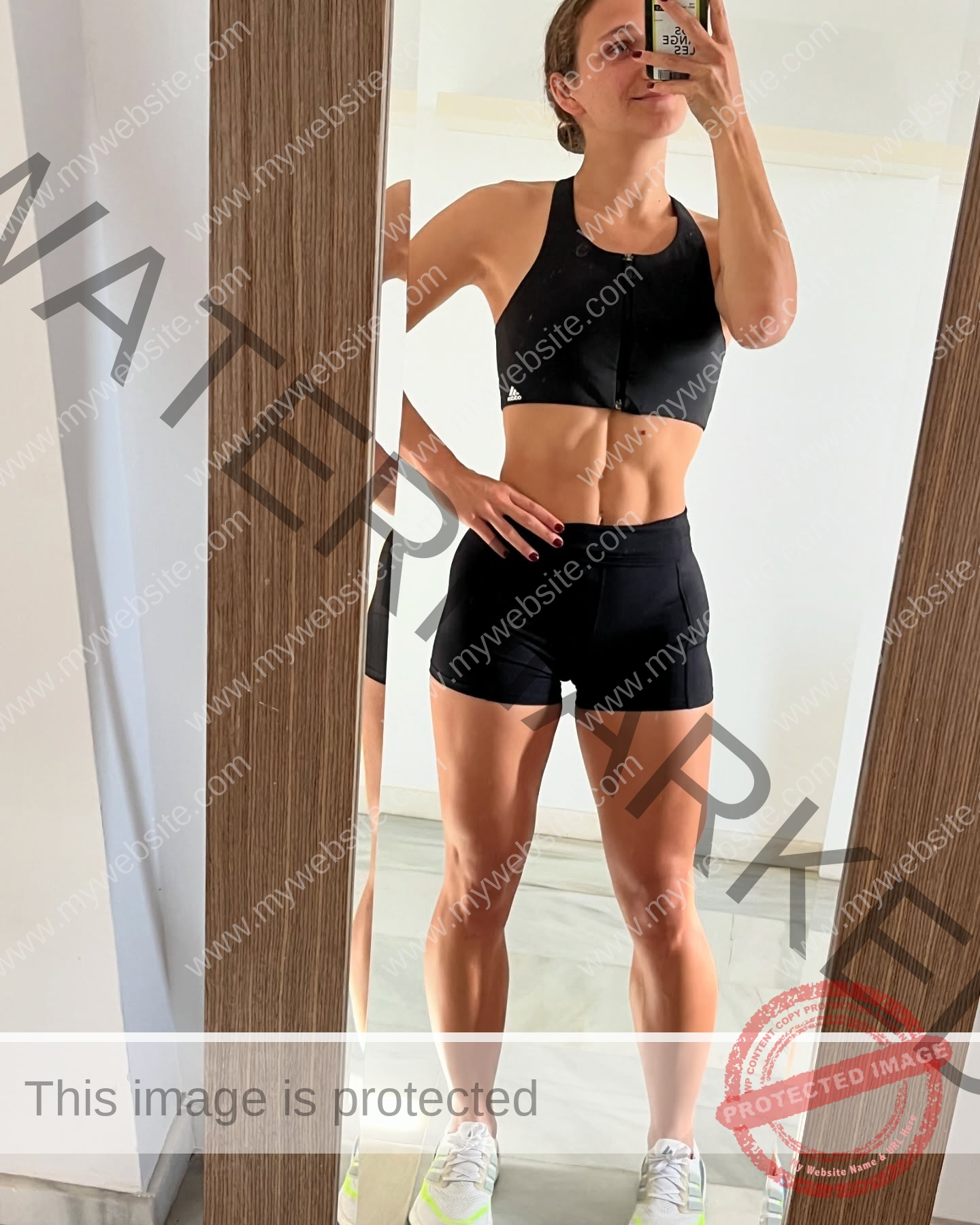

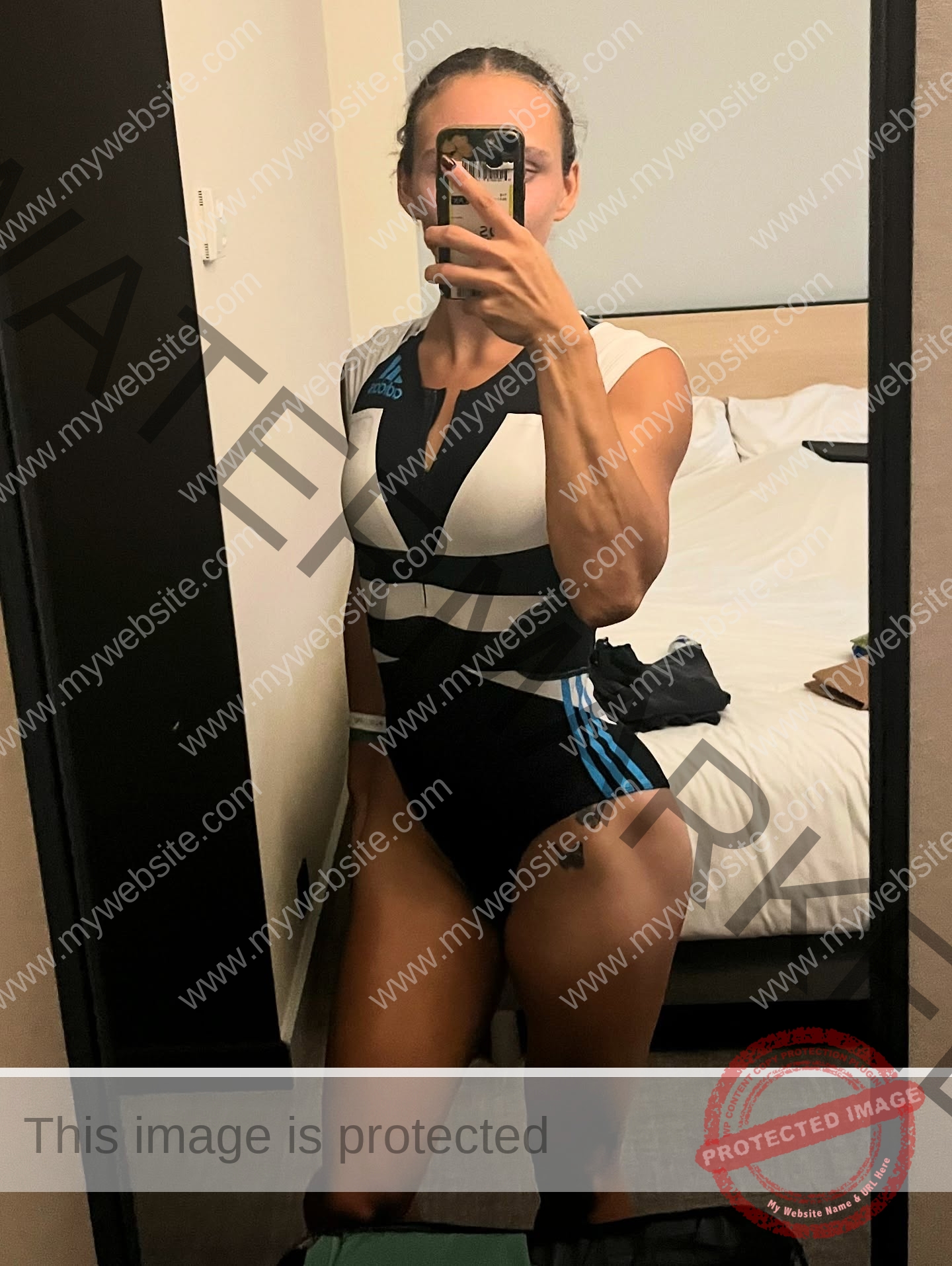

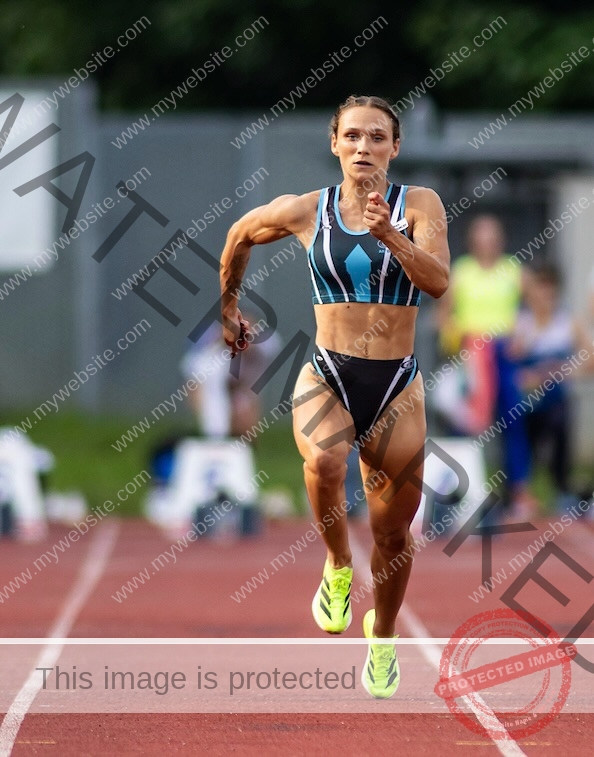

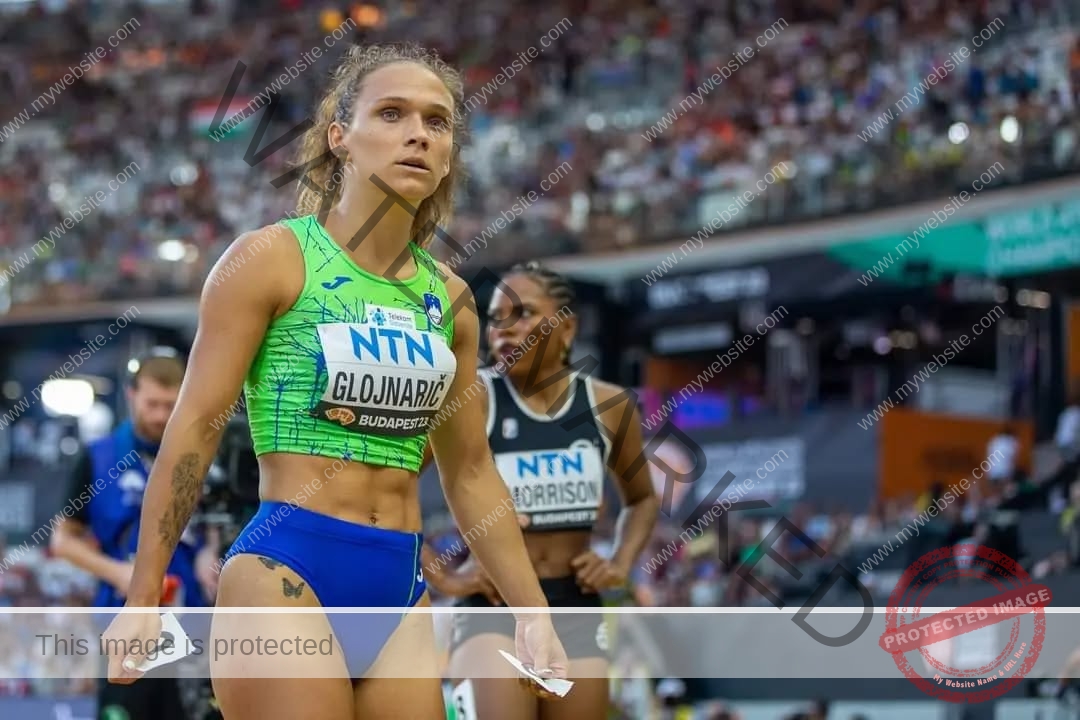


Nika Glojnarič
Sprint Hurdler | 60m & 100m Hurdles | Slovenia | AK Brežice | Born: November 29, 2000
The Hurdler from the Posavje
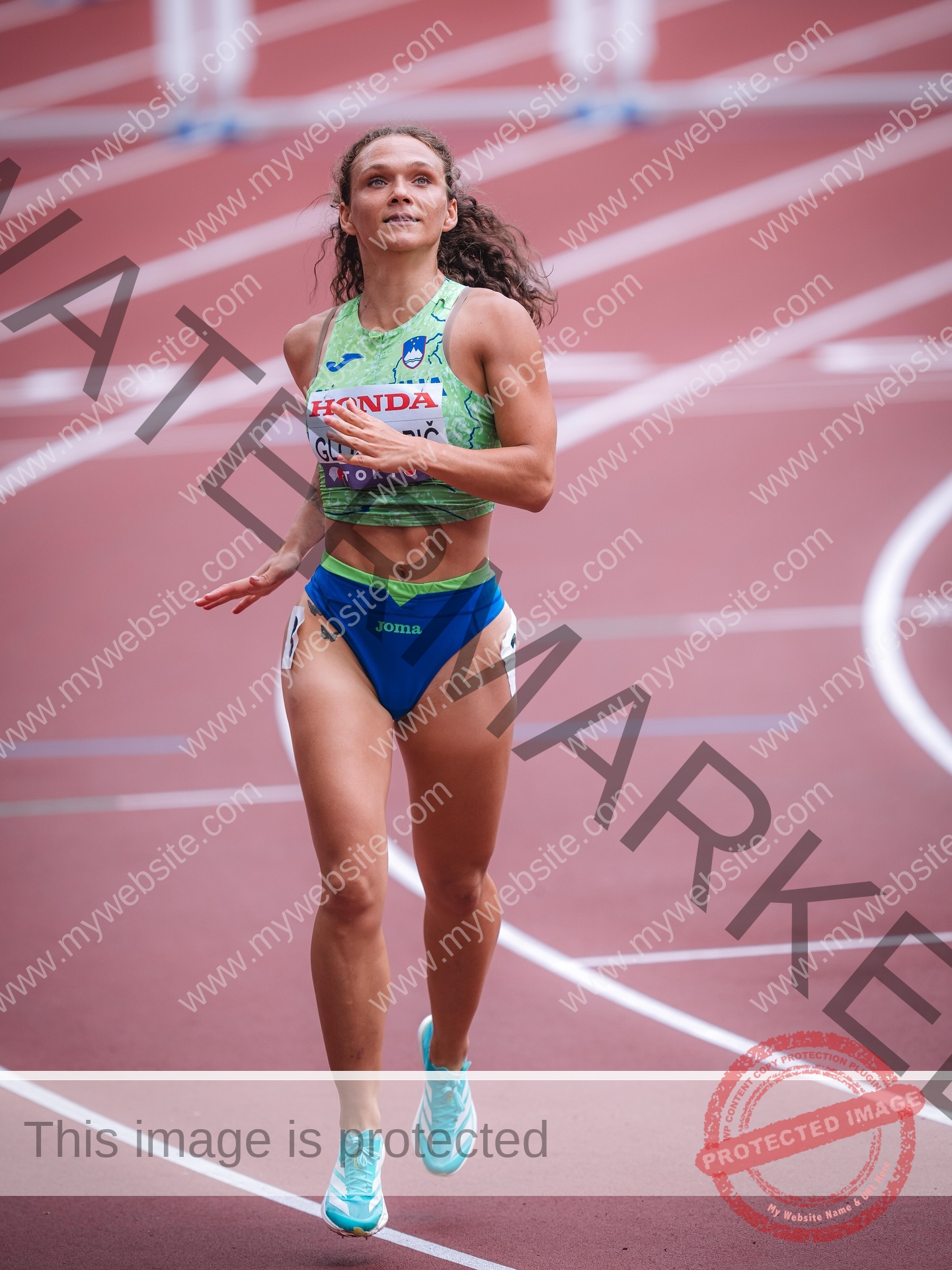
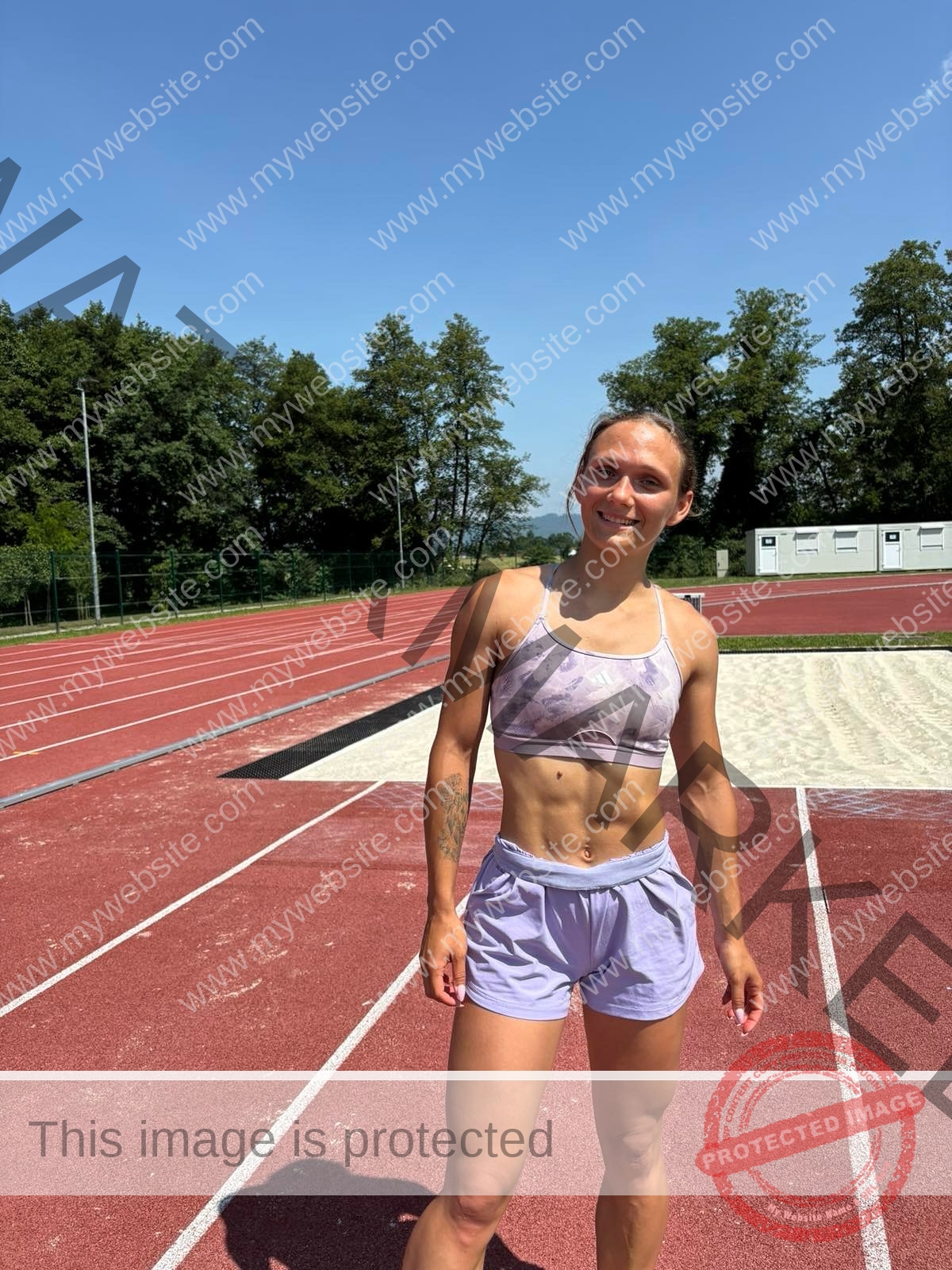
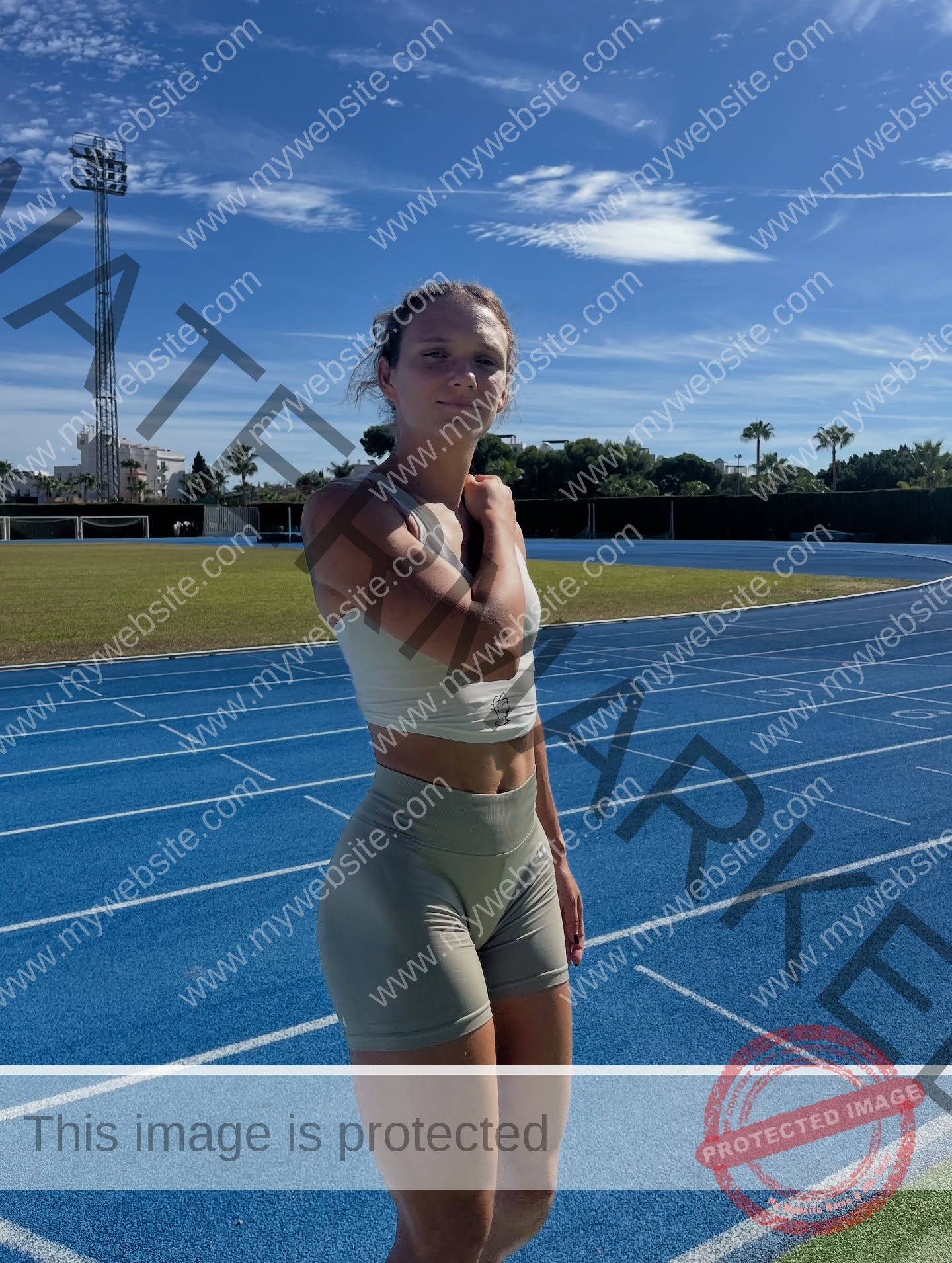
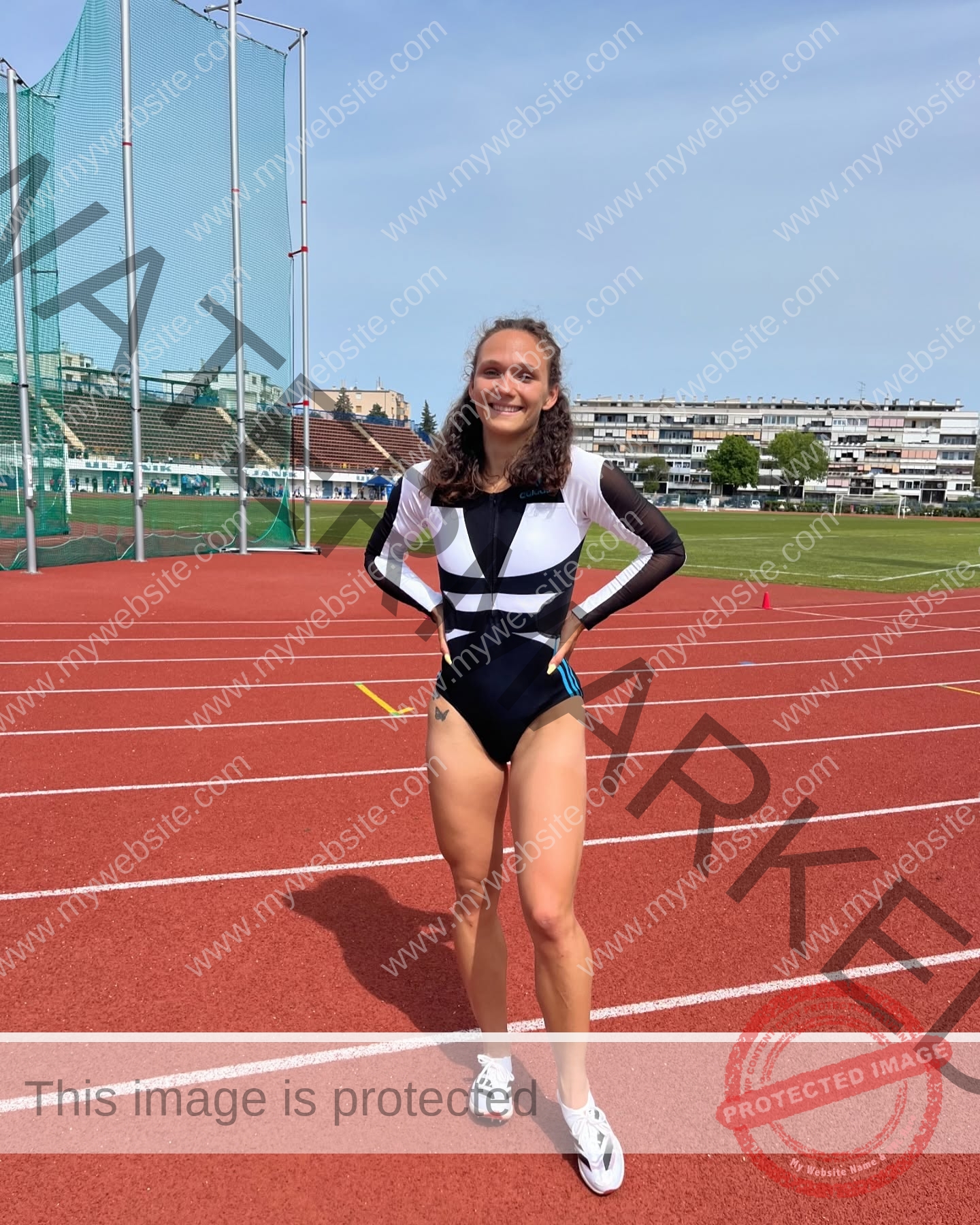
There is a stadium in Brežice, a small city in Slovenia’s Posavje region where the Sava River bends south toward the Croatian border, where a man who can barely run a lap around the track has spent years turning his daughter into one of the fastest hurdlers in Europe. That man is Iztok Glojnarič — a self-taught athletics coach, a technical draughtsman by trade, a stone restorer by craft, and a father whose lungs function at only 43 percent capacity due to severe asthma that has shadowed him since birth. And that daughter is Nika Glojnarič, now Slovenia’s premier sprint hurdler, a four-time national champion, a two-time World Athletics Indoor Championships semifinalist, and a woman who has twice broken the 13-second barrier in the 100 metres hurdles — a feat only two Slovenian women before her had ever achieved.
The story of Nika Glojnarič is inseparable from the story of her family. It is the kind of story that Slovenian athletics, and small-nation sports more broadly, produces from time to time: an athlete who arrives not from a national training centre or a well-funded academy, but from a small-city club, guided by parents who love the sport more than they know the sport, and who make it work anyway through sheer dedication and a willingness to learn.
Brežice, the Posavje, and a Sporting Family
Nika Glojnarič was born on November 29, 2000, in Brežice, a town of roughly 7,000 inhabitants in southeastern Slovenia. The region, the Posavje, sits in the valley of the lower Sava — a gentle, wine-growing landscape that is not, historically speaking, a hotbed of elite athletics. But the Glojnarič family has changed that perception, producing two athletes of genuine international standing from the same household.
Nika’s father, Iztok Glojnarič, is 52 years old at the time of writing and has been a partial disability pensioner for some years, his lungs badly scarred by a life of asthma that prevented him from participating in sport even as a schoolboy. He was not a sportsman and had no formal athletics background. He is, as described by the Slovenian press, a “samouk” — a self-taught coach — who stumbled into athletics through his children and stayed because the results kept coming. His wife Vesna has been a constant and essential support. Together, they have four children: Teja, the eldest, who works as a nurse in the emergency department in Brežice; Nika; Leja; and the youngest, Anžeta. The family originally lived in Sevnica before relocating to Brežice specifically to be closer to the athletics club and its facilities.
Leja Glojnarič, two years younger than Nika, is herself a remarkable athlete — a multiple Deaflympics medalist and world record holder in heptathlon in the deaf sport category, named Slovenian parasportswoman of the year on multiple occasions. She was born with severe hearing impairment that has progressively worsened. The family’s navigation of Leja’s disability, combined with the demands of supporting two athletes competing at the highest levels of their respective domains, has drawn comparisons in the Slovenian media to the Kostelić family of Croatia, whose father Ante coached Ivica and Janica to alpine skiing stardom.
Iztok Glojnarič has managed the remarkable balancing act of being both trainer and father to two internationally competing athletes — each with fundamentally different physical abilities and competitive landscapes. His approach, by his own account and his daughters’, is professional on the track and parental off it. Nika has spoken about the dual dynamic in interviews: “At home, my dad is all warm and fatherly, but when he gets to the track, he switches completely to coaching mode. He’s very strict and competitive then.” She has also noted, with evident warmth, that the arrangement works because the two roles are kept deliberately separate and the communication in both is honest.
Getting Started: Athletics at Nine, Hurdles by Discovery
Nika began athletics at around nine years old, drawn to the sport by the simple fact of being energetic and fast. “I fell in love with athletics in primary school, at around nine,” she has said. “I was very energetic and fit from a young age, so my father and mother enrolled me in AK Brežice.” The club — which promotes itself as proof that “even in smaller environments you can develop world-class athletes and athletics” — became her sporting home, and has remained so throughout her entire career.
Her introduction to the hurdles came through a coach she credits by name: Henrik Omerzu. “My previous coach Henrik Omerzu introduced me to hurdles,” she has recalled. “At the beginning I had quite a few problems, since it was something new for me. But pretty quickly I fell in love with hurdles, because they represented a challenge for me.” The appeal of the discipline, she has explained, is precisely its unforgiving nature — one race, one shot, no mulligans. “It’s one chance. If you don’t take it, everything falls apart. From start to finish you have to run with maximum concentration and precision.”
Her early club results established her as one of the faster young athletes in the Posavje and gradually in the broader Slovenian youth circuit. The Atletska zveza Slovenije — Slovenia’s national athletics federation — would later list her as the 2015 winner among “pionirke,” the youngest competitive age group, indicating that her progress was notable even before she was a teenager. The foundation was being built steadily, year by year, in Brežice.
The Youth Years: European U18 and the First Records (2016–2018)
By 2016, Nika Glojnarič was 15 years old and already competing at international youth level. That year she took part in the inaugural European Athletics U18 Championships — a new competition launched by the European Athletics Association to give the under-18 age group its own championship platform — where she made the heats of the 100 metres hurdles. The exposure to elite European youth competition at that stage was significant preparation for the years ahead.
The same year, the Slovenian athletics federation recognised her among the top young athletes in the country in her age category. Her times in the sprint and hurdles events were improving steadily across the domestic youth circuit.
The 2018 indoor season brought an early near-miss that, in retrospect, showed how quickly she was developing. In February 2018, competing in the 60 metres hurdles as a 17-year-old, she ran a time that came within just 17 hundredths of a second of the automatic qualifying standard for the 2018 World Athletics Indoor Championships in Birmingham — a championship that would have made her one of the youngest Slovenians ever to compete at an indoor world level. She didn’t get the auto-standard, but the near-miss was an early indicator that she was tracking toward something significant.
That same month, in February 2018, she won her first senior Slovenian indoor title in the 60 metres hurdles — a milestone reported by the Posavski Obzornik local newspaper in Brežice. She was 17 years old and already a national champion at the senior level.
That summer brought the 2018 World Athletics U20 Championships in Tampere, Finland, where she competed in the 100 metres hurdles. She won her qualifying heat but did not advance to the final — a standard progression for a young athlete making her first appearance at a world junior championship. She was photographed by Getty Images during the event, competing on the track in the Finnish summer, her name beginning to circulate in European junior athletics data.
The Senior Build-Up: 2019–2022
The years between 2019 and 2022 were Nika’s development period at the senior level — a time of steady competitive improvements, interrupted and complicated, like those of every athlete of her generation, by the disruptions of the COVID-19 pandemic in 2020 and 2021.
She continued to compete regularly in the Balkan regional circuit, which serves as one of the most important competitive environments for Slovenian athletes operating between the purely domestic level and the major international championships. Her appearances in the Balkan Indoor Championships gave her competitive experience against strong regional fields.
The 2020 season, reduced to a shadow of itself by the pandemic, still saw Nika confirmed as AK Brežice’s leading senior athlete and a candidate for the 2021 Olympics in Tokyo, European Indoor Championships in Torun, and the Universiade — an indication of how high the expectations for her had grown domestically. By year-end 2020, she was the AK Brežice athlete of the season in the senior women’s hurdles category.
In the 2021 indoor season, she reached the semifinals of the European Athletics Indoor Championships in Torun, Poland — a significant step forward for a 20-year-old athlete competing in the 60 metres hurdles against the cream of European women’s hurdling.
Her high jump personal best of 1.74 metres, recorded in October 2022 in Bilaspur (likely an error in the World Athletics records — this appears to refer to competition circumstances that may need verification), appears in her World Athletics profile as a secondary mark from her earlier multi-event participation. Her primary focus was always on the hurdles.
The Breakthrough Year: 2023
If there is a year that transformed Nika Glojnarič from a promising domestic talent into a genuine member of the European elite, it is 2023. The season delivered two performances of historical significance for Slovenian athletics.
The first came on June 8, 2023, at a meeting in St. Pölten, Austria. Running the 100 metres hurdles, Nika crossed the line in 12.92 seconds — the first time in her career she had broken the 13-second barrier, and only the third time any Slovenian woman had ever done so. Before her, only two Slovenians had achieved it: Brigita Bukovec, the legendary sprinter who won Olympic silver in Atlanta in 1996 and whose national record of 12.59 remains untouched, and Marina Tomič, who had posted 12.94. With 12.92, Nika moved to second on the Slovenian all-time list, just two hundredths behind Tomič’s mark. Her reaction afterward was one of pure, unguarded joy: “I’m simply at a loss for words. My race was truly exceptional. I’m really looking forward to the next competitions abroad and I hope I’ll manage a similar run again soon.”
The time also secured her qualification for the 2023 World Athletics Championships in Budapest — her first-ever appearance at a senior outdoor world championship. In August, she took to the track at the purpose-built National Athletics Centre in Budapest, competing in the 100 metres hurdles qualifications. She ran 13.13 seconds to finish 35th overall — a heat exit that was, she acknowledged, expected given the competition (the winner of her heat ran under 12.50), but the experience of a world championship is irreplaceable. “This is a new experience and a motivation for the future,” she said afterward. “I want to qualify for the indoor world championships in March, I already have the standard for the European Championships in Rome, and my target is also the Olympic Games in Paris.”
The 2023 season cemented her status as the leading Slovenian female hurdler of her generation, surpassing the long-running domestic records of the Brigita Bukovec era and establishing a new benchmark for what Slovenian women could do on the barriers.
Glasgow, Rome, and a Widening Stage: 2024
The 2024 season saw Nika Glojnarič continue her development on multiple fronts simultaneously, competing at the World Athletics Indoor Championships in Glasgow in March and the European Athletics Championships in Rome in June.
The indoor season opened well. In January in Udine, Italy, she posted a 60m hurdles time of 8.08 — a personal best at the time. She matched that mark in Istanbul at the Balkan Indoor Championship in February, where she also won the gold medal — her second Balkan Indoor title. She capped the indoor season by winning the Slovenian Indoor Championships in Novo Mesto in the 60 metres hurdles, also in 8.08, for the third time that year she had run that precise time.
At the World Athletics Indoor Championships in Glasgow, she qualified from her heat with 8.05 seconds — another personal best, and 16th fastest overall — advancing directly to the semifinals. In the semifinal, she struck a hurdle with her knee (which began bleeding) and her rhythm was disrupted, limiting her to 8.17. She finished 21st overall. It was, all things considered, a competitive debut at a global indoor championship.
The summer brought the European Athletics Championships in Rome. Competing outdoors in June under Italian conditions, she qualified for the semifinal of the 100 metres hurdles — a significant advancement over her performance at comparable competitions in previous years. The semifinal was as far as she went, but reaching it at a European Championship is a meaningful achievement, placing her among the fastest 18 women in Europe over the event that cycle.
2025: A Nine-Month Season — and Her Biggest Performances
Nika Glojnarič’s 2025 season was, by her own description, the longest and most demanding of her career. “The season lasted nine months without interruption,” she said after it ended. “This summer there was no sea for me, I sacrificed everything for it.” It ran from indoor work in January all the way through the World Championships in Tokyo in September — an arc that most professional athletes would find punishing.
The indoor season began with the European Athletics Indoor Championships in Apeldoorn, Netherlands, in March 2025, where she competed in the 60 metres hurdles. She then made it three consecutive World Athletics Indoor Championship appearances when she reached the semifinals again in Nanjing, China, at the end of March — her most sustained stretch of top-level indoor competition to date. In Nanjing, she ran 8.11 in the qualifying round and 8.16 in the semifinal for 18th place overall. The semifinal run was disrupted by contact from a competitor on the adjacent lane. “I received many hits from the runner on the neighboring lane, which is unusual,” she said. “I’m not satisfied, but I need to analyze everything still.”
The outdoor summer brought some of the year’s best performances. In June 2025, she equalled her outdoor personal best of 12.92 seconds in the 100 metres hurdles — the same mark she had first posted in St. Pölten in 2023 — confirming that the benchmark was repeatable and not a one-off. She also posted 11.51 seconds in the 100 metres flat, her fastest legal flat time, demonstrating the underlying speed that feeds her hurdles performance.
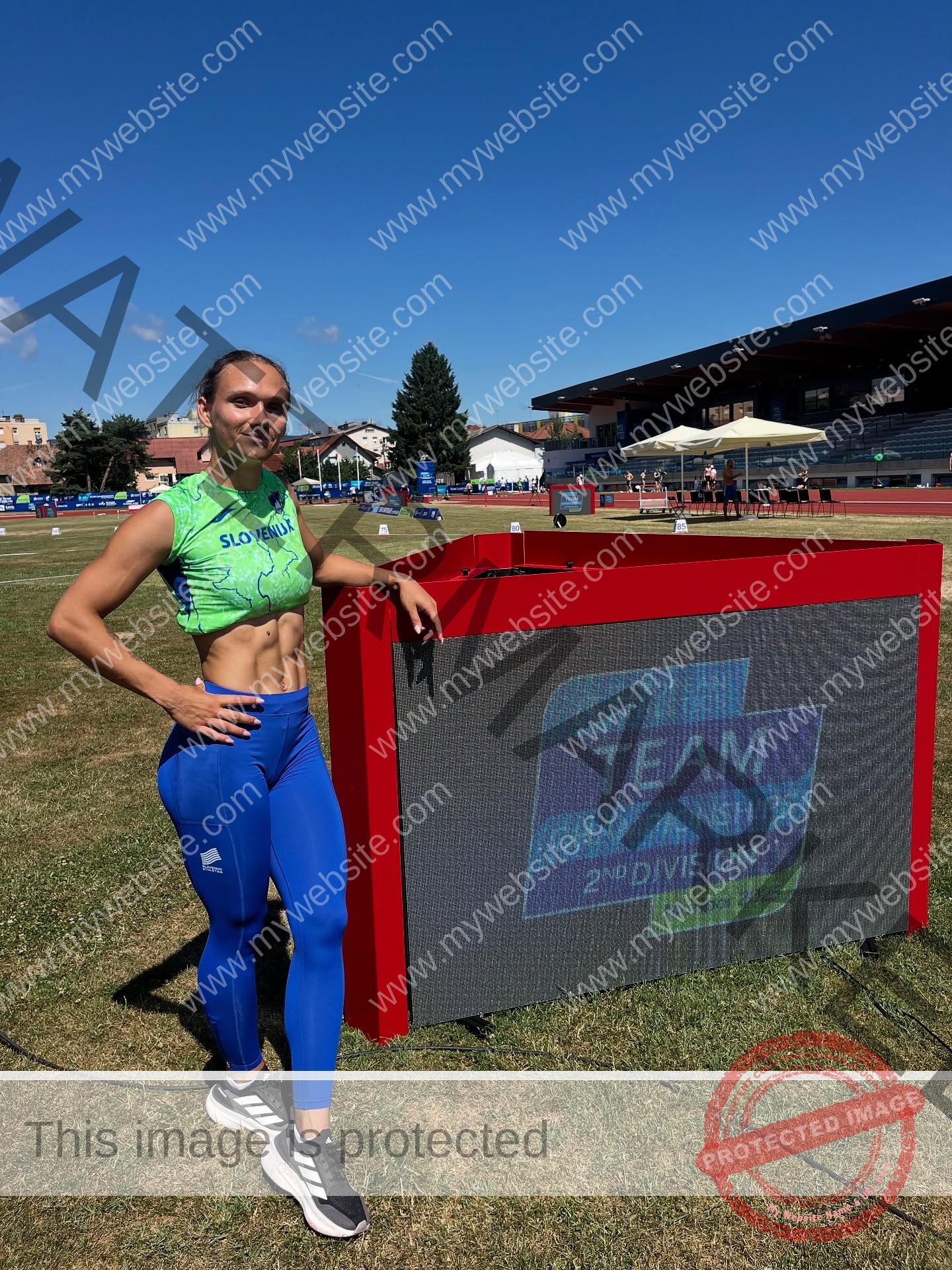
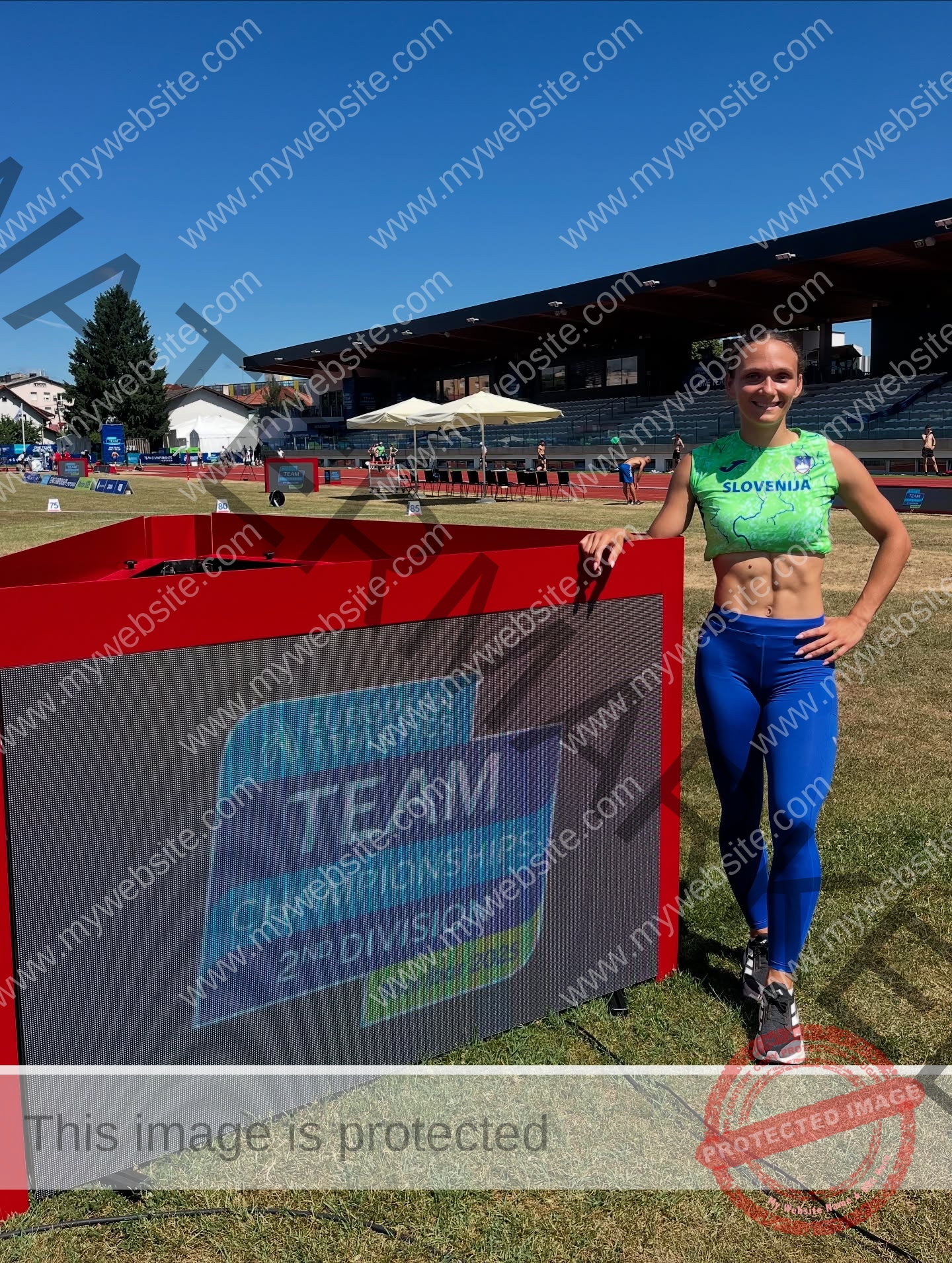
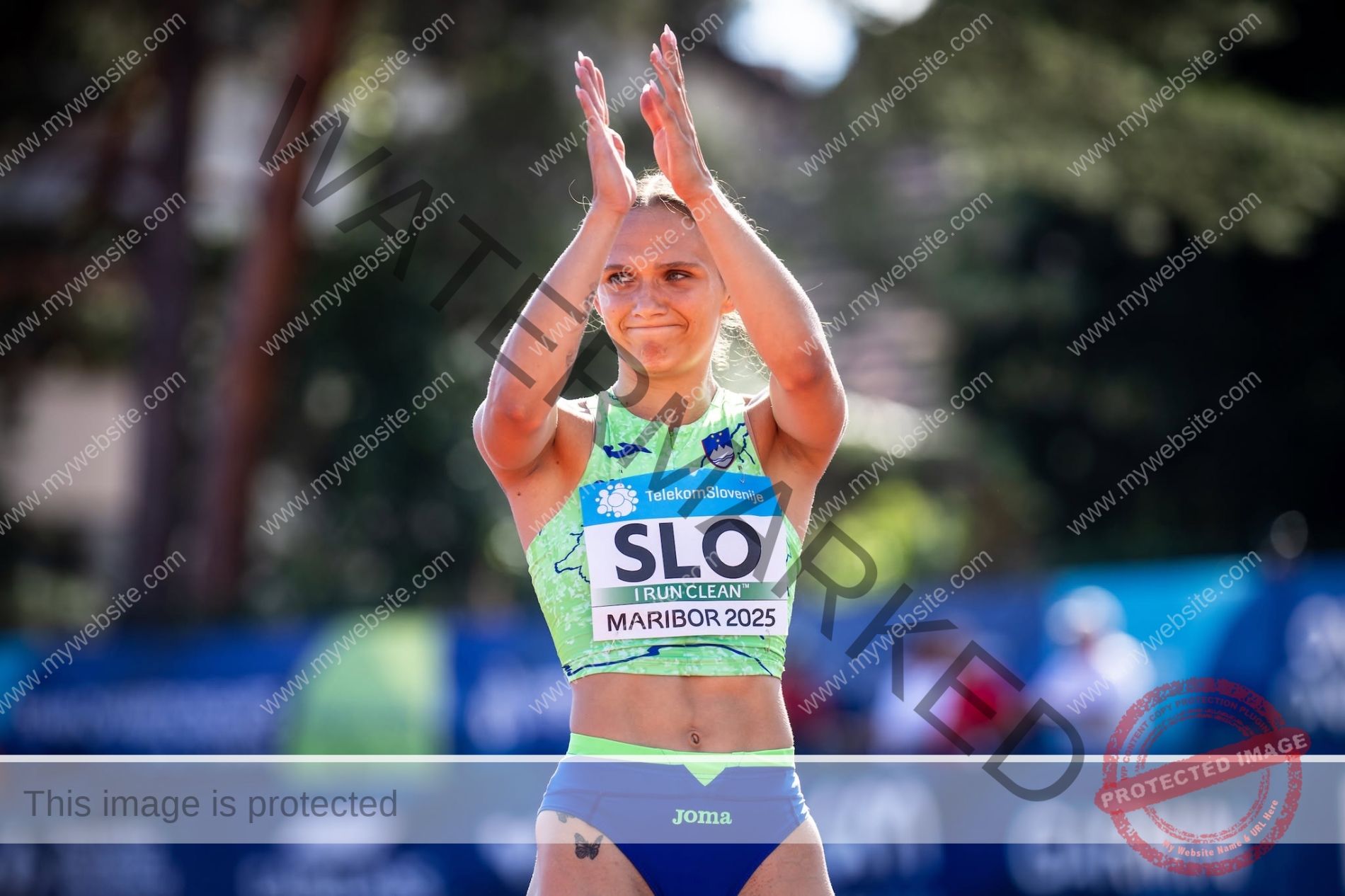
June also brought the European Athletics Team Championships in Maribor — a home competition for the Slovenian team, held in Slovenia for the first time in the modern format of that event. In August, at the Slovenian Athletics Championships, she won the 100 metres hurdles national title for the fourth consecutive year — a run of domestic dominance that underscores how clearly she sits above her Slovenian peers in the event.
In late July, she won a meeting in Belgium in the 100 metres hurdles, though a quirk of the timing system meant her result was not officially ratified — a frustrating bureaucratic footnote to an otherwise strong performance. The World Athletics Championships in Tokyo arrived in September. Competing in a heat that included athletes running well under 13 seconds, she ran 13.13 — the same time she had posted at her first World Championship two years earlier in Budapest — and finished fifth in her heat without advancing. She was candid about what happened: “When I saw they were beside me, I wanted to accelerate, which threw me off my rhythm, so I kept arriving too close to the hurdle. On the last hurdle, it turned me, so I barely reached the finish line. Given that, I achieved a good result.”
2026: A New Personal Best and a World Semifinal
The 2026 indoor season has, to date, produced the best performances of Nika Glojnarič’s career. In January, competing at the Orlen Cup in Lodz, Poland, she won the 60 metres hurdles in 8.03 seconds — a lifetime best at the time. Then on February 3, 2026, at the Czech Golden Spike meeting in Ostrava, she lowered it again to 7.98 seconds — becoming only the second Slovenian woman in history to break the 8.00-second barrier in the 60 metres hurdles indoors, following Brigita Bukovec’s iconic 7.78 from 1999. She is currently ranked #43 in the world in the 100 metres hurdles, her highest-ever world ranking.
Later that month, she won the 2026 Slovenian Indoor Athletics Championships in 8.14 seconds, adding a fifth indoor national title to her collection. She also won the 2026 Balkan Indoor Championships — her second Balkan indoor gold — again demonstrating consistency across the regional circuit.
At the 2026 World Athletics Indoor Championships in Toruń, Poland, held in March, she again advanced to the semifinals of the 60 metres hurdles. In her qualifying heat, she ran 7.99 seconds — just inside the 8-second barrier. In the semifinal, she clocked 8.06, but unfortunately made contact with the second hurdle and lost her rhythm through to the third. Despite the disruption, she finished 22nd overall. “In general, I was satisfied with the first run today; the second was also good, but I hit the second hurdle and then completely lost my rhythm to the third,” she said after. “If I hadn’t hit the hurdle, I would have gone under eight seconds again.” Her father, her coach, had set the semifinal as a goal before the championships, and it was achieved.
The World Athletics profile now lists her 60m hurdles personal best at 7.98 — a mark that positions her firmly among the world’s top indoor hurdlers, and places Slovenia’s second-greatest hurdler in a genuinely compelling relationship with the records set by Bukovec a generation ago.
The Technical Picture: Why She Runs the Way She Runs
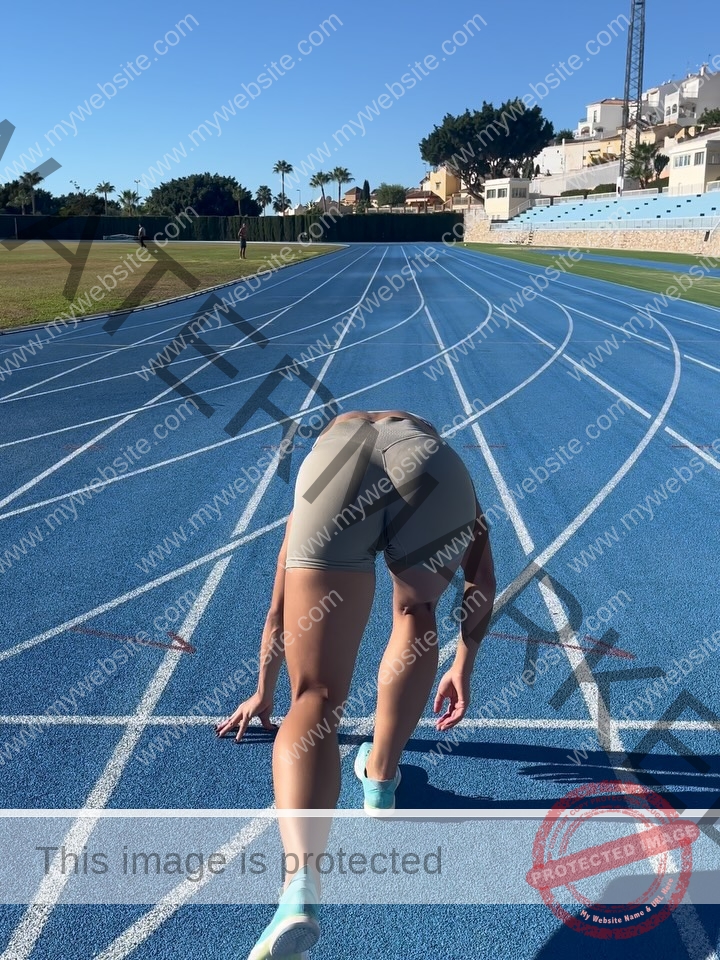
Sprint hurdling in the 100 metres requires an athlete to cover ten barriers spaced at 8.5 metres apart over a distance of 84 metres between hurdles, with the first hurdle arriving just 13 metres from the start. The 60 metres hurdles indoor version has five barriers over a shorter runway, compressing the margins for error even further. A single clip of a barrier can cost a tenth of a second or more; Nika Glojnarič has spoken many times about what a high-stakes discipline it is. “You have one chance,” she said in 2024. “If you don’t use it, everything falls apart.”
Her strengths lie in her starting speed — she has referenced particularly strong starts in multiple post-race comments — and in her overall sprint capacity, evidenced by her 11.51-second flat 100 metres. Her father has worked with her on technical refinements throughout her career, and the evidence of improvement from season to season — from 13.13 to 12.92, from 8.08 to 7.98 — suggests a genuine working methodology that produces measurable gains.
The ankle and back injuries she has dealt with over the years have tested her resolve. “I have certainly faced numerous challenges in my career, primarily related to ankle and back injuries,” she has said. “All these injuries affected me strongly — both physically and mentally. Despite this pressure, I found the motivation to continue with sport.” When asked in 2023 if she had considered ending her career, she confirmed she had come close at points and that mental resilience, combined with the support of her family, partner, and coach, had pulled her through.
The Bukovec Question: Slovenia’s Greatest Hurdler and Her Legacy
Any conversation about Slovenian women’s sprint hurdling comes, eventually, to Brigita Bukovec. The Ljubliana-born hurdler who won Olympic silver in Atlanta in 1996 in 12.59 seconds remains one of the most celebrated athletes in Slovenian sports history. Her national record of 12.59 has stood for nearly three decades. Her indoor 60m hurdles best of 7.78, set in 1999, remains the Slovenian record.
Nika Glojnarič, now second on the Slovenian all-time list in the outdoor 100m hurdles at 12.92 and second in the indoor 60m hurdles at 7.98, sits closer to that legacy than any Slovenian woman has in a long time. When asked directly whether she dreams of breaking Bukovec’s record, her answer in 2023 was measured but honest: “Every record is set with the idea that it can be achieved or surpassed. But in sport it is difficult to predict or promise the future, since there are many factors that affect results.”
The gap between 7.98 and 7.78 (60m hurdles) and between 12.92 and 12.59 (100m hurdles) is substantial by the standards of elite sprinting. Whether Nika Glojnarič closes it further remains one of the more intriguing storylines in Slovenian athletics.
Personal Bests and Honours at a Glance
- 60 metres hurdles (indoor): 7.98 — February 3, 2026, Ostrava (Czech Golden Spike)
- 100 metres hurdles: 12.92 — June 8, 2023, St. Pölten; equalled June 19, 2025
- 50 metres hurdles: 6.93 — December 28, 2025
- 100 metres: 11.51 — June 11, 2025
- National champion (outdoor 100mH): 4 times (at minimum 2022, 2023, 2024, 2025)
- National Indoor champion (60mH): 5 times (including 2018, 2024, 2026)
- Balkan Indoor Championships: Gold 2024 (Istanbul), Gold 2026 (Belgrade)
- World Athletics Indoor Championships: Semifinalist 2024 (Glasgow, 21st), 2025 (Nanjing, 18th), 2026 (Toruń, 22nd)
- World Athletics Championships (outdoor): 2023 Budapest, 2025 Tokyo
- European Athletics Championships: Semifinalist 2024 (Rome)
- World Athletics athlete code: 14594240
- Current world ranking: #43 (100m hurdles), as of early 2026
Club, Support, and the Slovenian Armed Forces
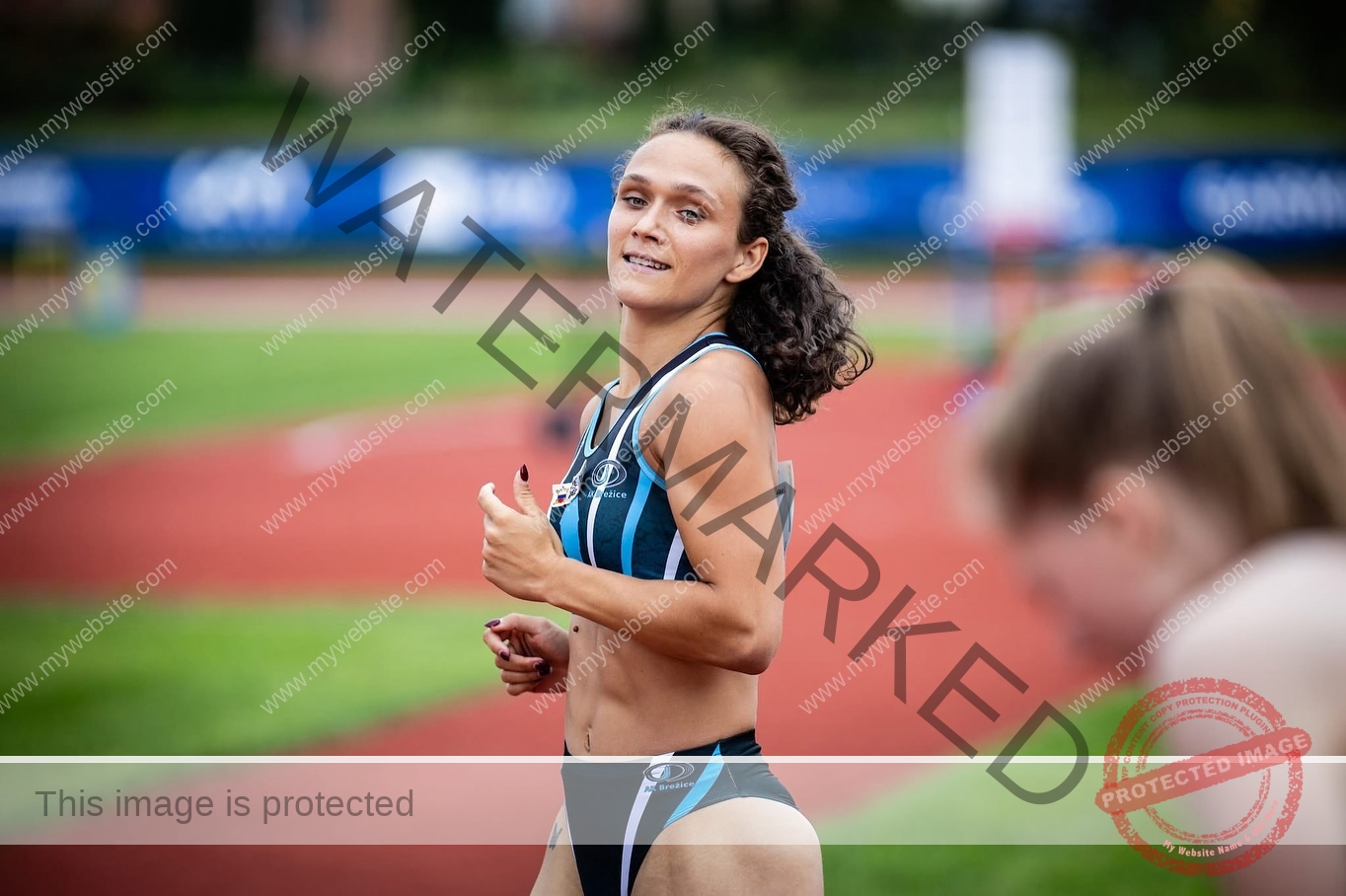
Nika Glojnarič trains and competes for AK Brežice, the athletics club of her hometown, which she has been a member of since childhood. The club, which celebrated 40 years of existence and positions itself as proof that small-city athletics can produce world-class talent, remains her sporting home despite the international scale of her career. There has been no move to a larger city or a national training centre — the Glojnarič family trains in Brežice, on the track there, with Iztok Glojnarič continuing as both father and coach.
Her Facebook page identifies her as a member of the Slovenian Armed Forces — “Slovenian armed forces ⚔️” — indicating that she holds a position in the military sports programme that provides support and structure for elite athletes in Slovenia. This arrangement, common in several European countries, allows high-performance athletes to train professionally while maintaining a formal institutional affiliation.
Social Media
Nika Glojnarič maintains an active presence on Instagram under the handle @nika_glojnaric, where she documents her training, competition appearances, and the occasional glimpse of life in Brežice. Her profile has been linked from the Wikidata entry for her biographical record. She also maintains a Facebook page — under her name — which carries her sport description as “Slovenian hurdler 🇸🇮 Slovenian armed forces ⚔️” and has accumulated over 2,000 likes. No specific personal commercial sponsorships have been publicly confirmed, though her institutional support through the Slovenian Armed Forces programme and AK Brežice provides the infrastructure for her competitive activities.
Looking Ahead
At 25 years old, Nika Glojnarič is at a prime stage for a sprint hurdler. The 100 metres hurdles is an event where athletes often peak in their mid-to-late twenties, and her trajectory — steady improvement from the teen years through to the 12.92 she first ran at 22 and has now matched twice — suggests she is still ascending. The 7.98 she posted in February 2026 is the fastest start to any season of her career, and the fact that she qualified directly for the semifinal at the World Indoor Championships in Toruń — her third consecutive appearance in the rounds beyond the heats at a global indoor event — confirms her standing.
The outdoor season of 2026 will bring further opportunities. The European Athletics Championships, scheduled for Birmingham in August, represent a natural major target. As the holder of the Slovenian indoor record (second only to Bukovec) and a consistent 12.92 runner outdoors, she enters that competition as one of the more interesting athletes in the field — not a medal favourite, but absolutely a semifinalist-calibre performer who, on the right day, can run faster than she ever has.
Back in Brežice, Iztok Glojnarič will watch from the stadium — or more likely from the coach’s area — barely able to run himself but as invested as ever in what his daughter does with the speed and determination she has always had. The self-taught coach from the Posavje and the hurdler he raised on a track by the Sava River have come a long way together, and the race is far from over.
Born: November 29, 2000 | Hometown: Brežice, Slovenia | Club: AK Brežice | Coach: Iztok Glojnarič (father) | Events: 60m Hurdles (indoor), 100m Hurdles | 60mH PB: 7.98 (2026, Ostrava) | 100mH PB: 12.92 (2023, equalled 2025) | World Athletics ID: 14594240 | Instagram: @nika_glojnaric | Facebook: Nika Glojnarič
