
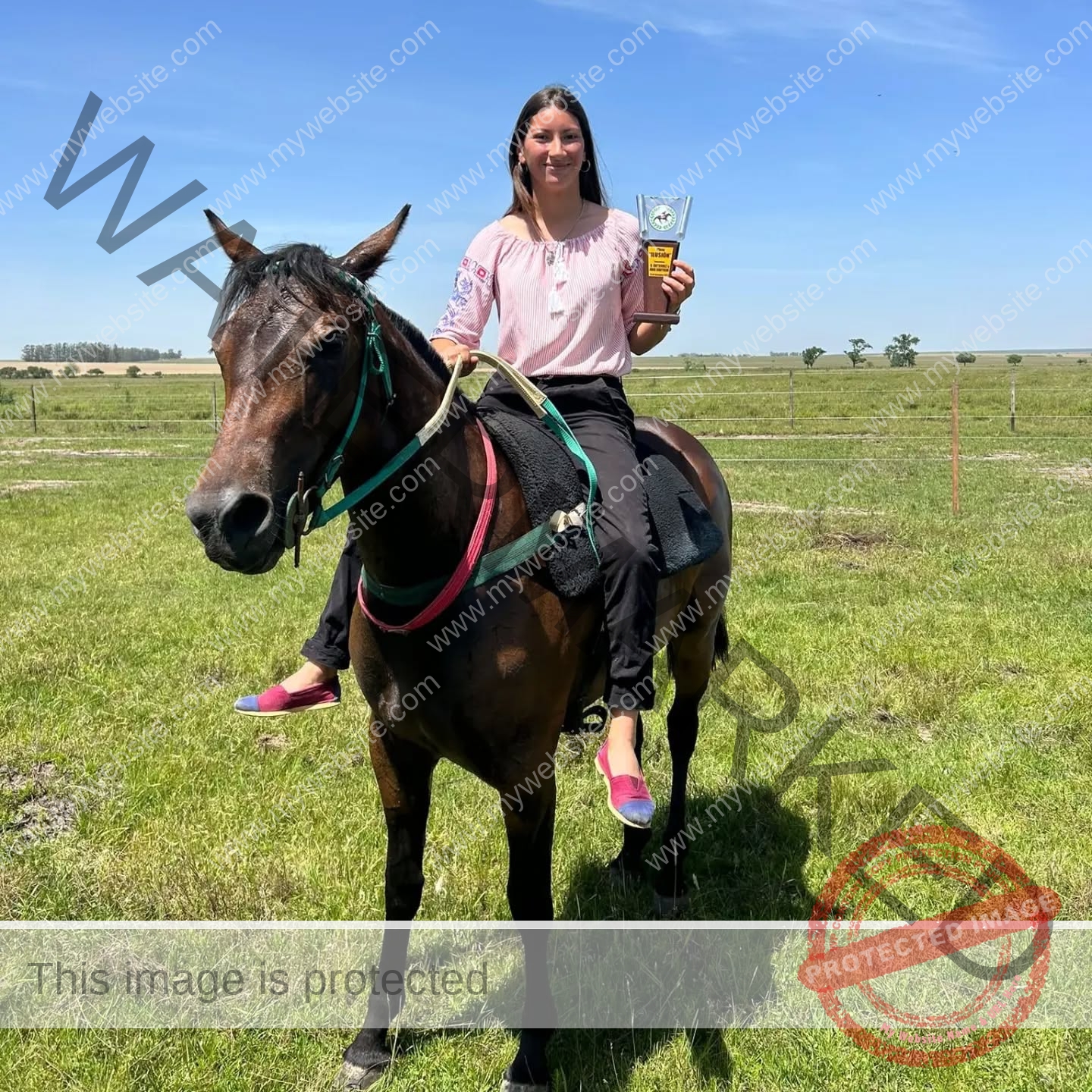
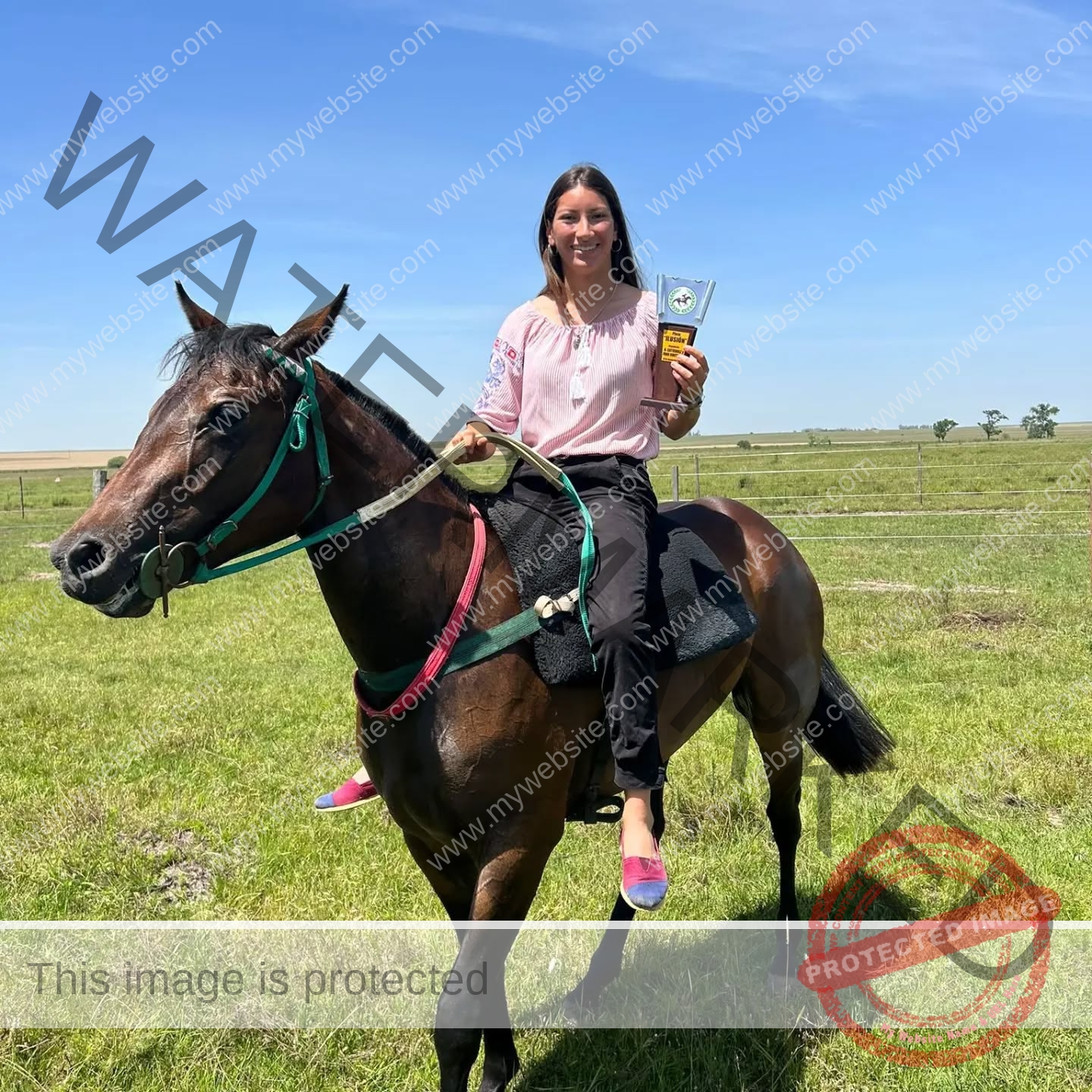
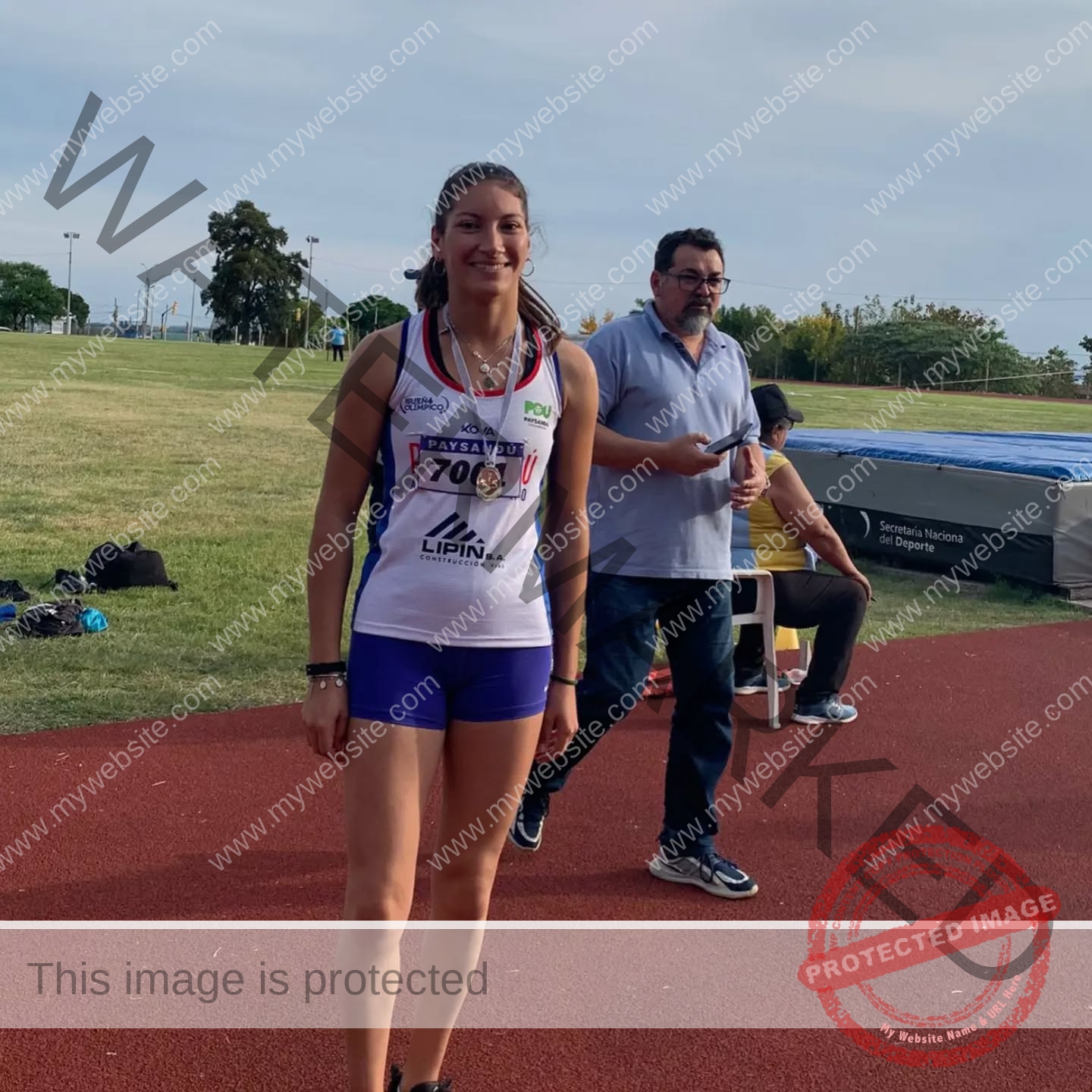
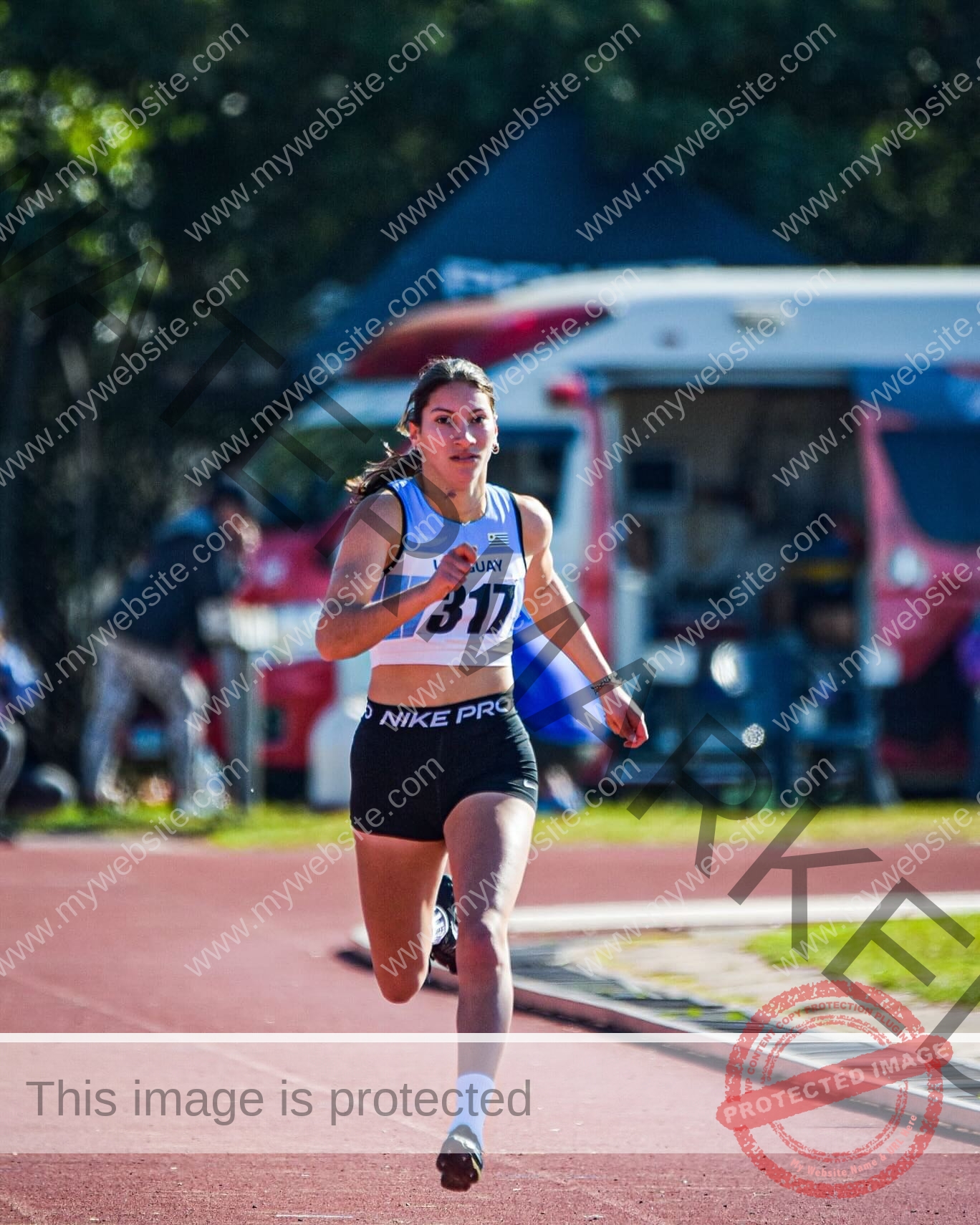
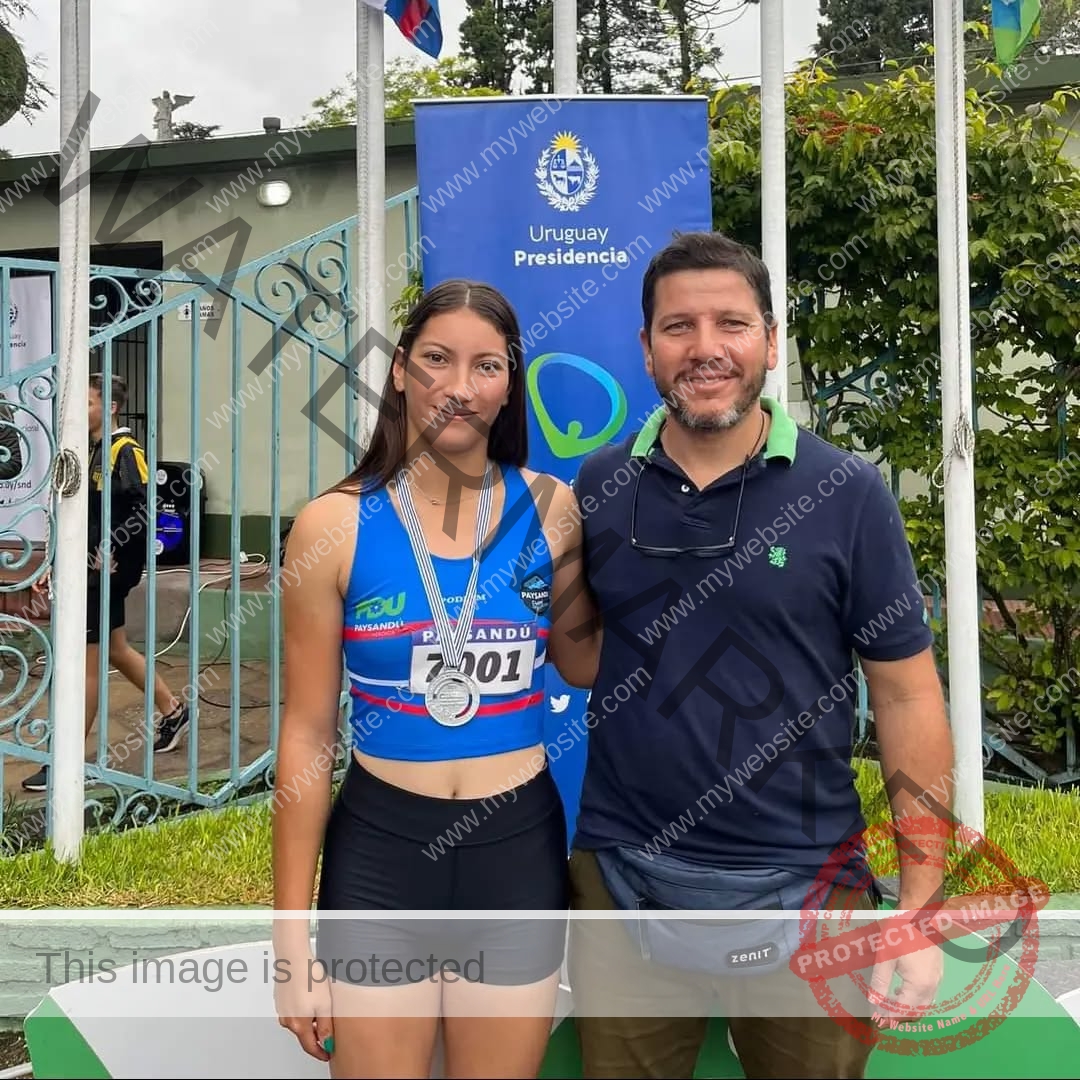
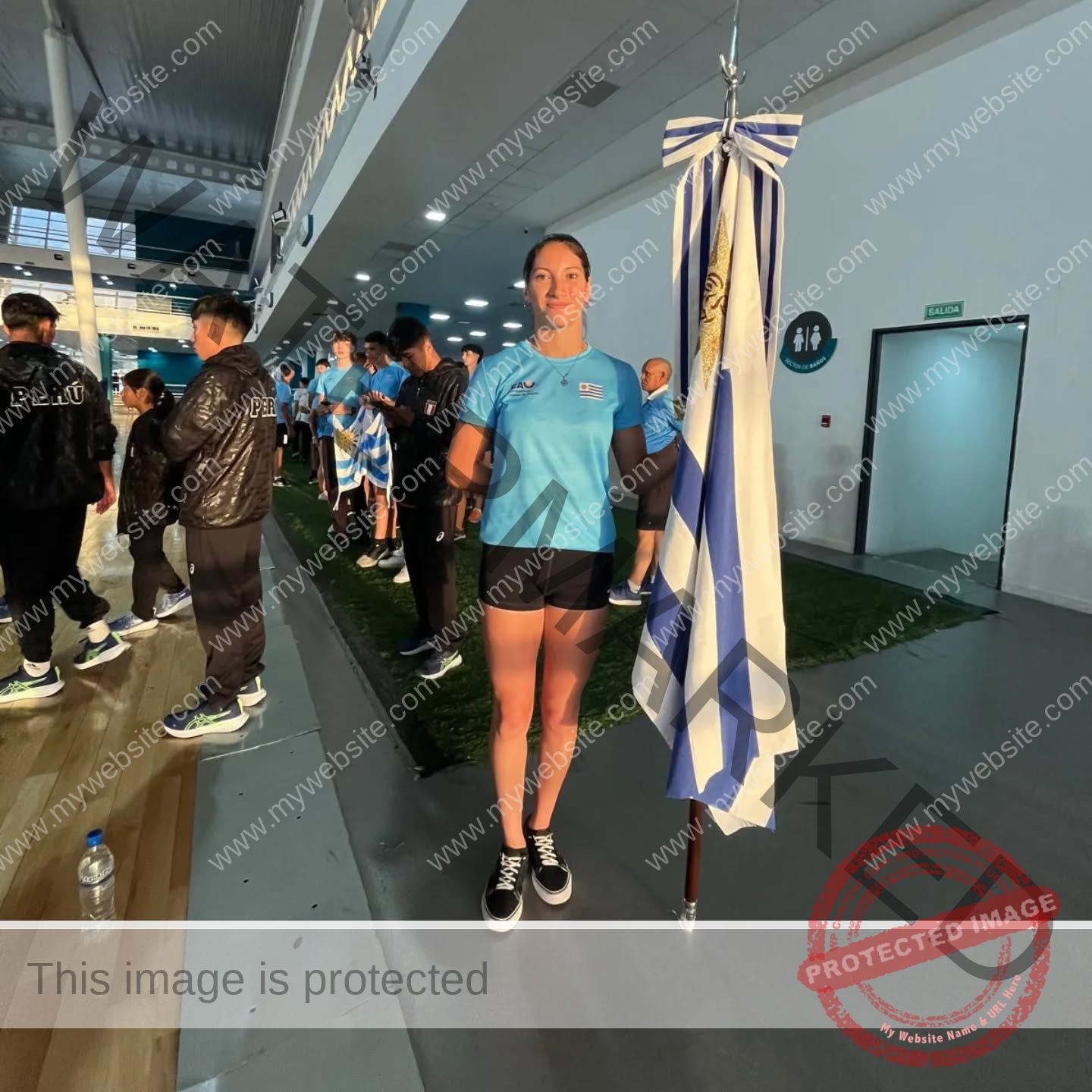
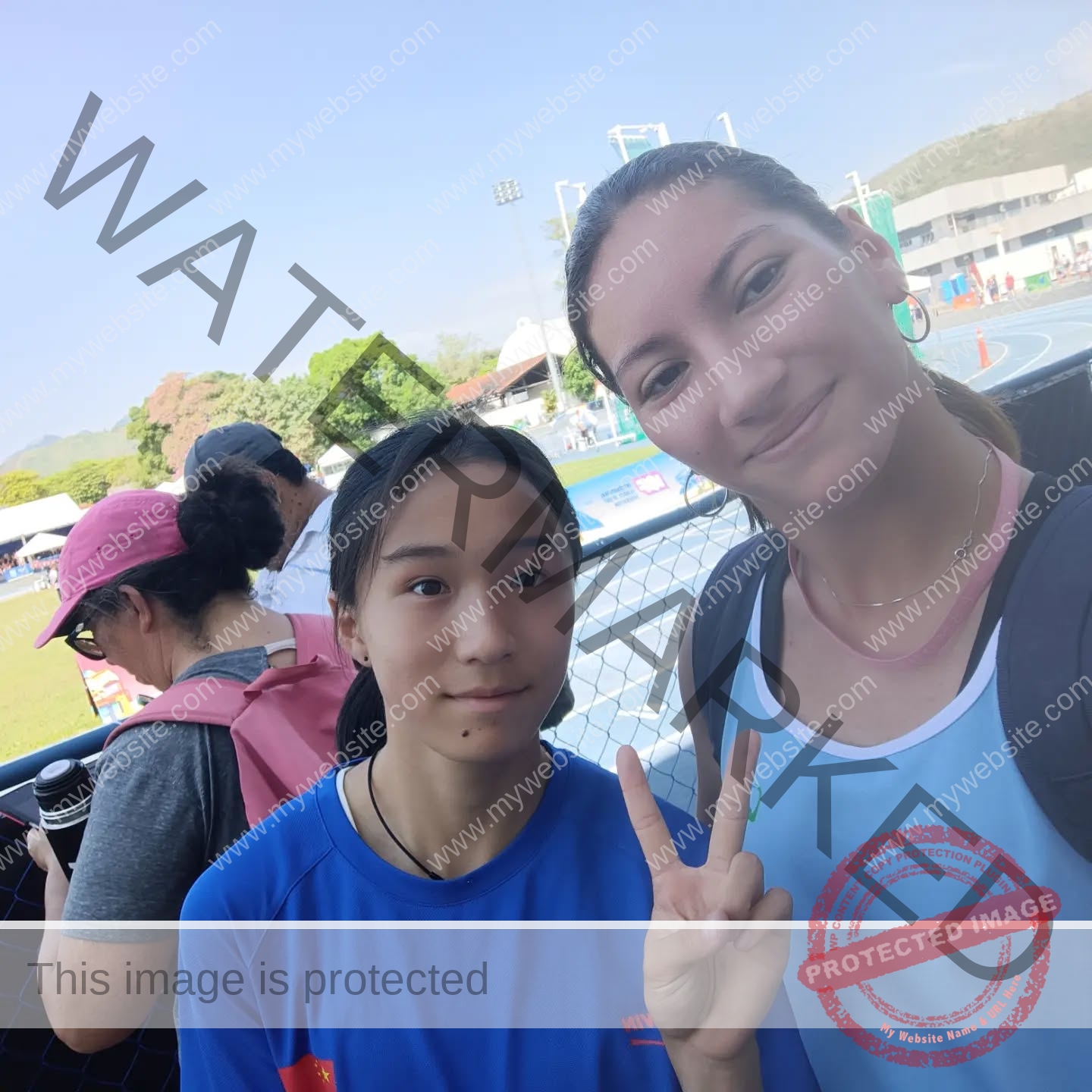
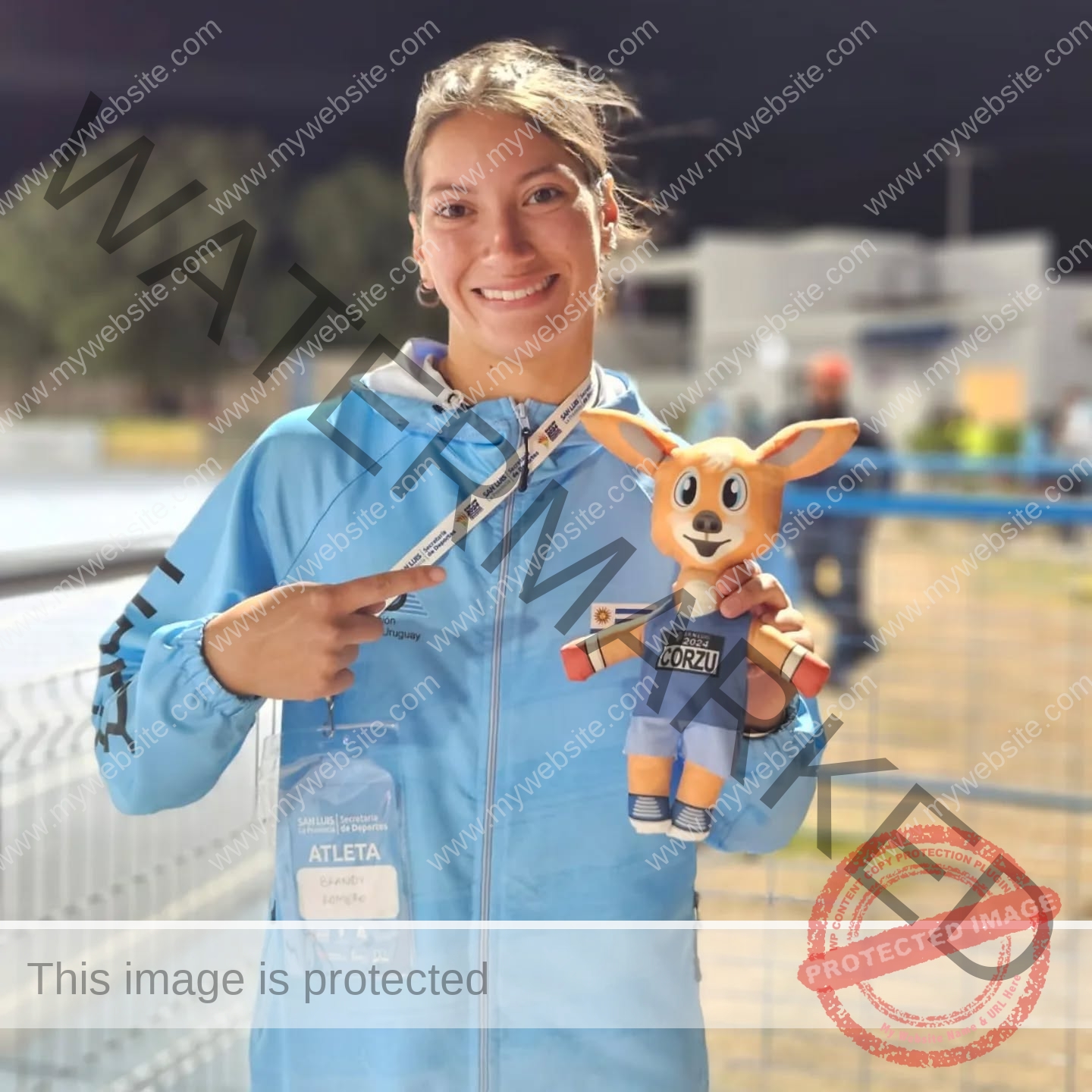
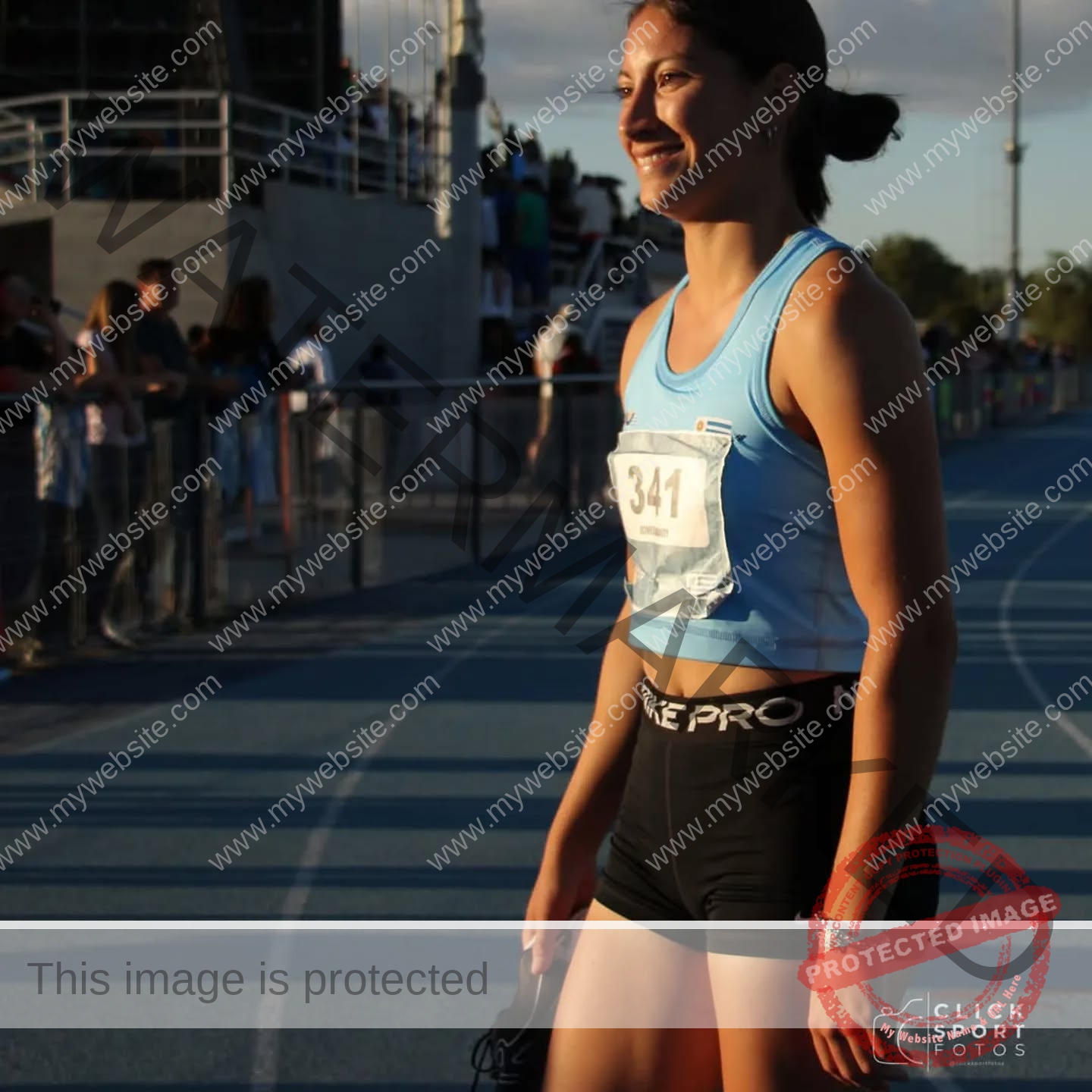
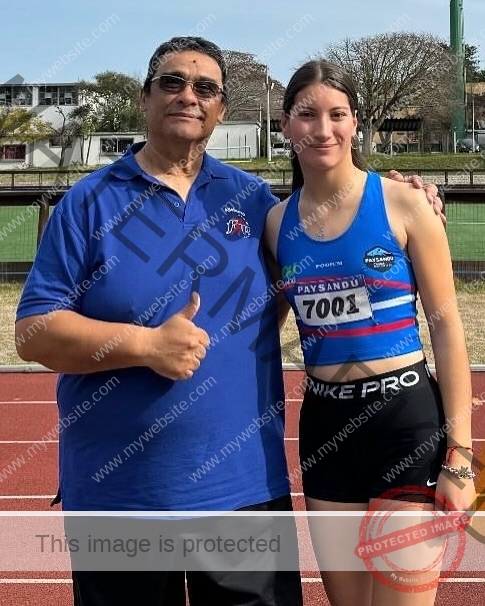
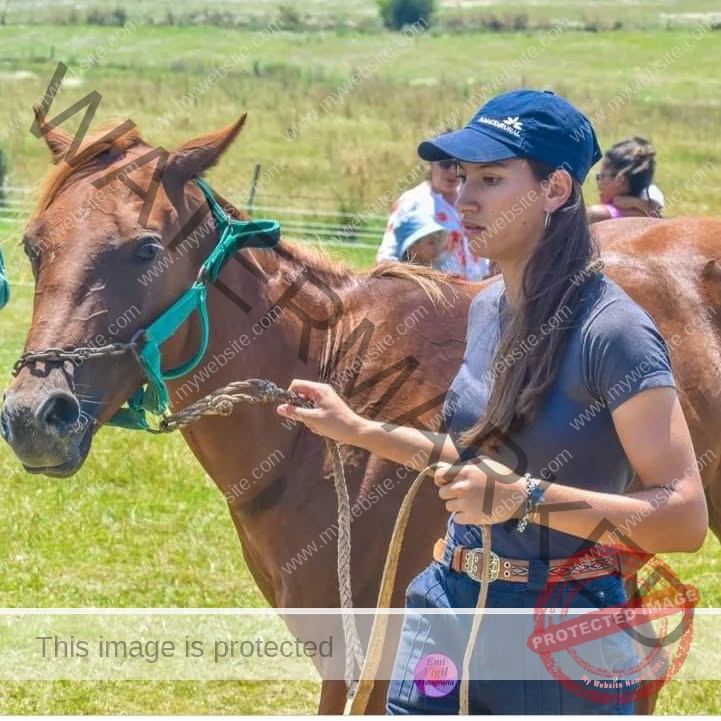
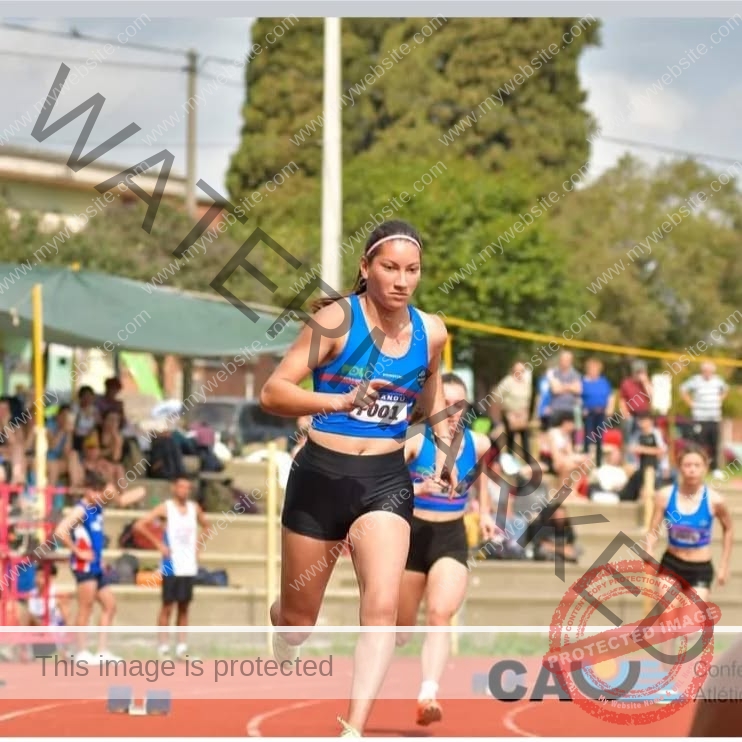
Brandy Romero
Uruguay’s Fastest Rising Star
Brandy Romero was born on January 9, 2008, in Paysandú, Uruguay — a riverside city of roughly 80,000 people on the Argentine border, known for its strong civic pride and, increasingly, its track and field tradition. She is, at seventeen years old, the fastest junior female sprinter Uruguay has produced in a generation, a two-time national record holder in the 200 meters across two different age categories, and a continental medalist who has already competed at the senior South American Championships. She is only getting started.
Paysandú and the Program That Built Her
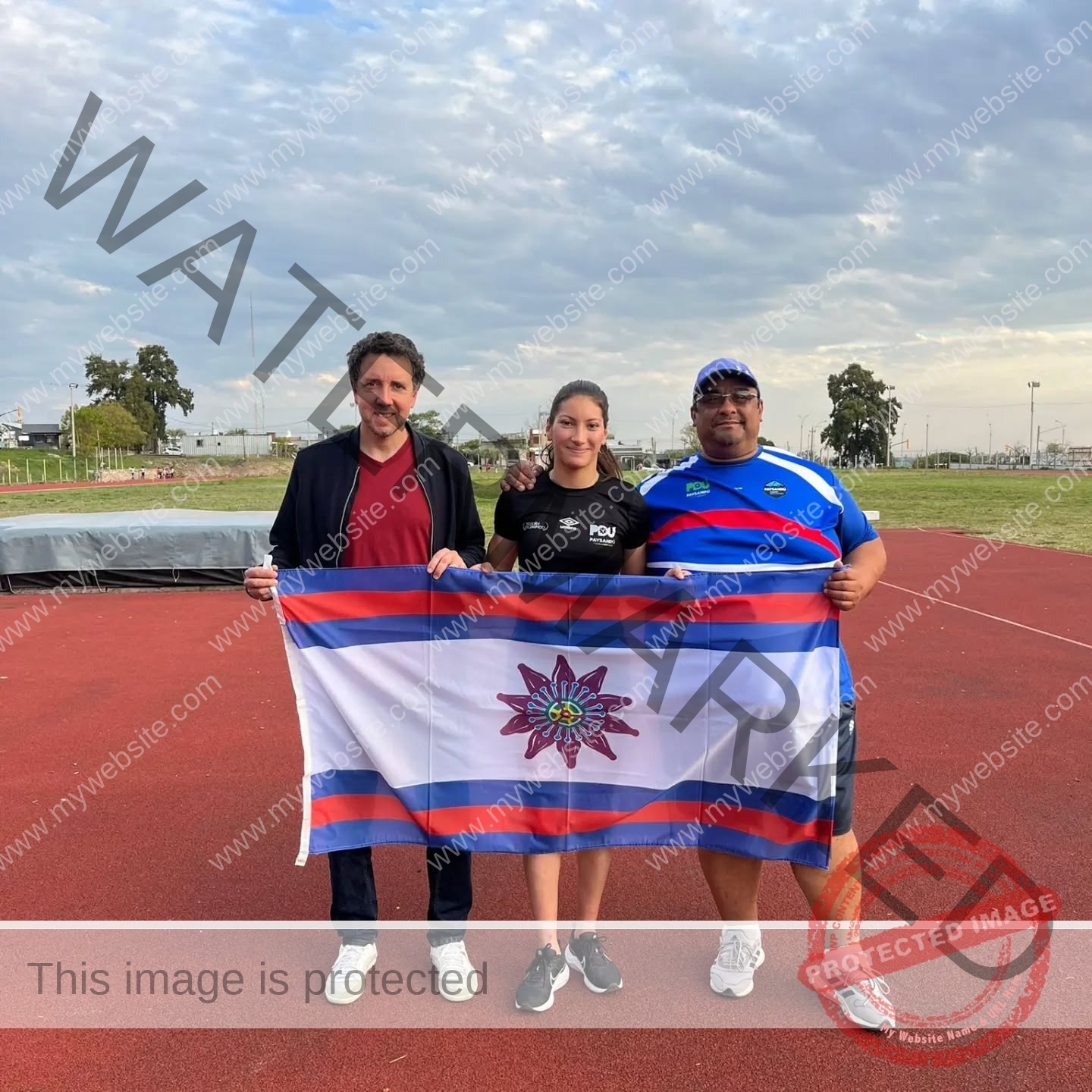
Uruguay’s third-largest city is not the obvious cradle for a sprint prodigy. Paysandú sits far from Montevideo’s more established athletics infrastructure, and for years the department’s competitive athletes had to navigate limited resources and logistical challenges just to reach the national stage. What changed that picture was the Escuela Departamental de Atletismo — the Departmental Athletics School — a program operated directly by the Intendencia Departamental de Paysandú, the city’s municipal government. Through the Intendencia’s Department of Sports, led by director Guillermo Arias, the program grew into a genuine talent pipeline, providing coaching, travel support, and institutional backing that had not previously existed for young athletes in the region.
It was into this program that Brandy Romero arrived as a young teenager, quickly drawing the attention of head coach Julio Acosta. Acosta, a dedicated figure in Paysandú athletics, recognized in Romero a rare combination of natural speed and competitive temperament. Coach Luciana Acosta — also from Paysandú — would travel alongside the athletes to major competitions, providing continuity of support away from home. The relationship between the Acosta coaching staff and the Intendencia proved formative: as coach Julio Acosta later recalled, when Arias reached out about supporting the young athletes, the partnership offered “a great solution to great problems we had been carrying, because a lot of support arrived that we hadn’t had in previous years.” For Romero, that institutional backing would prove essential as her career accelerated rapidly through the international ranks.
Early Career and First International Steps (2023)
Romero made her first significant international appearance in 2023, at just fifteen years old, when she was selected to represent Uruguay at the World School Games in Rio de Janeiro, competing in the 100 meters. It was a milestone moment — her first trip outside Uruguay to compete — and local coverage in the Paysandú newspaper El Telégrafo captured both the excitement and the measured expectations around her participation. Before departing, she was given a formal send-off by Guillermo Arias at the Intendencia. The immediate competitive goal was to approach 12.29 seconds, a time that would have qualified her for the Pan American Youth Championships in Peru scheduled for September of that year. Romero herself was characteristically grounded about it: the first great objective, she acknowledged, was simply to enjoy and learn from the experience.
That mindset — ambitious but patient, process-oriented — would become a signature of her development. She did not qualify for the Pan American Youth Championships that cycle, but the exposure of competing internationally, absorbing a higher-level competitive environment, and returning to Paysandú with a clearer sense of what elite athletics looked like laid important groundwork for what was coming.
Breakthrough Year: 2024
The 2024 season announced Romero to the wider South American athletics community in unmistakable terms.
In November, she traveled to Asunción, Paraguay, for the Grand Prix Sudamericano — a significant open-level South American competition that draws senior athletes from across the continent. Competing as an under-18 athlete against older rivals, she finished fourth in the 100 meters with a time of 12.19 seconds, a new personal best at the distance. Paysandú’s sports media noted how much ground she was conceding in terms of age and experience to her competitors, making the result all the more impressive. She also competed in the 200 meters the following day, her primary event, arriving with a best of 24.95 seconds and eyeing the national U18 record of 24.89 — a mark set in 2021 by Montevideo’s Martina Bonaudi. The record would have to wait, but the trip to Asunción confirmed she was operating at a level well beyond her years.
One month later came the result that put her name on the map of South American junior athletics: the XXVII South American U18 Athletics Championships, held December 6–8, 2024, at the Centro de Desarrollo Deportivo “Pedro Presti” in San Luis, Argentina. This was a serious competition — 450 athletes from 13 countries, conducted on a World Athletics-certified synthetic track in brand-new facilities, with nearly 60,000 people following the event via live stream. Uruguay sent a Paysandú-heavy delegation including Romero, Lucas Núñez, Valentino Torres, Estefanie Camejo, Agustina Quintana, and Manuel Cabrera, accompanied by coach Luciana Acosta.
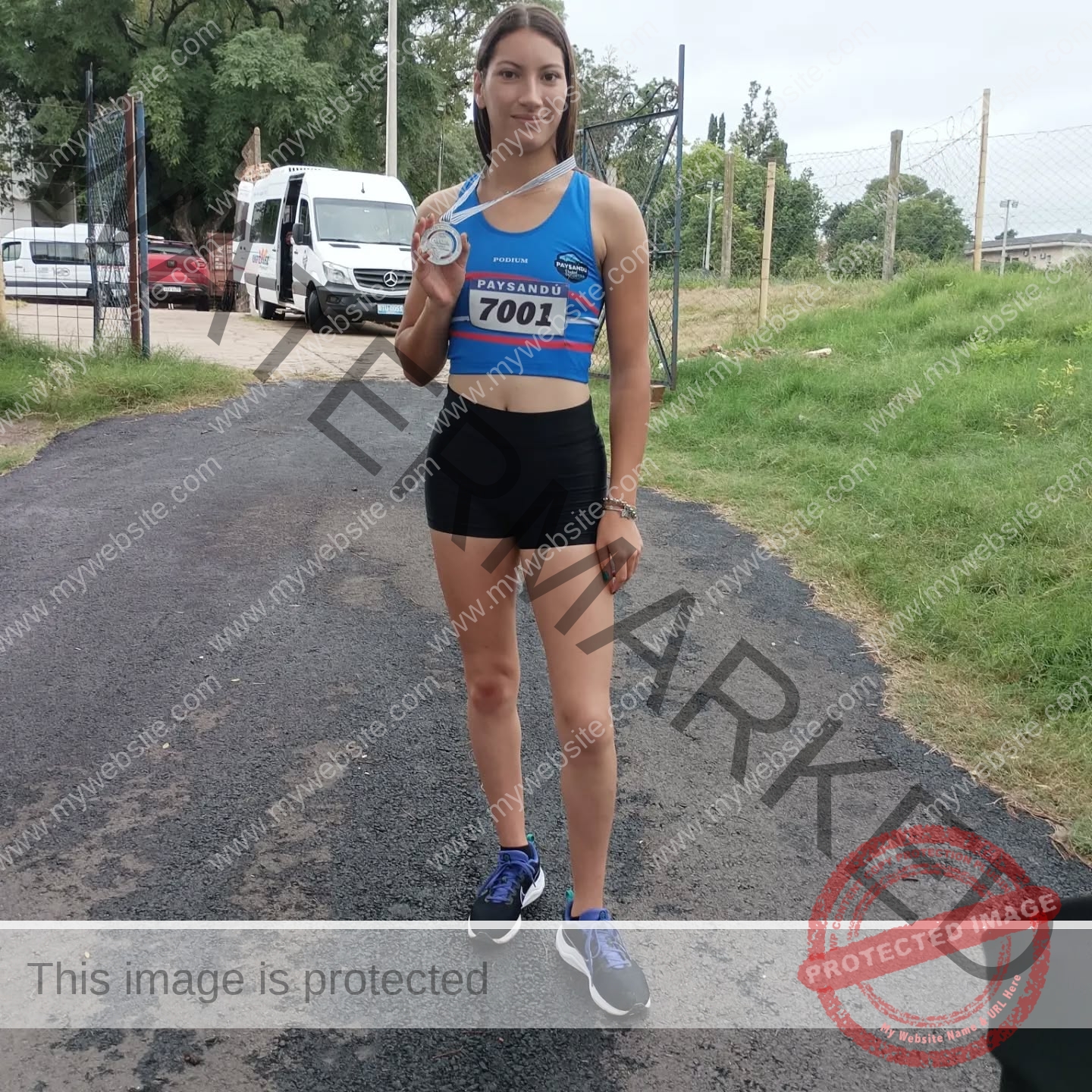
Romero competed in both the 100 meters and the 200 meters. It was in the 200 meters that history was made. Moving through her heat and into the final, she ran 24.34 seconds — a stunning performance in a razor-close race. Ecuador’s Pastrana took the gold by a mere four hundredths of a second; Chile’s Ramírez claimed bronze just two hundredths behind Romero. The silver medal was Uruguay’s only sprint medal at the championship and one of just two medals the country collected in the sprint events across the entire meet. At sixteen years old, Brandy Romero had earned a continental podium finish in her primary event. She was, by any measure, a legitimate South American-level sprinter.
The 24.34 was marked with an asterisk in the record books — a wind-assisted or short-track notation rendering it ineligible for official ratification under World Athletics standards — but it stands on her World Athletics profile as one of her top performances, reflecting the actual speed she demonstrated that December weekend in San Luis.
A Record-Breaking 2025
If 2024 was a breakthrough, 2025 was the year Romero began leaving marks on the historical record of Uruguayan athletics that may stand for decades.
The season opened indoors. On February 1, she ran 7.73 seconds in the 60 meters — a performance noted on her World Athletics profile — before recording a ratified indoor best of 7.87 on February 15. These were encouraging early-season results that confirmed she was developing across the sprint range, not just in her primary 200-meter event.
In April, just before the continental showpiece, she won gold at the Grand Prix Sudamericano — a victory that arrived as Uruguay’s athletic federation was finalizing its roster for the senior South American Championships. The Grand Prix win sealed her selection, and local coverage in El Telégrafo made clear the significance: she was heading to the continent’s most prestigious annual athletics competition as a seventeen-year-old, one of the youngest members of a historic 34-athlete Uruguayan delegation.
The 45th South American Athletics Championships took place April 25–27, 2025, at the Estadio Justo Ernesto Román in Mar del Plata, Argentina — a championship classified by World Athletics, serving double duty as a qualifier for the 2025 World Athletics Championships in Tokyo. Uruguay’s delegation included names like the legendary Déborah Rodríguez, Olympic long jump medalist Emiliano Lasa, and multiple South American champion Manuela Rotundo. Into that company walked Brandy Romero, competing in the 100 and 200 meters as a U18 athlete at a senior continental championship. In the 100-meter heats, she ran 12.12 seconds, finishing fourth in her series. She advanced and competed across the full program. Her World Athletics profile records the result as her “1× in top 8 at South American Championships” — a senior continental top-eight finish at seventeen years old, alongside athletes many years her senior. Julio Acosta traveled with the delegation as one of Uruguay’s coaches, a reflection of the program’s growing national stature.
Then came May 25, and the performance that rewrote the national record books in two categories simultaneously.
Invited to compete at the Argentine National U18 Championships in Mar del Plata — the same city, weeks after the senior championship — Romero lined up in the 200-meter final as a visiting athlete from Uruguay. She crossed the line first, winning the race outright, in a time of 24.71 seconds. The result had two layers of historical significance. First, it broke the Uruguayan U18 national record of 24.89, held since 2021 by Martina Bonaudi of Defensor Sporting. Second — and more strikingly — it broke the Uruguayan U20 national record of 24.73, set by Claudia Acerenza in 1985. That mark had been untouched for forty years. In one race, as an invited guest at a foreign national championship, Romero swept both age-category records for her country.
The Copa Uruguaya de Atletismo, held at the Darwin Piñeyrúa track in Parque Batlle in Montevideo, followed in May. There, representing the Escuela Departamental, Romero won both the 100 meters and the 200 meters outright — adding two national cup titles to a season that was already remarkable. Her training partner Luciana Acosta took first in shot put and hammer throw, reflecting the depth of the Paysandú program at the national level.
The season continued to produce results. On July 20, Romero ran a legal outdoor personal best of 24.55 seconds in the 200 meters — moving well past even her record-breaking May performance and establishing herself as the clear standard-bearer for Uruguayan junior sprint women. On October 3, she ran 11.97 seconds in the 100 meters, her current legal personal best in the event. Both marks are recorded on her World Athletics profile and rank among the better junior times in the South American region.
Civic Recognition: Carrying the Torch
In June 2025, as Paysandú prepared to celebrate the 162nd anniversary of its declaration as a city, the organizing committee made a choice that said something about how the community sees Romero. The traditional torch relay, which brings a ceremonial flame from the Meseta de Artigas to the city center, is one of Paysandú’s most symbolic civic rituals. The lighting ceremony was carried out by veteran ultramarathon runner Jacinto Rivero. The honor of carrying the torch into the city was given to Brandy Romero.
Intendenta Nancy Núñez and Sports Director Guillermo Arias made the announcement in a press conference, with Arias noting that Romero had “recently broken the U18 and U20 records” and had earned the distinction. For a seventeen-year-old athlete from a municipal athletics program, being chosen as the face of her city’s founding anniversary was a meaningful public recognition — and a signal of the degree to which Paysandú has claimed her as its own.
Current Standing and Personal Bests
As of early 2026, Brandy Romero’s World Athletics profile (athlete code 15045211) shows the following personal bests:
- 100 meters: 11.97 seconds (October 3, 2025)
- 200 meters: 24.55 seconds (July 20, 2025) — legal outdoor best
- 200 meters: 24.34 seconds (December 8, 2024) — wind-assisted/short track, not ratified for records
- 60 meters (indoor): 7.87 seconds (February 15, 2025)
Her World Athletics scoring places the 100-meter mark at 997 points and the 200-meter mark at 984 points on the international scoring table — figures that reflect genuinely competitive times at the continental junior level. Her current world rankings are approximately #1280–1330 in the women’s 200 meters and #1945–1967 in the women’s 100 meters globally — rankings that, for a seventeen-year-old from a small-country program still in its developmental phase, represent a solid foundation for continued growth.
She holds two Uruguayan national records: the women’s U18 record in the 200 meters (24.71, set May 25, 2025) and the women’s U20 record in the 200 meters (24.71, set the same day). Her World Athletics summary credits her with being a two-time national champion and one-time top-8 finisher at the South American Championships.
The Program Behind the Athlete
One of the more interesting aspects of Romero’s story is what it says about infrastructure and opportunity in Uruguayan athletics outside the capital. The Escuela Departamental de Atletismo is not a glamorous private club or a university-affiliated powerhouse. It is a municipal program — funded and supported by the Intendencia Departamental de Paysandú — that has, through the dedication of coaches Julio and Luciana Acosta and the institutional support of the Intendencia’s sports directorship, built something genuinely competitive.
The program produced other nationally notable athletes alongside Romero, including javelin thrower Manuela Rotundo (a multiple South American champion and one of Uruguay’s top women’s athletes), javelin thrower Kevin Machado, and 400-meter runner Valentino Torres, who competed alongside Romero at the San Luis U18 championships. That Paysandú — not Montevideo — sent the largest or most decorated contingent to several recent national and continental competitions is a testament to what the program has built.
Coach Julio Acosta has been direct about what the Intendencia’s backing has meant: travel funding, training facilities, and the kind of organizational stability that allows athletes to focus on training rather than logistics. For Romero, who has now traveled to Paraguay, Argentina (multiple times), Brazil, and competed at the senior South American level — all before her eighteenth birthday — that support has been foundational.
Social Media and Sponsorships
Romero does not currently maintain prominent public-facing social media accounts with a confirmed following. Coverage of her career has appeared primarily through the Intendencia de Paysandú’s official sports social media presence (Facebook: deportesidp) and through Paysandú’s local newspaper El Telégrafo, which has covered her career closely and consistently. She has no confirmed commercial sponsorships at this stage of her career; her primary institutional support comes through the Intendencia Departamental de Paysandú and the national structure of the Confederación Atlética del Uruguay (CAU).
Outlook
Brandy Romero turns eighteen in January 2026. She remains eligible for U18 competitions through that year’s season, though her results suggest she is already competitive at the U20 and, increasingly, the open senior level. The 2025 World Athletics Championships in Tokyo — for which the South American Championships in Mar del Plata served as a qualifier — represented the kind of horizon that athletes at her level begin to aim for. Whether she reaches global championships in the near term or continues building through the continental circuit, the trajectory is clearly upward.
What makes Romero’s story particularly compelling is not just the speed — though at 17 with a 24.55 legal outdoor 200 meters and an 11.97 100-meter best, the speed is real — but the setting. She did not come up through a capital city club with deep resources and a long roster of international alumni. She came from Paysandú, through a municipal program, coached by people who are from the same community she represents. When she carried the torch into her city on its 162nd anniversary, it meant something beyond ceremony. It was a city acknowledging one of its own, at the beginning of what looks like it could be a long, distinguished run.
