





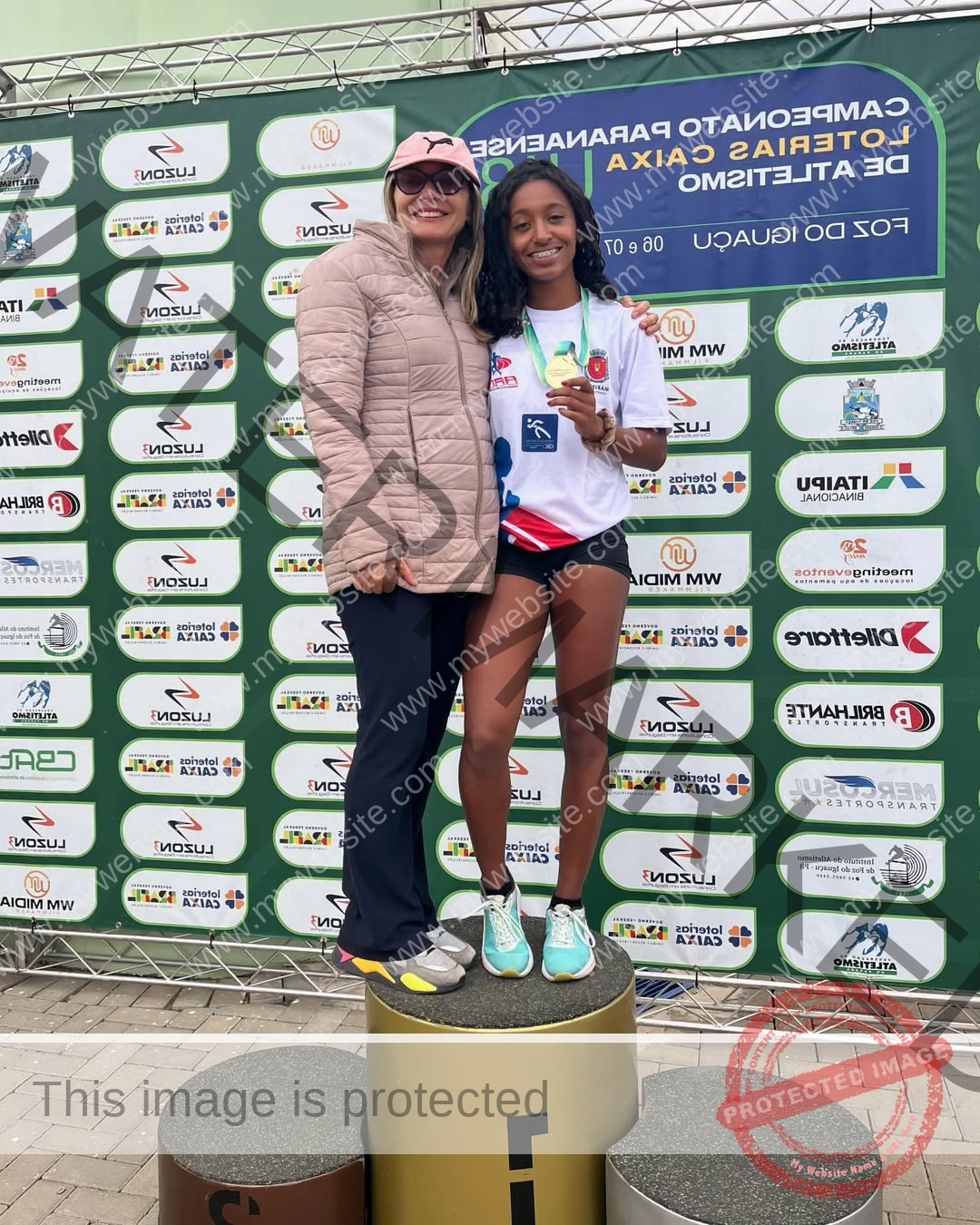
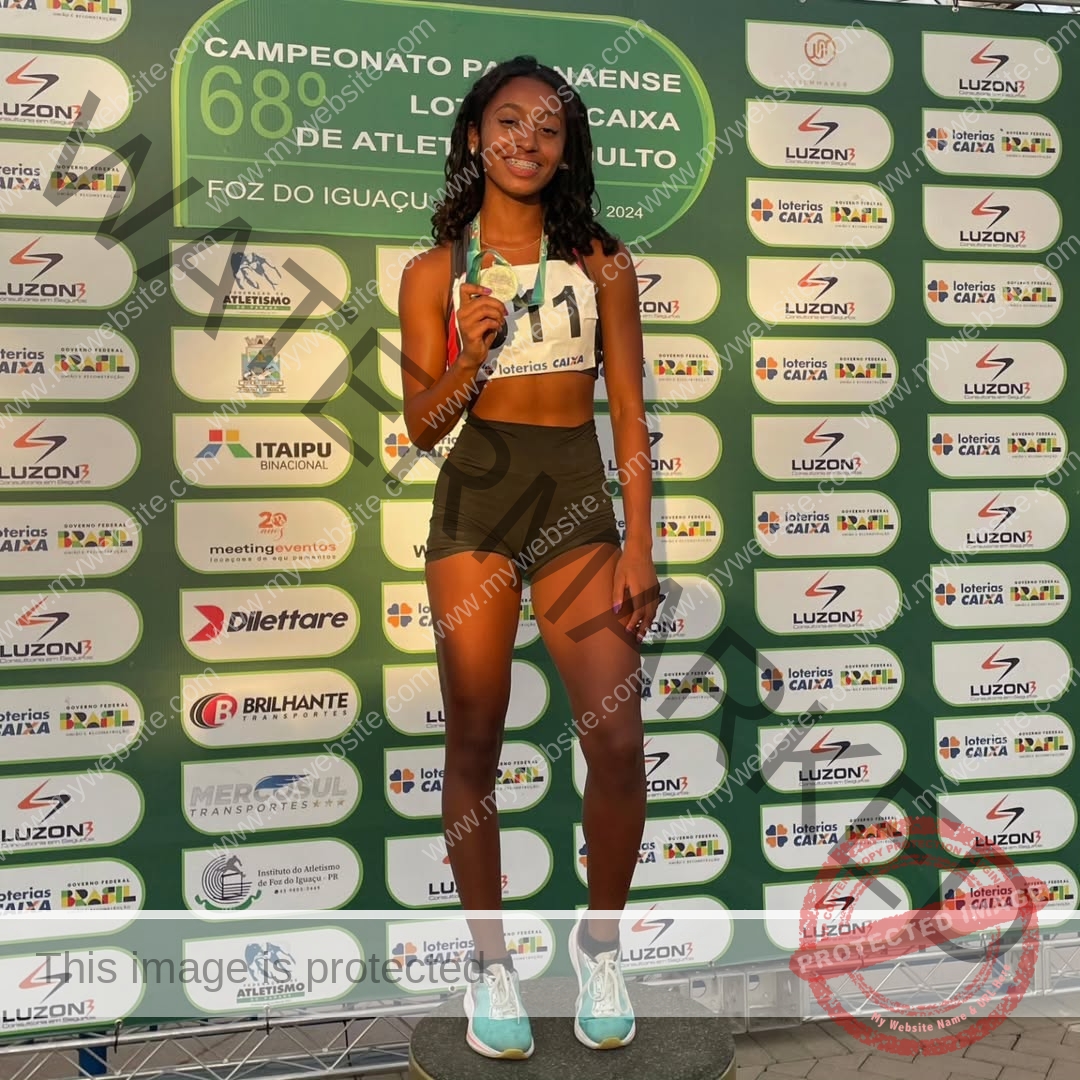
Thays Araujo – Brazil’s Versatile Young Athletics Star
Thays Araujo is an emerging Brazilian track and field athlete who exemplifies remarkable versatility by competing at a high level in two distinctly different athletic disciplines—sprinting and pole vaulting. Representing Brazil on the youth athletics circuit, Araujo trains in Foz do Iguaçu, a city in the state of Paraná near Brazil’s borders with Argentina and Paraguay, where she has developed into one of the country’s most promising young multi-event athletes.
Athletic Versatility: Speed and Heights
What sets Araujo apart in Brazilian athletics is her exceptional ability to excel in two events that require vastly different physical and technical skill sets. As both a sprinter and pole vaulter, she demonstrates the rare combination of explosive speed, technical precision, and aerial awareness that few athletes successfully master.
Sprint Performance
In the 100 meters, Araujo has achieved impressive marks that place her among Brazil’s top youth sprinters:
- Personal Best: 12.58 seconds (October 17, 2024)
- Secondary Best: 12.60 seconds (October 17, 2024)
Her sprint times in the low 12-second range demonstrate the explosive power and technical proficiency necessary to compete at national and international levels in the youth category. The 100 meters requires perfect start mechanics, maximum acceleration, and the ability to maintain top speed under pressure—skills Araujo has clearly developed through dedicated training.
Pole Vault Achievement
In the pole vault, Araujo has reached heights that showcase her technical ability and fearlessness:
- Personal Best: 2.90 meters (May 11, 2024, Pista de Atletismo de Foz do Iguaçu)
Pole vaulting is one of track and field’s most technical and demanding events, requiring athletes to sprint down a runway at near-maximum speed while carrying a pole, plant it precisely in a box, and use their momentum to vault themselves over a bar several meters in the air. Success demands courage, timing, upper body strength, core stability, and spatial awareness—qualities Araujo possesses in abundance.
The combination of sprinting speed and vaulting technique makes her a valuable asset in combined events and demonstrates her well-rounded athletic development.
Training Base: Foz do Iguaçu
Araujo trains at the Pista de Atletismo de Foz do Iguaçu, a modern athletics facility that has become a hub for developing Brazilian track and field talent. Located in one of Brazil’s most scenic cities—famous for the spectacular Iguaçu Falls, one of the world’s largest waterfall systems—Foz do Iguaçu provides an inspiring backdrop for athletic excellence.
The athletics complex in Foz do Iguaçu features:
- A double-radius 400-meter track meeting international standards
- Six curved lanes and eight straight lanes
- Two pole vault installations
- Two high jump installations
- Two triple jump and long jump installations
- Two shot put circles
- Two javelin throwing areas
- A steeplechase pit
- Combined disc and hammer throwing areas
This comprehensive facility allows athletes like Araujo to train across multiple disciplines with proper equipment and coaching, contributing to her development as a multi-event athlete.
Instituto do Atletismo de Foz do Iguaçu
Araujo is part of the Instituto do Atletismo de Foz do Iguaçu (Foz do Iguaçu Athletics Institute), an organization that has produced numerous successful Brazilian athletes. The institute has gained recognition for developing talent across various athletics disciplines, creating a supportive environment where young athletes can pursue excellence while maintaining their education and personal development.
Training alongside other talented athletes from the Foz do Iguaçu program, Araujo benefits from a competitive training environment, expert coaching, and the camaraderie of teammates who share her dedication to the sport.
The Challenge of Dual-Event Competition
Competing in both sprints and pole vault presents unique challenges that test Araujo’s physical and mental capabilities:
Physical Demands: Sprinting requires explosive fast-twitch muscle fiber recruitment and anaerobic power, while pole vaulting demands upper body strength, core stability, and the ability to control one’s body in flight. Training for both events simultaneously requires careful periodization to avoid overtraining while developing the distinct physical qualities each event requires.
Technical Complexity: The 100 meters demands perfection in start mechanics, acceleration patterns, and sprint mechanics. Pole vaulting requires mastering the approach run, pole plant, take-off, swing-up, extension, turn, and bar clearance—a complex sequence that takes years to refine. Dividing training time between two highly technical events challenges athletes to maintain proficiency in both.
Mental Switching: Sprinting is a brief explosion of maximum effort lasting roughly 12 seconds, while pole vaulting involves repeated attempts with recovery time between efforts. The psychological approach differs significantly—sprinters must channel controlled aggression, while vaulters need patience, visualization, and the ability to manage fear.
Equipment Management: Unlike pure sprinters who need only spikes and starting blocks, Araujo must also master pole selection, understanding how different poles flex and respond to her speed and body weight—adding another layer of technical knowledge to her athletic repertoire.
Youth Athletics in Brazil
As a young athlete competing on the Brazilian athletics circuit, Araujo represents the next generation of Brazilian track and field stars. Brazil has a rich tradition in athletics, producing Olympic champions and world record holders across multiple disciplines, including:
- Adhemar Ferreira da Silva: Brazil’s first Olympic athletics champion, winning gold in triple jump at Helsinki 1952 and Melbourne 1956
- Thiago Braz da Silva: Olympic pole vault champion (Rio 2016) and bronze medalist (Tokyo 2021), who set the Olympic record of 6.03 meters
- Alison dos Santos: 400-meter hurdles world champion (2022) and two-time Olympic bronze medalist
- Vanderlei Cordeiro de Lima: Olympic marathon bronze medalist (Athens 2004) and Pierre de Coubertin Medal recipient
- Fabiana Murer: Pole vault world champion and South American record holder
Araujo follows in the footsteps of these Brazilian legends, particularly inspired by compatriot Thiago Braz, who proved that Brazilian pole vaulters can compete at the highest levels of international competition.
The Confederação Brasileira de Atletismo (CBAt)
As a competitive athlete in Brazil, Araujo falls under the governance of the Confederação Brasileira de Atletismo (Brazilian Athletics Confederation), the national governing body responsible for organizing competitions, developing talent, and selecting athletes for international representation.
The CBAt oversees a comprehensive competition structure including:
- National championships across age categories (youth, junior, senior)
- Regional competitions
- Copa Brasil events in various disciplines
- Combined events championships
- Selection processes for international competitions including South American Championships, Pan American Games, and Olympic Games
Through this structure, Araujo has opportunities to compete against Brazil’s best athletes in her age group, measure her progress, and work toward selection for international competitions representing Brazil.
Foz do Iguaçu: A Unique Training Environment
Training in Foz do Iguaçu offers Araujo unique advantages and experiences. The city, located at the tri-border area where Brazil, Argentina, and Paraguay meet, provides:
Natural Inspiration: The proximity to the magnificent Iguaçu Falls—one of the New Seven Wonders of Nature—creates an environment of natural beauty that can inspire athletic achievement.
International Exposure: The tri-border location exposes athletes to international influences and cultures, with easy access to competitions and training opportunities in neighboring countries.
Climate: The subtropical climate allows for year-round outdoor training, avoiding the seasonal interruptions common in temperate regions.
Tourism Infrastructure: As one of Brazil’s major tourist destinations, Foz do Iguaçu has excellent infrastructure, including quality sports facilities, accommodations, and transportation—important factors for athletes who travel frequently for competitions.
Growing Sports Culture: The city has invested significantly in athletics infrastructure, recognizing the importance of sports for youth development and community pride.
The Path Forward
As a youth athlete, Araujo stands at a critical juncture in her athletic development. The coming years will determine whether she continues competing in both events or specializes in one discipline. Many successful multi-event athletes eventually focus their energy on a single event as they progress toward senior competition, though some maintain versatility throughout their careers.
Potential Pathways:
Sprinting Specialization: With her 12.58-second 100-meter time, Araujo could focus exclusively on sprints, potentially adding the 200 meters and 4×100-meter relay to her repertoire. Specialization might allow her to drop her time further, potentially reaching the 11-second range with focused training.
Pole Vault Focus: Dedicating herself fully to pole vaulting could allow Araujo to follow Thiago Braz’s path, potentially reaching heights of 4.00 meters and beyond with continued development in strength, technique, and equipment optimization.
Combined Events: Her versatility makes her an ideal candidate for the heptathlon, where athletes compete in seven events over two days. Her speed and vaulting ability would provide strong scoring opportunities in the 100-meter hurdles, high jump, 200 meters, and long jump, complementing her pole vault background.
Continued Versatility: Some athletes successfully maintain proficiency in multiple events throughout their careers, using each discipline to complement the other and keeping training fresh and engaging.
Youth Development in Brazilian Athletics
As part of Brazil’s youth athletics development system, Araujo benefits from structured competition opportunities designed to nurture young talent. The Brazilian system includes:
- Age-Group Competitions: Championships for under-16, under-18, and under-20 categories allow athletes to compete against age-appropriate opposition
- Talent Identification: Successful performances at regional and national levels can lead to inclusion in national talent development programs
- International Opportunities: Top youth athletes earn opportunities to represent Brazil at South American Youth Championships, Pan American Junior Championships, and World U20 Championships
- Educational Support: Programs that help young athletes balance academic commitments with athletic training
The Broader Impact
Young athletes like Thays Araujo play a crucial role in inspiring the next generation of Brazilian track and field competitors. By demonstrating that athletes from Foz do Iguaçu—far from Brazil’s major athletic centers in São Paulo, Rio de Janeiro, or Belo Horizonte—can achieve national-level success, she shows that geographic location need not limit athletic ambitions.
Her success also highlights the importance of municipal and state investment in athletics infrastructure. The modern track facility in Foz do Iguaçu represents a commitment to youth sports development that directly enables athletes like Araujo to pursue their dreams without leaving their home region.
Physical and Technical Development
As a youth athlete still physically maturing, Araujo’s performances will likely improve significantly in the coming years as she:
Gains Strength: Natural physical maturation combined with progressive strength training will enhance both her sprinting power and pole vaulting capabilities.
Refines Technique: Continued technical coaching will allow her to optimize her mechanics in both events, finding efficiency gains that translate to better performances.
Develops Event-Specific Speed: Improving her approach speed in pole vault while maintaining sprint speed in the 100 meters represents a specific training challenge that, if mastered, will elevate both performances.
Builds Competition Experience: Exposure to high-level competition provides invaluable lessons in race tactics, pressure management, and the mental aspects of elite athletics.
Representing Brazilian Athletics
Every time Araujo competes, she carries forward Brazil’s proud athletics tradition. Brazilian athletes are known internationally for their joy, passion, and determination—qualities embodied in champions like Adhemar Ferreira da Silva’s celebratory backflips after setting world records, or Vanderlei Cordeiro de Lima’s gracious acceptance of his bronze medal despite being attacked during the Athens Olympic marathon.
As she develops her career, Araujo has the opportunity to add her own chapter to Brazilian athletics history, inspiring young girls throughout Brazil to pursue track and field and demonstrating that with dedication, quality coaching, and the right support system, athletes from any region can achieve excellence.
Looking Ahead
Thays Araujo’s journey in track and field is still in its early chapters. With personal bests of 12.58 seconds in the 100 meters and 2.90 meters in the pole vault, she has established herself as a talented and versatile young athlete with significant room for growth. Whether she ultimately becomes a specialist in one event or maintains her multi-event versatility, her current achievements demonstrate the potential for future success at national and possibly international levels.
Training in Foz do Iguaçu under the Instituto do Atletismo program, competing on Brazil’s youth circuit, and developing across multiple disciplines, Araujo represents the best of Brazilian youth athletics—talented, dedicated, and representing her city and country with every competition.
As she continues her athletic journey, the Brazilian athletics community watches with interest to see how this versatile young athlete from Foz do Iguaçu will develop, which event path she will choose, and how high—both literally and figuratively—she will ultimately soar in her track and field career.
Go Thays!
