
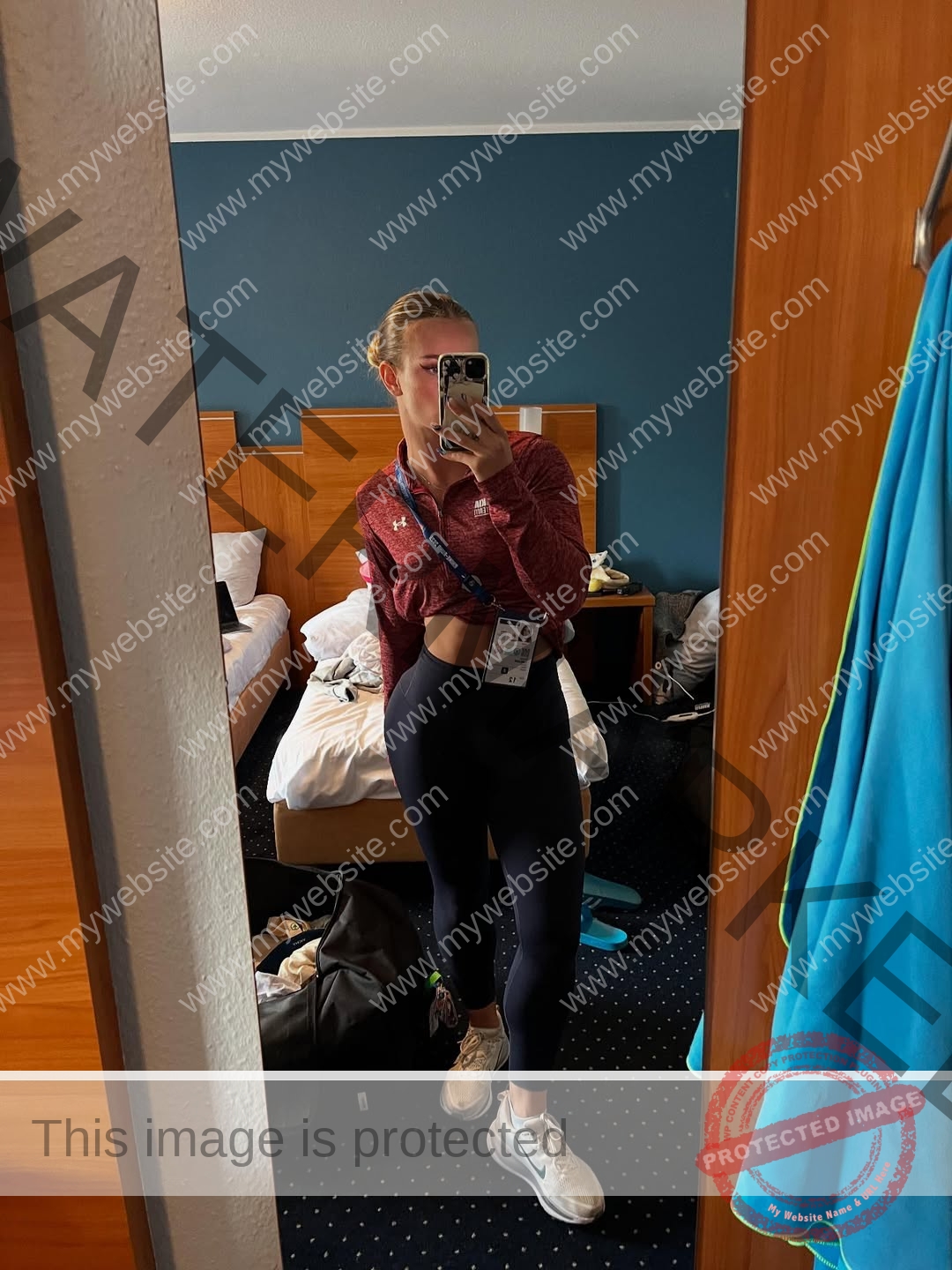
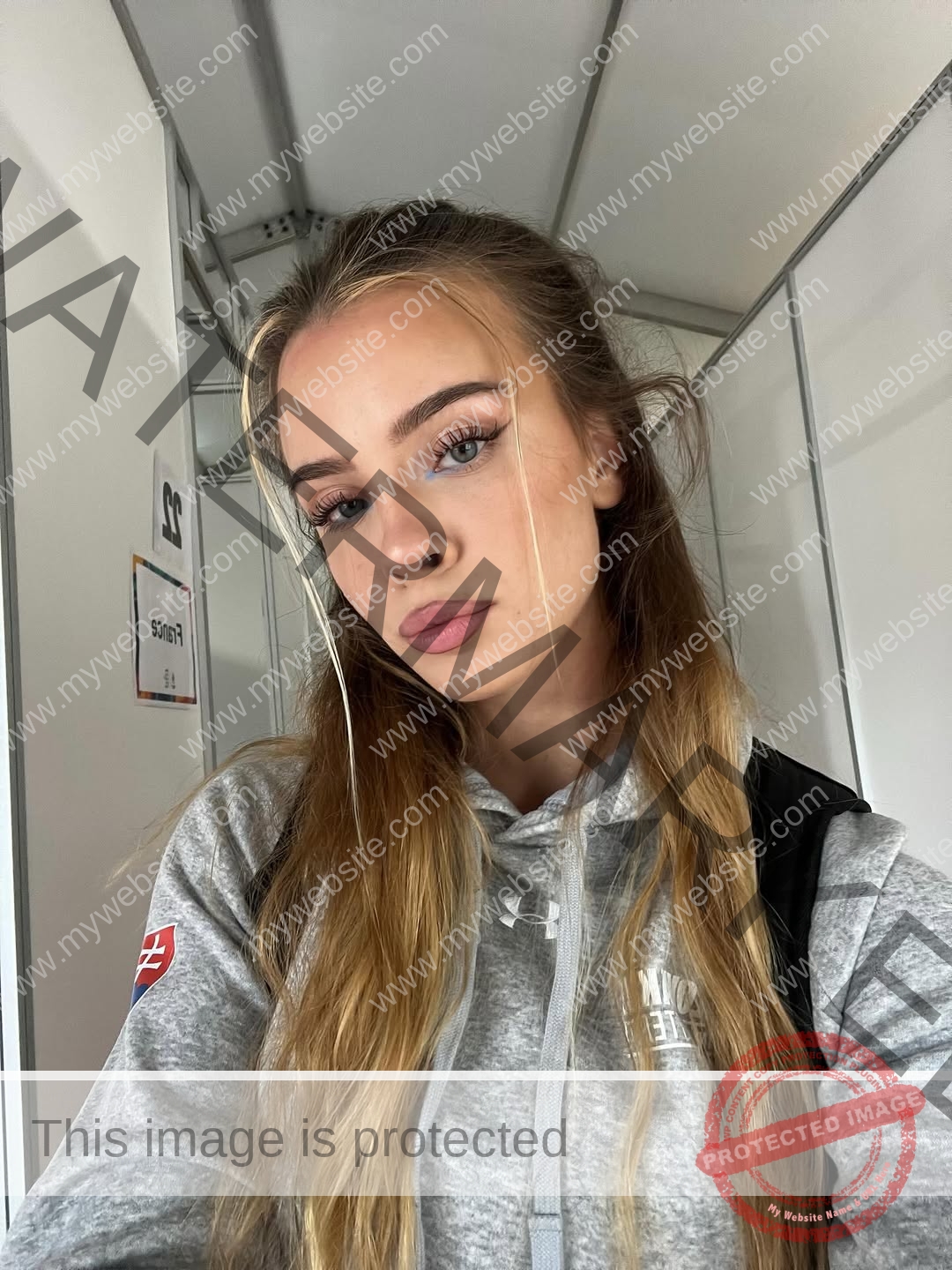
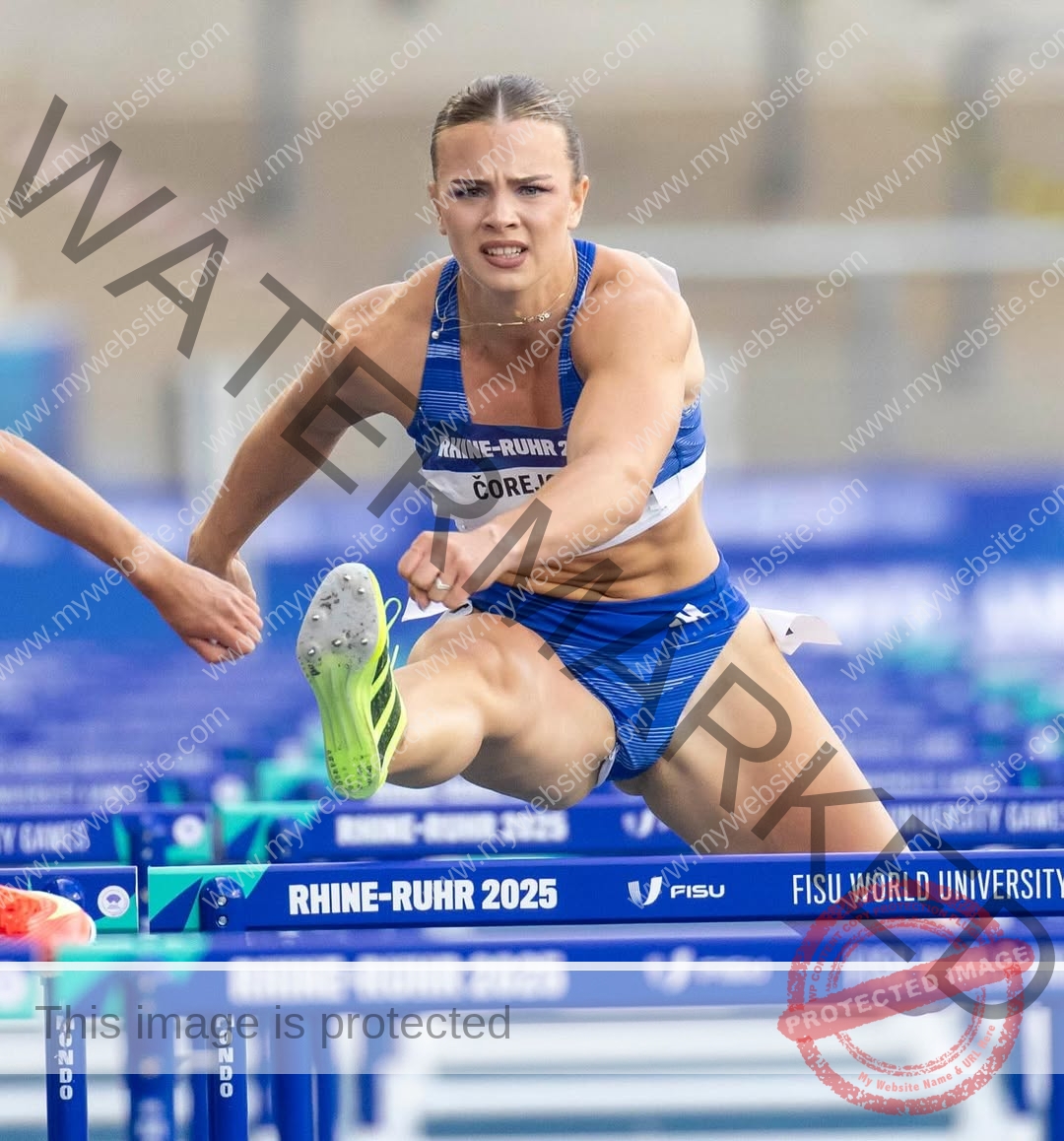
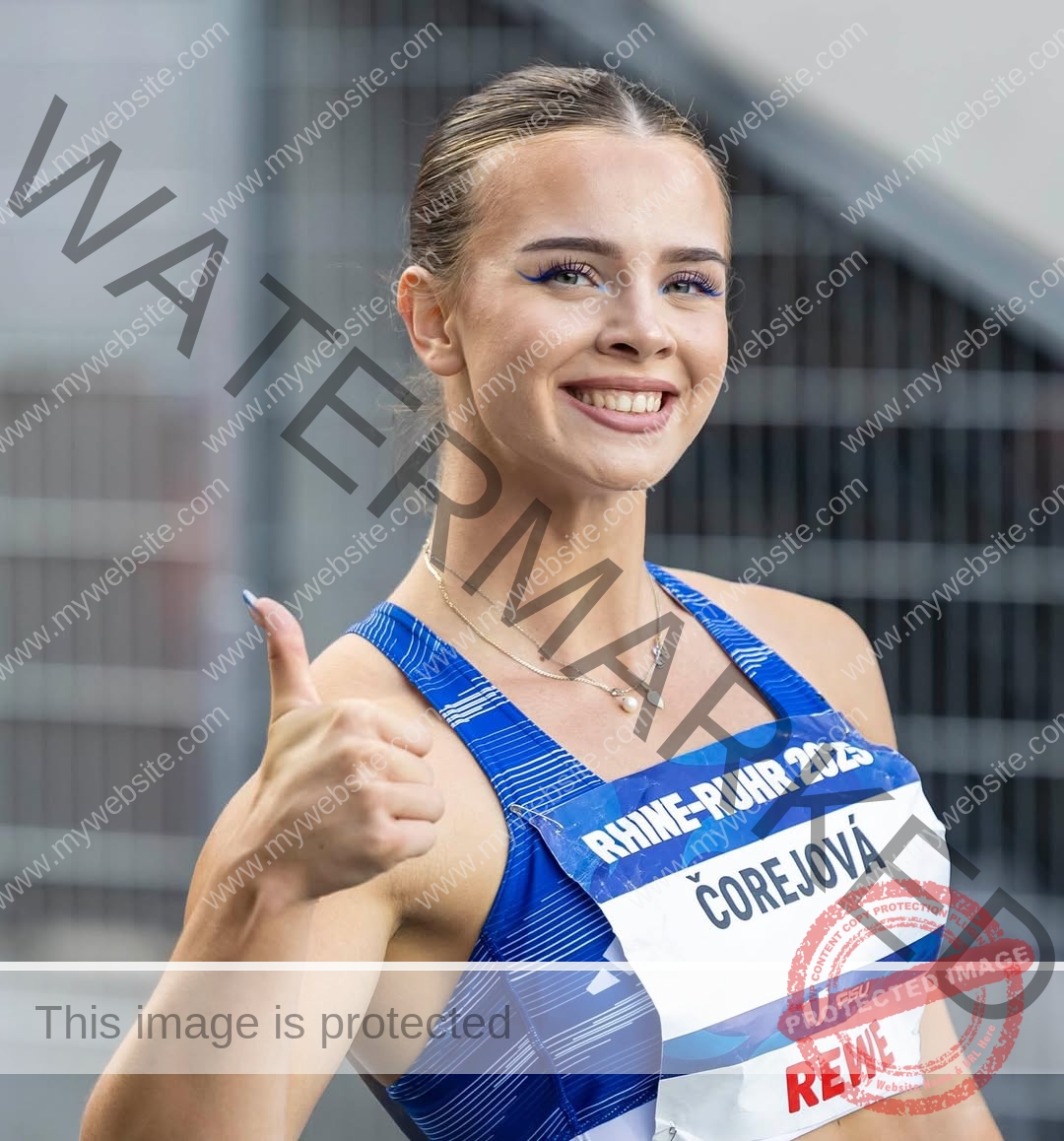

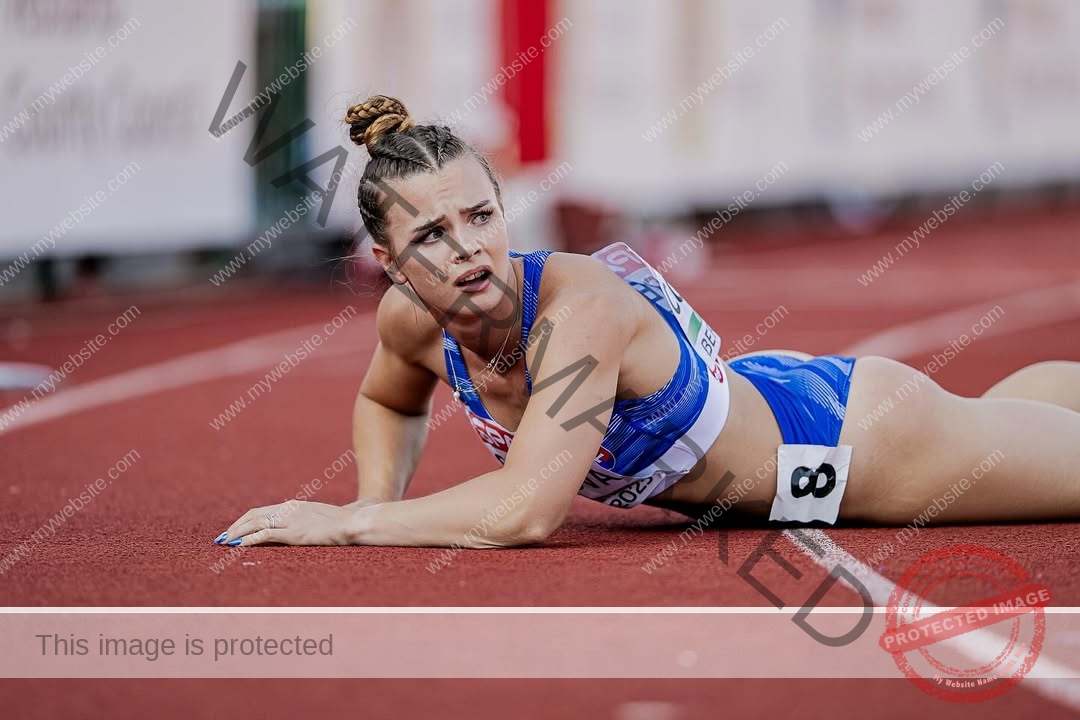
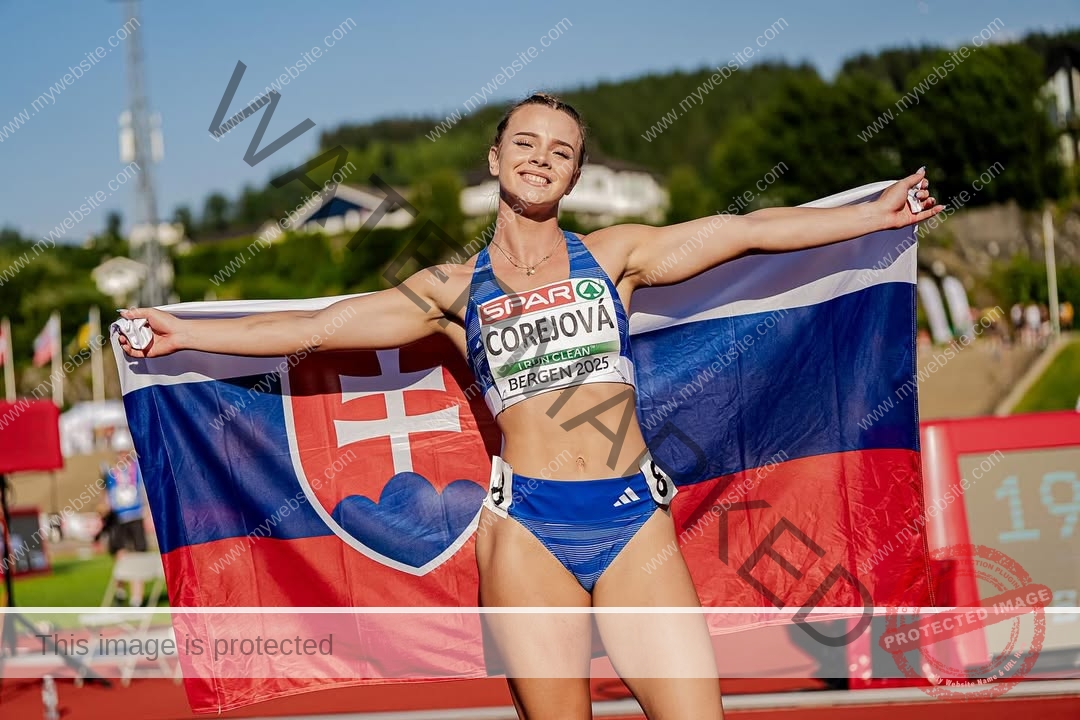

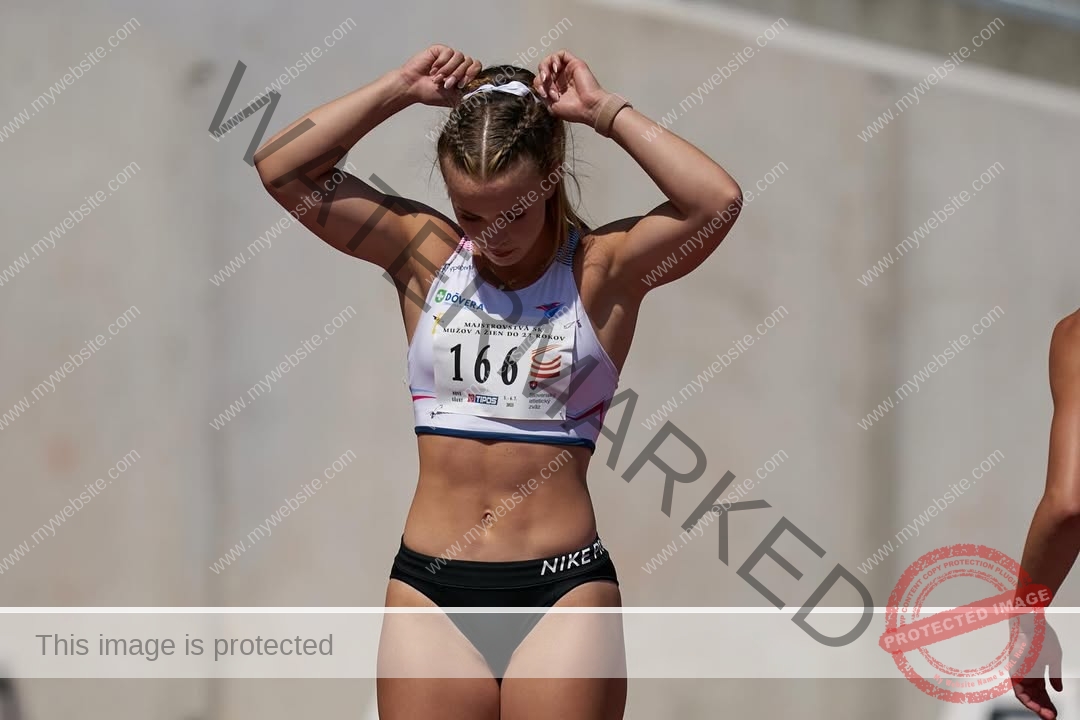
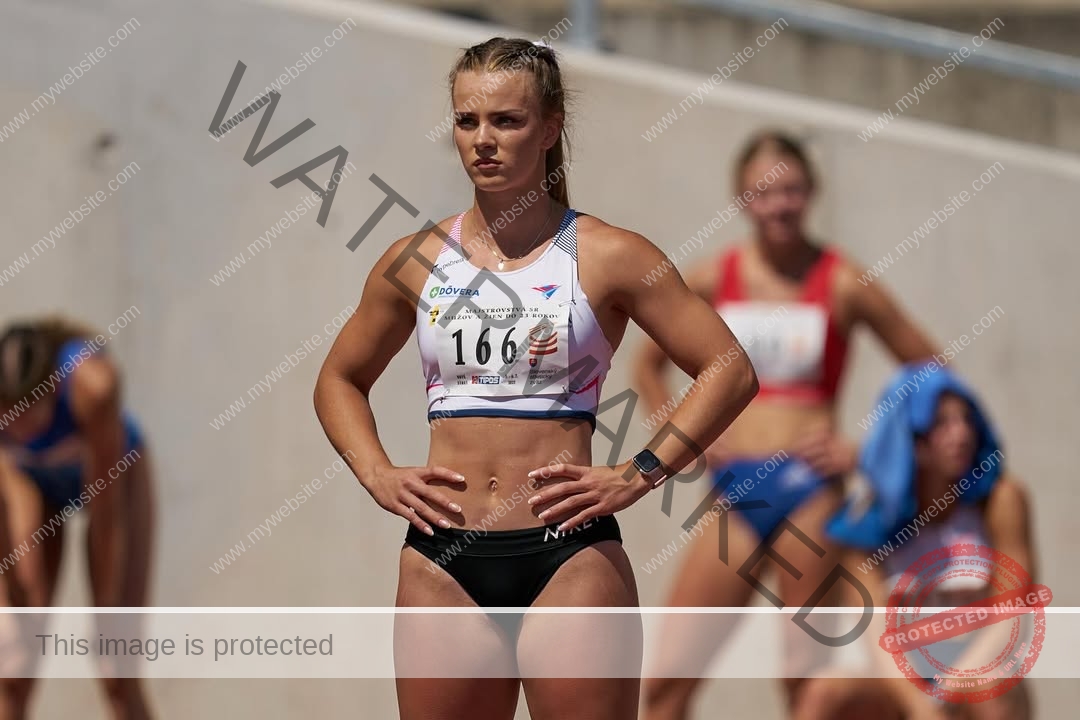
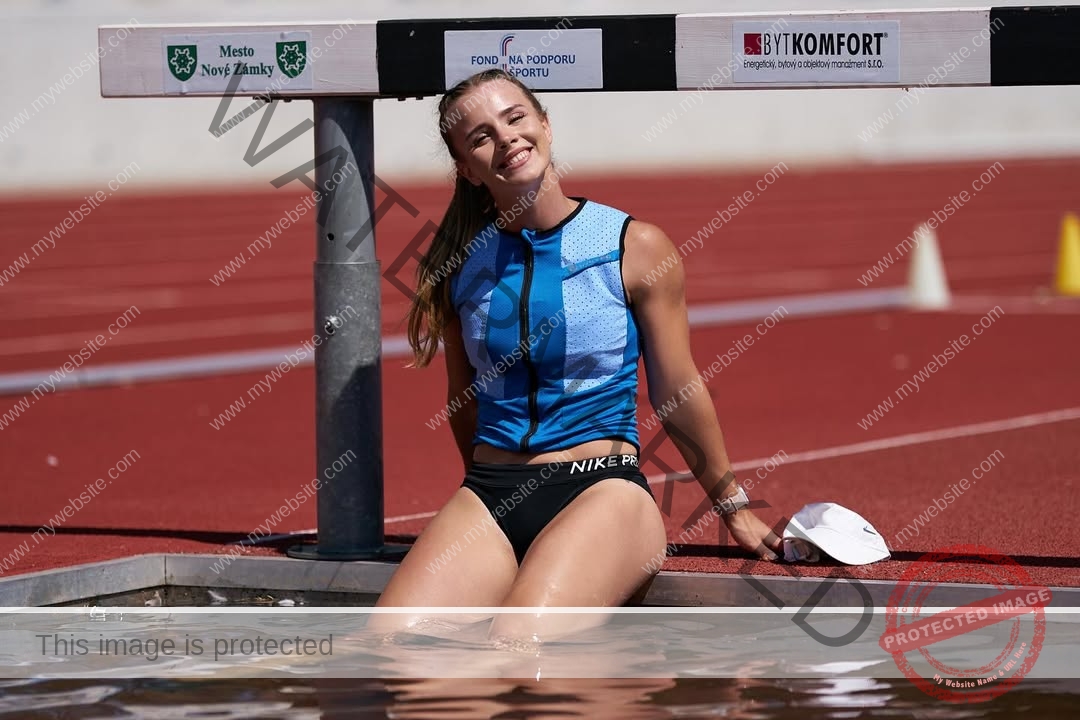
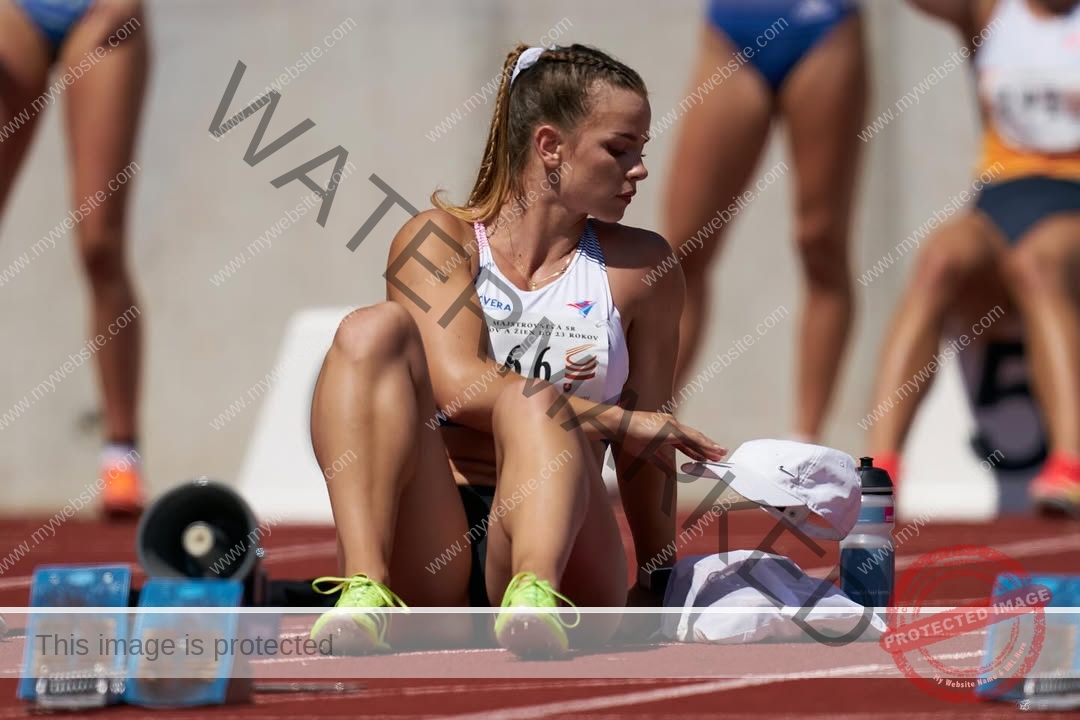
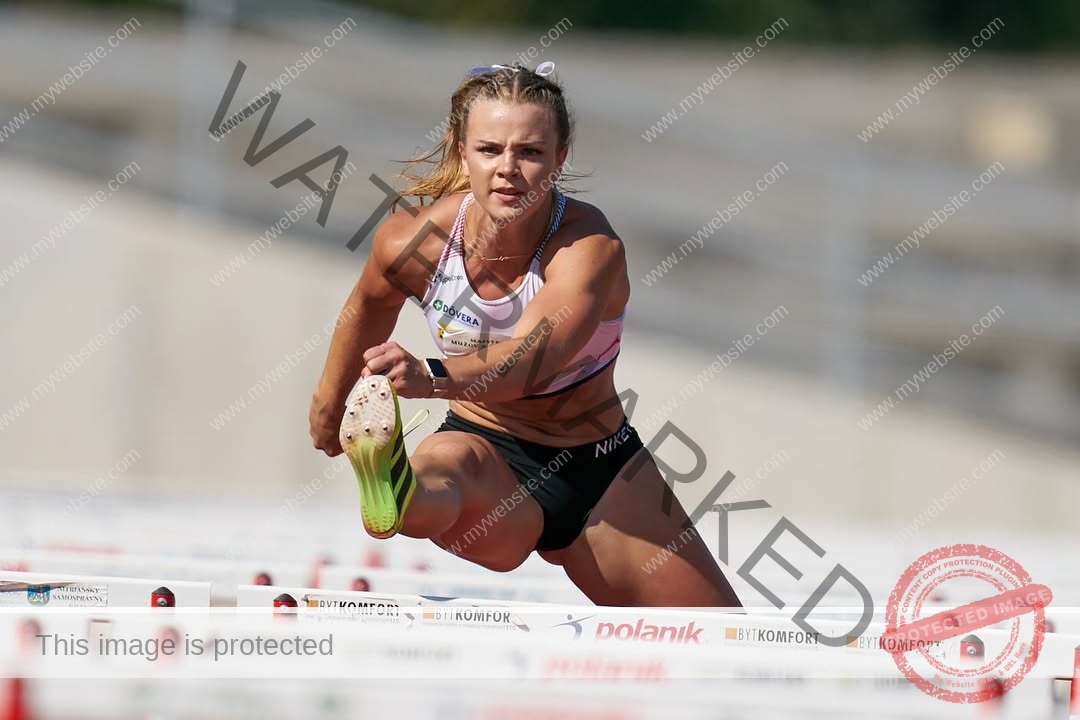
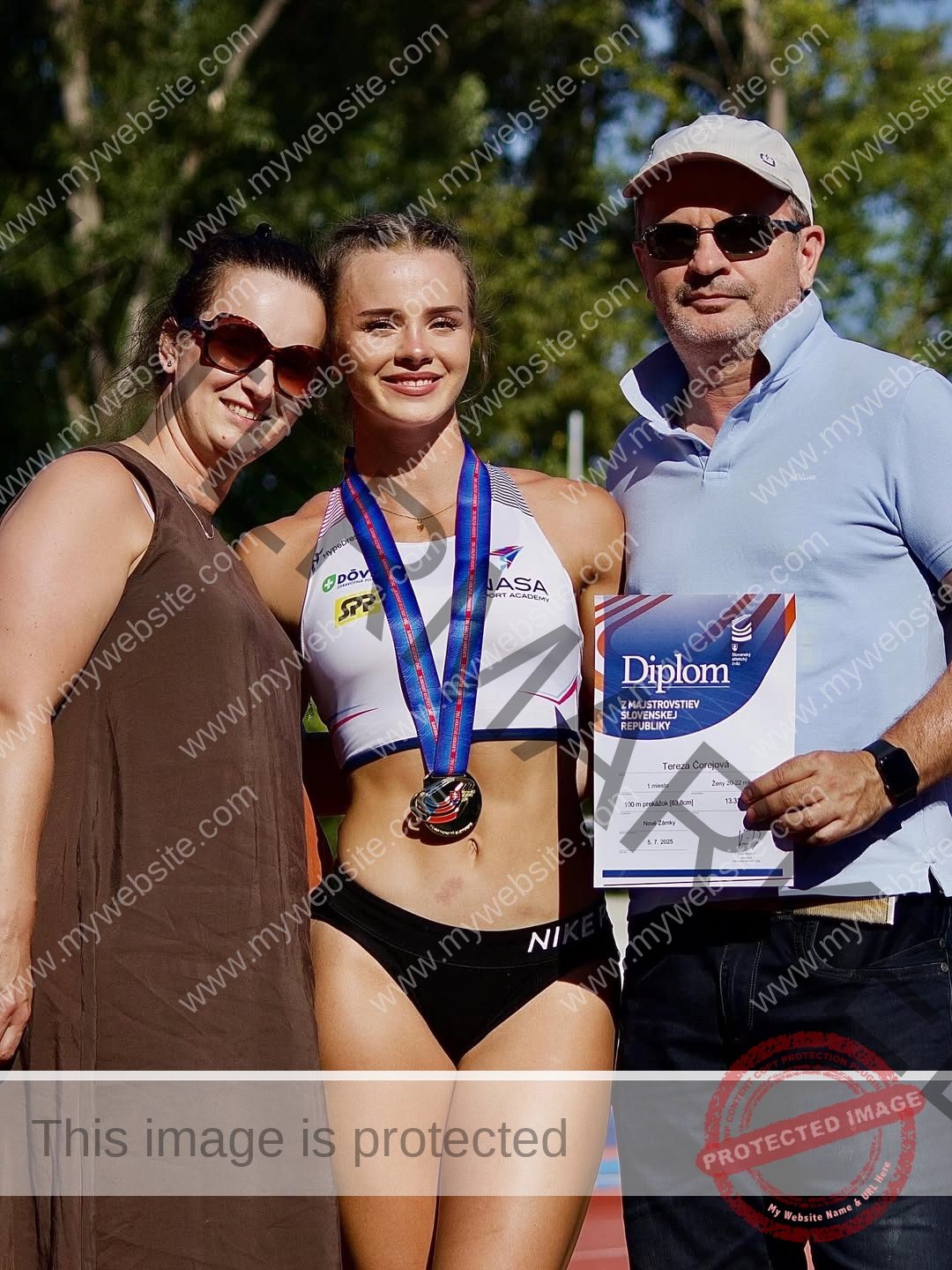
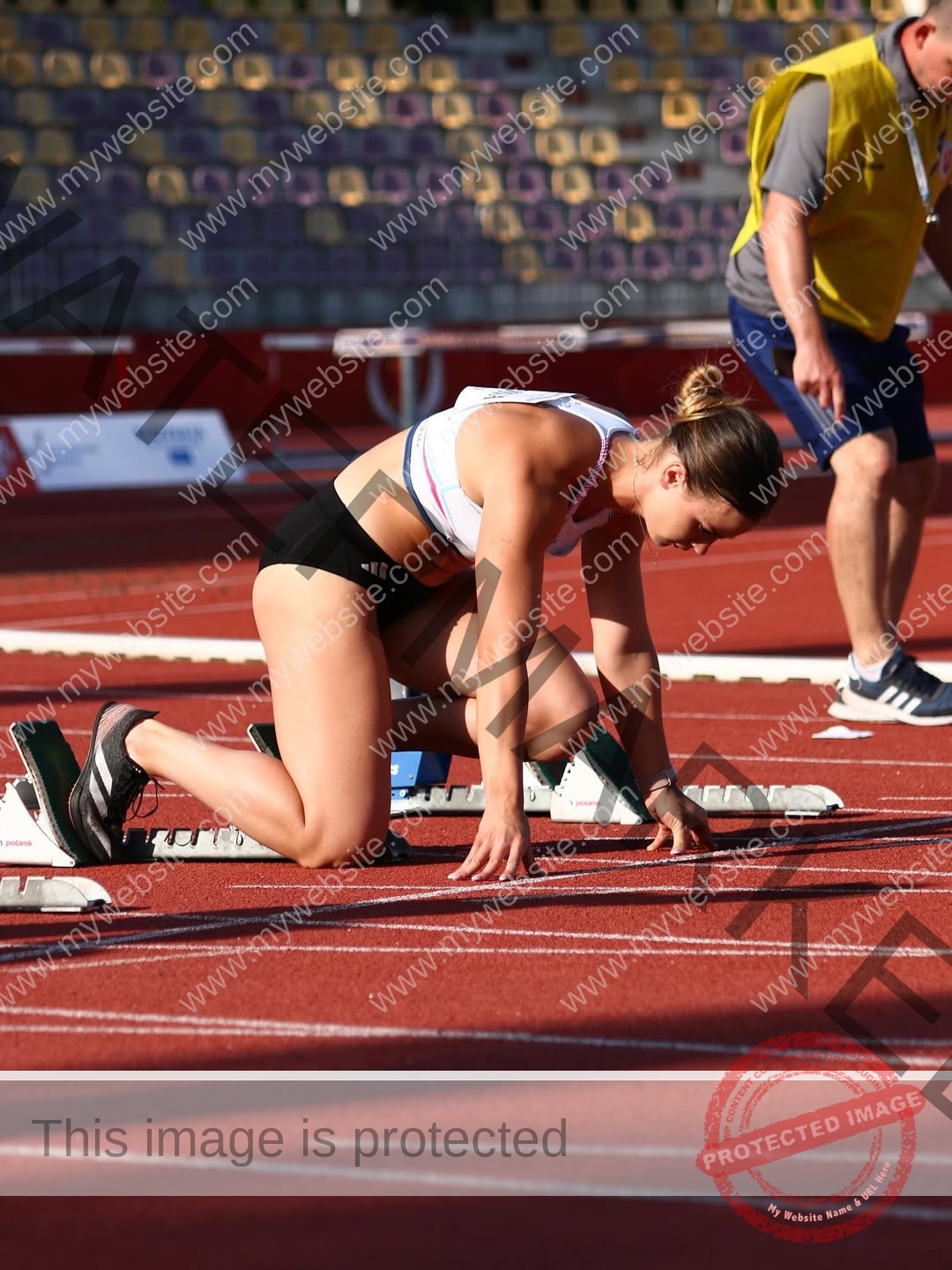
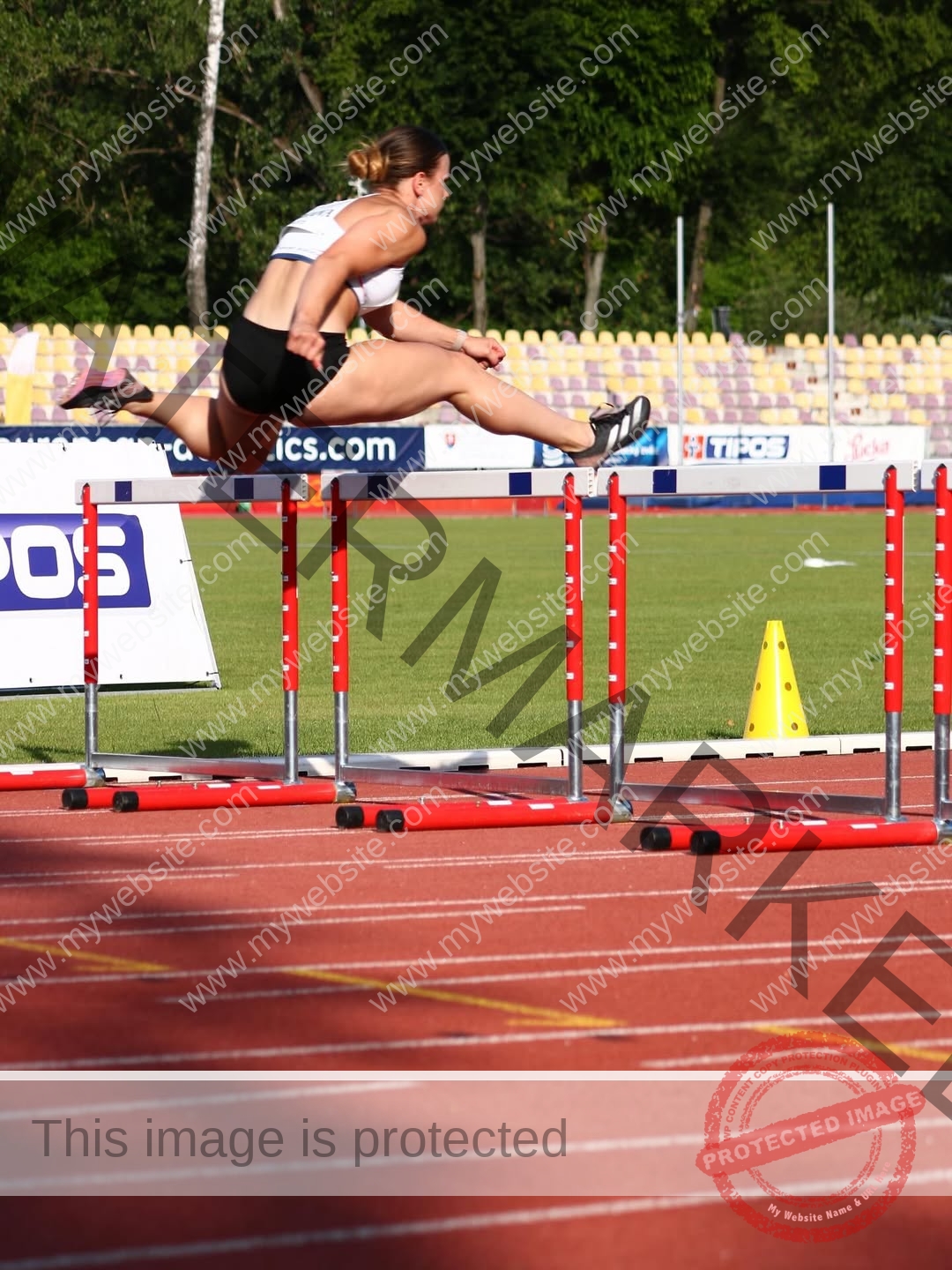
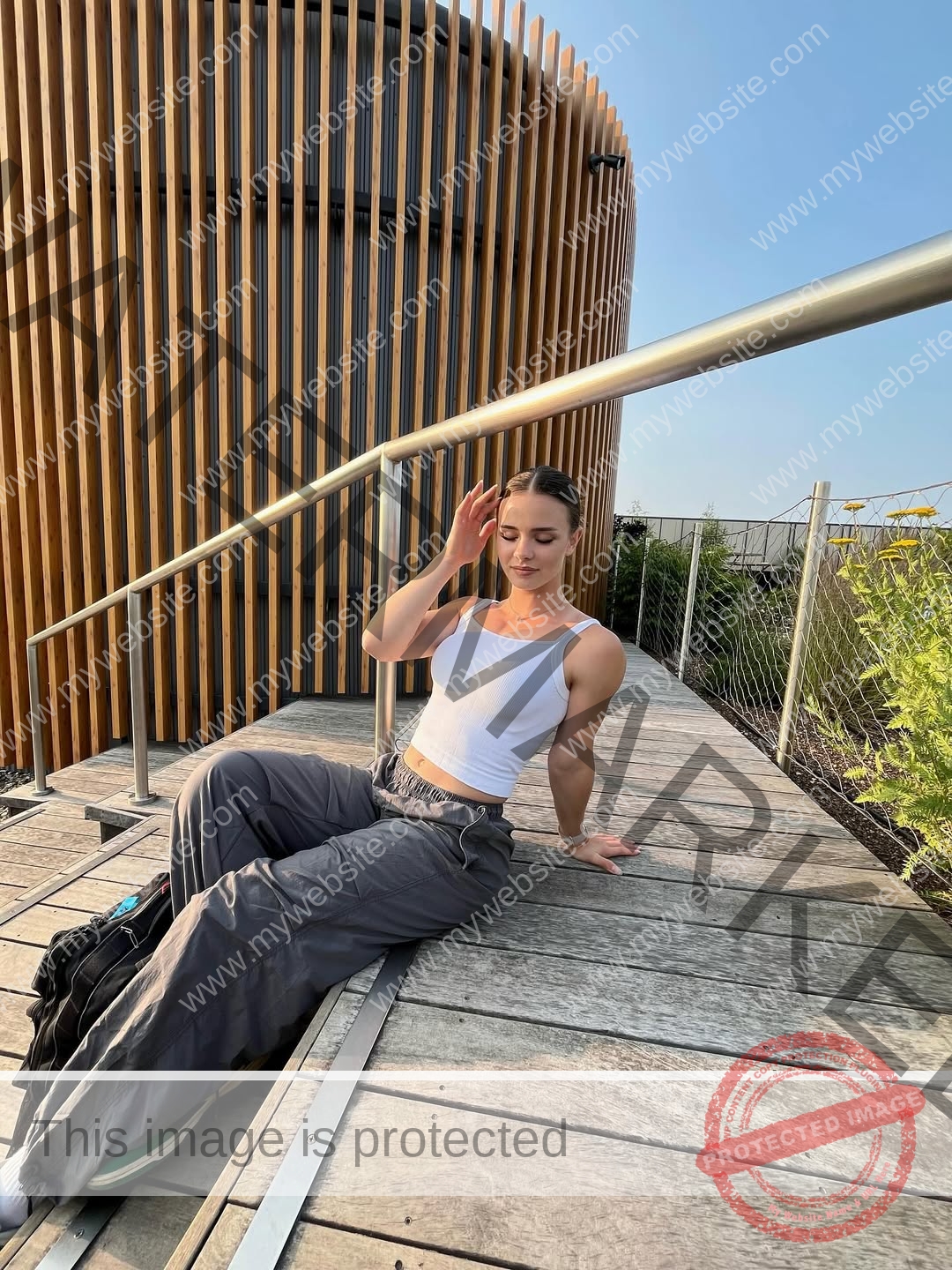
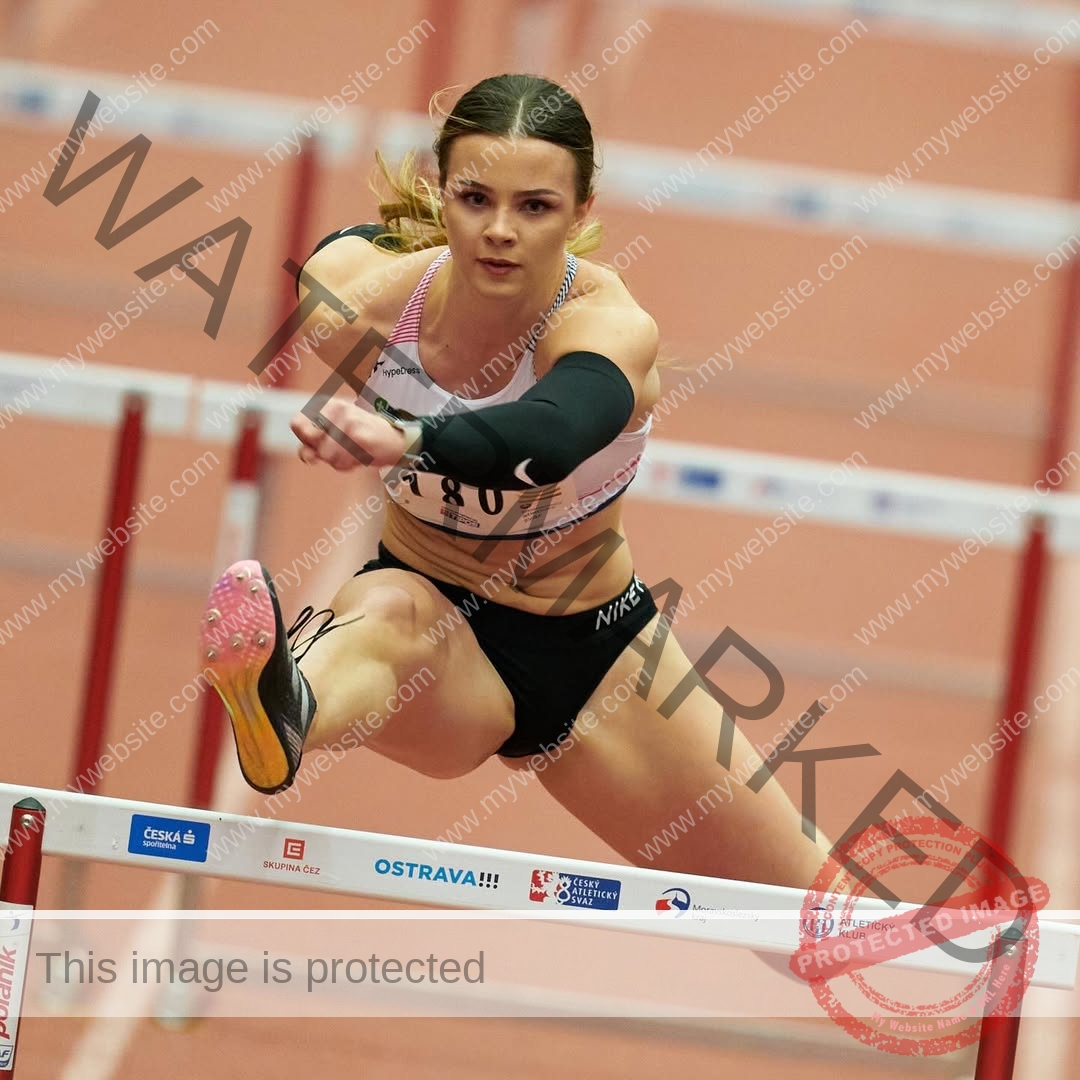

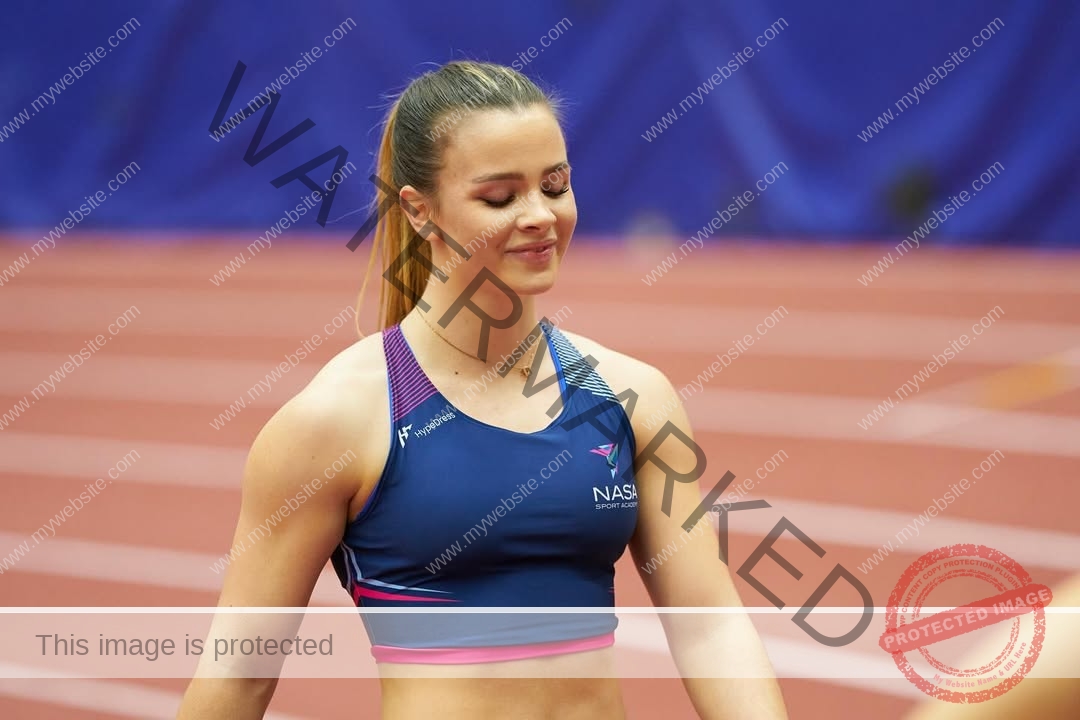
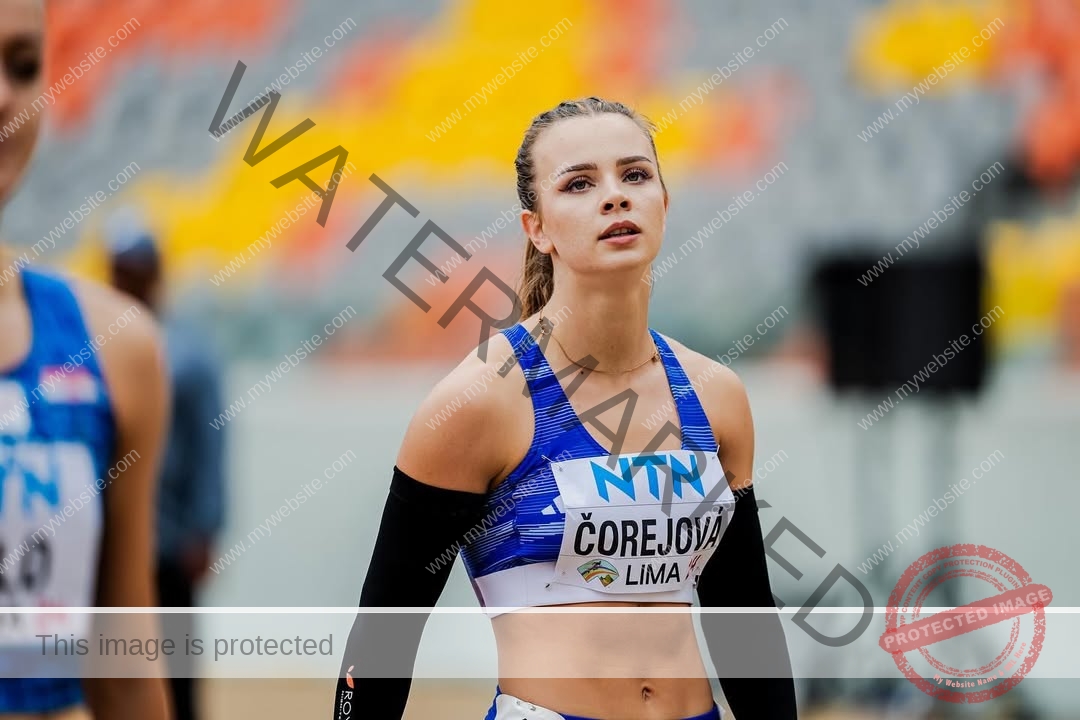
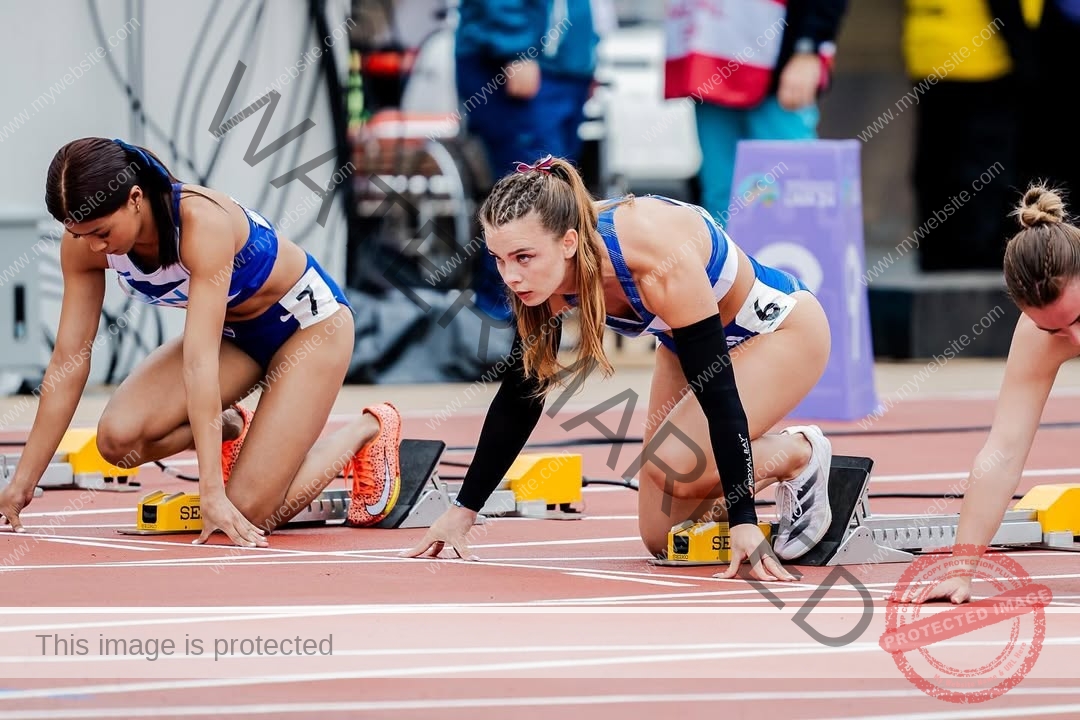

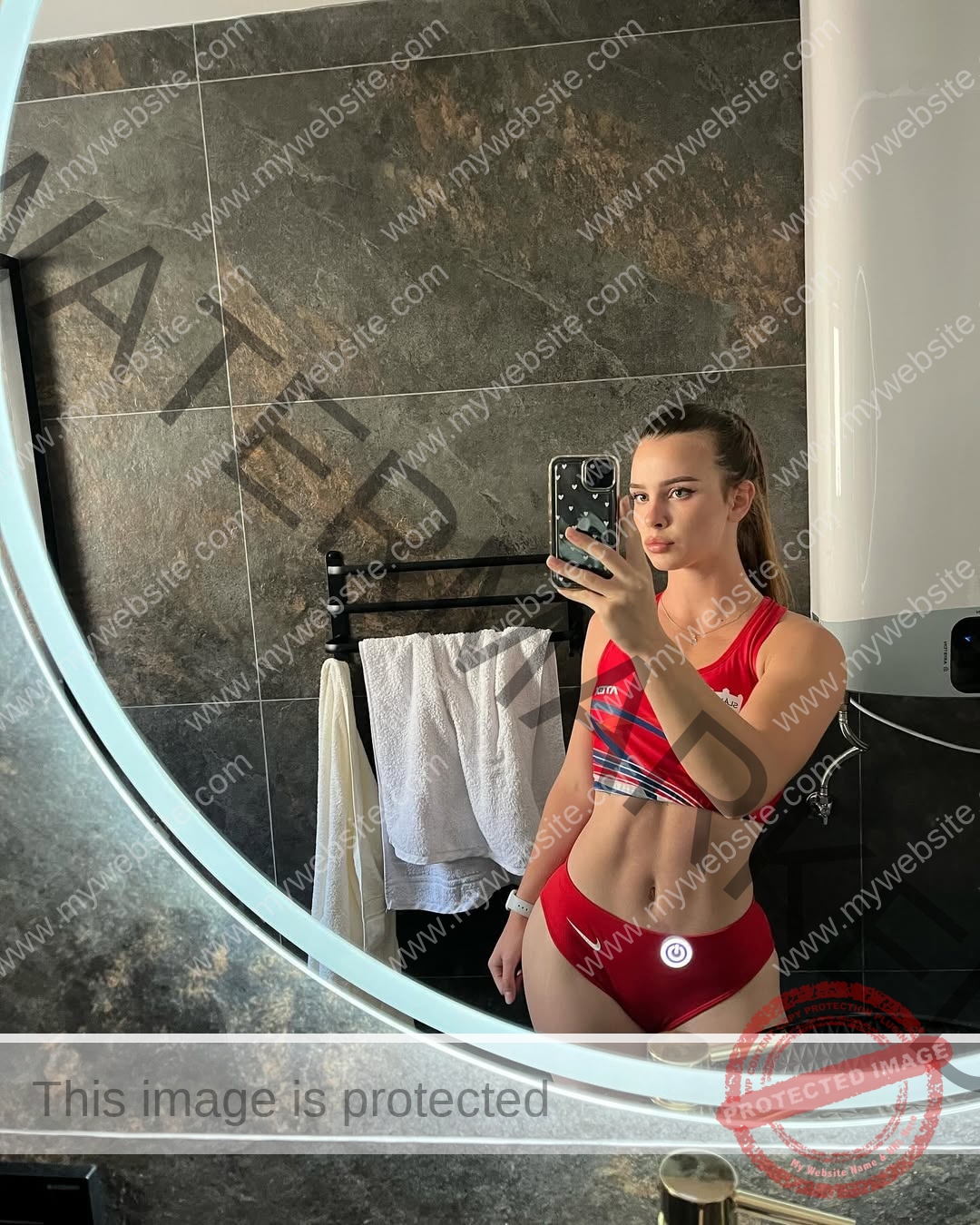


Tereza Čorejová
Slovak Track and Field Star – 100m Hurdles Specialist
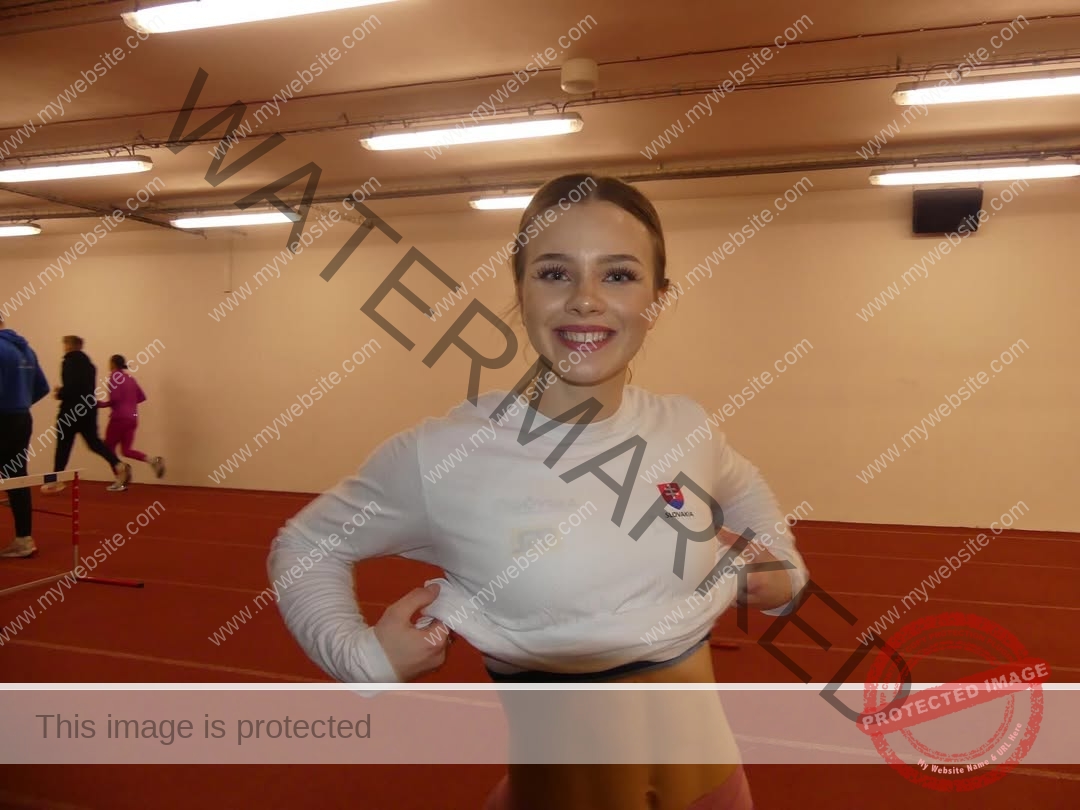
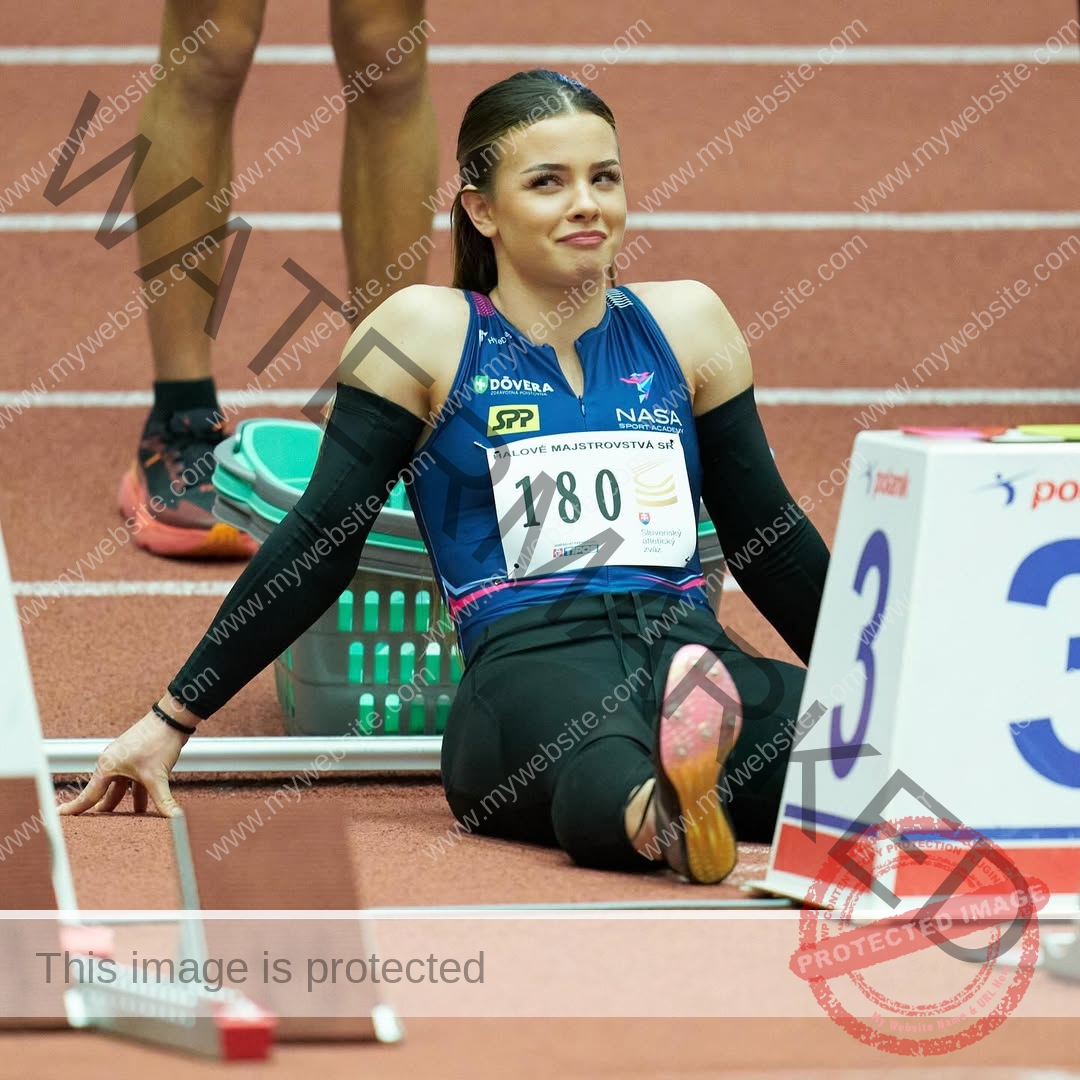
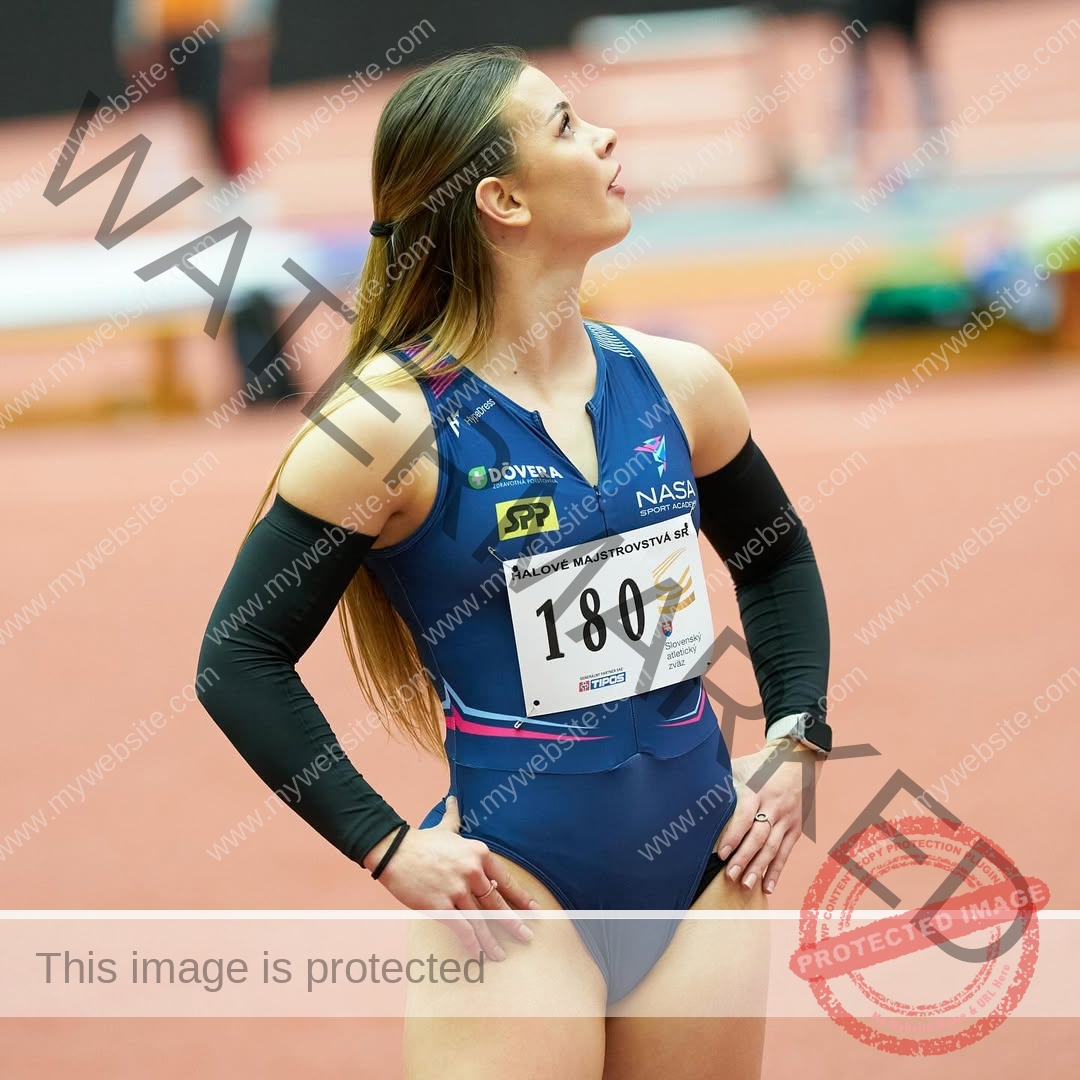
Tereza Čorejová is a rising star in Slovak athletics, specializing in the 100-meter hurdles and sprint events. At just 20 years old, she has already established herself as one of Europe’s most promising young hurdlers, capturing international medals and setting personal bests that place her among the elite in her discipline.
Track and Field Accomplishments
European U23 Championships Bronze Medal – Historic Achievement
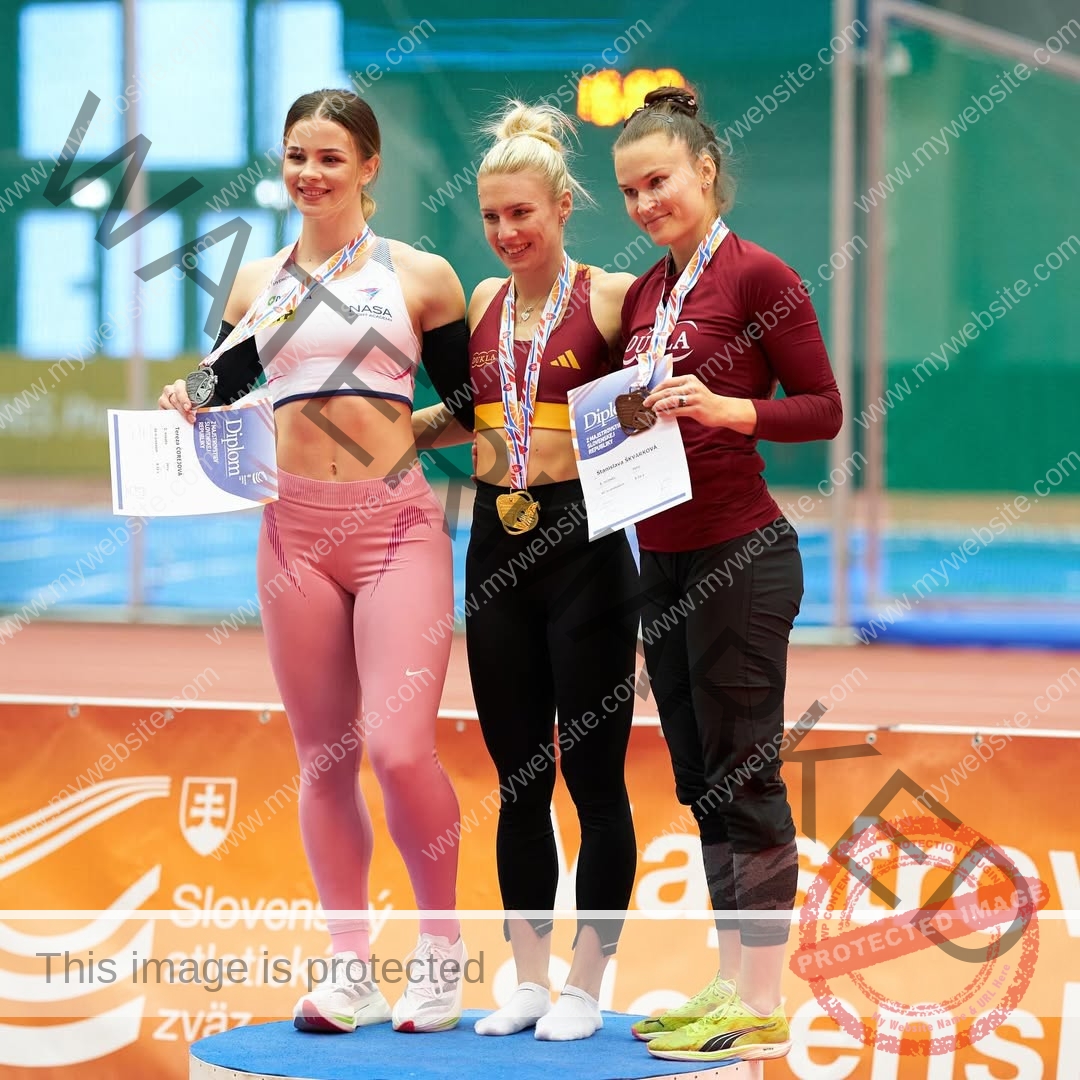
Tereza’s breakthrough moment on the international stage came in July 2025 at the European Athletics U23 Championships in Bergen, Norway, where she won the bronze medal in the 100-meter hurdles. Running in challenging conditions with a strong headwind of -1.7 m/s, Tereza clocked 13.05 seconds to claim third place on the podium.
The final was a tightly contested race, with Poland’s Alicja Sielska winning gold in 12.91 seconds and Hungary’s Anna Tóth taking silver in 13.02 seconds. Tereza’s bronze medal performance came just one hundredth of a second away from her personal best, demonstrating her ability to compete at her highest level when it mattered most at a major championship.
What made this achievement even more special was its timing—Tereza earned the bronze medal as a birthday gift to herself, celebrating her 20th birthday on the same weekend as the competition. The medal marked a historic moment for Slovak athletics, as Slovakia joined the medal table at the European U23 Championships through Tereza’s outstanding performance.
The road to the final was dramatic and nerve-wracking. After the semifinal, Tereza experienced anxious moments wondering whether she would qualify for the final. In the end, just one hundredth of a second separated her from missing the final entirely, making her eventual bronze medal even more remarkable. Once in the final, she “unraveled it completely,” as Slovak media described, delivering a strong performance in difficult wind conditions.
Personal Bests and Performance Progression
Tereza’s personal best in the 100-meter hurdles stands at an impressive 13.04 seconds, achieved on June 17, 2025. This time translates to a scoring performance of 1144 points according to World Athletics’ scoring tables, placing her firmly among Europe’s elite young hurdlers.
Her progression in 2025 has been exceptional:
- 100m Hurdles: 13.04 seconds (outdoor personal best, June 17, 2025)
- 60m Hurdles: 8.22 seconds (indoor personal best, February 21, 2025, Ostrava, Czech Republic)
- 100m Sprint: 11.81 seconds (May 24, 2025)
- 60m Sprint: 7.52 seconds (February 20, 2025, Ostrava, Czech Republic)
Her indoor season in early 2025 showed tremendous promise, with personal bests in both the 60-meter hurdles and 60-meter sprint at competitions in Ostrava, Czech Republic, in February. These performances set the foundation for her successful outdoor campaign that culminated in the European U23 bronze medal.
World Rankings and International Standing
As of 2025, Tereza holds the #105 world ranking in women’s 100-meter hurdles, a remarkable achievement for a 20-year-old athlete. This ranking places her among the top 110 hurdlers globally and demonstrates her competitiveness against senior-level athletes from around the world.
She also maintains a #1179 world ranking in the 100-meter sprint, showing her versatility as a speed athlete capable of competing in multiple events.
Her European U23 Championships bronze medal officially designates her as a “European U23 Championships bronze medallist” in World Athletics records, a title that will remain with her throughout her athletic career.
Multi-Event Capability
While Tereza specializes in hurdles, her training background includes multiple sprint events:
- 100-meter hurdles (primary event)
- 60-meter hurdles (indoor season)
- 100-meter sprint
- 60-meter sprint
- 200-meter sprint
- 100-meter hurdles (76.2cm height – youth category)
This versatility demonstrates her well-rounded speed and technical abilities. Many elite hurdlers maintain proficiency in flat sprints to develop raw speed and race rhythm, both essential components of hurdles success.
Training and Development
Coaching and Technical Development
Tereza trains under the guidance of coach Petr Bottlík, who has been instrumental in her development as one of Slovakia’s premier hurdlers. The coach-athlete relationship has proven highly successful, with Bottlík guiding Tereza through the technical complexities of hurdles while developing her speed and competitive mentality.
Hurdles coaching requires specialized knowledge of technique, rhythm patterns, and the biomechanics of clearing barriers at high speed. The 100-meter hurdles demands ten near-perfect clearances, with elite athletes taking just three steps between hurdles after the initial approach. Any technical flaw can cost precious hundredths of a second or result in a stumble that ruins an entire race.
The Technical Demands of 100m Hurdles
The 100-meter hurdles is one of track and field’s most technically demanding events. Athletes must combine:
Speed: Elite hurdlers must possess flat sprint speed approaching 12 seconds for 100 meters or faster to be competitive at the international level.
Power: Explosive power is required to drive off the blocks and generate the force needed to clear hurdles while maintaining speed.
Rhythm: Hurdlers must establish and maintain precise stride patterns, typically using three steps between the ten hurdles positioned throughout the 100-meter distance.
Technique: Proper hurdle clearance technique involves the lead leg attack, trail leg clearance, and rapid ground contact to maintain momentum. Poor technique results in deceleration and slower times.
Flexibility: Extreme flexibility in the hips, hamstrings, and hip flexors is essential for efficient hurdle clearance and injury prevention.
Mental Focus: With ten barriers to clear in approximately 13 seconds, there’s no margin for mental errors. Athletes must maintain concentration through the entire race while running at maximum speed.
Tereza’s personal best of 13.04 seconds places her in elite company. To put this in perspective, only a select group of women worldwide can break 13 seconds in the 100-meter hurdles, with the world record standing at 12.20 seconds. Tereza’s time demonstrates world-class speed combined with technical proficiency.
Competitive Journey and Milestones
2025 Season – Breakthrough Year
The 2025 season marked Tereza’s emergence as a top-level international competitor. Beginning with strong indoor performances in February, she set personal bests in both the 60-meter hurdles and 60-meter sprint in Ostrava, Czech Republic. These indoor meets helped her fine-tune her technique and build the speed foundation for the outdoor season.
Her outdoor season progression led to her 13.04-second personal best in June, followed by the crowning achievement of her European U23 bronze medal in July in Bergen, Norway. Running 13.05 in strong headwinds (-1.7 m/s) demonstrated her ability to perform under pressure at major championships.
The Semifinal Drama
One of the most memorable aspects of Tereza’s European U23 Championships experience was the drama of the semifinal. After her race, she experienced agonizing uncertainty about whether she had qualified for the final. In major championships, the fastest qualifiers from the semifinals advance to the final, along with the next fastest times across all heats.
When the results were finalized, Tereza had advanced to the final by just one hundredth of a second—the narrowest possible margin. This close call made her eventual bronze medal performance even more special, as she overcame both the pressure of nearly missing the final and the difficult wind conditions to deliver a medal-winning performance.
Representing Slovakia
National Pride
Tereza competes with the athlete code 14855954 registered with World Athletics, representing Slovakia on the international stage. Her European U23 bronze medal added to Slovakia’s proud tradition in track and field and inspired young athletes throughout the country.
Slovak athletics has produced numerous talented athletes over the decades, and Tereza represents the next generation carrying forward this legacy. Her success at the European U23 Championships demonstrated that Slovakia continues to develop world-class athletes capable of competing against the best in Europe and beyond.
Inspiration and Role Model
At just 20 years old with a European medal already to her name, Tereza serves as an inspiration to young Slovak athletes, particularly young women interested in track and field. Her achievement shows that with dedication, proper coaching, and hard work, Slovak athletes can reach the highest levels of international competition.
Slovak media has celebrated her achievements, referring to her fondly as the “sympathetic Slovak” who brought home bronze from Bergen. Her success has raised the profile of hurdles and women’s athletics in Slovakia.
Career Stage and Future Potential
Youth and Development Phase
At 20 years old, Tereza is still in the early stages of her athletic career. Most elite hurdlers reach their peak performance in their mid-to-late 20s, meaning Tereza potentially has 5-8 years of continued development and improvement ahead of her.
The 100-meter hurdles requires years to master. Technical refinements, continued strength development, and accumulated racing experience all contribute to improvement. Many athletes continue to set personal bests well into their mid-20s as they perfect their technique and develop the physical qualities needed for elite performance.
With a current personal best of 13.04 seconds, Tereza is approaching the threshold of 13.00 seconds, a significant psychological and actual barrier. Breaking into the 12.90s would place her among an even more elite group of hurdlers and could open doors to senior-level European Championships, World Championships, and ultimately Olympic competition.
Future Goals and Aspirations
While specific long-term goals haven’t been publicly detailed, athletes at Tereza’s level typically aspire to:
- Breaking the 13.00-second barrier in the 100-meter hurdles
- Competing at senior European Championships
- Qualifying for World Athletics Championships
- Representing Slovakia at the Olympic Games
- Setting Slovak national records
- Winning medals at senior-level European championships
- Breaking into the top 50 world rankings
Her current trajectory suggests these goals are achievable with continued development and consistent training.
Training Lifestyle and Commitment
The Life of an Elite Hurdler
Competing at Tereza’s level requires year-round dedication. A typical training week for an elite hurdler includes:
Technical Sessions: Multiple hurdles practice sessions per week focusing on rhythm, technique, and race simulation. These sessions require access to specialized facilities with properly spaced hurdles and adequate runway space.
Speed Development: Sprint training to develop and maintain maximum velocity, typically including block starts, acceleration drills, and maximum velocity sprinting.
Strength and Power Training: Gym sessions focused on developing explosive power, particularly in the legs, hips, and core. Olympic lifts, plyometrics, and resistance training are essential components.
Flexibility Work: Extensive daily stretching and mobility work to maintain the extreme range of motion required for efficient hurdle clearance.
Video Analysis: Regular review of training and competition footage to identify technical inefficiencies and areas for improvement.
Recovery and Regeneration: Proper recovery protocols including massage, physiotherapy, adequate sleep, and nutrition to support the demands of high-intensity training.
Competition Schedule
Elite hurdlers like Tereza compete throughout the indoor season (January-March) and outdoor season (April-September). The indoor season features 60-meter hurdles, while the outdoor season includes the 100-meter hurdles. Major targets include:
- National championships (indoor and outdoor)
- European Cup and team competitions
- Diamond League meetings (for top-ranked athletes)
- European U23 Championships
- Progression toward senior European Championships and World Championships
Balancing training loads, competition schedules, and recovery requires careful planning and management from both athlete and coach.
Personal Characteristics and Competitive Spirit
Mental Toughness
Tereza’s experience at the European U23 Championships showcased her mental resilience. After the anxiety of barely qualifying for the final, she composed herself and delivered one of her best performances of the season when it mattered most. This ability to perform under pressure is a hallmark of championship-level athletes.
The hurdles event itself requires immense mental strength. Unlike many track events where athletes can settle into a rhythm, hurdlers must maintain perfect focus while navigating ten barriers at maximum speed. A single lapse in concentration can result in hitting a hurdle and potential disqualification or injury.
Competitive Mindset
Describing how Tereza “unraveled it completely” in the final, Slovak media highlighted her ability to rise to the occasion. Running into a strong headwind that slowed all competitors, she executed her race plan effectively and crossed the finish line as a European medalist.
Her competitive performances in 2025 demonstrated consistency and the ability to reproduce high-level performances across multiple competitions—a crucial quality for athletes aiming to compete at the highest levels.
Connection to Broader Athletics Community
European Athletics Scene
Tereza competes in one of the world’s most competitive regions for hurdles. Europe has produced numerous Olympic and World champions in the hurdles, and the depth of talent means that even reaching a European U23 final requires exceptional ability.
Her bronze medal places her among the top three U23 hurdlers in Europe, a significant achievement given the size and talent pool of European athletics. Athletes like Poland’s Alicja Sielska, who defeated Tereza in Bergen, are also rising stars on the global stage, and competing against this caliber of athlete provides valuable experience.
Social Media Presence
Tereza maintains a presence on social media platforms including Instagram (@teres_sa_), where she has built a following of over 5,400 followers. Social media has become an important platform for track and field athletes to connect with fans, share their training journey, and build their personal brand.
Through social media, athletes can document their preparation, celebrate achievements, and inspire the next generation of athletes. Tereza’s growing following reflects interest in her career and achievements.
The Significance of Her Achievement
Historic Context
Tereza’s European U23 bronze medal represents a significant achievement not just personally but for Slovak athletics. International medals in track and field from Slovak athletes help raise the profile of the sport within the country and demonstrate that Slovakia can produce athletes capable of competing at the highest levels.
Her success comes during an era when Slovak athletics continues to develop its programs and support systems for elite athletes. Tereza’s medal validates these development efforts and provides a template for future Slovak athletes to follow.
Breaking Barriers
As a 20-year-old winning a European medal, Tereza has achieved something many athletes never accomplish in their entire careers. This early success provides a foundation for continued development and suggests that even greater achievements may lie ahead.
The experience of competing at a major championship, dealing with the pressure of the semifinal, and then delivering in the final provides invaluable learning that will serve her throughout her career.
Conclusion
Tereza Čorejová represents the bright future of Slovak athletics. With a European U23 bronze medal already secured at age 20, a personal best of 13.04 seconds in the 100-meter hurdles, and a world ranking of #105, she has established herself as one of Europe’s most promising young hurdlers.
Training under coach Petr Bottlík and competing with determination and mental toughness, Tereza continues to improve and chase even more ambitious goals. Her dramatic journey to the European U23 final—advancing by just one hundredth of a second—and subsequent bronze medal performance demonstrated both her technical ability and competitive character.
As she continues to develop, with potentially 5-8 years of peak performance ahead of her, Tereza has the opportunity to represent Slovakia at the highest levels of international athletics, including senior European Championships, World Championships, and ultimately the Olympic Games.
Her success inspires the next generation of Slovak athletes and proves that with dedication, expert coaching, and competitive spirit, athletes from smaller nations can achieve greatness on the European and world stage. Tereza Čorejová’s journey is just beginning, and the athletics world will be watching as this talented young hurdler continues to chase her dreams and push the boundaries of Slovak track and field excellence.
Go Tereza!
