
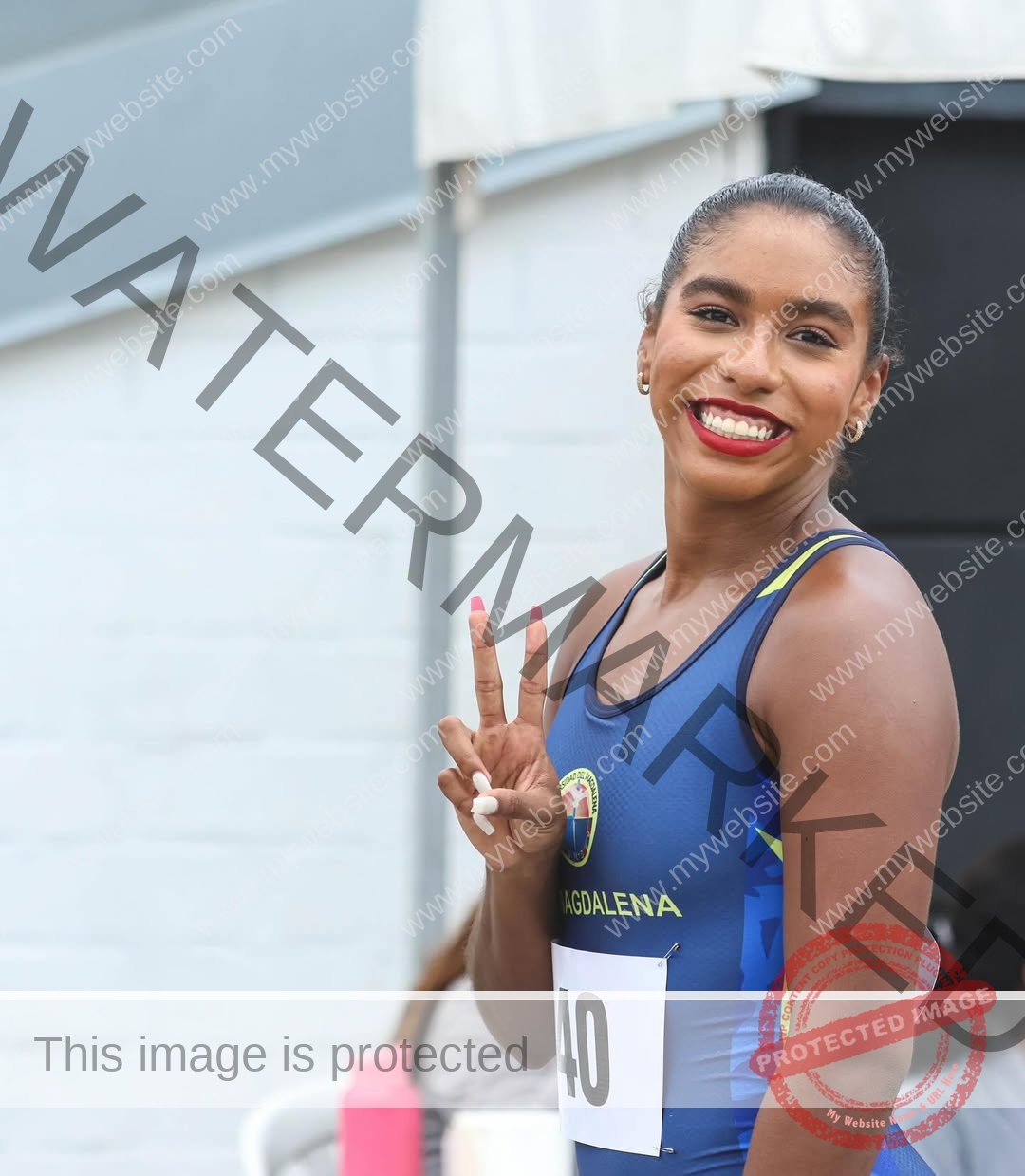


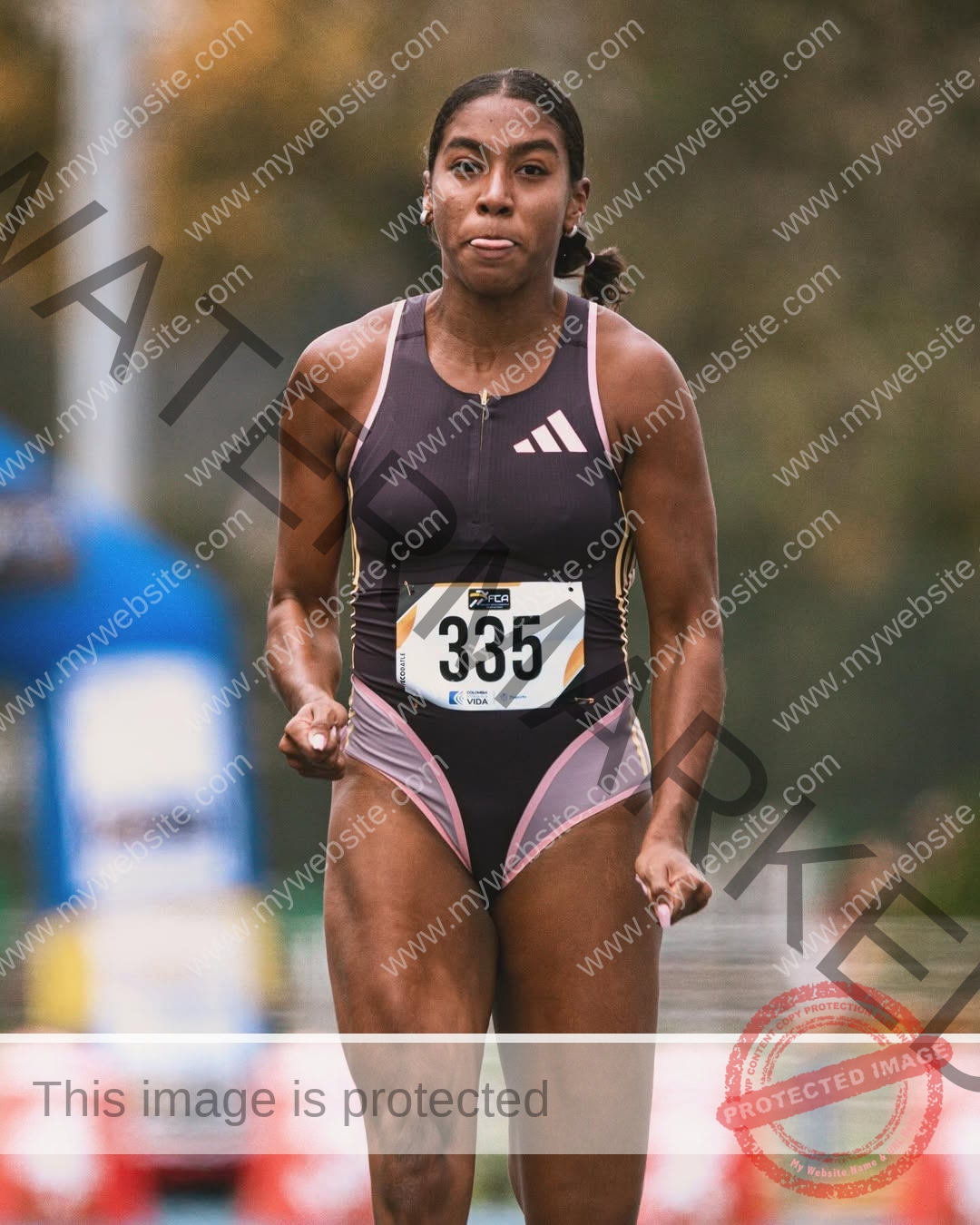
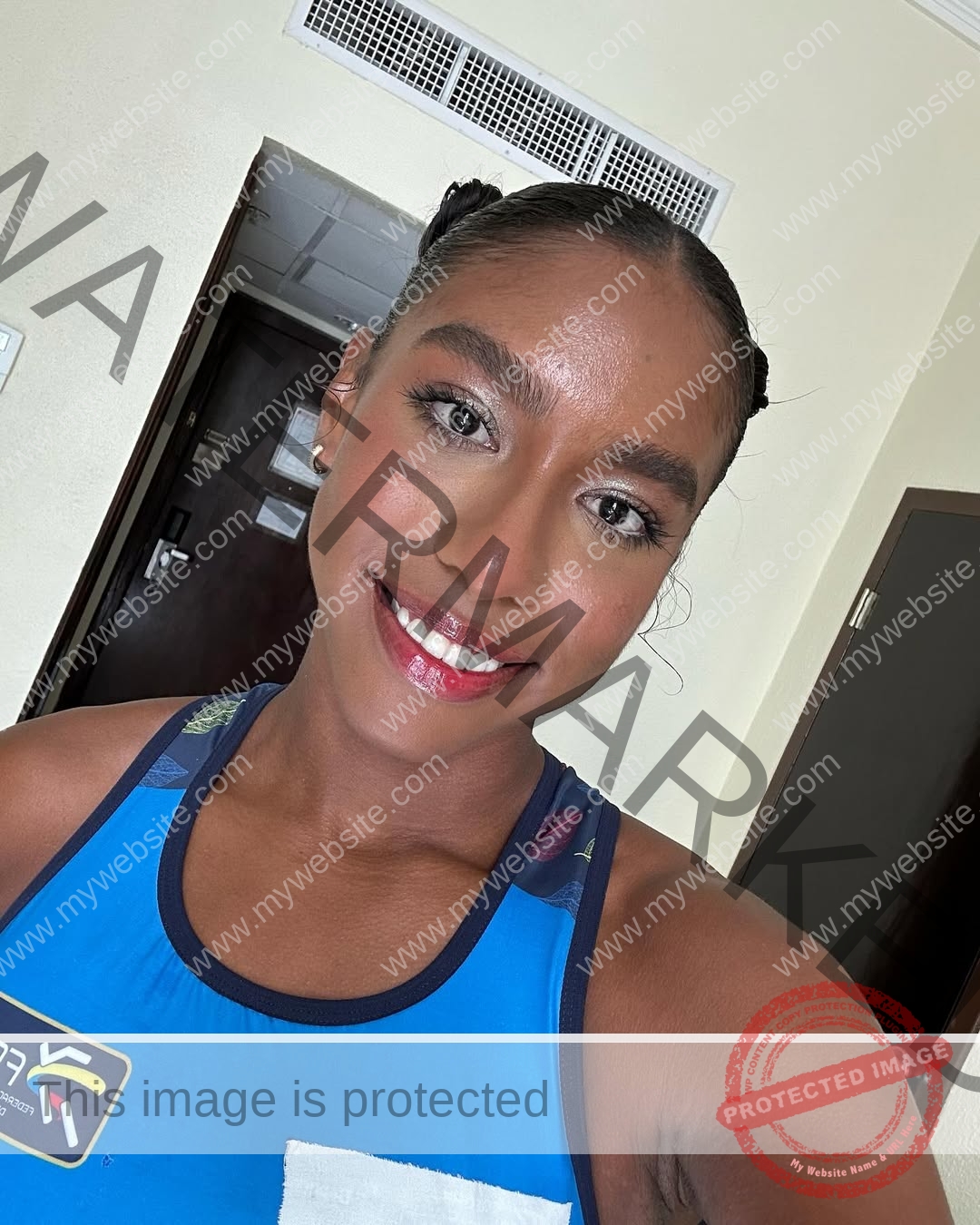

















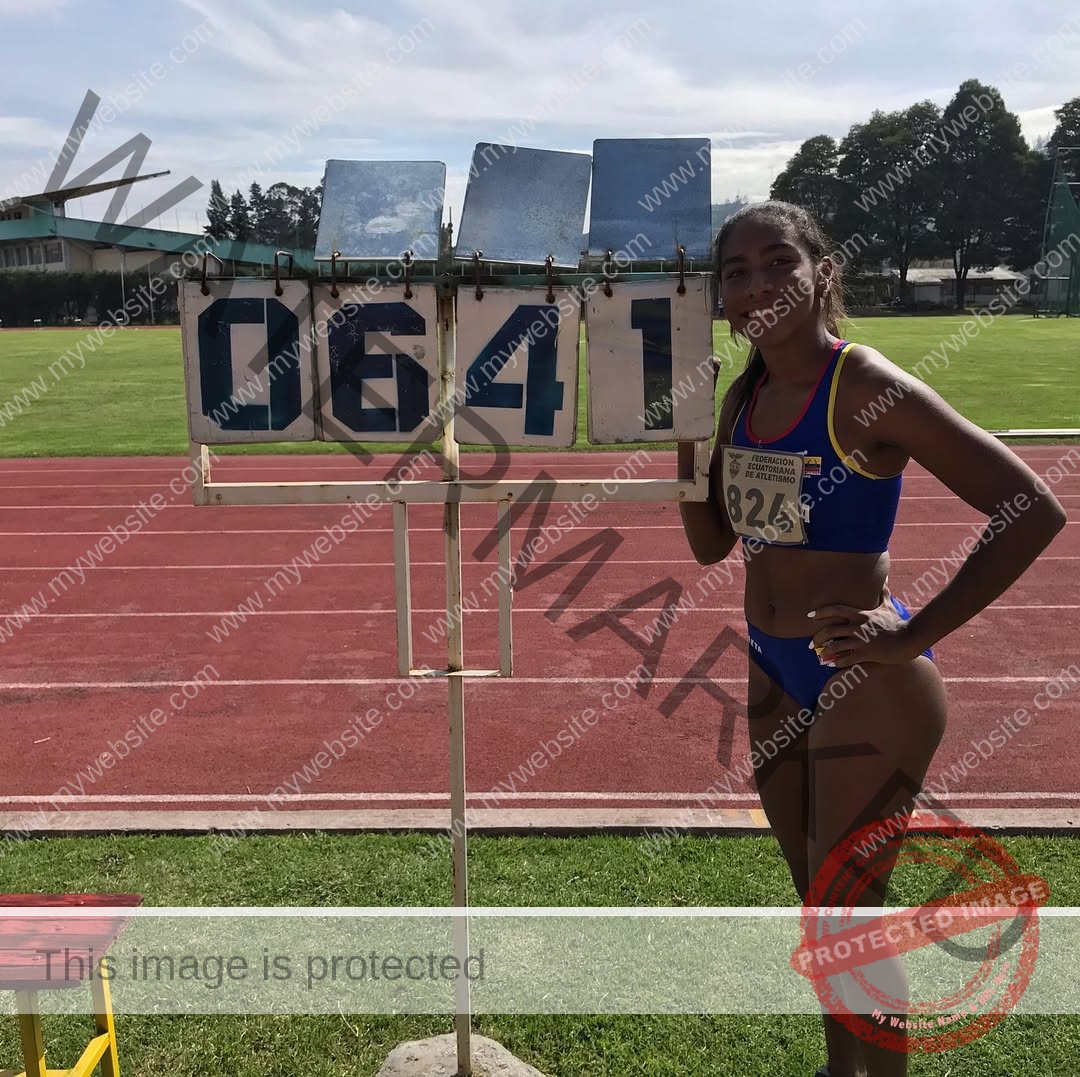
La Diosa Coronada: The Extraordinary Rise of Natalia Carolina Linares González
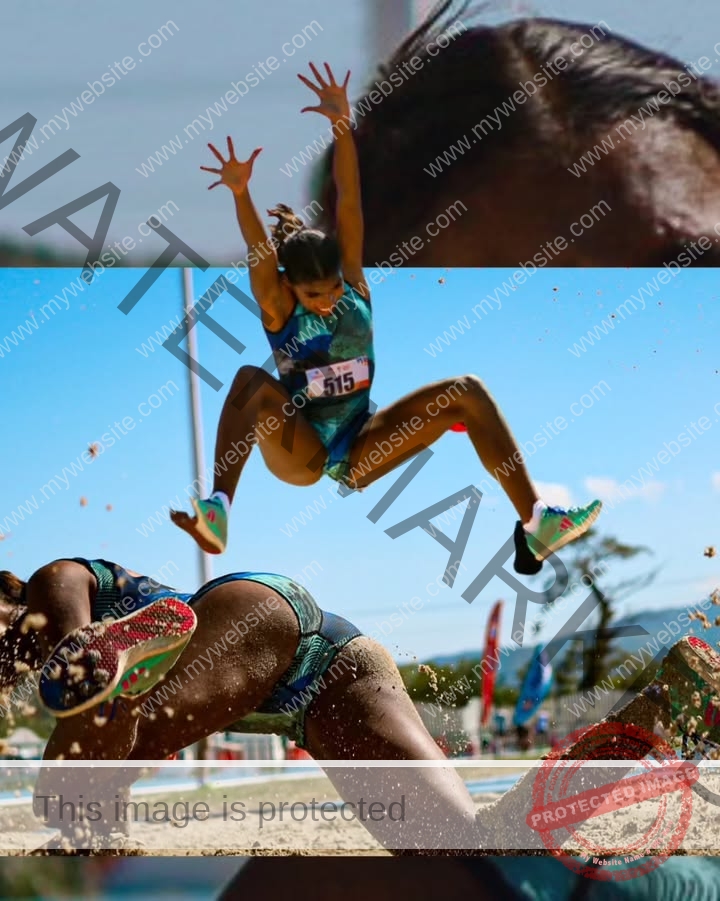
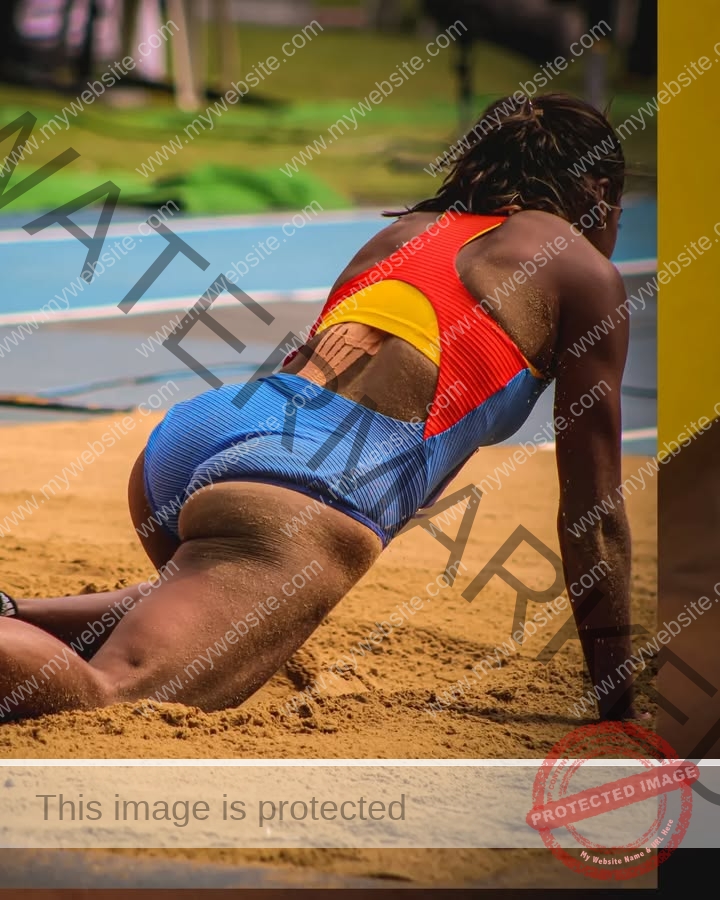
In a physical education class at the Gimnasio del Norte school in Valledupar, Colombia, sometime around 2013, a hyperactive ten-year-old named Natalia Linares watched her classmates run, jump, and land on gymnastics mats that their teacher, Fabián Martínez, had arranged to simulate a long jump pit. She waited until everyone else had gone. She watched carefully. Then she took a breath, sprinted, and launched herself into the air — and landed farther than any other student in the class. Boy or girl, it didn’t matter. Nobody was close.
Martínez picked up the phone and called her mother, Yanelis González. “Do you know how talented your daughter is?” he asked. “No,” González said, perfectly honestly. “Well,” the teacher replied, “she has a unique talent for jumping.”
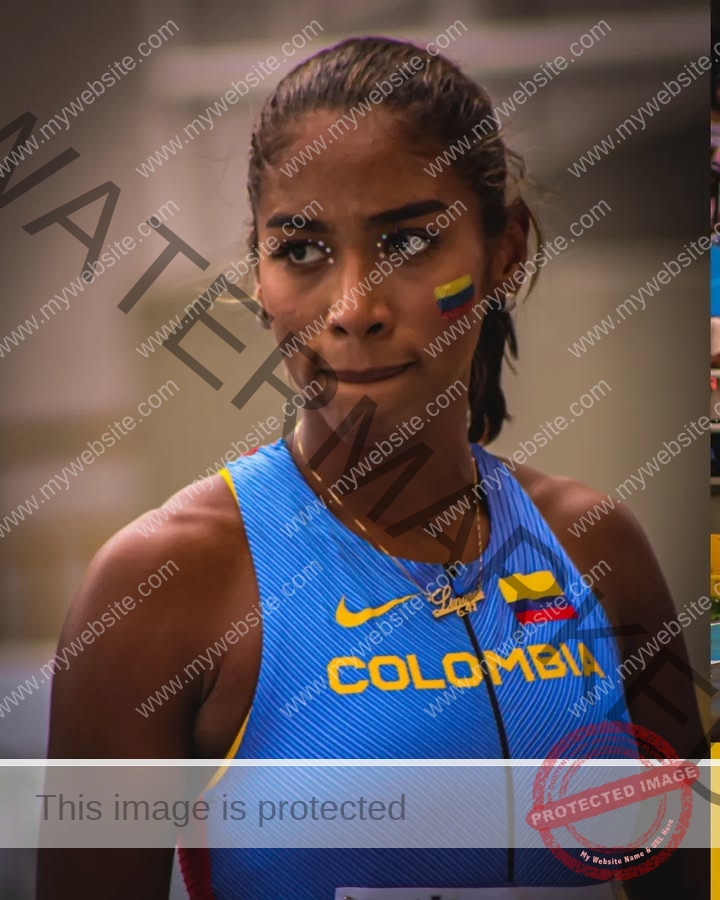
That conversation set in motion one of the most compelling athletic careers in the history of Colombian track and field. Natalia Carolina Linares González, born January 3, 2003, in Valledupar — the capital of the Cesar department in Colombia’s Caribbean coast region and the spiritual home of vallenato music — is now a two-time World Athletics Championships bronze medalist, a Pan American Games gold medalist, a South American record holder, and the reigning holder of Colombia’s first-ever World Indoor Championships medal. She is 23 years old.
Valledupar Roots and an Unlikely Beginning
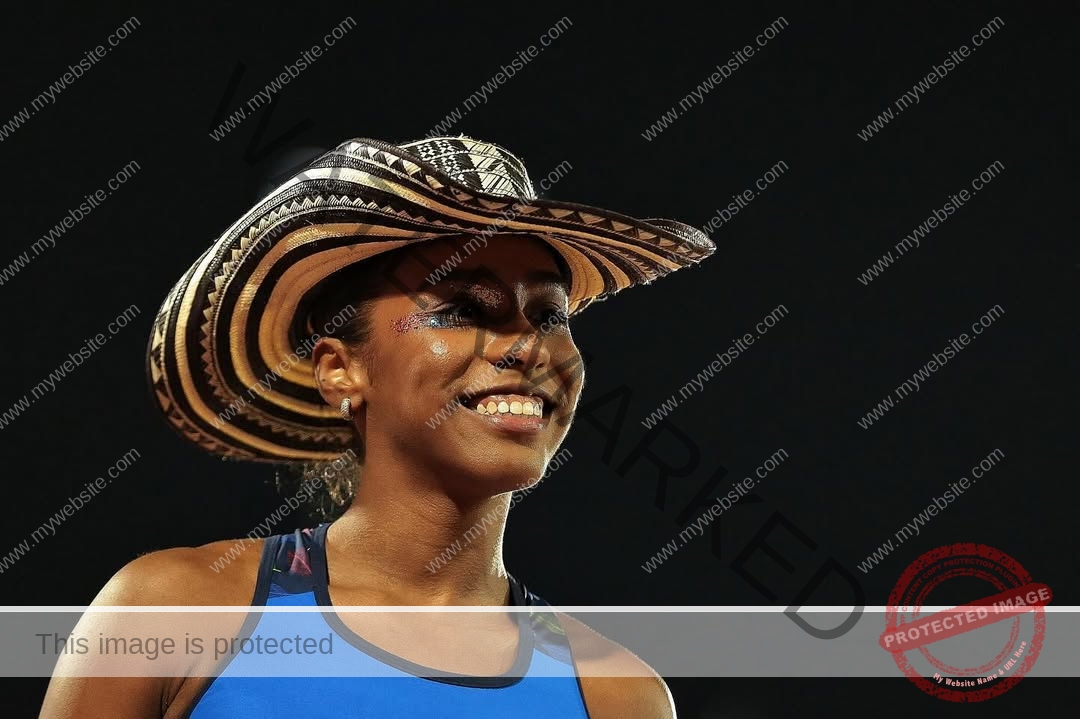
Valledupar is a city of heat, color, and music, nestled against the Sierra Nevada de Santa Marta mountains at the edge of the Guatapurí River. It is a city that takes pride in its traditions — particularly the vallenato, Colombia’s iconic accordion-driven folk genre — and in the people it produces. Natalia Linares grew up there, a daughter of the Cesar department, and has never stopped carrying that identity with her across the world. The Colombian flag and the sombrero vueltiao — the traditional woven hat that has become a symbol of the region’s cultural heritage — have become her calling cards of celebration at every major competition.
As a child, Linares was known for her restless energy. The family was not immediately sure what to do with her boundless physical drive. She began swimming and showed enough aptitude to continue for several years, but a skin condition — dermatitis — that worsened with repeated chlorine exposure ultimately forced her out of the pool at around age 11. It was athletics that would claim her instead, beginning with that revealing class exercise at the Gimnasio del Norte.
Her first real competition came at the Copa Freskaleche, where the young Natalia collected three silver medals — in the long jump, the 80 meters, and the 5×80 relay. Modest beginnings, but the trajectory was clear. She had found her sport.
Eight Years Without Knowing Usain Bolt
What makes Linares’s story particularly striking is how late, in athletic terms, her introduction to the sport actually was. As she told World Athletics in 2022 ahead of the World U20 Championships on her home soil in Cali, she did not even know who Usain Bolt was when she made her first competitive jump. Nor did she know Caterine Ibargüen, Colombia’s Olympic triple jump gold medalist and one of the greatest athletes the country has produced. The world of athletics was entirely foreign to her. She came to it not through aspiration or fan enthusiasm but through pure, accidental discovery of a natural gift.
That gift manifested quickly once the right environment was found. Representing the Liga de Atletismo del Cesar, she began appearing at national scholastic competitions. At the Juegos Escolares in Medellín in 2016, when she was just thirteen, she won the 150 meters, set a Colombian U16 national record in the long jump with a mark of 5.74 meters, and anchored a winning 5×80 relay team. She was not yet a teenager who had sat down and memorized the great names of her sport; she was simply a remarkably gifted young athlete who happened to run fast and jump far.
Puerto Rico, Ibargüen, and the Brink of Quitting
At age fourteen, Linares had her first truly formative international experience. Her raw talent had attracted enough attention that she was offered the opportunity to travel to San Juan, Puerto Rico, and train for three months under Cuban coach Ubaldo Duany alongside none other than Caterine Ibargüen herself. For a teenager from Valledupar who had only recently learned who Ibargüen was, the experience was extraordinary. She later described it as a chance to see, firsthand, how an Olympic champion trains, thinks, and lives — a window into the habits and mentality of an elite competitor that no classroom could replicate.
But the experience came to an abrupt end when Ibargüen’s own competition schedule made continued joint training impractical. Linares returned to Colombia and found herself without a coach — a particularly difficult situation for a teenager on the cusp of real athletic development. She struggled to find a suitable replacement, grew frustrated, and began to think seriously about stepping away from the sport entirely.
It was her family — her mother Yanelis and her brother — who refused to let her quit. Their argument was blunt: she would be crazy to walk away from something she was this good at. Their encouragement was enough. She stayed.
Finding Her Coach, Finding Her Future: Martín Suárez and Santa Marta
The turning point came in 2019, when Linares connected with coach Martín Suárez Mazenett, a trainer based in Santa Marta, the coastal city roughly two hours west of Valledupar. Suárez invited her to relocate and train under his guidance full-time. It was an enormous ask — to leave her family and hometown at sixteen and begin a new life in a new city entirely around athletics — but Linares accepted.
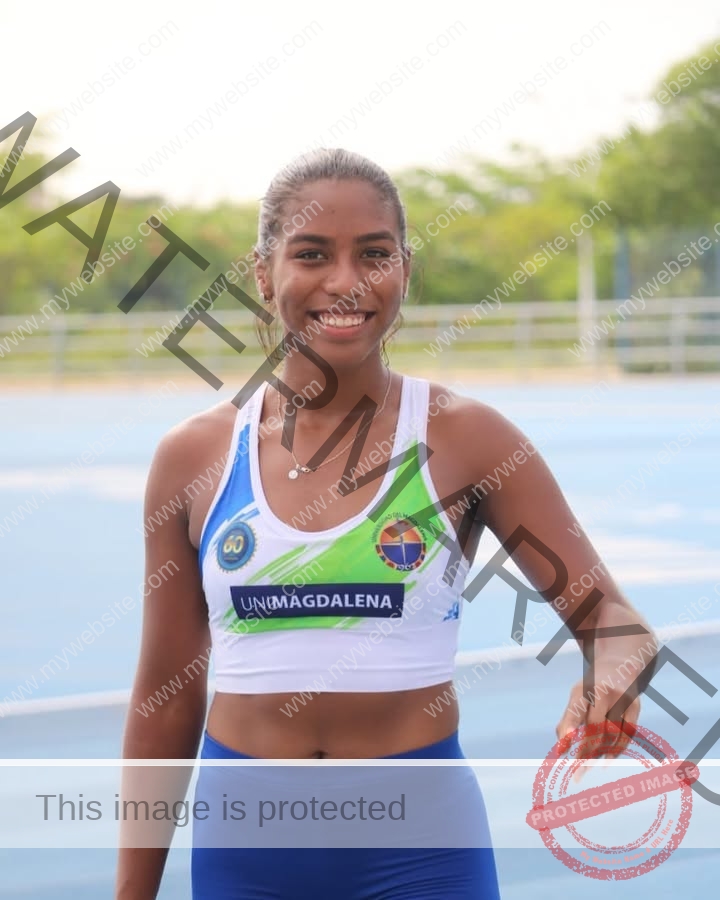
The relationship between the two has been central to everything that has followed. Suárez, who has described Linares as someone whose sensitivity and vulnerability away from her family he needed to help manage, has functioned as something close to a father figure to her during the years she has spent building her career far from home. In Santa Marta, she trains alongside Arnovis Dalmero, another high-level Colombian sprinter, within a focused competitive training group. She has also studied at the University of Magdalena, pursuing an education alongside her athletic career in a city that has become her adopted home.
The chemistry between athlete and coach has, by any measure, been exceptional. Suárez speaks of the importance of a shared ambition — of having a coach and athlete equally invested in the same goal. Linares has echoed the sentiment in her own reflections, describing their partnership as a genuine collaboration where communication, trust, and synchronized purpose make the whole greater than the sum of its parts.
The Early Breakthrough: Indoor Records and the 2020 South American Championships
Even in 2019, her first year training under Suárez, Linares began competing at higher levels through the Liga de Atletismo del Cesar. The results started coming. In 2020, at the South American Indoor Championships in Cochabamba, Bolivia, she announced herself with authority: a silver medal in the 60 meters in a Colombian national record time of 7.42 seconds, and gold in the 200 meters in a championship record of 24.19 seconds. She was seventeen years old, competing against senior athletes from across South America, and she was already winning.
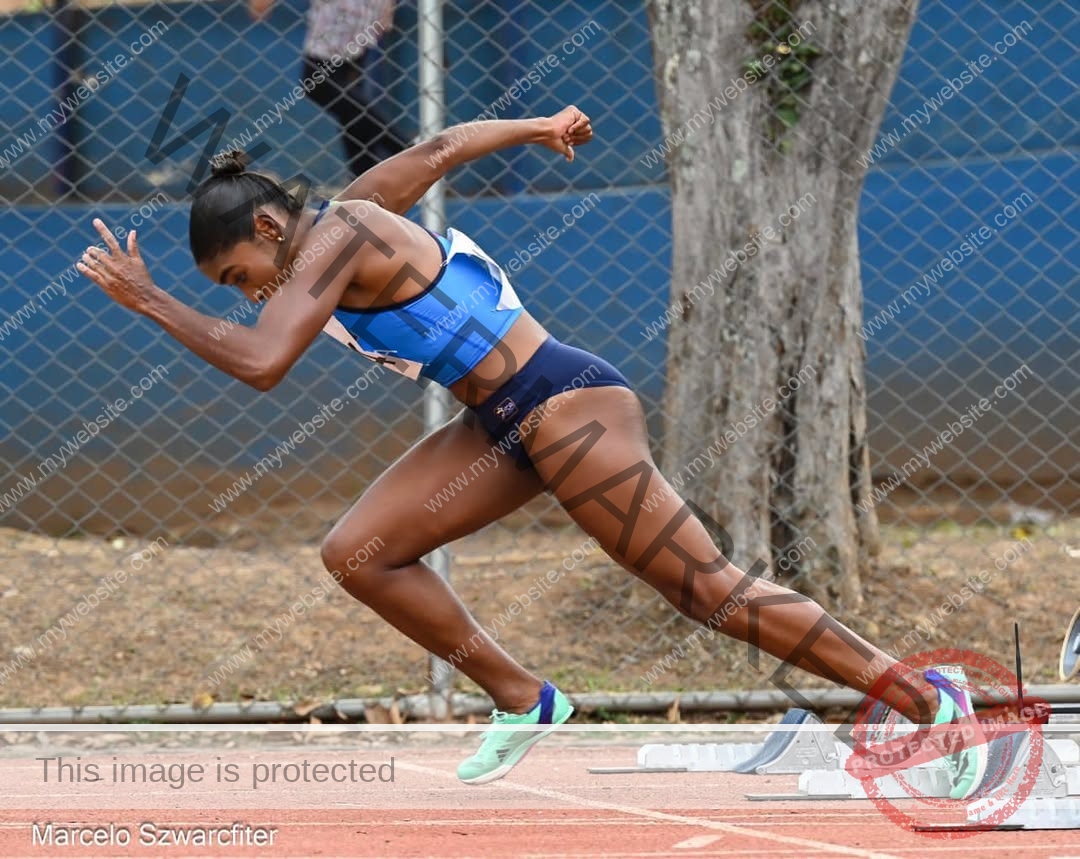
The performance underscored something important about Linares as an athlete: she is not purely a long jumper. She is a sprinter of genuine quality who happens to also be a world-class long jumper. Her raw speed — a 100-meter personal best of 11.34 seconds, set at the 2023 National Games — is a foundation that fuels everything she does in the pit. The explosive first steps, the long, powerful strides down the runway, the violent takeoff — all of it is underpinned by sprint speed that would make her dangerous in the flat events alone.
The U20 Years: A Rapid Education on the World Stage
The 2021 season saw Linares competing at the South American Championships in Guayaquil, where she finished fourth in the long jump (6.33 meters) and contributed to Colombia’s 4×100 relay team that took silver. At the South American U20 Championships in Lima, she won gold in both the 100 meters (11.68 seconds) and the long jump (6.14 meters), as well as anchoring the gold-medal relay squad. She was building a resume of versatility and multi-event excellence that would prove to be a genuine asset.
At the World Athletics U20 Championships in Nairobi in 2021, she finished twelfth in the long jump — a sobering result at the global youth level, but one that provided exactly the kind of educational experience that shapes future champions. Linares came away from Nairobi with a clearer sense of what global competition actually demanded.
She arrived at 2022 with a mission. In July of that year, at the Bolivarian Games held in Valledupar — her hometown — Linares turned in a performance that will be remembered by those who witnessed it as the moment the long jump world took serious notice. She jumped 6.68 meters for gold, shattering the Colombian record and the Caterine Ibargüen-era U20 benchmark with it, and added a wind-assisted leap of 6.79 meters that hinted at even greater distance within reach. The fact that it happened at home, in Valledupar, before a crowd that knew her name, made it all the more electric. As one Colombian outlet put it at the time, she had pulverized the Caterine Ibargüen record.
The following month brought the World Athletics U20 Championships, held in Cali — back in Colombia. Linares, already living with the pressure and privilege of being the hometown hope in the long jump, navigated the pressure with admirable poise. She advanced from qualifying with the third-best mark, then competed in the final with the composure of an athlete who had already, mentally, been in this situation a thousand times. She took silver with a leap of 6.59 meters, finishing behind her Nigerian rival Ese Brume — a result that matched her personal best at the time and established her firmly as one of the next great names in women’s long jump.
Her pre-competition routine, she explained to World Athletics at Cali, was always the same: eyes closed, deep breaths, faith in a higher power, and then the singular focus on the task at hand. “I enter a bubble,” she said. “I only listen to my coach and myself.”
2022 South American Games and the Path Forward
Later that year, at the South American Games in Asunción, Paraguay, she added a silver medal in the long jump (6.43 meters) against a full senior field. She had, in the space of a single season, won a Bolivarian Games gold on home soil with a national record, won World U20 silver, and medaled at the South American Games. At nineteen. The trajectory was undeniable.
A Year of Golden Moments: 2023
If 2022 established Linares as a future star, 2023 confirmed she was already a present one. The year was simply extraordinary.
At the Central American and Caribbean Games in San Salvador, El Salvador, she won gold in the long jump with a personal best of 6.86 meters, a Games record, and she secured both her Olympic qualification for Paris 2024 and her entry to the senior World Championships. She then competed at the 2023 World Athletics Championships in Budapest, where she finished 25th in qualifying — not her finest performance on the biggest stage, but experience accumulated.
The crowning achievement of 2023 came in October at the Pan American Games in Santiago, Chile. In what was widely considered her most complete performance to that point, Linares won the gold medal in the long jump with 6.66 meters — the first gold in this event for Colombia in Pan American Games history. The Colombian Olympic Committee later described her as “la diosa coronada del atletismo,” the crowned goddess of athletics, a reference to Valledupar’s legendary folk ballad and a measure of how deeply the city had embraced what she had accomplished. She was also named queen of sport in the Cesar department for the third consecutive year.
At the Colombian National Games that October, she even dominated the 100 meters flat, running 11.34 seconds to win gold — a reminder that her track speed is not merely a training asset but a genuine weapon in its own right.
Paris 2024: Learning What the Olympics Demand
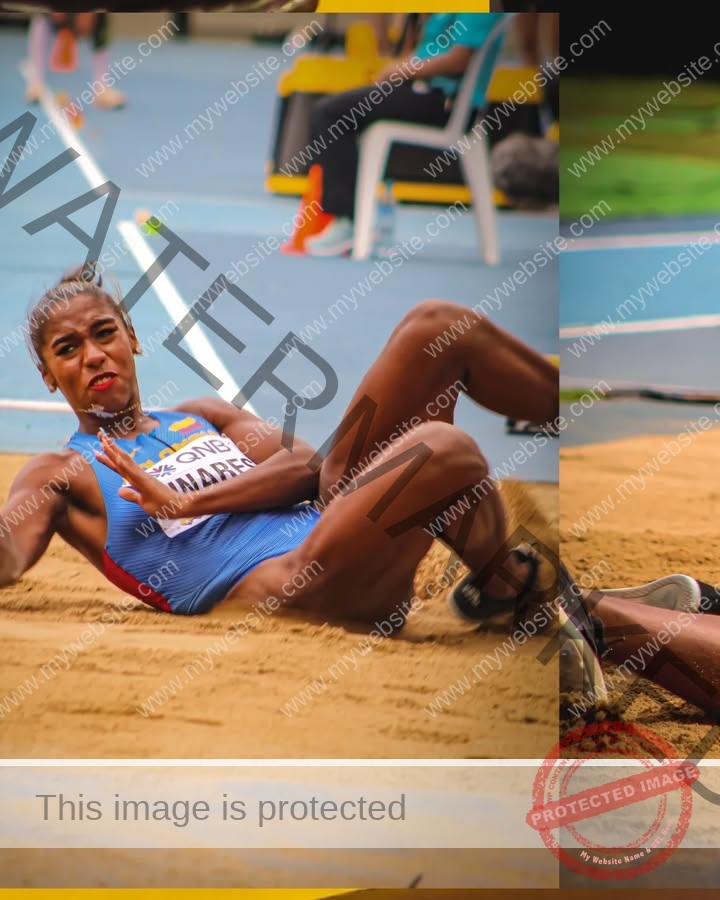
The 2024 season saw Linares accumulate experience and victories while building toward Paris. At the South American Indoor Championships in Cochabamba, she took bronze in the long jump. In Glasgow at the World Indoor Championships, she finished twelfth — not the result she sought, but another lesson filed away. She ran as part of the Colombian 4×100 relay team at the World Athletics Relays in Nassau, Bahamas. At the Ibero-American Championships in Cuiabá, Brazil, she won gold with 6.82 meters. At the Meeting de Paris Diamond League stop, she finished sixth.
The Olympic Games in Paris came with enormous expectation and ended with a 22nd-place finish in qualifying with 6.40 meters — a difficult day in a pit that many long jumpers found uncooperative. Linares is candid about having not been at her best at the Stade de France, and she has described the experience of not capitalizing on a major opportunity as something that ultimately taught her more about preparation, mental readiness, and taking chances than many of her victories had.
2025: The Season That Changed Everything
The 2025 season was Natalia Linares’s definitive arrival on the global stage, a summer of performances that will be cited for years as the breakthrough campaign of one of the finest long jumpers of her generation.
The year began indoors with South American Championship gold in Cochabamba (6.64 meters, a Colombian indoor national record at the time). Outdoors, she opened the season with South American Championship gold in Mar del Plata, Argentina, with a wind-assisted 6.81 meters. At the World University Games in Bochum, Germany, she took bronze (6.67 meters). Then came the U23 Junior Pan American Games in Asunción, Paraguay — the same city where she had medaled at the South American Games three years earlier — where she won gold with 6.92 meters, a Games record and a South American U23 record.
The mark of 6.92 meters would prove to be prophetic. In September 2025, at the World Athletics Championships in Tokyo, Japan, Linares stepped onto the track for the long jump final and turned in the performance of her career to that point. In the fourth round, she launched herself to 6.92 meters — matching her Junior Pan American Games mark exactly, setting a new South American record, and landing on the podium for the first time at a senior World Championships.
The gold went to American Tara Davis-Woodhall, the Olympic champion, with a stunning 7.13 meters. Silver went to Germany’s Malaika Mihambo at 6.99 meters. And the bronze — Colombia’s tenth medal in the history of the World Athletics Championships — belonged to Natalia Linares.
“I was very confident with all the hard work we have done leading up to this,” she said afterward, clutching the Colombian flag and wearing the sombrero vueltiao. “Caterine Ibargüen opened the door for Colombian athletics. She is my idol. This is a different event to her, but we started a new path of success. Colombia has a world medallist.”
Caterine Ibargüen herself, watching from back in Colombia, celebrated publicly on social media.
On December 1, 2025, at the Bolivarian Games in Lima, Peru, Linares extended her South American outdoor record once more — jumping 6.95 meters for gold. It remains her lifetime best and the longest jump ever recorded by a South American woman in the long jump.
2026: History, Again
Where 2025 was the breakthrough, 2026 has been the confirmation that what Linares achieved in Tokyo was no accident.
The year began at the South American Indoor Championships in Cochabamba, where she won her third consecutive South American indoor title with 6.73 meters in a 1-2 finish for Colombia alongside compatriot Valeria Araujo. Three weeks later, at the World Athletics Indoor Championships in Kujawy Pomorze (Toruń), Poland, Linares made history again. Leading the competition through the first two rounds with marks of 6.79 and 6.80 meters, she ultimately finished third as Portugal’s Agate de Sousa took gold with 6.92 meters and Italy’s Larissa Iapichino claimed silver with 6.87 meters. Linares’s 6.80-meter bronze was a new Colombian indoor national record — and it also made her the first Colombian athlete ever to win a World Athletics Indoor Championships medal.
“I’m glad I was able to pair it with the bronze medal from the 2025 World Championships,” she said at the podium. “Of course, that experience from Tokyo gave me much more confidence. Colombian triple jump legend Caterine Ibargüen is still my idol and she opened the path for us. Now we are here in the long jump and I hope my example will open the path for other Colombian women.”
The consistency of her messaging — the gratitude toward Ibargüen, the desire to inspire other Colombians, the faith she maintains through competition — speaks to a character as consistent as her jumping.
Then, on May 16, 2026, Linares made her first true Diamond League appearance on her own merit, competing at the opening stop of the 2026 Diamond League circuit in Shanghai (Keqiao), China. She opened with marks of 6.73 and 6.72 meters, then soared to 6.78 meters in her fourth attempt to claim silver — finishing behind only the United States’ Monae Nichols (6.89 meters) and ahead of Alexis Brown of the U.S. (6.75 meters). It was the fifth-ever Diamond League podium by a Colombian athlete, joining an exclusive list that includes Ibargüen, Anthony Zambrano, Flor Denis Ruiz, and others.
“The girl who dreamed from Colombia never imagined that athletics would take her this far,” she said from Shanghai, in words that made their way around Colombian athletics media within hours.
Who She Is Between the Jumps
Linares is a deeply expressive person whose character comes through as clearly in her post-competition interviews as it does in her competitive performances. She is openly devout — closing her eyes and praying before each jump is not a performance but a genuine ritual she has described as the centering act that allows her to block everything out and enter what she calls her competitive bubble. She works with a sports psychologist and speaks thoughtfully about the mental side of competition, about the necessity of synchronizing heart and mind.
She describes herself, without any hint of false modesty, as a dreamer. “I consider myself a dreamer,” she said at the 2022 World U20 Championships, “and every dream that I fulfil leads me to a bigger one.” That quality — the way ambition replenishes itself rather than being satisfied by achievement — may be the most distinctive thing about her as a competitor.
She is also deeply rooted in her identity as a vallenata, a daughter of Valledupar and the Cesar department. The sombrero vueltiao she waves at every competition is not a costume but a statement — a way of carrying home with her to every stadium in the world. Her love of vallenato music, the sound of her birthplace, is something she has spoken about openly. In a sport that often strips athletes of regional identity in favor of national or commercial branding, Linares insists on being visibly from somewhere specific.
Training, Support, and Representation
Linares trains under Martín Suárez Mazenett in Santa Marta, alongside fellow Colombian sprinter Arnovis Dalmero. She has described the coach-athlete relationship as the key infrastructure of everything she has achieved: a true partnership, not a hierarchy, built on shared ambition and open communication. The IDRD (the Bogotá Institute of Recreation and Sport) has provided institutional support under the umbrella of “Equipo Bogotá,” the city’s high-performance athletics program, reflecting the national and capital-city investment in her continued development.
She competes internationally under the Colombian flag and through the Federación Colombiana de Atletismo (Fecodatle), the country’s athletics governing body.
Personal Bests and Career Milestones at a Glance
For the record, Natalia Carolina Linares González’s current personal bests are: long jump, 6.95 meters (December 1, 2025, Bolivarian Games, Lima — outdoor South American record and Colombian national record); indoor long jump, 6.80 meters (March 22, 2026, World Indoor Championships, Toruń); 100 meters, 11.34 seconds (October 20, 2023, National Games); 200 meters, 23.78 seconds (2021); 60 meters, 7.42 seconds (2020, indoor, South American record at the time); 4×100 meters relay, 43.59 seconds (2021, South American U23 record). Her World Athletics ranking is currently fifth in the world in the women’s long jump, a position that accurately reflects her standing among the global elite.
Among her major career titles: World Athletics Championships bronze (Tokyo, 2025); World Athletics Indoor Championships bronze (Kujawy Pomorze, 2026 — Colombia’s first ever World Indoor medal); Pan American Games gold (Santiago, 2023 — Colombia’s first ever Pan American Games long jump gold); South American Championships gold (Mar del Plata, 2025); three South American Indoor Championships titles (2020 in 200 meters, 2025 and 2026 in long jump); Ibero-American Championships gold (Cuiabá, 2024); Central American and Caribbean Games gold (San Salvador, 2023); Bolivarian Games gold twice (Valledupar, 2022; Lima, 2025); World U20 Championships silver (Cali, 2022); and three consecutive Cesar department Sports Queen titles.
Social Media
Linares maintains an active Facebook presence under the page Natalia Carolina Linares Gonzalez. She has also been active on Instagram, where photos from her competitions and training life have been shared under her accounts over the years, though her primary public-facing social presence remains her Facebook community page.
Looking Ahead: Toward Los Ángeles 2028
Paris 2024 was a learning experience. The goal now is Los Angeles 2028, and the shape of Linares’s career suggests she will arrive as one of the event’s most dangerous competitors. She is currently ranked fifth in the world. She has two consecutive World Championships bronze medals — outdoor and indoor — at 22 and 23 years old respectively. She holds the South American outdoor record at 6.95 meters. The seven-meter barrier, which she has publicly identified as a personal dream, remains tantalizingly within reach for someone who has been jumping 6.90 to 6.92 meters in competition. The progress from 5.66 meters at her first World U20 appearance in 2021 to 6.95 meters at the 2025 Bolivarian Games traces one of the most compelling individual development curves in contemporary women’s track and field.
Valledupar, the Cesar department, and Colombia at large are watching. In the stands of whatever stadium she competes in next, there will be a Colombian flag and a sombrero vueltiao ready for the moment. Natalia Carolina Linares González has not yet given everything she has to give — and that, for anyone paying attention, is the most exciting part of this story.
