
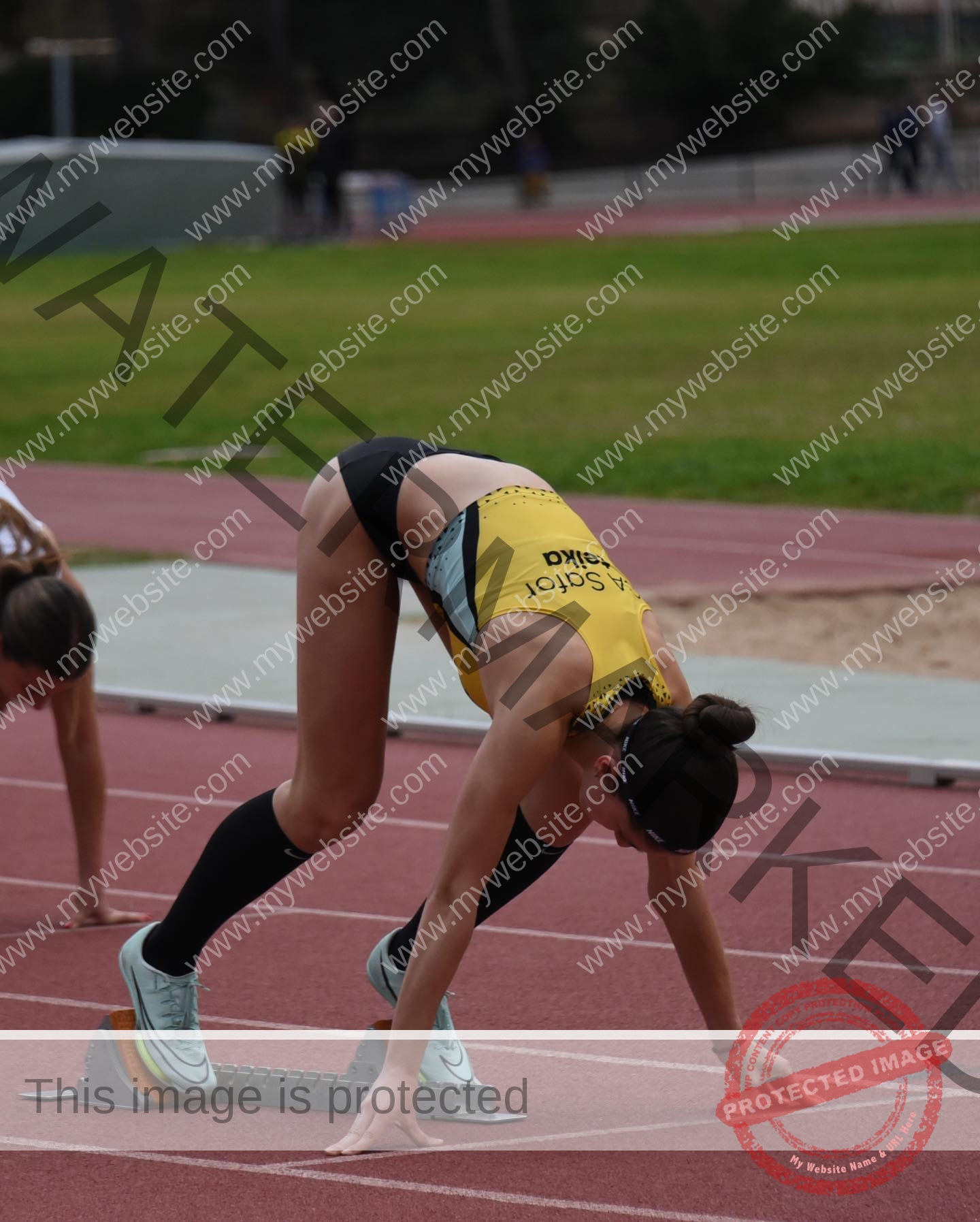
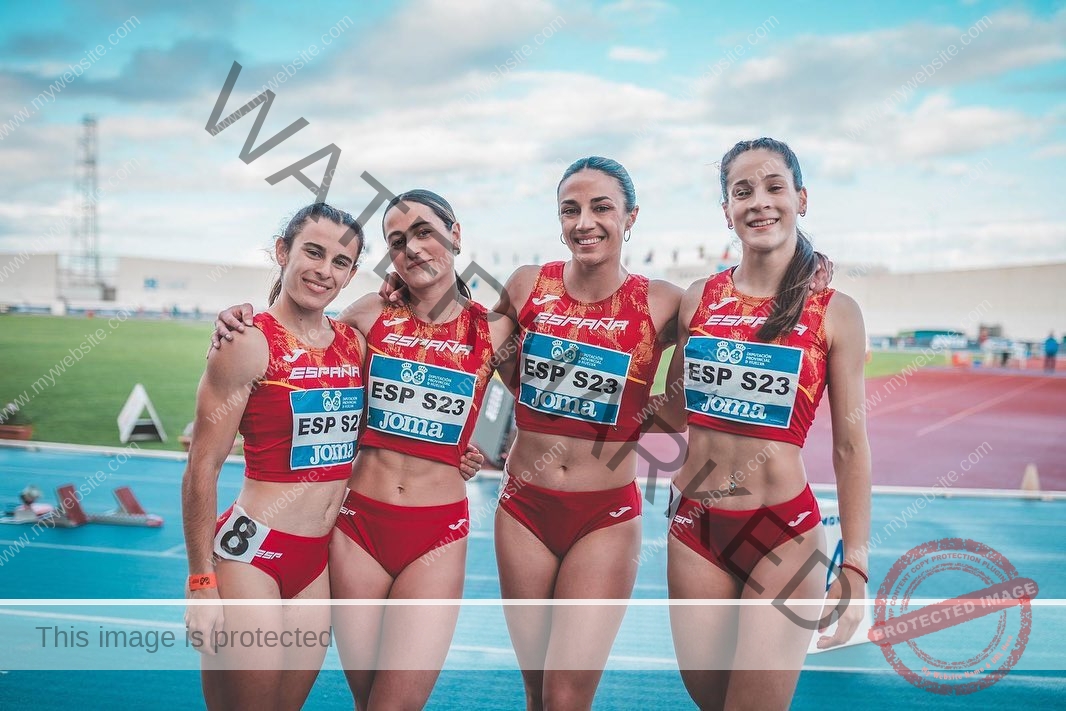
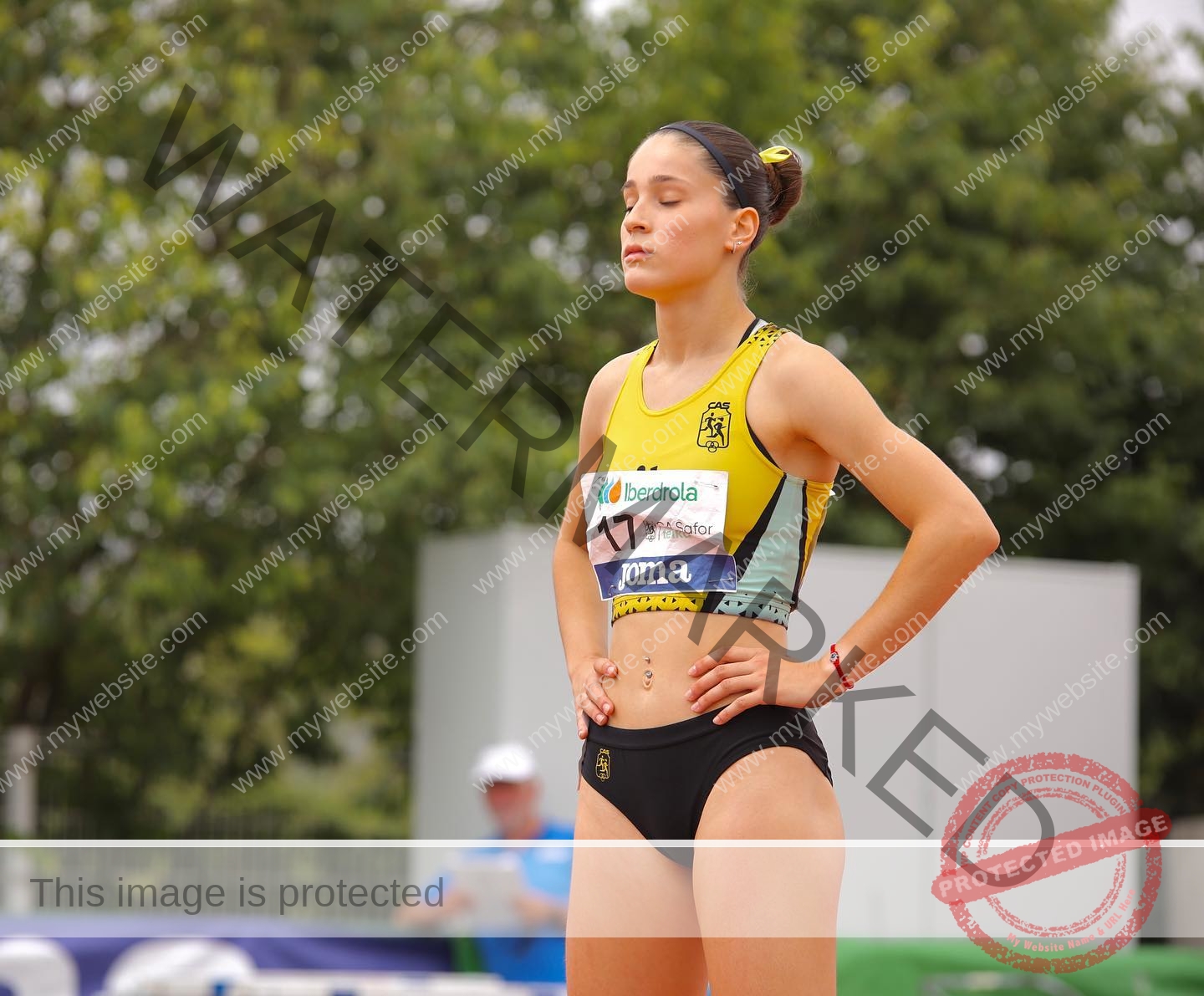
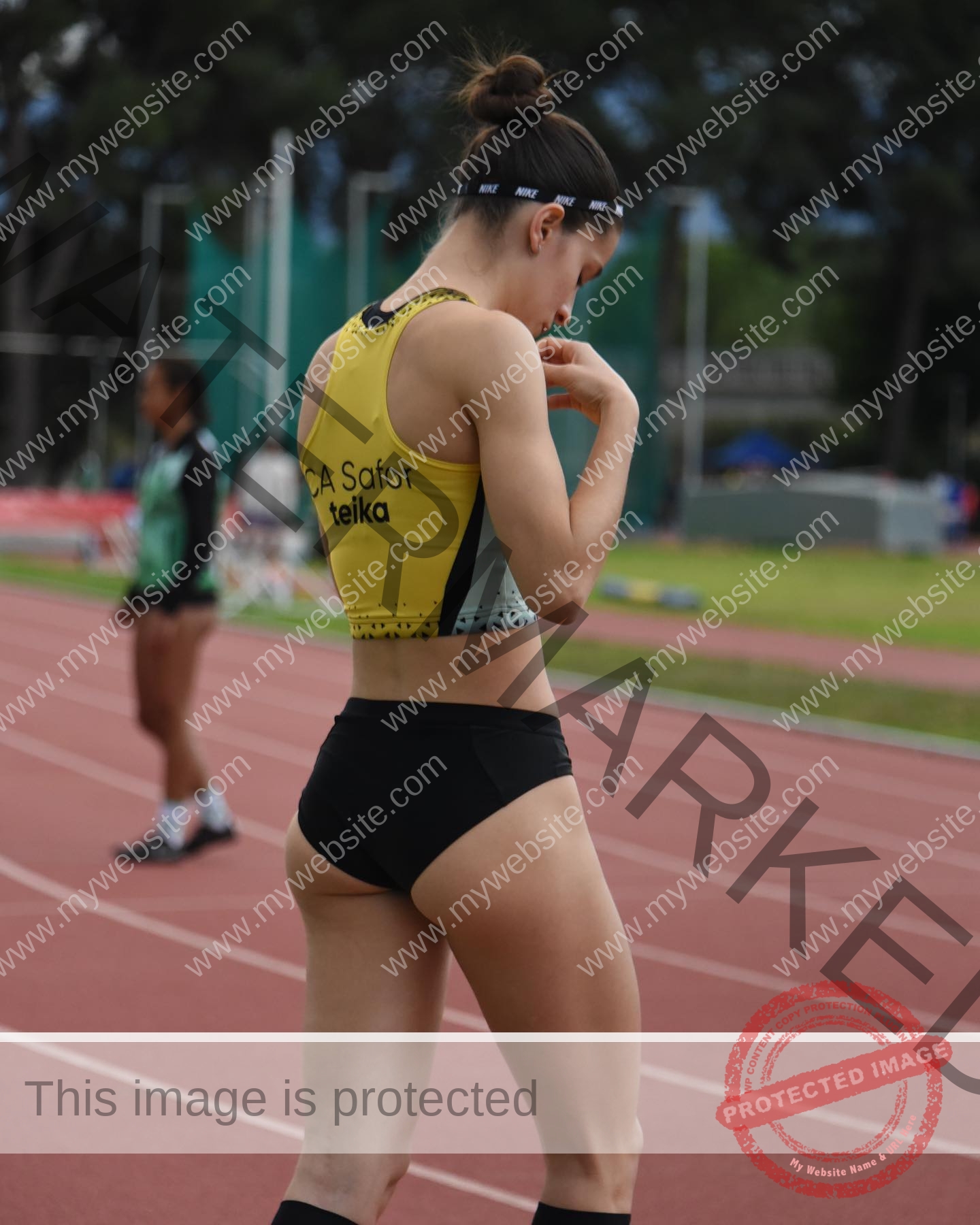

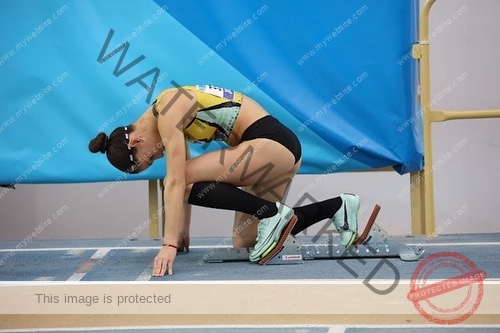
Laura Castillo Ibáñez: The Valencian Sprinter Chasing Speed and Titles
In the crowded, fiercely competitive world of Spanish sprinting, Laura Castillo Ibáñez has done something quietly remarkable: she has climbed from weekend fun runs alongside her parents to the national finals of the Spanish absolute championships — and she has done it before turning 22. Born on 14 October 2003 in the Valencia region, she is a 200-metre specialist whose trajectory reads like a textbook case of how patience, a strong support system, and an almost stubborn belief in incremental progress can produce an athlete who keeps proving people right.
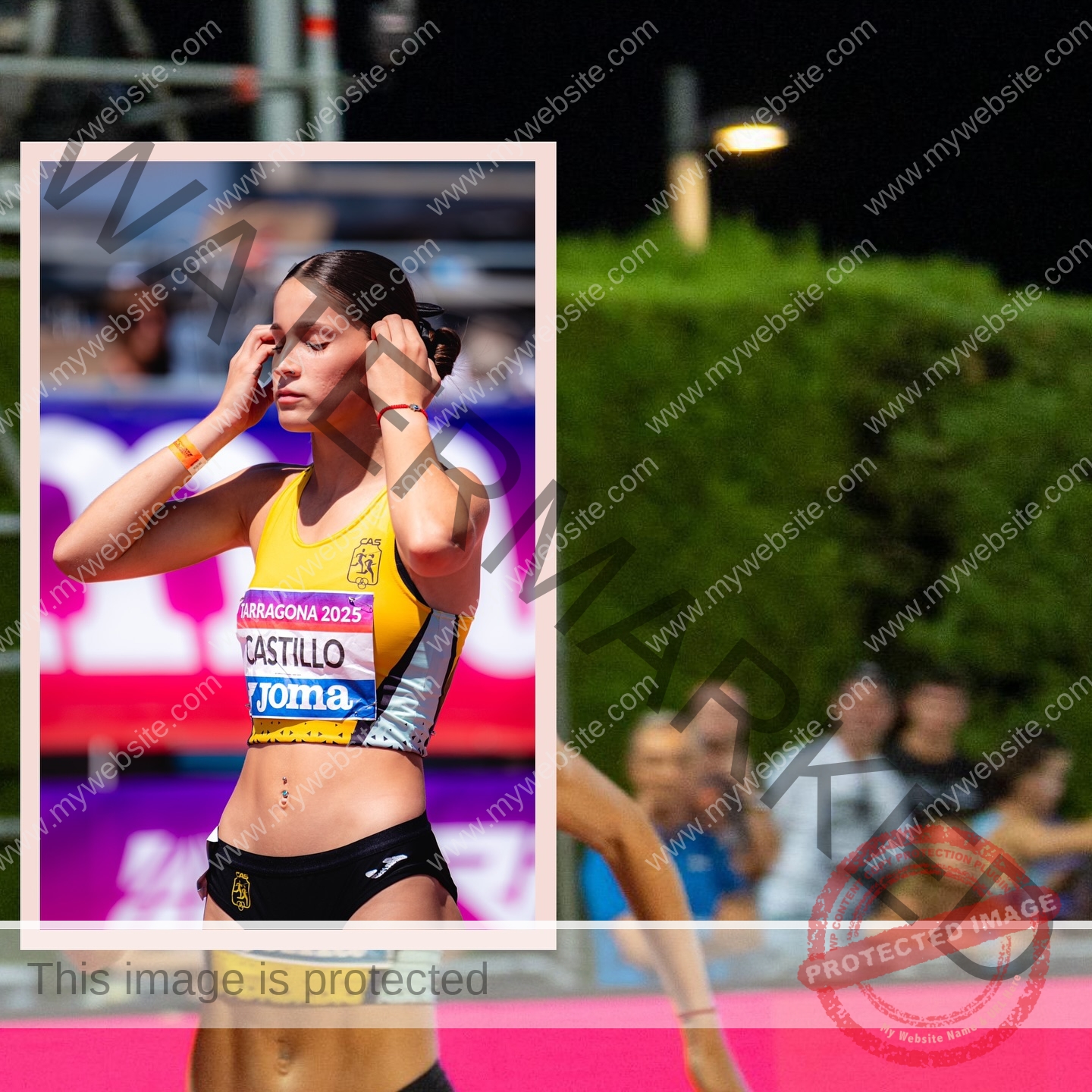
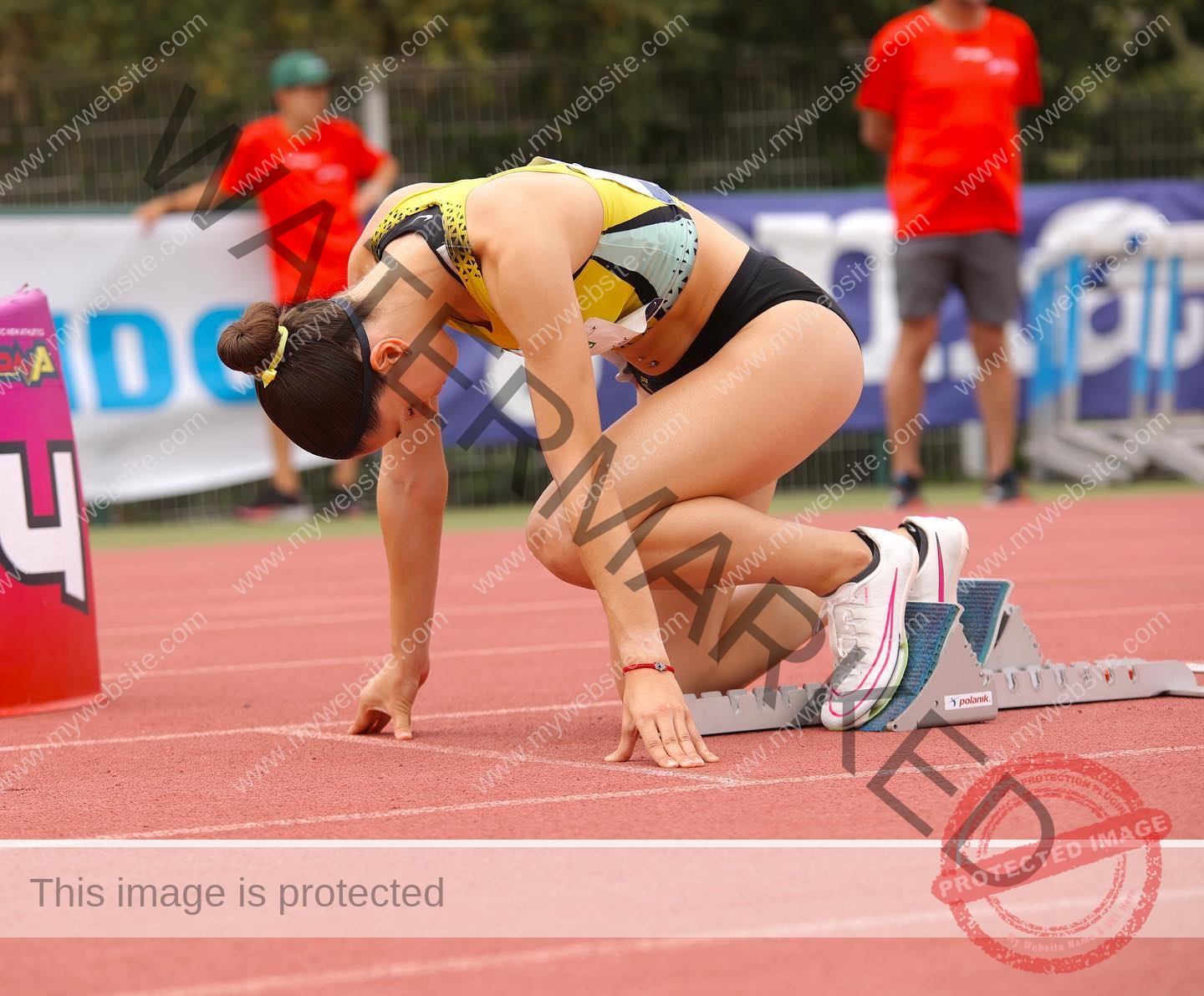
As of early 2026, Castillo competes for Club Atletisme Safor Teika, the Gandía-based club widely known by its club color and nickname, the groguets (“little yellows”). She trains five to six days a week in Valencia, working under coach Rubén Ortiz in one of the Valencian Community’s premier development groups. She is the reigning Spanish Sub-23 (Promesa) champion in the 200 metres, a four-time finalist at the Spanish absolute national championship, and a member of the Spanish Under-23 relay squad. At just 22, she is still only scratching the surface of what she is capable of.
Beginnings: A Family Sport and a Feel for Speed
Laura Castillo’s introduction to athletics was almost inevitable given the environment in which she grew up. Both of her parents are athletics practitioners themselves, and in her own words she was drawn into the sport from a young age through their example and encouragement. Like so many young children in Spain who grow up in athletic households, she started not on the track but on the roads, taking part in the popular carreras populares — the festive, community fun-run circuit that serves as the gateway into athletics for millions of Spaniards.
As she grew older, however, the discipline of track running began to call to her. The precision of the lanes, the raw clarity of racing against the clock — these things resonated in a way that road running did not quite satisfy. She enrolled with C.A. Silla, the athletics club from the town of Silla, just south of Valencia city, and it was there that her coaches first noticed something different in her stride. She was quick. Not just quick in a general sense, but quick in the way that makes coaches glance at each other and decide to pay closer attention.
Her first competitive experiences in the sub-16 (cadete) category came in the 300 metres — the distance used for Spanish youth sprinters in that age group before athletes transition to the full 200m and 400m programme. Castillo took to it immediately, performing well enough to qualify for her first Spanish national championship in the event, held in Castellón. That was the moment the concept of national competition became real for her: the track, the crowd, the start line, other girls from every corner of the country who were just as hungry.
The Sub-18 Transition and Finding Her Distance
When she aged into the sub-18 (juvenil) category, the Spanish federation’s standard distances changed alongside her, and Castillo found herself testing both the 200 metres and the 400 metres. After exploring both events, she made a clear-eyed decision: the double hectometre was where she belonged. The 200m suited her — the explosive power off the bend, the hold in the straight, the fine line between controlled aggression and pure release. She committed to the event and to improving herself within it with a singleness of purpose that would define her career going forward.
She also began representing the Selecció de la Comunitat Valenciana — the regional team of the Valencian Community — at youth championships, gaining experience of representative competition and the specific demands of running for a team as well as herself.
The Sub-20 Years: A Silver Medal and a Move to Safor Teika
Still competing with C.A. Silla as she moved through the sub-20 (junior) age group, Castillo reached a significant milestone in the 2022 outdoor season. At the 69th Spanish Sub-20 Championship, held at the Parc Central athletics facility in Torrent (Valencia), she finished in second place in the 200 metres, earning the silver medal as runner-up at the national level in her age group. It was the kind of result that announces an athlete has arrived at the highest tier of age-group competition in Spain — and it confirmed what her coaches at Silla had long believed about her potential.
The following season, ahead of the 2022–2023 winter campaign, she made a significant move: she transferred to Club Atletisme Safor Teika, the Gandía-based club that competes at the top levels of Spanish club athletics. It was a strategic decision that placed her within a broader, more ambitious competitive structure. At the same time, she began working under coach Nayade Luján in Valencia, training in the group at the Velódromo Luis Puig — one of the most important athletics venues in the Valencian Community. Under that coaching partnership, her results would begin to improve steadily and substantially.
The 2022–23 Season: A Debut Absolute Finalist
In the winter of 2023 — her first full campaign with Safor Teika — Castillo made her debut at the Spanish Absolute Indoor Championship (then still formally denominated “en Pista Cubierta”), held at the Centro Deportivo Municipal Gallur in Madrid. She arrived as a debutant at the absolute level with a personal best of 24.65 seconds, and few would have predicted she would do more than survive the early rounds.
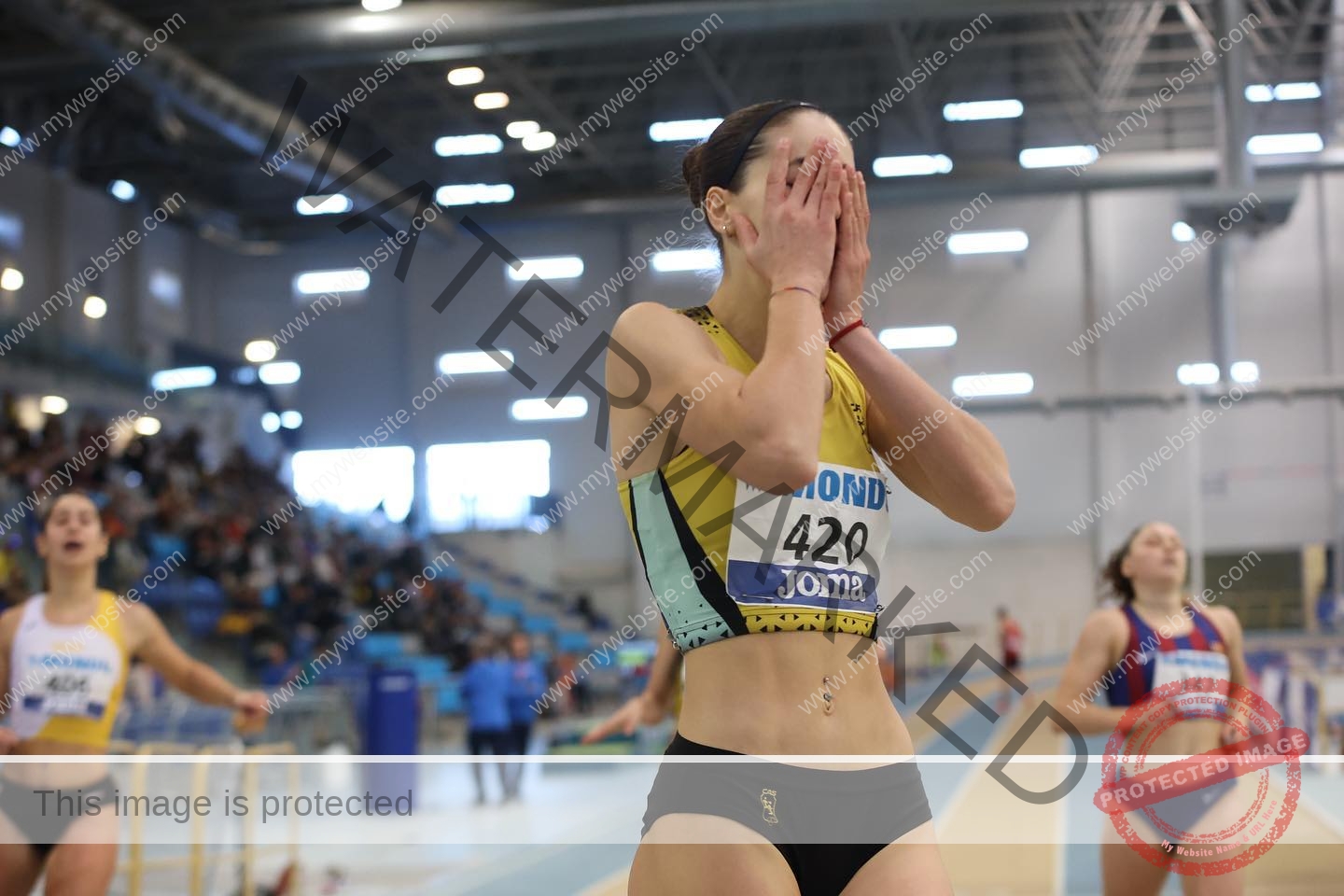
She did considerably more than survive. In the heats she lowered her mark to 24.48. In the semifinals she improved again to 24.31. And on the final day, running from what was widely considered the least favourable lane (lane 3) for a 200m race with two tight curves on a short track, she placed sixth in the national final with a time of 24.70. She was 19 years old. It was the first time in the history of Club Atletisme Safor Teika that a female sprinter from the club had qualified for a final at the Spanish Absolute Championship. In a very real sense, she had made club history on her very first attempt at the competition.
That same year, in the Sub-23 championship in Antequera, she had placed fourth in the promesa category at the indoor championships — not yet on the podium, but knocking hard on the door. She carried that momentum into the outdoor season, where she again reached the final of the Spanish Absolute Championship and finished eighth. Two absolute national finals in a single year, at age 19: the trajectory was impossible to ignore.
2023–24: Mastering the Sub-23 Stage
The 2023–24 indoor season confirmed that Castillo had moved beyond promising and into the category of genuine contender. At the Sub-23 (Promesa) indoor championship in Antequera in February 2024, she put together one of the most consistent performances of her young career. She won her heat with 24.87, won her semifinal with 24.30, and then took the Final B with a personal best of 24.09 — earning the bronze medal at the national Sub-23 level and establishing herself firmly in Spain’s top three in her age group. Her coaches at that point were Nayade Luján and Rubén Ortiz, both of whom had been central to her technical development.
A fortnight later, she was back in competition at the Absolute Championship, this time in Ourense. She came in as the sixth-ranked entered athlete with her 24.09 personal best and her stated goal of reaching the final and cracking 24 seconds. She didn’t quite crack the barrier, but she reached the semifinal stage before a fall disrupted her rhythm and ended her run — a frustrating conclusion to what had been a solid championship run.
It was also during the 2023–24 winter period that Castillo spoke publicly and candidly about her athletic journey in an interview. She described her commitment to the sport in practical terms: training five to six days a week, balancing morning academic study with afternoon sessions on the track, and leaning on her parents for motivation and presence at competitions. At that point she was pursuing a higher-level vocational qualification in physical education and sport instruction (TSEAS — Técnico Superior en Enseñanza y Animación Sociodeportiva), which gave her both educational credentials and a daily physical grounding that complemented her athletic training. She acknowledged that adapting to a schedule of sport in the morning and track training in the afternoon required real discipline to establish, but that with organisation it had become manageable.
She also reflected on her motivations with characteristic clarity: the satisfaction of progress, the competitive energy generated by her training group, and the distant but vivid example of the Olympic athletes she had watched as a child. She was equally thoughtful on the subject of women’s visibility in sport, noting that in some disciplines the support infrastructure and media attention available to female athletes still fell short of what they deserved — and expressing a quiet but firm conviction that things needed to change.
By April 2024, following her Sub-23 bronze medal and her absolute national semifinal appearances, she had earned a place in the top ten of the Spanish absolute short-track ranking in the 200 metres — a benchmark she called out with evident pride.
The summer of 2024 brought another personal best. On 14 July 2024, Castillo ran 23.66 seconds in the 200 metres (wind-assisted, flagged as not legal for record purposes) — a mark that underlined the kind of raw speed she was capable of producing. Her legal outdoor personal best, recorded on 15 May 2024, stood at 11.80 in the 100 metres, while her 200m legal outdoor best of 24.02 was set on 25 May 2025.
2024–25: The Year She Won It
If the preceding seasons had been about establishing herself, the 2024–25 indoor campaign was about claiming what she had worked toward. At the 40th Spanish Sub-23 (Promesa) Indoor Championship, held in Sabadell in February 2025, Castillo arrived not as a bronze-medal defender but as an athlete who knew exactly what she was capable of — and she delivered accordingly.
She was dominant from the first round. She won her heat, won her semifinal, and then in the Final A she crossed the line in 24.16 seconds, clear of second-place Ivanna Peralta (24.46) of Alcampo Scorpio de Zaragoza and third-place Celia Payrato of FC Barcelona. For the first time in her career, she stood at the very top of a Spanish national championship podium. The gold medal was hers.
Her reaction, captured in a post-race interview, was unguarded and genuine. “I still can’t believe it,” she said. “This medal reflects everything I’ve been working toward, all the effort and sacrifice.” She spoke about arriving at the championship knowing she was well-prepared and well-placed in the rankings, but also knowing the field was closely matched. “I knew that if I ran a good race I could get to the top. But you never know.” She also used the moment to encourage young athletes watching: “Even when things don’t go right straight away, don’t give up. Keep trying, because in the end things happen.” The time of 24.16 also served as the qualifying mark for the Spanish Absolute Individual Championship, scheduled the following fortnight in Madrid — yet another measure of how far she had come.
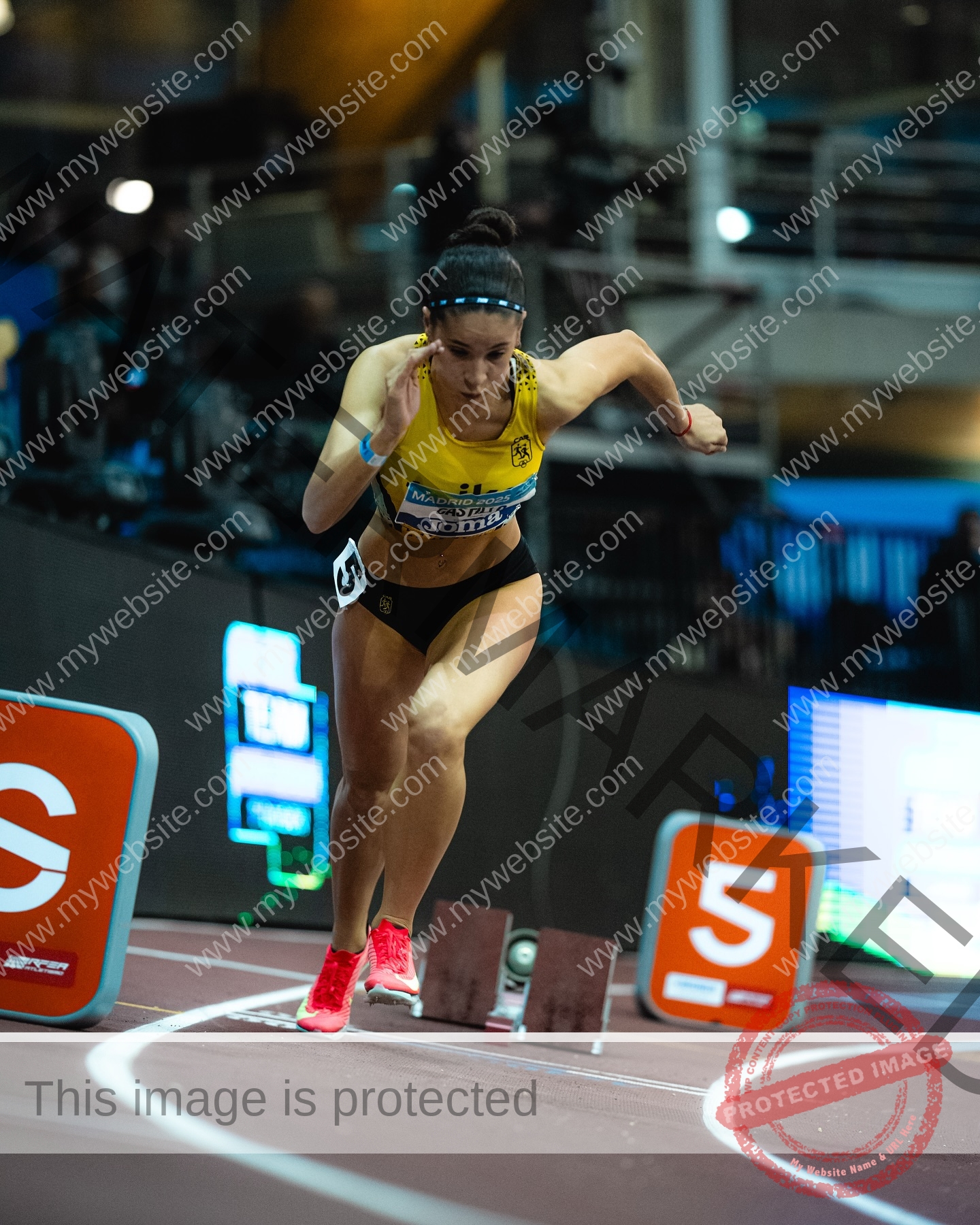
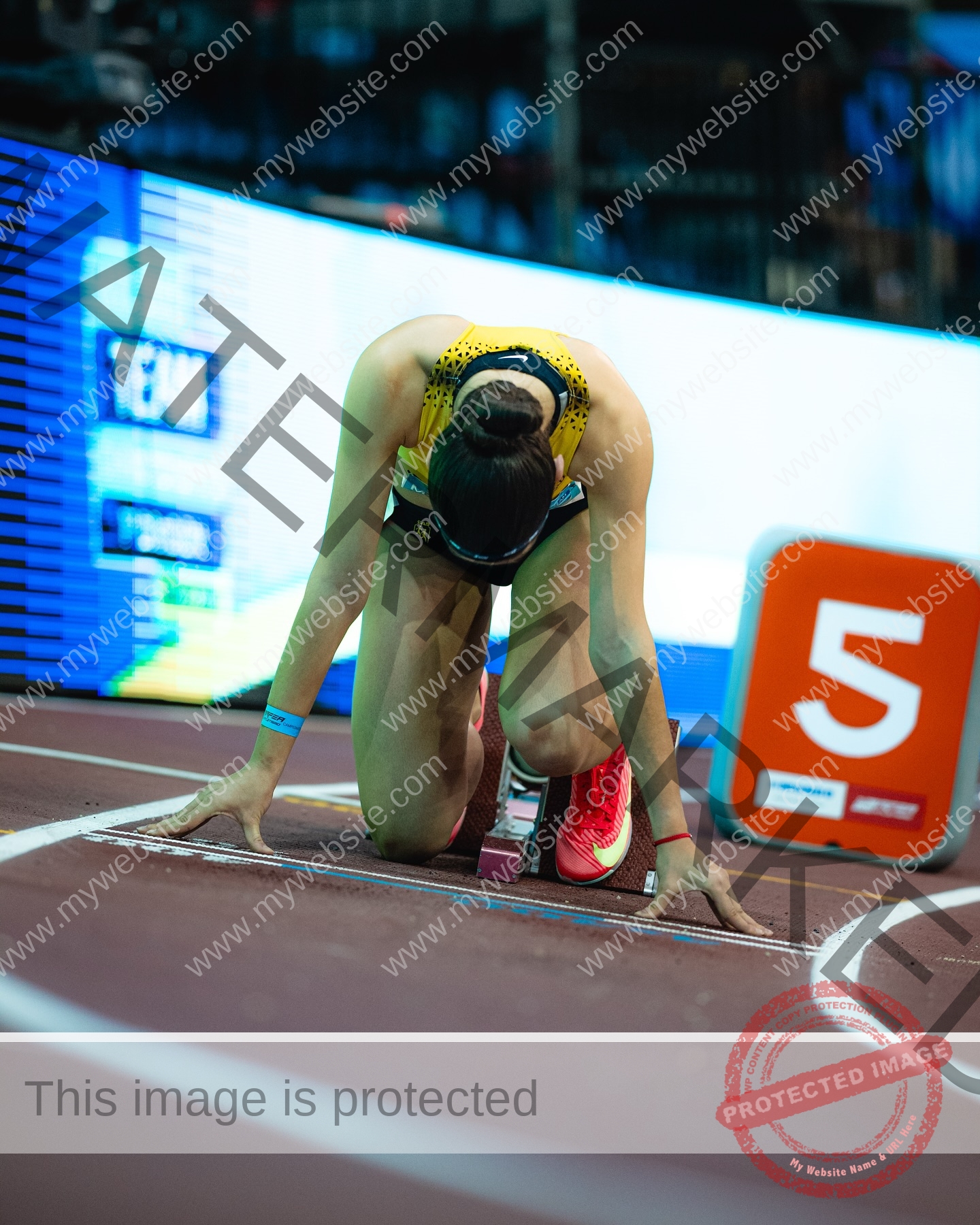
At the Absolute Championship two weeks later, held at Madrid’s Gallur track, Castillo once again proved she could compete at the highest domestic level. She won her heat with 24.49 and ran 24.48 in her semifinal, advancing to the final. There, unfortunately, she was assigned the interior lane — the most technically difficult position on the short track’s tightly curved circuit — and finished seventh with a time of 25.00. The result was a procedural frustration more than anything else; the four national absolute finals she had now accumulated, each one approached and executed with consistency, spoke more clearly than any single-race placement.
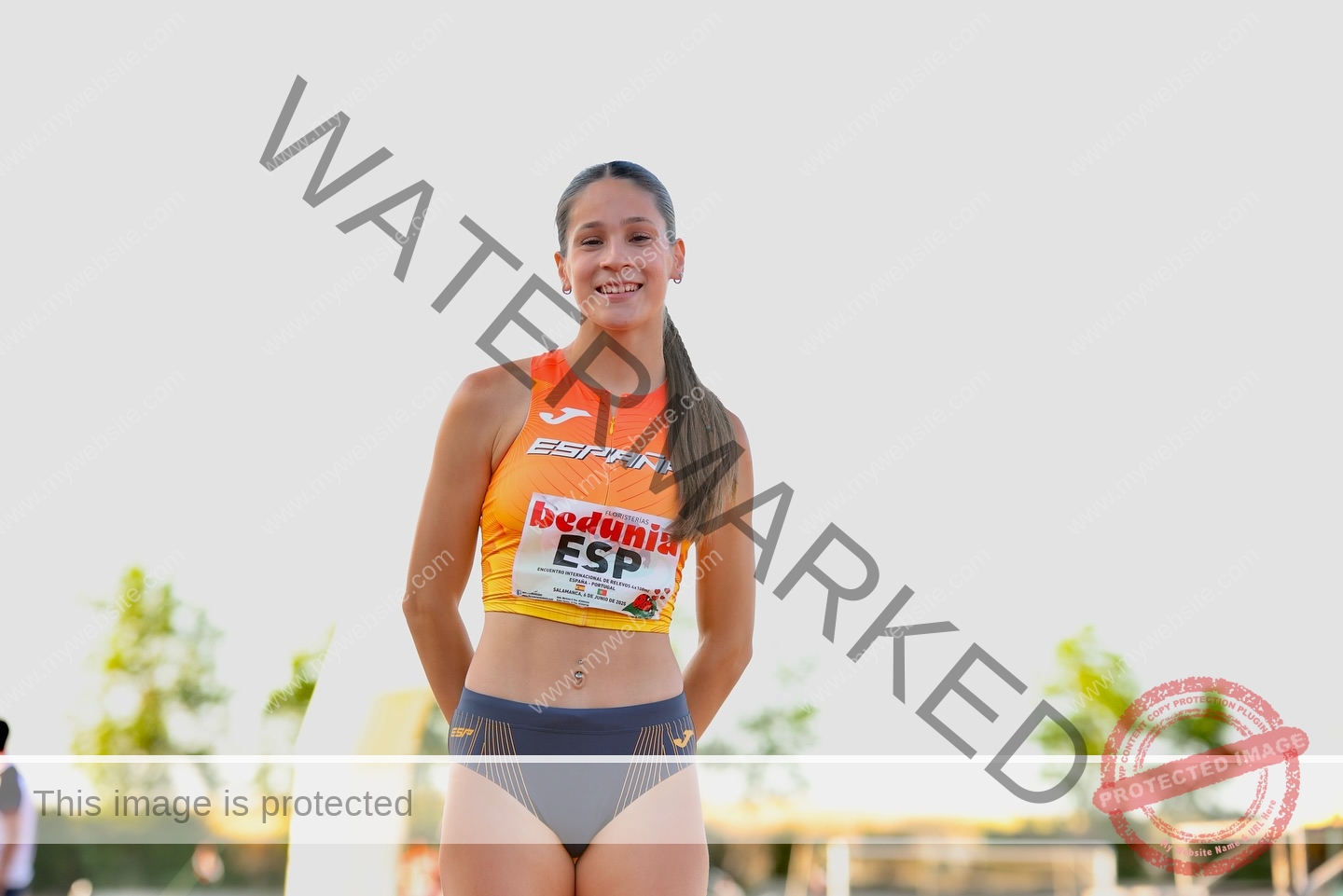
The outdoor season of 2025 added another dimension to her profile. In June of that year, she competed with the Spanish Under-23 national squad in the International 4×100 Metres Relay Match between Spain and Portugal, held in Salamanca. The Spanish Sub-23 team — comprised of Castillo, María Hernández, Yissis Cortijo, and Ericka Maseras — finished first in their semifinal with a time of 44.40 seconds, a new personal relay best for Castillo and a Spanish Under-23 best for the relay group. In the final they placed second with 44.97. It was her first confirmed call-up to the Spanish national relay setup, confirmation that the federation had taken notice of her progress at the domestic level.
Also in 2025, competing in the domestic club competition structure, Castillo delivered a standout performance in the Campeonato de España de Clubes en Primera División for Safor Teika, winning both the 100 metres and the 200 metres in her squad’s encounter — demonstrating the same consistent finishing ability that had defined her championship career.
2025–26: Continuing to Compete at the Top
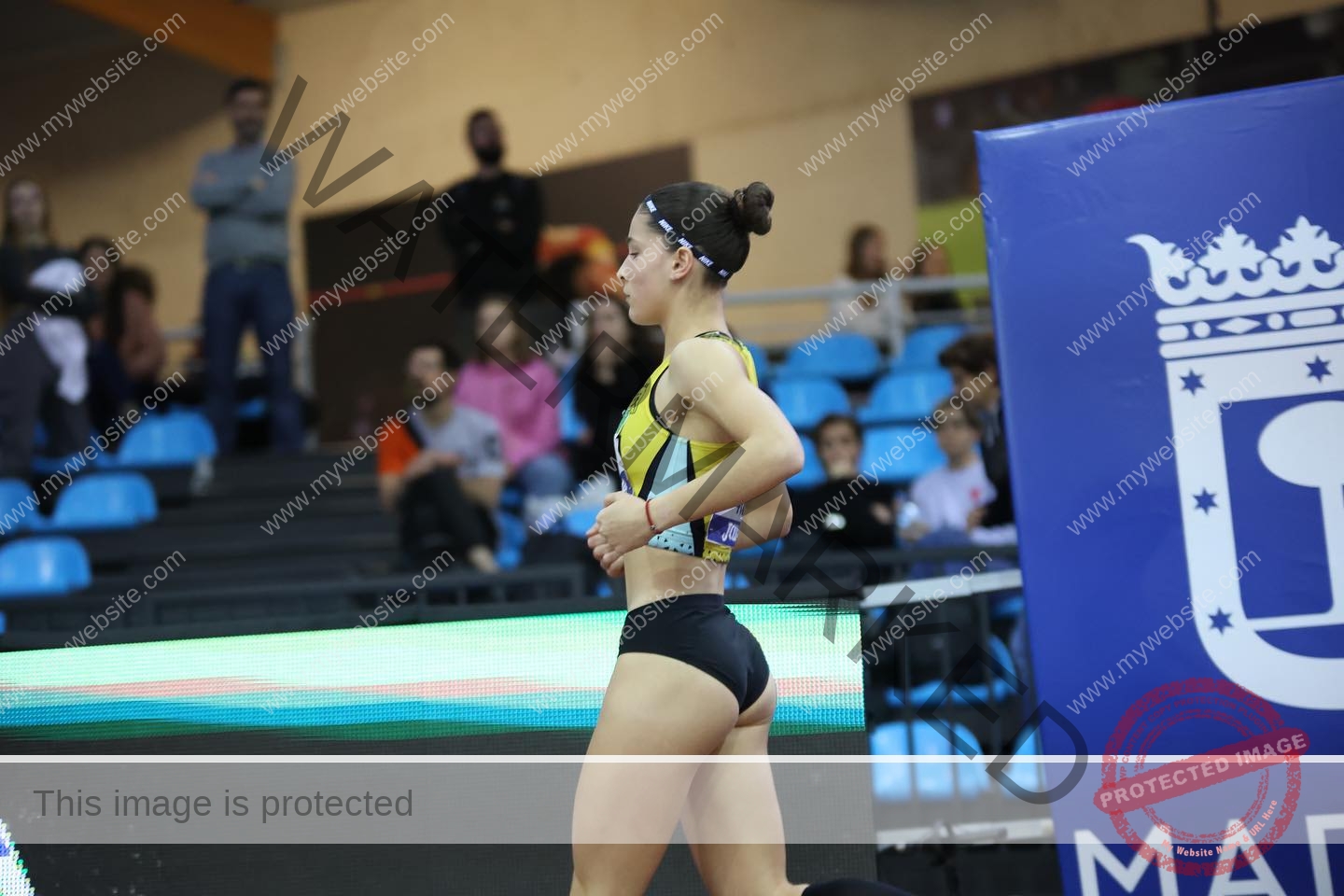
The 2025–26 season opened with Castillo once again representing Safor Teika at the upper levels of Spanish competition. In January 2026, she recorded a 60-metre time of 7.55 at the Velódromo Luis Puig in Valencia — a solid short-sprint benchmark confirming she was in form heading into the indoor season. Later that winter, she competed at the 62nd Spanish Absolute Short Track Championship, again held at the Lluís Puig pavilion in Valencia. She ran 24.37 in the heats, 24.34 in the semifinal (equalling her seasonal best), and 24.53 in the final, finishing seventh. It was the fourth time she had reached the absolute national final — a run of consistency at the elite domestic level that few Spanish sprinters her age can match.
The club’s published notes on the result pointed out something worth highlighting: by reaching the Absolute final for the fourth time, Castillo had made this particular achievement — consistent senior national finalism — a recurring feature of her career rather than an occasional one.
Personal Bests and Career Statistics
The following are Laura Castillo Ibáñez’s key official personal bests as recognised by World Athletics and the RFEA:
- 200 metres (outdoor): 24.02 (25 May 2025)
- 200 metres (short track/indoor): 24.09 (4 February 2024, Antequera)
- 100 metres: 11.80 (15 May 2024)
- 60 metres: 7.55 (31 January 2026, Valencia)
- 4×100 metres relay: 44.40 (6 June 2025, Salamanca) — Spain Sub-23
Her World Athletics ranking as of early 2026 stands at approximately #605 in the global women’s 200-metre list — a meaningful position for an athlete of 22 who competes domestically and has not yet had significant exposure to major international individual championships. As her results continue to tighten, that number will only move in one direction.
Club, Training, and Structure
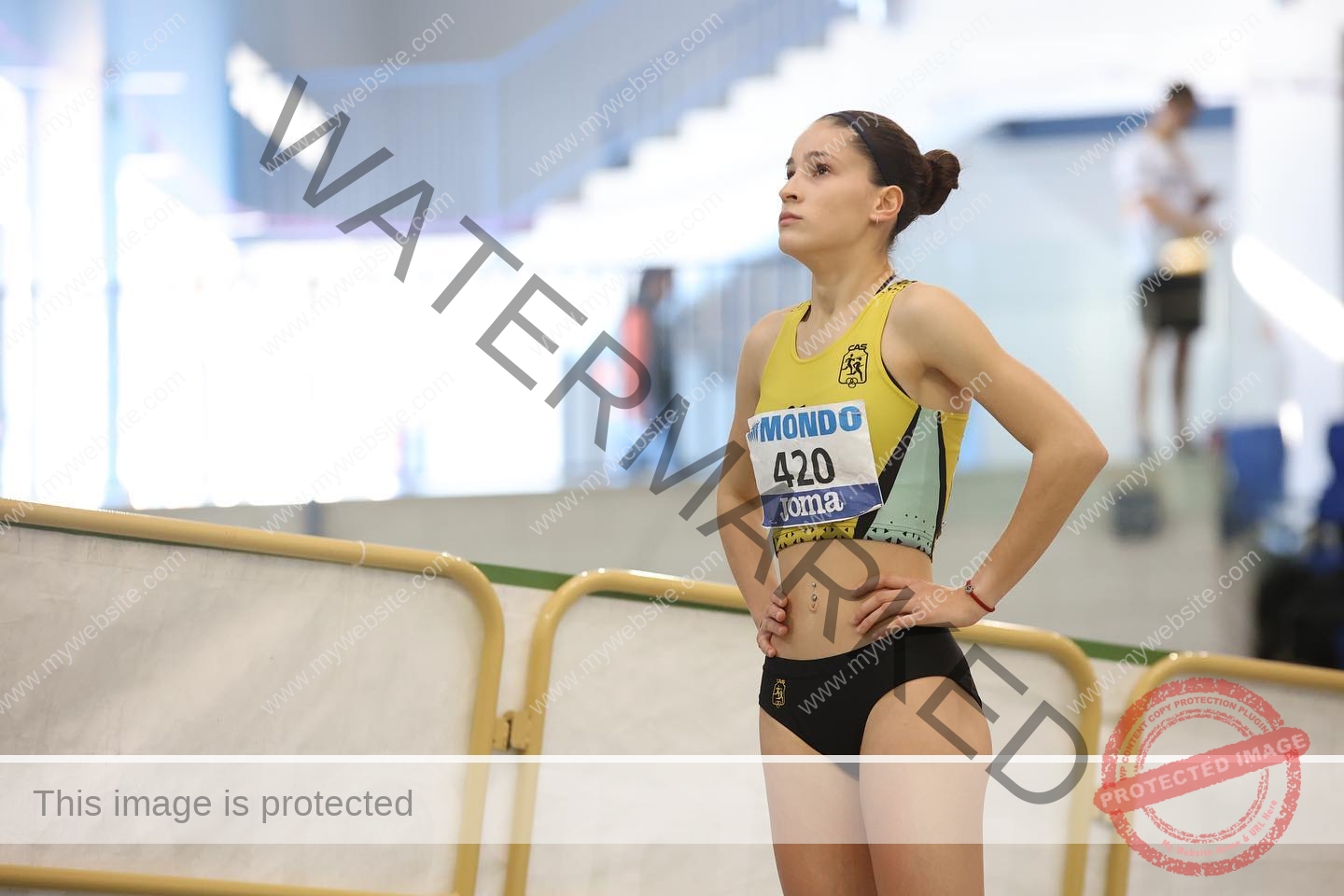
Castillo has been a member of Club Atletisme Safor Teika since the 2022–23 season. The club, headquartered in Gandía on the Valencian coast, competes in Spain’s Primera División league structure and has a well-developed network of training groups across the Valencian Community. Their club colour is yellow — hence the affectionate nickname groguets — and their reputation within Valencian athletics is one of genuine ambition: they are a club that develops athletes, invests in infrastructure, and aims at the highest levels of domestic competition.
Despite the club’s base in Gandía, Castillo actually trains in Valencia city, part of the Safor Teika technification group based at the Velódromo Luis Puig. She is resident in Masanassa, a municipality just south of Valencia city, which places her conveniently close to the training venue. Under coach Rubén Ortiz — who has guided her development through the most productive seasons of her career so far — she trains alongside a talented group of Valencian sprinters who provide the daily competitive stimulus that drives individual improvement. Nayade Luján also played an important early coaching role in her development at the club before Ortiz took on primary responsibilities.
Castillo has also been selected regularly to represent the Selecció Valenciana (the Valencian Community regional team) in the Spanish inter-federation championships, adding another layer of representative experience to her career. In 2024, for example, she competed in the Spanish inter-federations championship in La Nucia, placing fourth in the 200 metres and running on the mixed 4×100 relay team for the Valencian selection.
Education and Aspirations Beyond the Track
Laura Castillo has consistently demonstrated that she thinks about her life beyond athletics as seriously as she thinks about the sport itself. As of early 2024, she was pursuing a higher-level vocational qualification in sport instruction — the TSEAS degree (Técnico Superior en Enseñanza y Animación Sociodeportiva), a programme that covers sports pedagogy, coaching methodology, and physical activity management. The combination of hands-on athletic practice in the mornings and track training in the afternoons was initially demanding to adjust to, she has said, but she credits the experience with teaching her how to organise her time effectively — a skill she regards as among the most important any athlete can develop.
Her stated professional ambition is to work as an educator and sport instructor: to transmit her passion for athletics, and for physical activity more broadly, to the next generation. It’s an aspiration that reflects both her own experience of being inspired by her parents’ example and her awareness of the role that sport plays in shaping young people’s sense of what is possible.
The Athlete in Her Own Words
In interviews, Castillo speaks with a directness that matches her running: no unnecessary ornamentation, clear goals, honest assessment of where she stands. She is candid about the nerves that accompany major competition (“With a lot of nerves — and even more knowing you can do it well”), thoughtful about the factors that make the difference (“The gym is very important, because for the 200m you need a lot of strength to handle the bend”), and generous in crediting the people around her — her coaches, her training group, and most of all her parents.
She has also spoken about the importance of perseverance with a conviction that clearly comes from experience rather than platitude. Her path from participation in community fun runs to national champion and international representative is not one that happened overnight, and she knows it. “Even when things don’t work out straight away, don’t give up,” she has said. “Keep trying. Because in the end, things happen.”
Social Media
Laura Castillo Ibáñez maintains an active presence on Instagram, where followers can keep up with her competition results, training updates, and day-to-day life as an athlete. Specific handle information is not independently confirmed in published sources, but she can be found by searching her full name on the platform. Club Atletisme Safor Teika also documents her results and competition appearances regularly on the club’s official website and social media channels, which represent a reliable source for her ongoing career updates.
No confirmed commercial sponsorship arrangements have been publicly reported as of early 2026. Her club, Safor Teika, operates with support from regional sponsors but individual athlete endorsement arrangements have not been disclosed.
Looking Ahead
At 22, Laura Castillo Ibáñez stands at a genuinely interesting juncture in what has already been a well-constructed career. She has won the Spanish Sub-23 200-metre title indoors. She has earned selection to the Spanish national Under-23 relay squad and competed internationally. She has been a finalist at the Spanish Absolute Championship four times. She is coached by an experienced, ambitious technical staff and trains within one of the Valencian Community’s most competitive athletic environments.
The next logical step is the push toward Spain’s fastest women at the absolute level — athletes like Jaël-Sakura Bestué and Esther Navero who define the very top of Spanish sprinting — and toward international qualification standards that would put her on the starting line at European or world-level competitions in the senior category. Those goals are not distant fantasies for an athlete with her record; they are the natural next stage of a career that has developed with consistency and purpose since she first traded the road circuit for the track.
Spain’s sprint programme has genuine strength at the women’s 200 metres right now, and competition for places is fierce. But if Laura Castillo’s career to date has shown anything, it is that she does not back away from fierce competition. She runs toward it.
Career Highlights at a Glance
- Born: 14 October 2003, Valencia region, Spain
- Residence: Masanassa (Valencia)
- Primary event: 200 metres (also 100m, 60m)
- Club: Club Atletisme Safor Teika (Gandía)
- Coach: Rubén Ortiz (Valencia)
- Training venue: Velódromo Luis Puig, Valencia
- Spanish Sub-23 200m champion (indoor/short track): 2025 (Sabadell, 24.16)
- Spanish Sub-23 200m bronze medallist (indoor): 2024 (Antequera, 24.09)
- Spanish Sub-20 200m silver medallist (outdoor): 2022 (Torrent)
- Spanish Absolute 200m finalist: 2023 indoor (6th), 2023 outdoor (8th), 2025 indoor (7th), 2026 indoor (7th)
- Spain Sub-23 4×100 relay squad: 2025 (Spain vs Portugal, Salamanca — 1st in semifinal, 44.40; 2nd in final, 44.97)
- Valencian Community representative: Multiple editions of the Spanish Inter-Federations Championship
- 200m personal best (outdoor): 24.02
- 200m personal best (short track/indoor): 24.09
- 100m personal best: 11.80
- World Athletics ranking: ~#605, women’s 200m (as of early 2026)
