




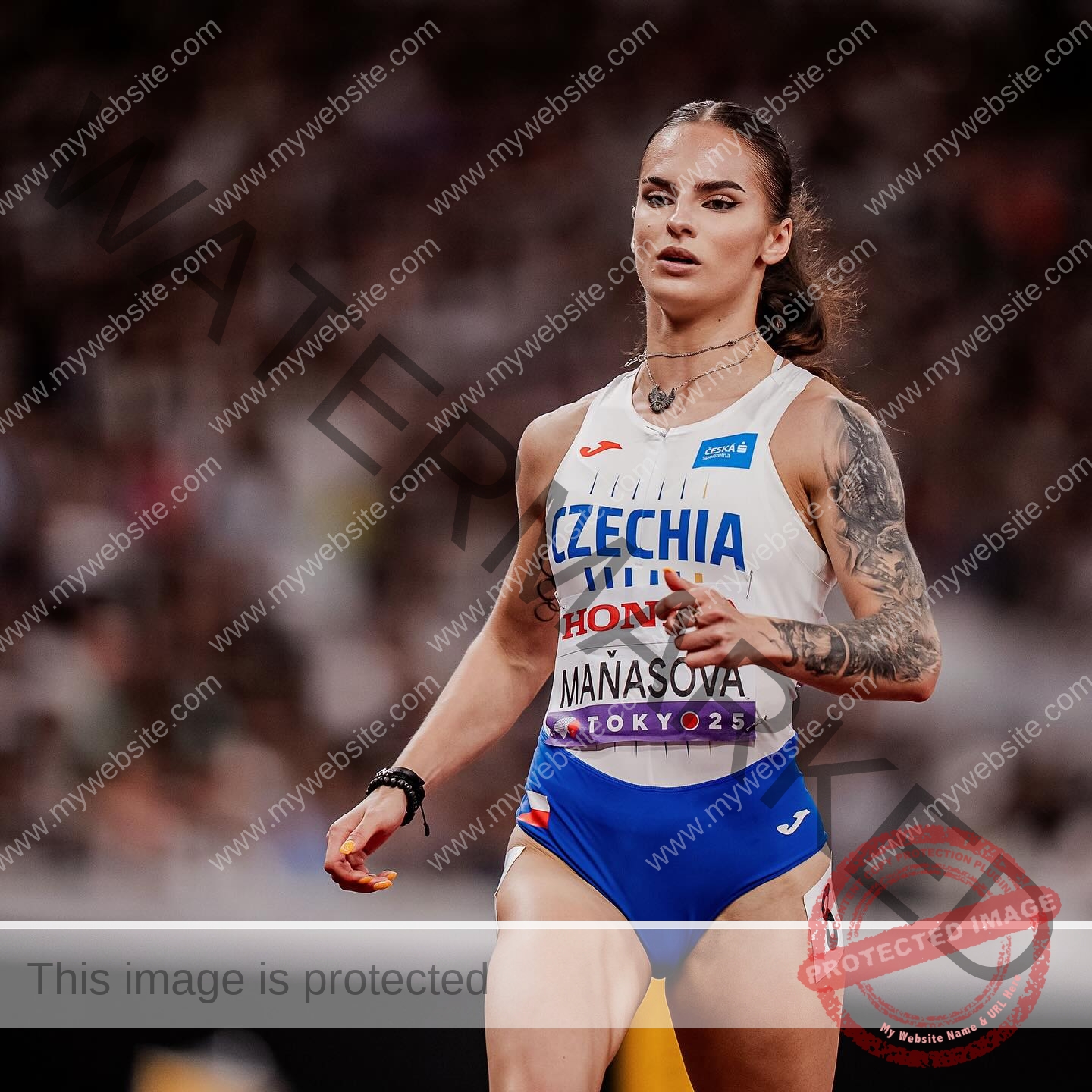
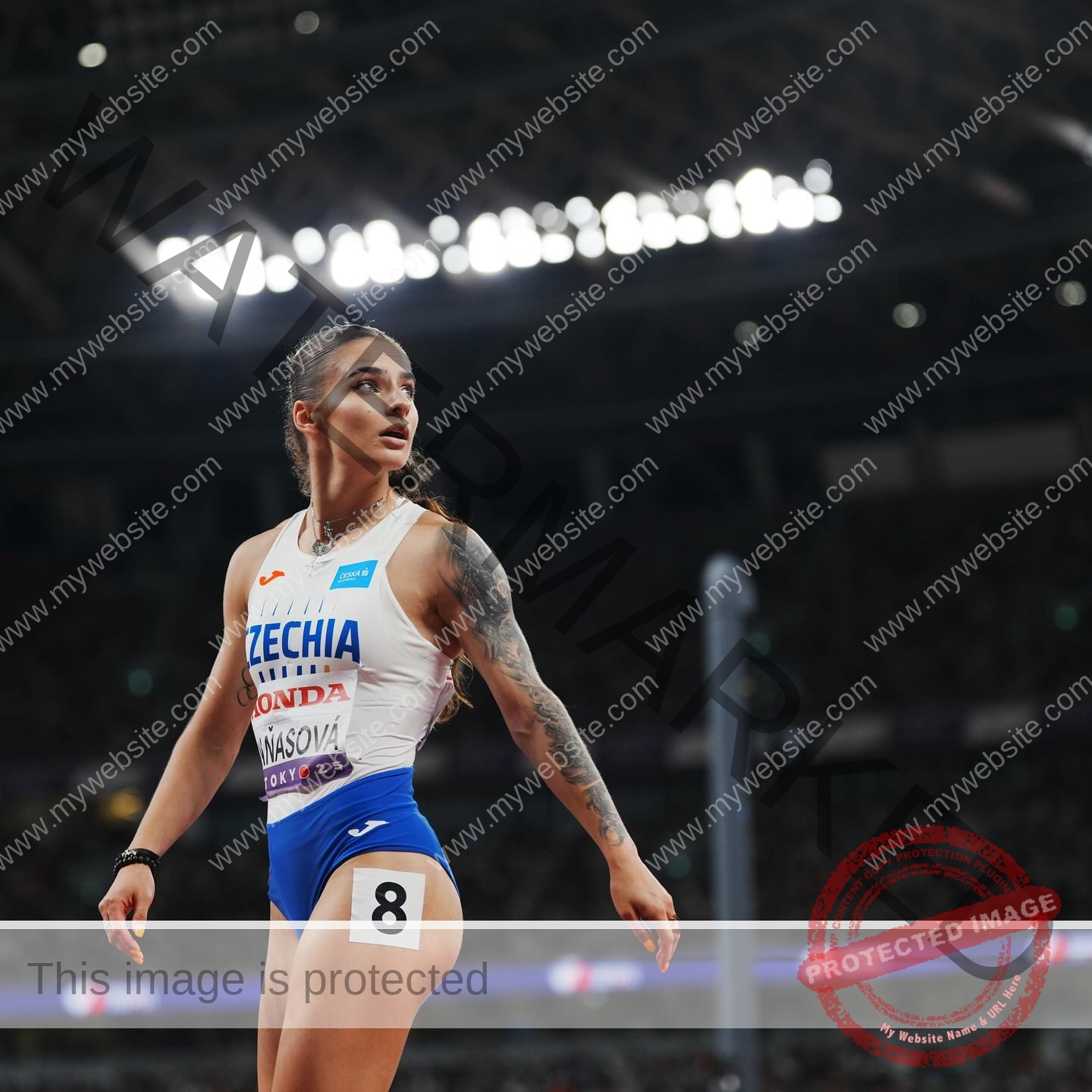
Karolína Maňasová: Czechia’s Fastest Woman and the Sprint Revolution She’s Leading
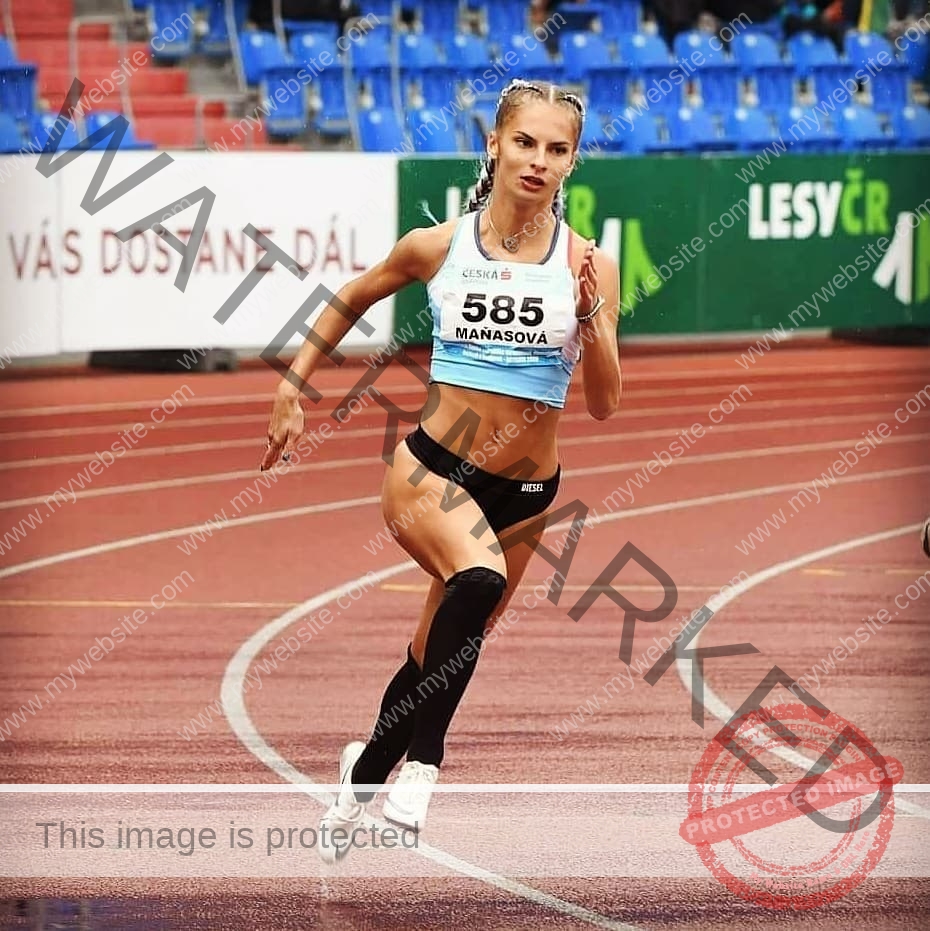
There is a moment that defines an athlete’s arrival on the world stage — a performance so unexpected, so quietly seismic, that it forces the broader sporting world to sit up and reconsider what it thought it knew. For Karolína Maňasová, that moment came on a warm August evening in Paris in 2024, when a 20-year-old sprinter from a modest industrial city in the Moravian-Silesian region of Czechia crossed the finish line of her Olympic 100 metres heat in 11.11 seconds — a personal best, a new Czech national record at the time, and the starting gun for what has become one of the most exciting ascents in European sprinting.
She was the first Czech woman to reach an Olympic 100 metres semifinal in 76 years. The previous qualifier had done so at the 1948 London Games. In the intervening three-quarters of a century, there had simply been no Czech sprinter capable of getting there. Then came Maňasová — and the long drought was over.
From Nový Jičín to the Starting Blocks
Karolína Maňasová was born on November 26, 2003, in Nový Jičín, a small historic city in the Moravian-Silesian Region of northeastern Czechia. Nový Jičín — known locally for its hatmaking heritage and its compact, handsome town square — is not a place the athletics world has traditionally associated with world-class sprinting. But the region has a deep sporting culture, and Karolína found her way into athletics there through the local club, Atletika Nový Jičín.
It was in those early years in Nový Jičín that she was shaped as an athlete, trained by coaches Irena Šádková and Darina Krausová. The foundations were laid there — the technical habits, the competitive instincts, the sense of belonging to a sport that would eventually carry her to Olympic lanes. The local club remains proud of her origins, and Maňasová has returned to the city periodically throughout her career, including a 2024 visit to Atletika Nový Jičín’s track event where she signed autographs for fans.
There is one detail from those formative years that has become something of a signature story: her relationship with Egyptian mythology. From around 7th grade, Karolína began wearing Egyptian god necklaces — images of Anubis and other deities that, in her own words, became her “heart.” She has never competed without them. That personal ritual, begun in early adolescence, would eventually be rendered permanent: years later, as an adult athlete, she had those same Egyptian gods tattooed on her left arm, the most prominent piece in an increasingly meaningful personal collection of ink.
The Junior Years: Promise, Injury, and a Crossroads
As a junior competitor, Maňasová showed promise — enough promise to keep her in the sport, to make coaches and peers notice her potential — but her path was far from smooth. By her own candid account, she spent much of her junior career battling injuries and could run the 100 metres in no better than 12 seconds. The picture she paints of that period is of an athlete who genuinely wanted to compete at the highest level but had no idea whether the body and the system around her would allow it.
She has spoken about the prevailing mentality in Czech athletics regarding sprinting — a kind of institutional resignation, a cultural assumption that Czech athletes simply do not produce world-class sprinters. “There is such a mentality here that good sprinters are just not born in Czechia,” she said in a 2025 interview. It was a mindset she found maddening, particularly when she looked across the Polish border, just kilometres from Ostrava, and watched athletes from a very similar northern European environment competing at the very top of the world.
The summer of 2022 became a defining pivot. Injured again and uncertain about her future in the sport, Maňasová reached a crossroads. She needed a change — in training approach, in philosophy, perhaps in everything. That search led her to Ivo Pištěk.
The Pištěk Partnership: Rebuilding from Zero
Ivo Pištěk is, by his own description, something of an outsider in the Czech athletics establishment — a coach who operates “outside the system.” A former sprinter himself (he ran the 100 metres in 10.35 seconds and trained alongside the legendary Czech middle-distance runner Táňa Kocembová), Pištěk had spent years after his competitive career working as a fitness trainer in tennis and football, collaborating at various points with Czech tennis stars including Karolína Muchová and Barbora Krejčíková. His approach to physical preparation had been shaped by a range of sporting disciplines rather than the narrow specialisation of the athletics track.
The connection between Pištěk and Maňasová came through her former coach, who sought his advice on the young sprinter’s starting technique. When the summer of 2022 brought its injuries and its existential questions about her future, Maňasová and Pištěk agreed to try working together. The terms were radical: they ended the season early and started completely from scratch.
“We started so that I was jumping over a line,” Maňasová recalled. The approach was methodical, patient, and utterly unhurried — rebuilding not just technique but the whole physical foundation underneath it. Pištěk moved her to SSK Vítkovice, the industrial-city club in Ostrava with a strong sprinting tradition, and together they began constructing the athlete who would eventually stand on Olympic starting blocks in Paris.
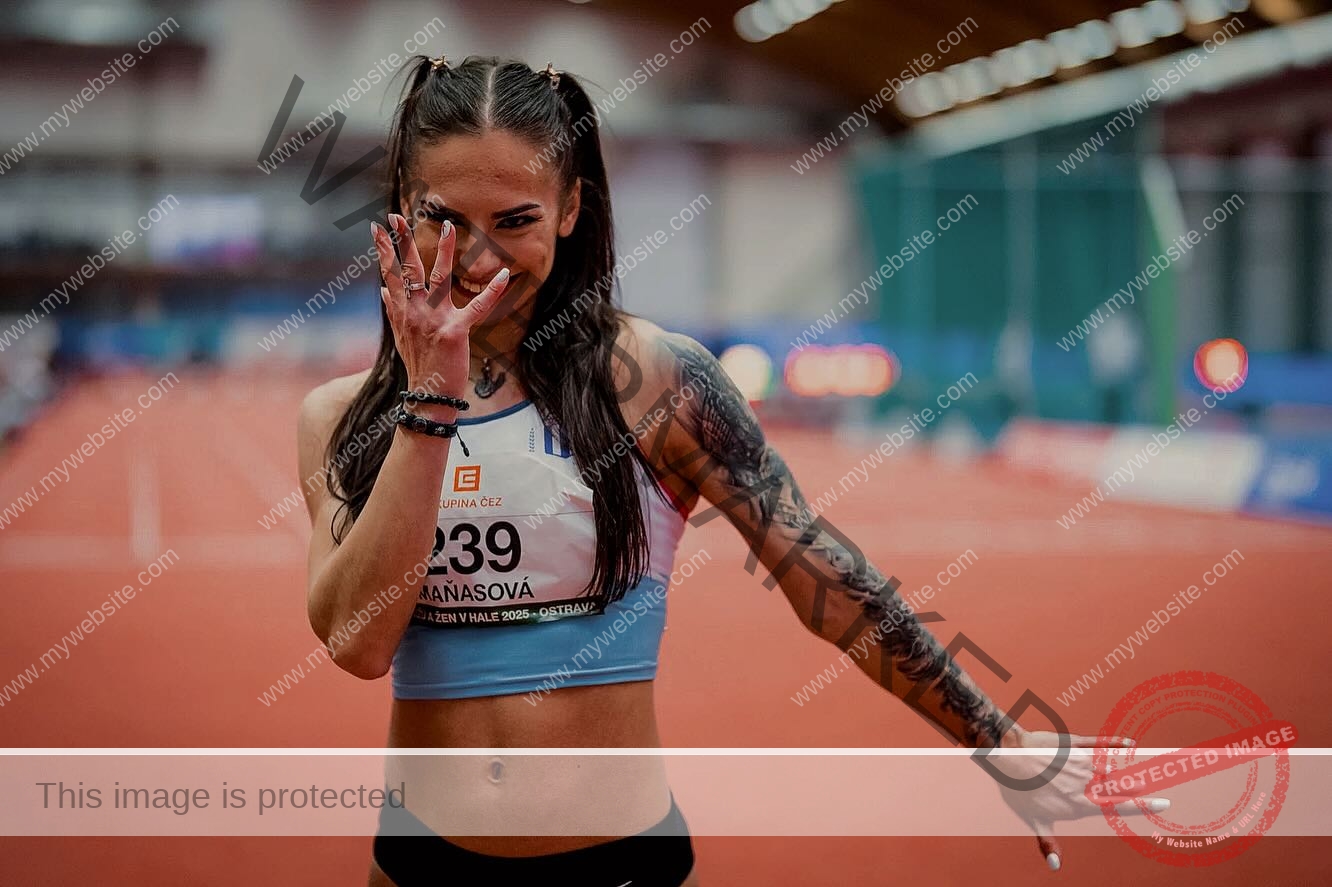
The progress, when it came, was rapid and cumulative. By February 2023, barely eighteen months after that reset, Maňasová had improved dramatically — and she announced her arrival at the national level by winning her first Czech Indoor Athletics Championship, taking the title in the 60 metres in Ostrava. She was 19 years old.
The Breakthrough: 2023–2024
The 2023 season established Maňasová as a genuine national figure in Czech sprinting. The indoor 60m title was a clear statement of intent, and she followed it up with solid outdoor results through the summer. For a young sprinter who had been running 12 seconds not long before, the trajectory was pointing sharply upward.
The 2024 indoor season brought her first brush with national records. In January 2024 at the Jablonec Indoor Meeting, she ran 7.23 seconds in the 60 metres — equalling the existing Czech national record set by Klára Seidlová back in 2018. It was a significant performance, but Maňasová was far from finished. The following month, at the Czech Indoor Athletics Championships in Ostrava, she went faster still — 7.15 seconds, a new Czech national record — and retained her national title at the distance.
That 7.15 opened the door to the global stage. The time earned her qualification for the 2024 World Athletics Indoor Championships in Glasgow in March — her first appearance at a senior global championship. The experience in Glasgow was educational rather than triumphant; she ran 7.27 in her qualifying heat and did not advance. But the process of competing at that level, of measuring herself against the world’s best in the shortest of sprints, was invaluable for a young athlete still assembling the full picture of what she could become.
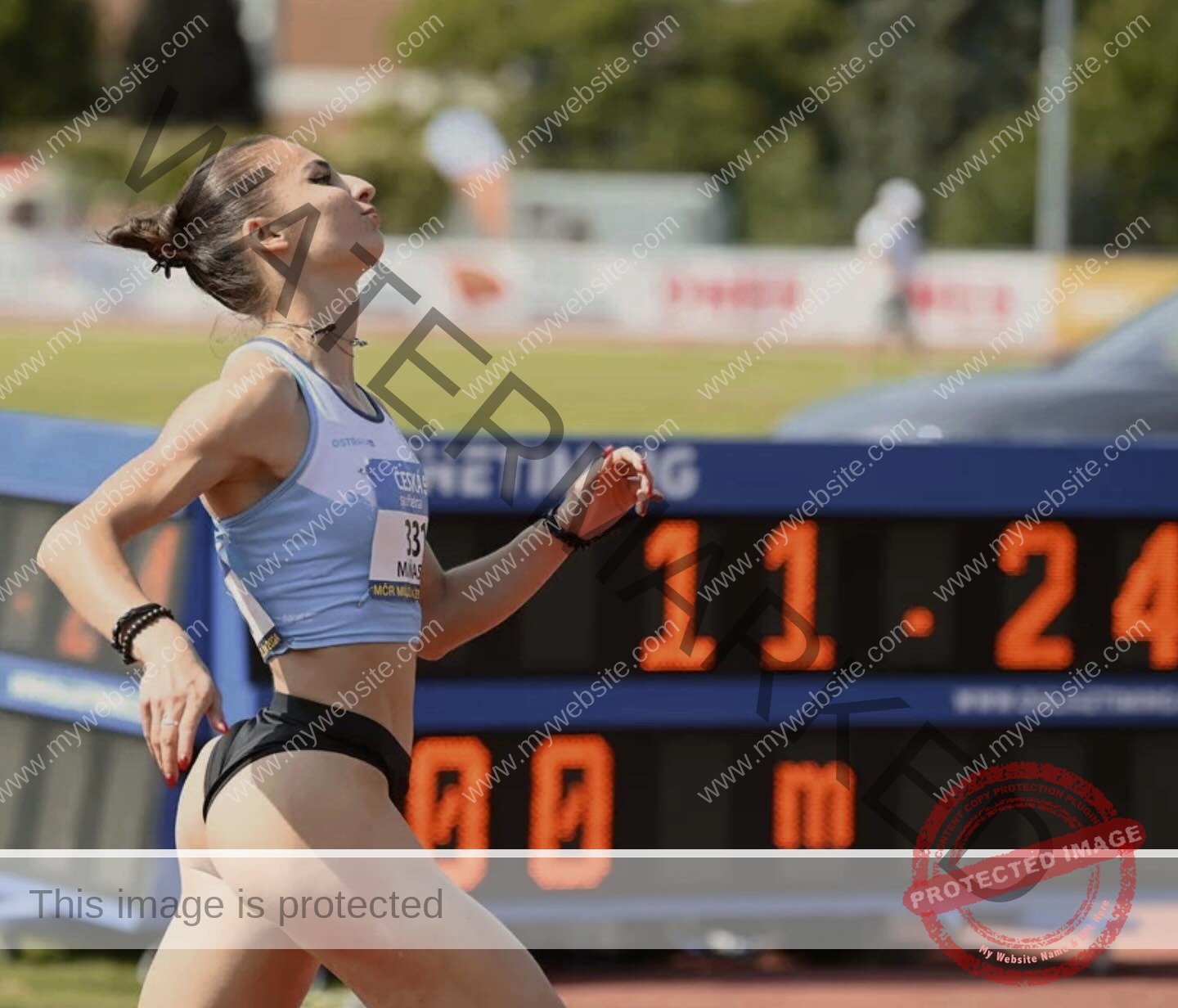
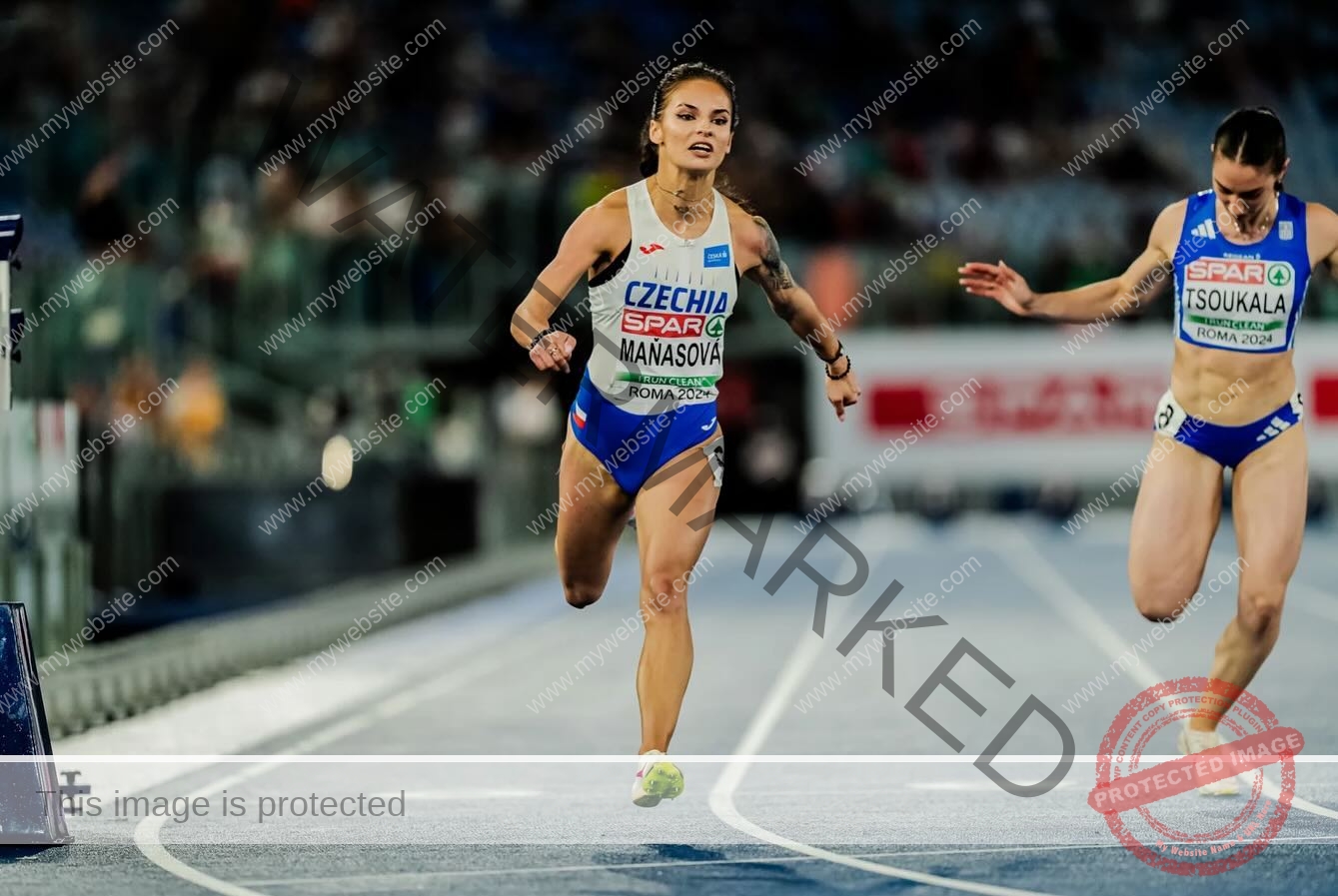
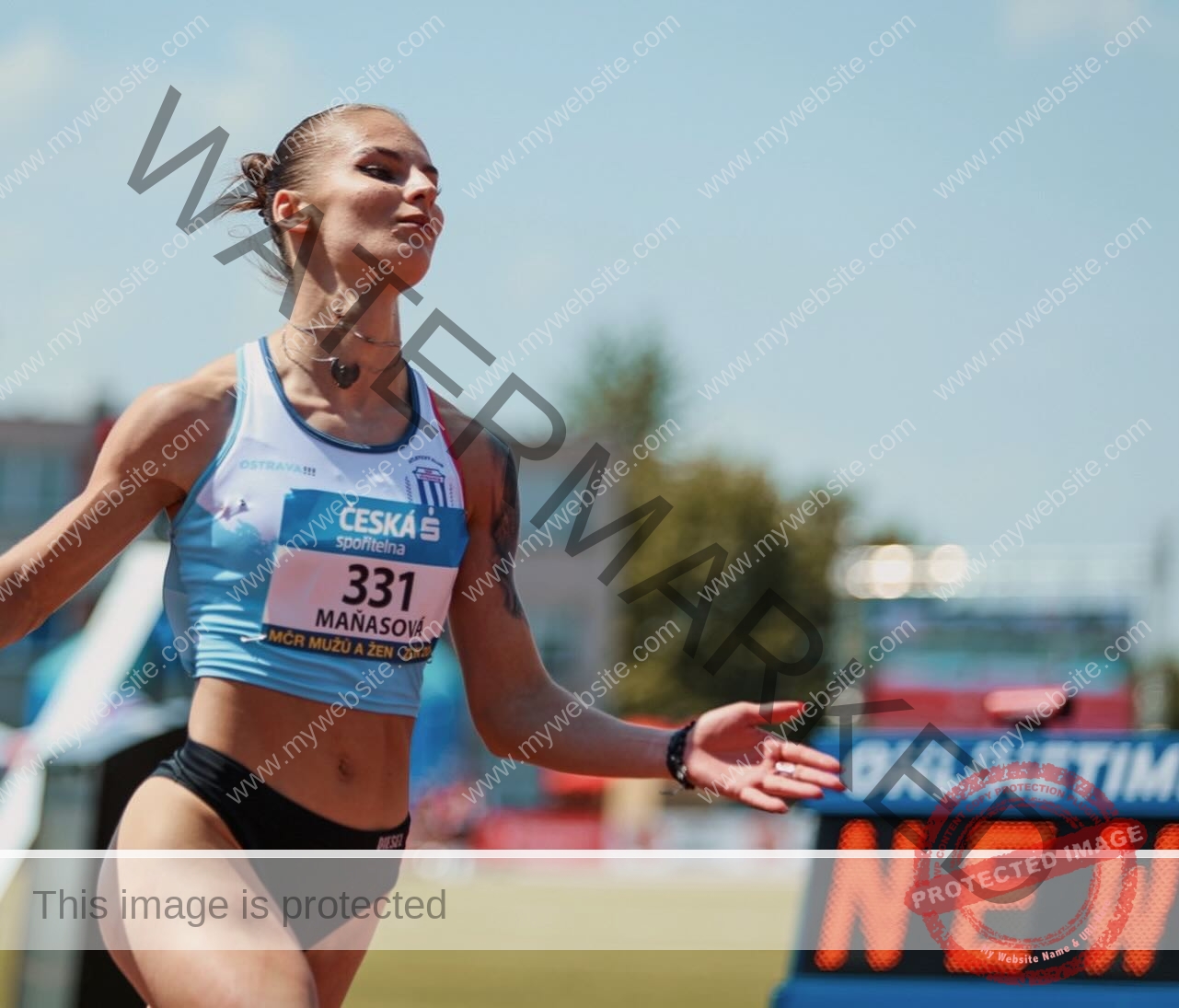
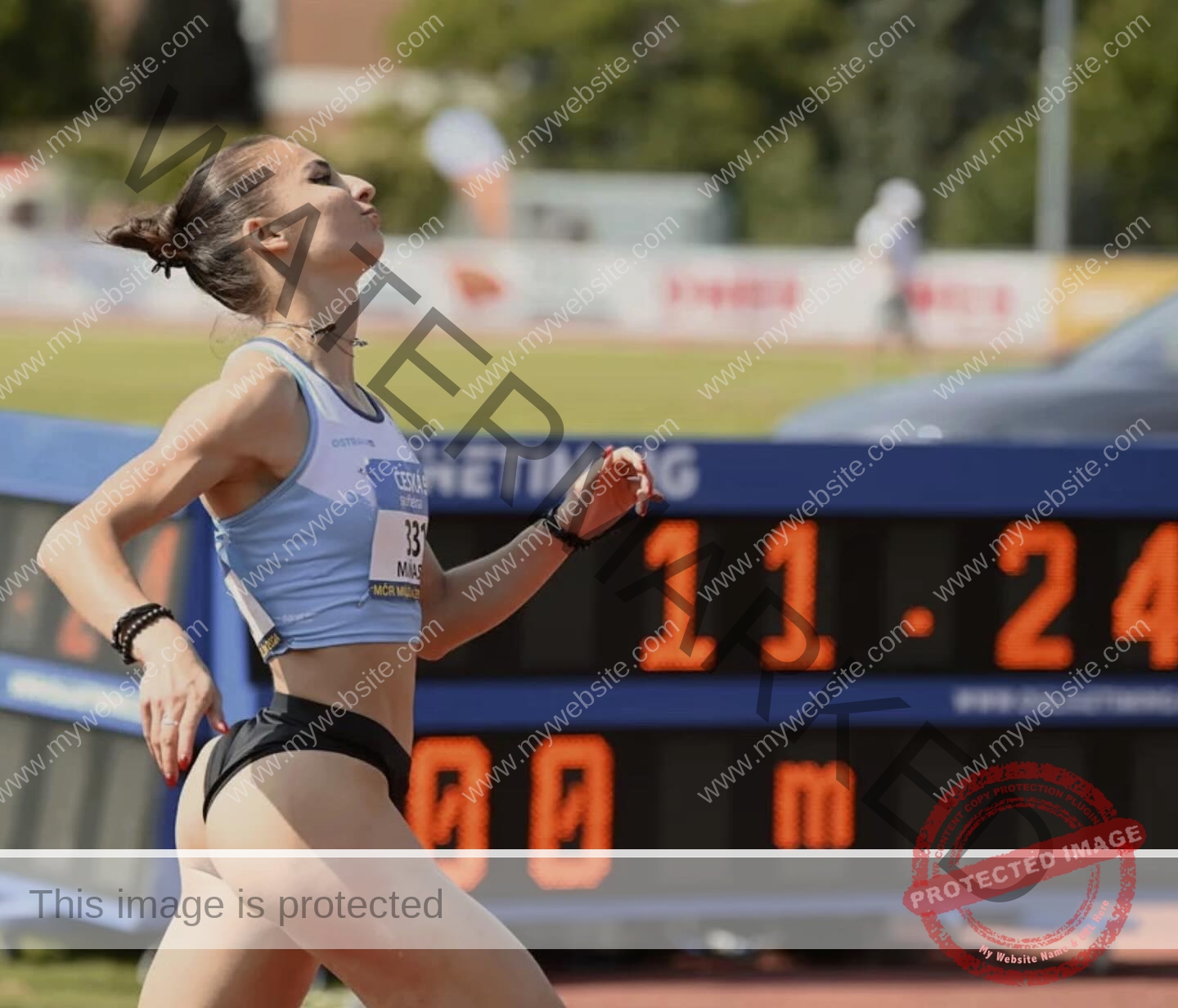
The outdoor season that followed was where Maňasová’s story shifted from promising to historic. At the 2024 European Athletics Championships in Rome in June, she competed in the 100 metres and reached the semifinals — a serious result at a major continental championship — running a personal best of 11.17 seconds. The following weekend at the Czech Athletics Championships in Zlín, she won her first outdoor national title at 100 metres, clocking 11.21 in her heat — a new championship record — before winning the final in 11.24.
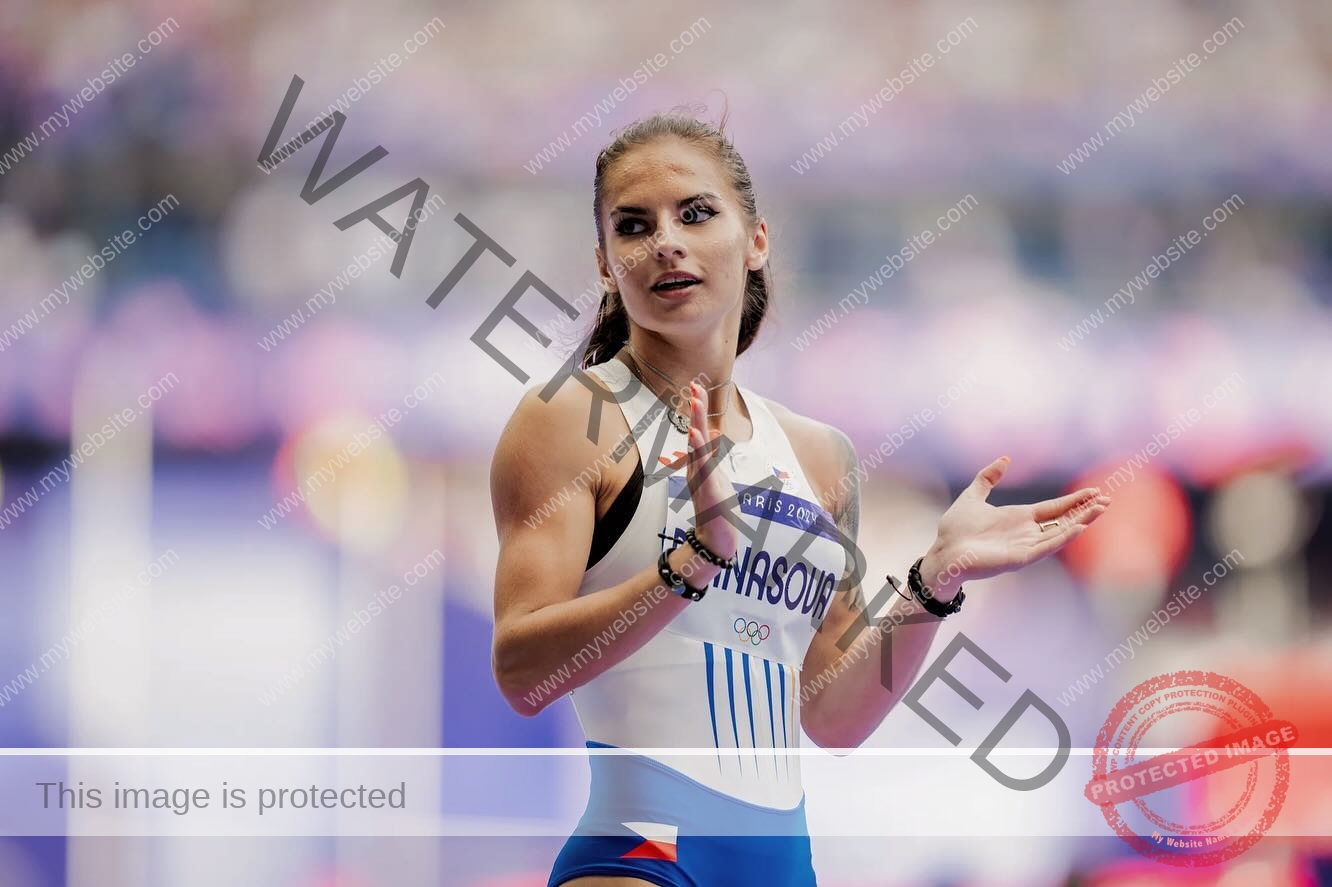
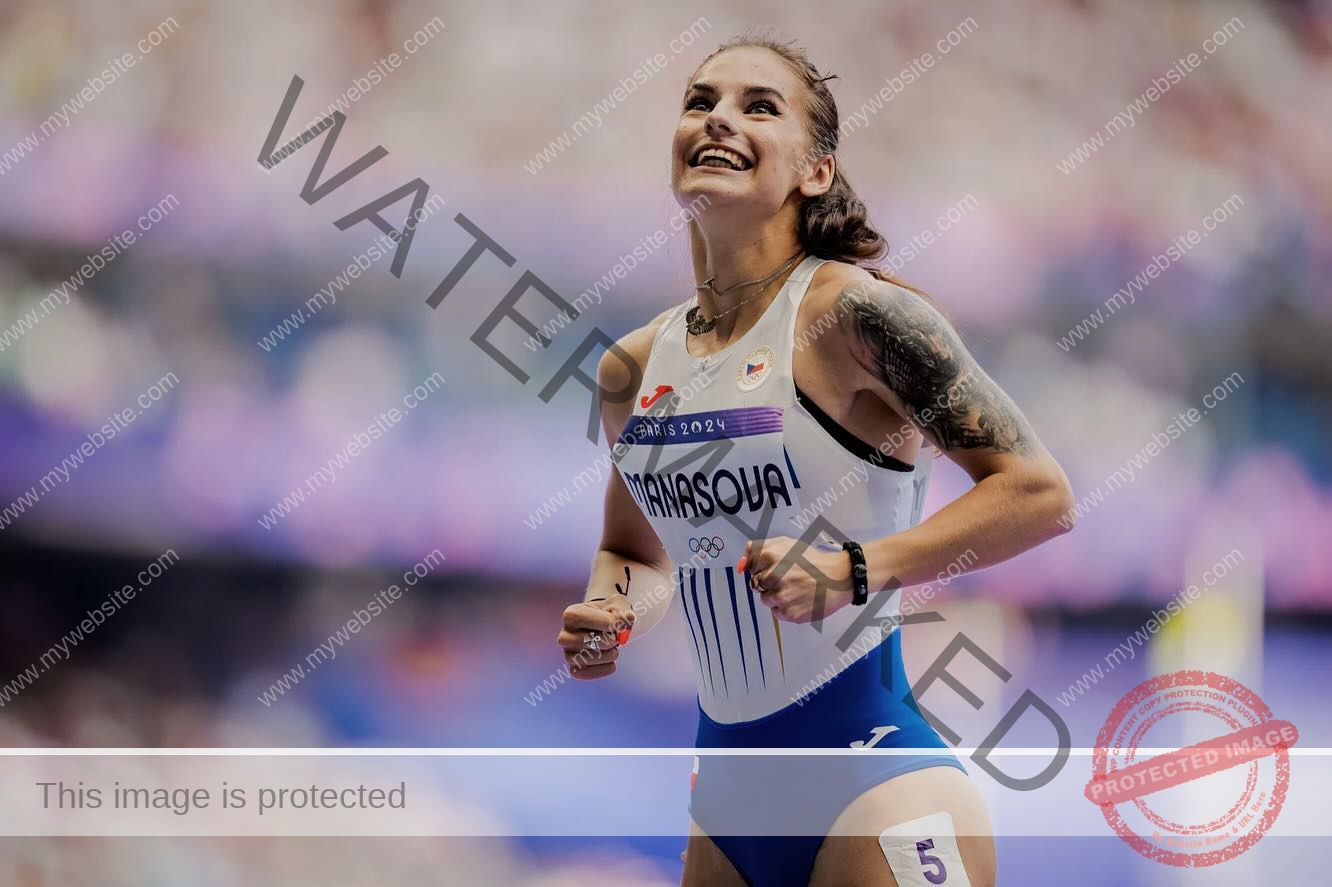
But it was Paris that truly defined 2024. At the Olympic Games in August, Maňasová stepped to the line for the 100 metres heats as a 20-year-old debutante on the grandest stage in sport. She ran 11.11 seconds — a new personal best, a new Czech national record — and advanced to the semifinals, where she ultimately finished 24th overall. The numbers tell the story clearly: the last Czech woman to reach an Olympic 100m semifinal had done so at the 1948 London Games, when Olga Šicnerová made it through. Maňasová had ended a 76-year absence. After returning home, she visited her tattoo artist and had the Olympic rings inked onto the inside of her right arm — the smallest of her tattoos, she notes, but the one that hurt the most. “It was on the inside of the arm. Not pleasant. But it was worth it.”
A Rising European Force: 2025
If 2024 was the year Maňasová announced herself to European athletics, 2025 was the year she established herself as one of the continent’s most exciting short sprinters — indoors and out.
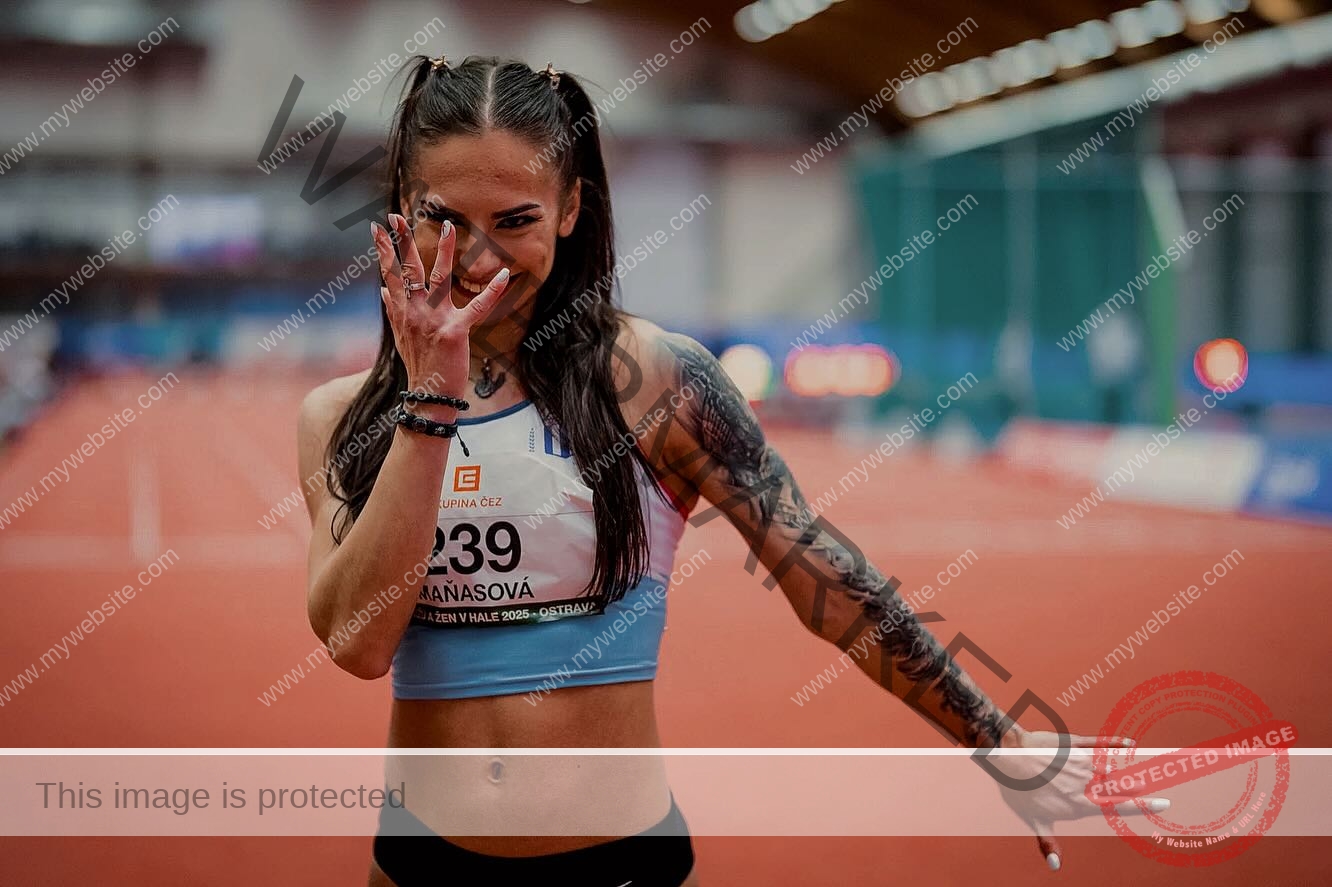
The indoor season opened with her third consecutive Czech Indoor Championship title in the 60 metres, clocking 7.17 seconds in Ostrava in February. It was a controlled, confident defence of a title she had made her own — running, as she described it, “from full training,” without tapering, as a kind of high-quality rehearsal for the bigger stage ahead.
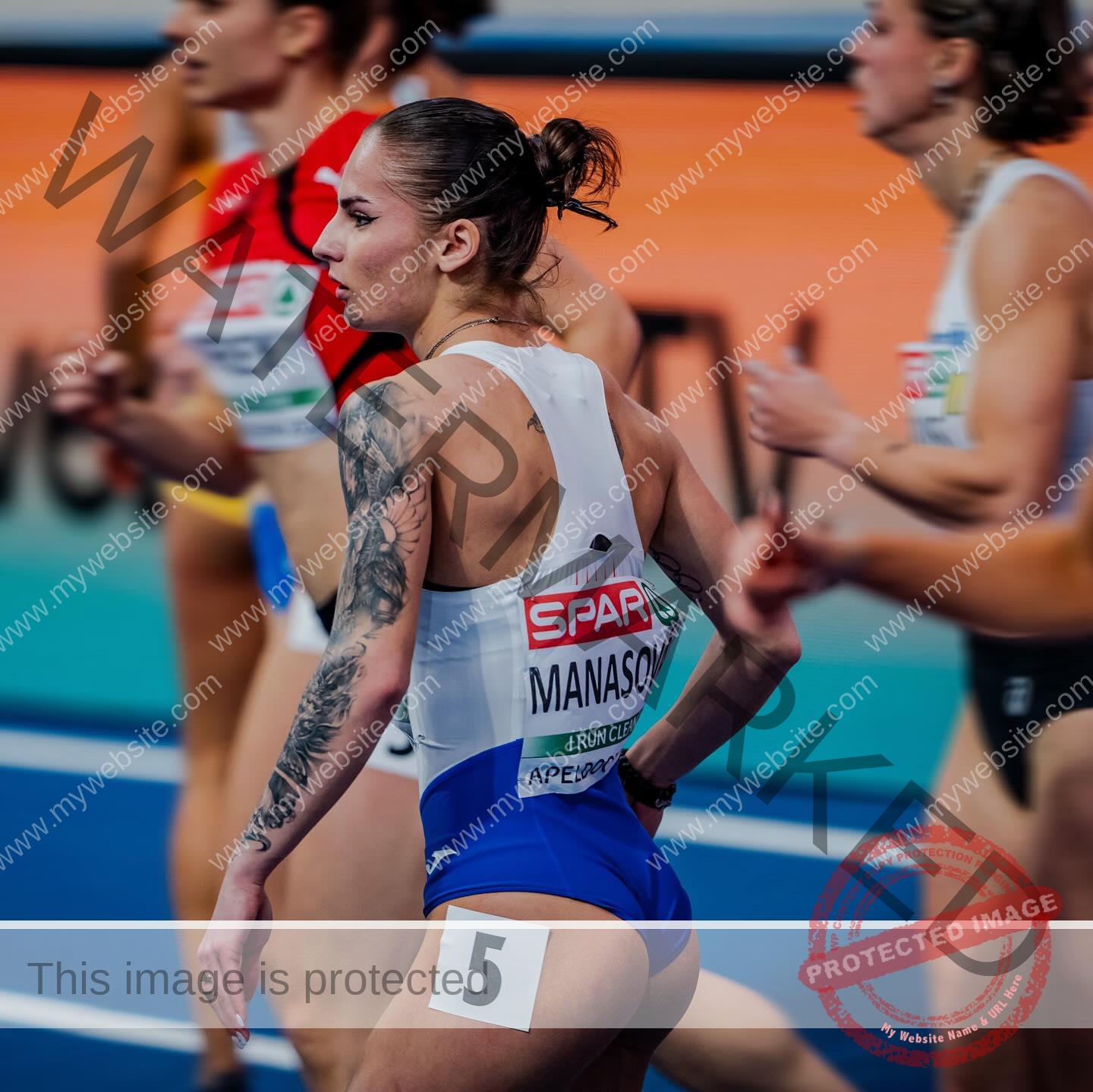
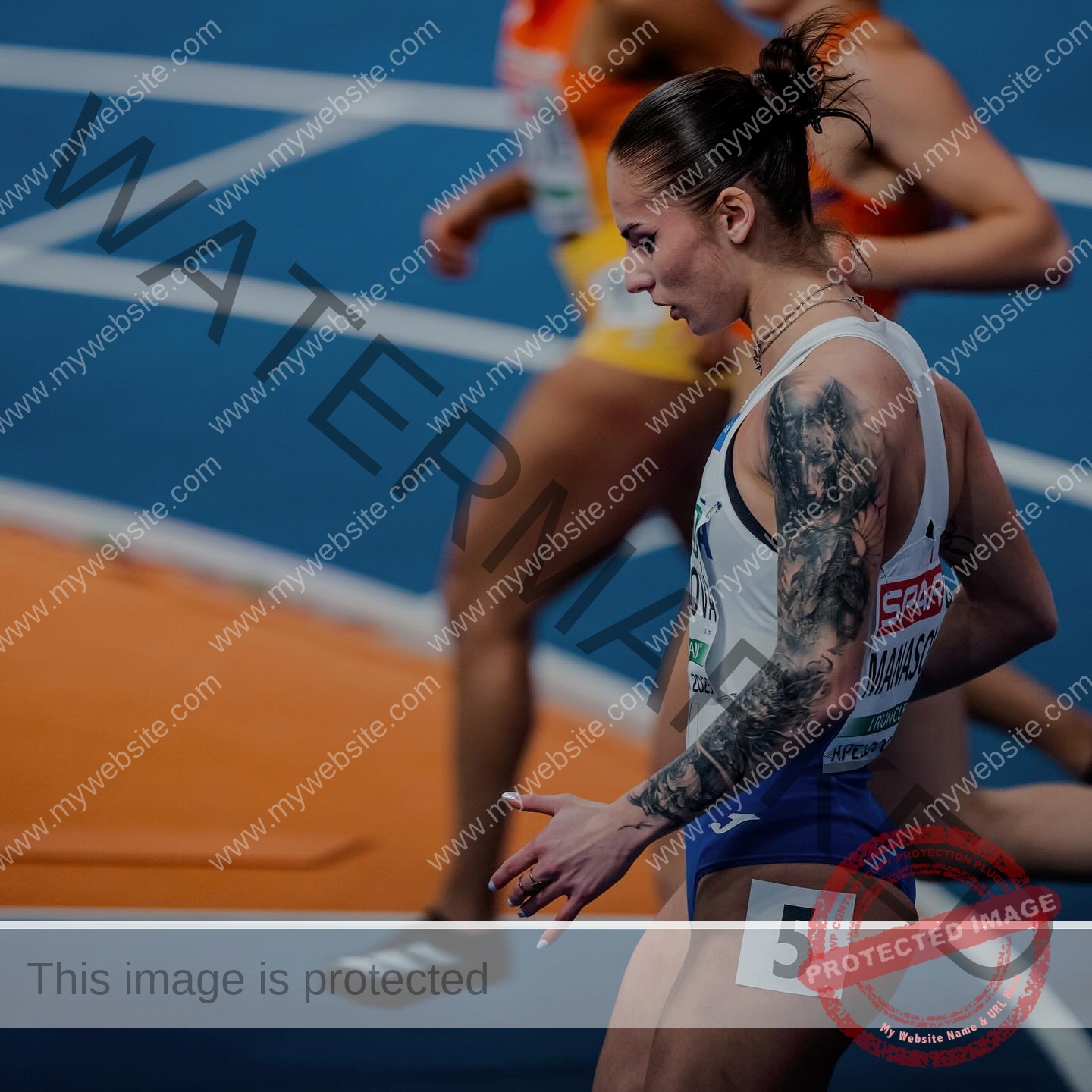
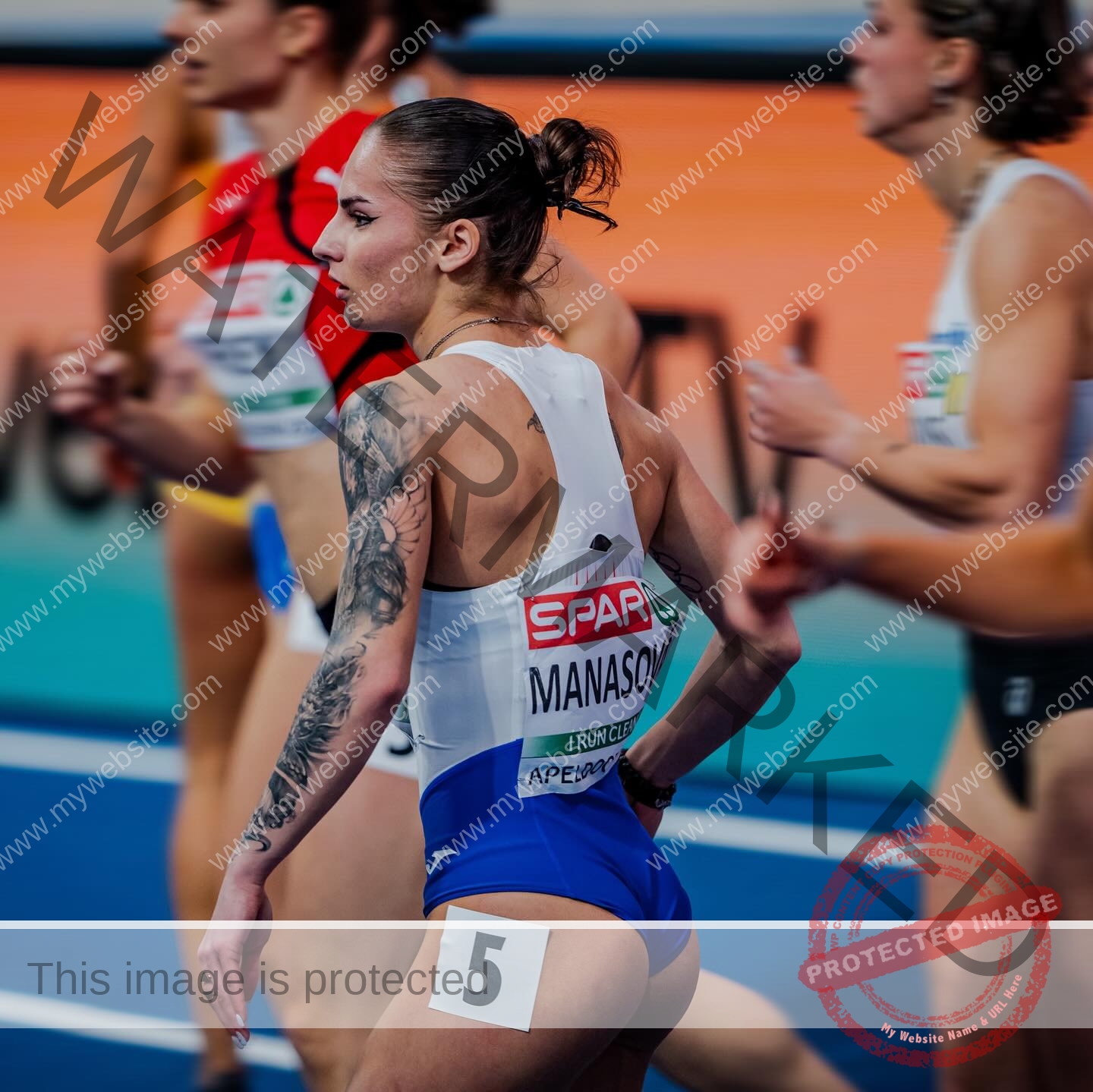
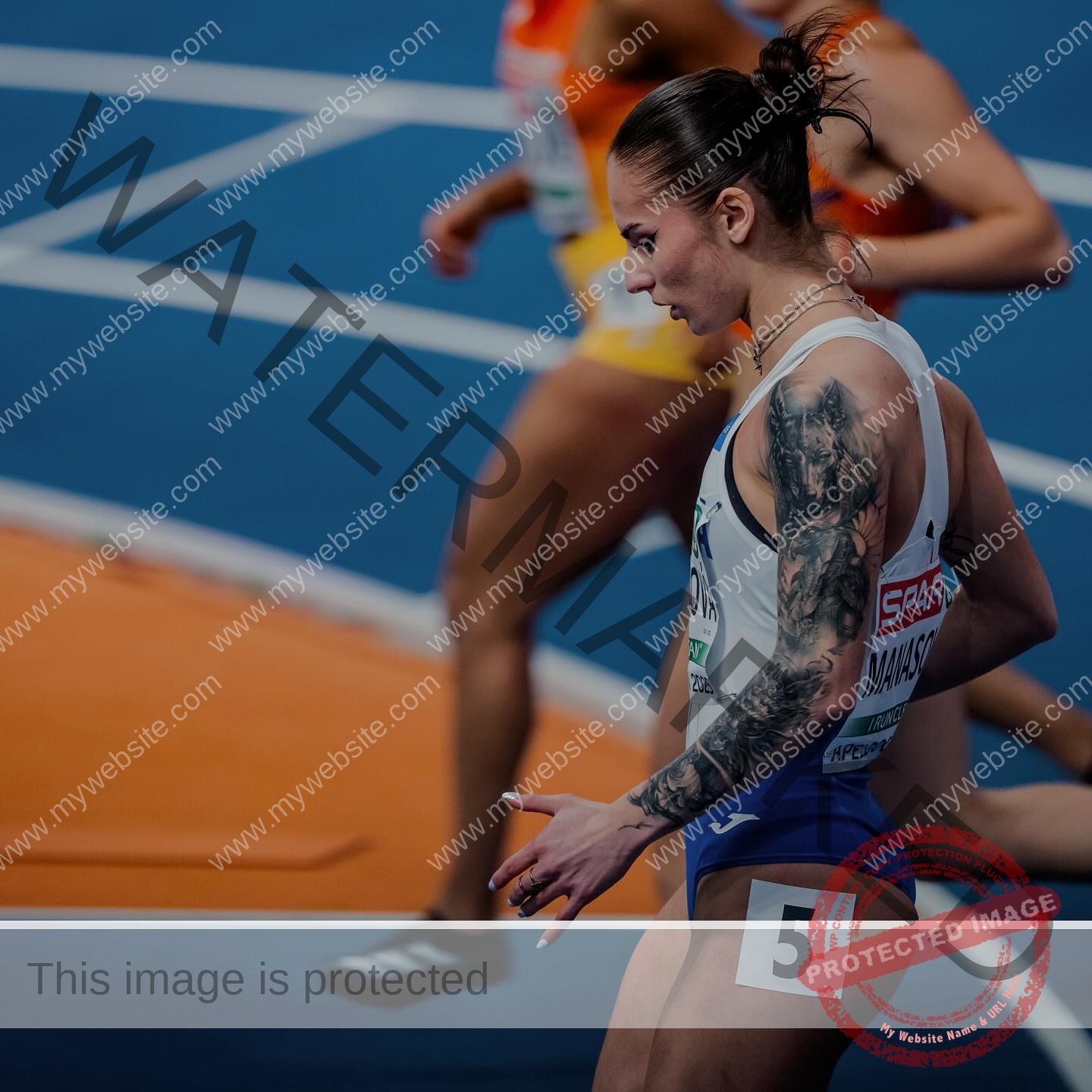
That bigger stage was the 2025 European Athletics Indoor Championships in Apeldoorn, Netherlands, in early March. What unfolded there was nothing short of historic for Czech athletics. In the qualifying round, Maňasová ran 7.14 seconds — a new Czech national record and simultaneously a new European under-23 record. Then in the semifinals, she went faster again: 7.10 seconds, another Czech record, another continental age-group mark. She had become only the second Czech woman in history to reach a European Indoor Championship 60 metres final — the only previous qualifier had been Eva Murková, who finished fifth in Gothenburg in 1984. In the final itself, Maňasová placed eighth (running 7.14), but the achievement of simply reaching that final, of rewriting the Czech history books twice in a single afternoon, was extraordinary. “Incredible emotions,” she told Czech Television’s cameras after that semifinal. “Maybe I can’t find the words.”
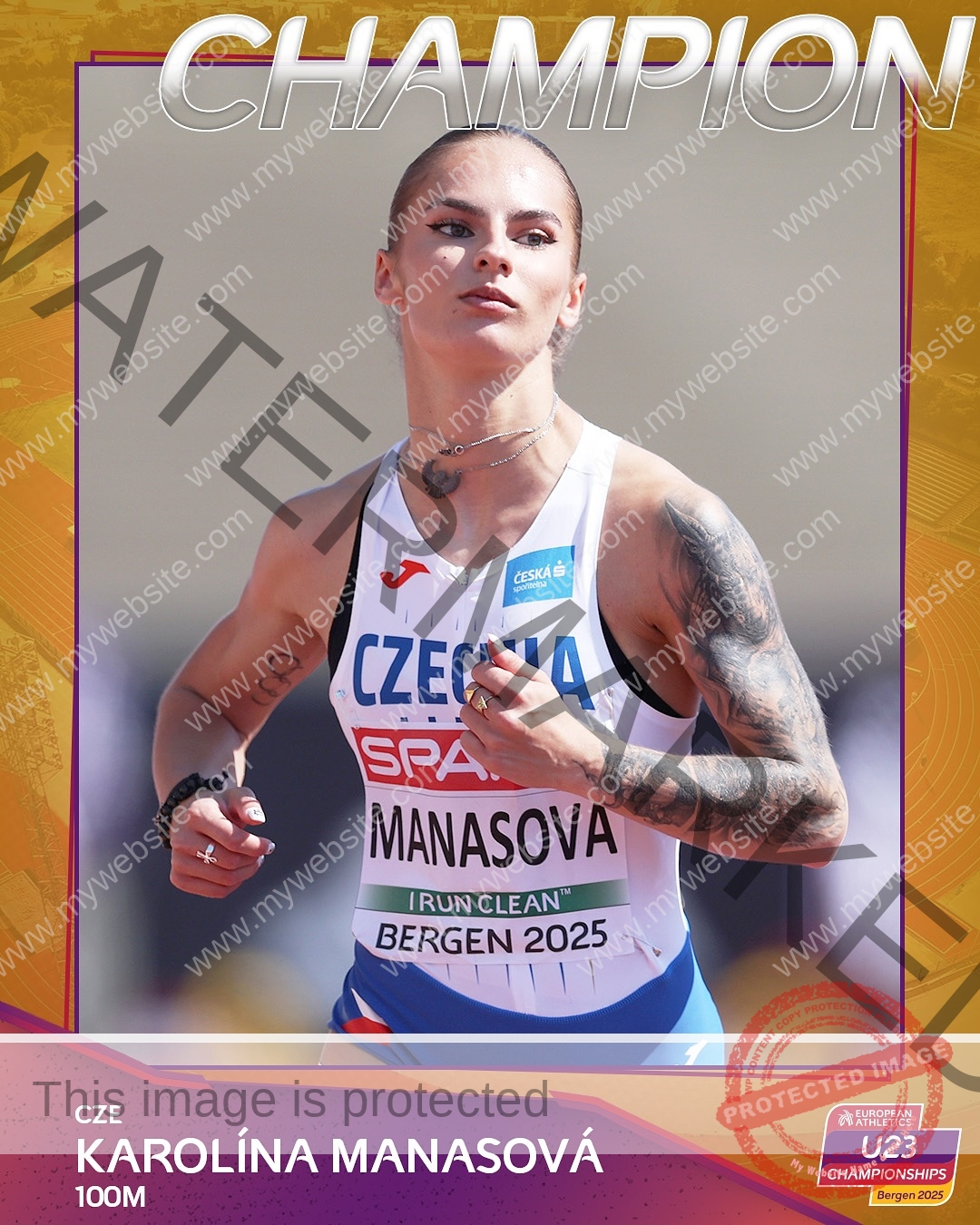
The outdoor season brought her to Bergen, Norway, and the European Athletics U23 Championships in July. Here she delivered the performance that, in many ways, stands as the crowning achievement of her career to date. Running into a 1.3 m/s headwind in the 100 metres final, Maňasová won gold in 11.30 seconds — the first Czech athlete ever to claim a European U23 100 metres title. It was, as one European Athletics report noted, a dominant performance from start to finish: smooth qualifying, commanding semifinals, and an authoritative final that left the rest of Europe’s sub-23 sprint field behind her. Standing on the podium, with the Czech anthem playing — a melody she last remembered singing in primary school — she fought hard to keep the tears back. She mostly managed it. “I said to myself: Karolína, don’t cry again,” she recounted afterward, laughing. “I was really holding it together.”
Her coach Ivo Pištěk, watching from the infield, did not hold it together. The man described as perpetually calm and analytical was seen weeping with joy after her victory. “That was my greatest reward,” Maňasová said. “When I see my trainer cry, I know I have done something right.”
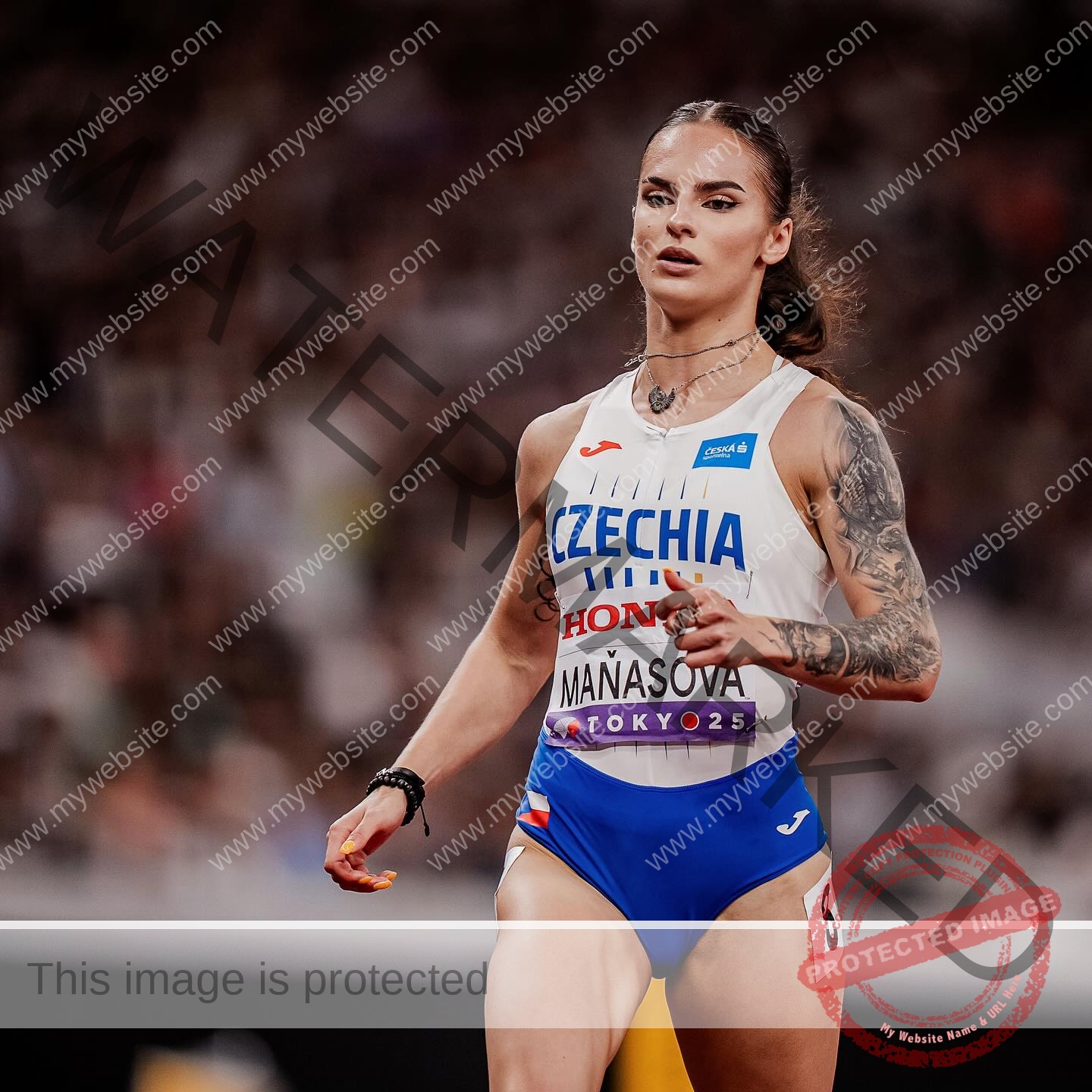
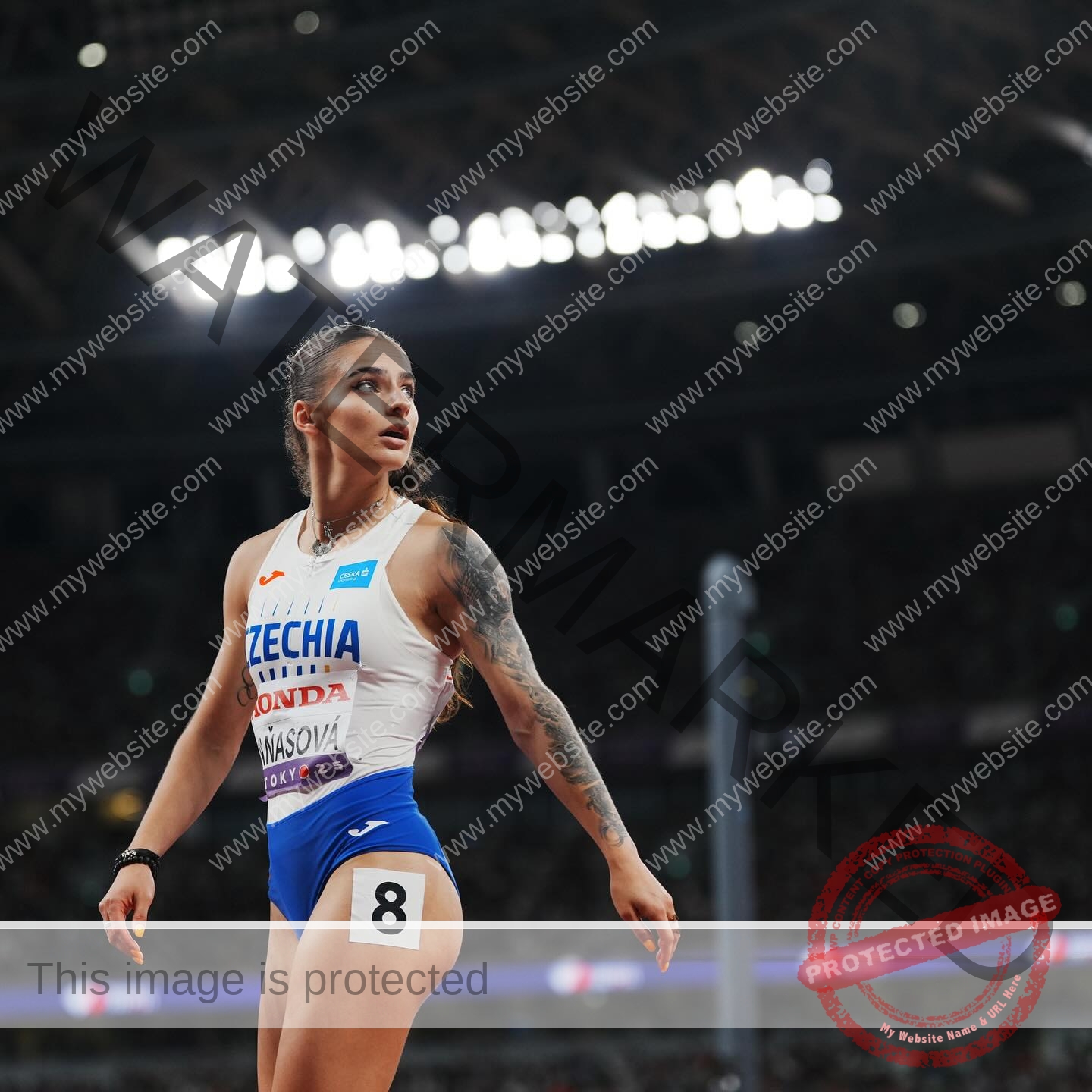
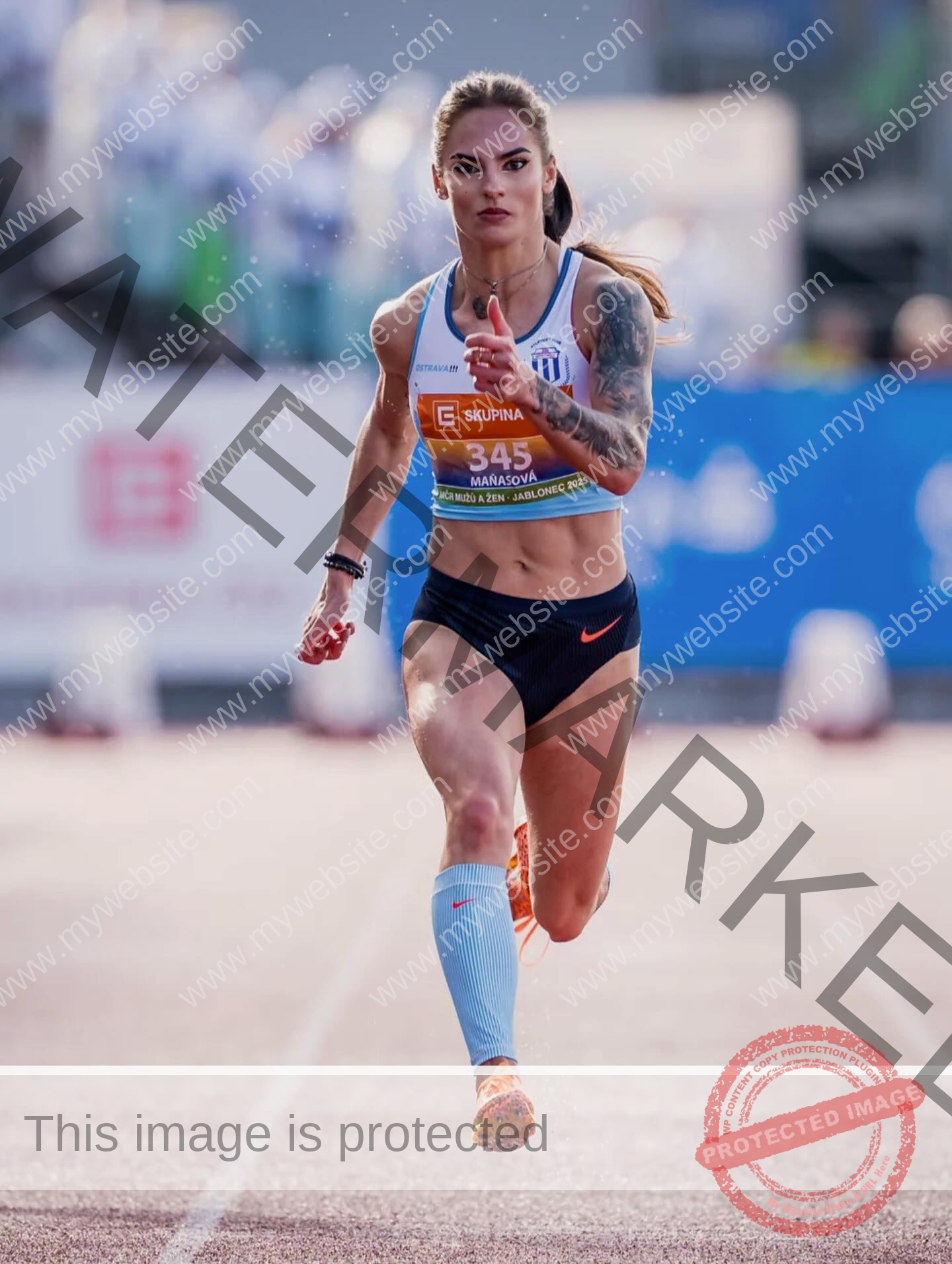
In August 2025, the Czech national squad nominated Maňasová for the World Athletics Championships in Tokyo — her first senior World Championships. She competed in the 100 metres, gaining valuable experience at the highest level of the sport. She also retained her Czech outdoor 100m title, winning the national championship in Jablonec nad Nisou in 11.20 seconds — another championship record at the distance.
2026: A New National Record and Eyes on Toruń
Maňasová wasted no time establishing the terms of her 2026 campaign. On January 20, competing in Ostrava, she ran 7.05 seconds for the 60 metres — a new Czech national record by a meaningful margin, and a time that placed her firmly among Europe’s elite short-sprint performers. It was the kind of season-opening performance that sends a message: the winter of training had gone well, and the ceiling remains in sight but not yet reached.
The following month she added to her remarkable collection of Czech Indoor Championship titles — her fourth in a row in the 60 metres — running 7.11 seconds at the national championships in Ostrava and setting yet another championship record. At the Czech Indoor Gala in Ostrava shortly before that, competing against international opposition including Italian sprinter Dossová and Luxembourg’s Van der Vekken, she finished third in 7.17, noting a slight hamstring tweak in her heat before recovering well for the final.
As of early March 2026, Maňasová holds six Czech national titles — four in the indoor 60 metres (2023, 2024, 2025, 2026) and two in the outdoor 100 metres (2024, 2025). She and coach Pištěk have set their sights squarely on the 2026 World Athletics Indoor Championships in Toruń, Poland, as the next major target. “We are not doing any competitions right now — after the Czech Indoor Gala we went straight into hard training, everything is pointed toward Toruń,” she said after the national championships.
The Record She Has in Her Sights
The elephant in the room — or rather, the ghost in the Czech record books — is Jarmila Kratochvílová. The legendary Czech middle-distance runner holds the Czech 100 metres national record at 11.09 seconds, a mark set in 1981 that has stood for over four decades. Maňasová’s Paris Olympic personal best of 11.11 stands just two hundredths of a second away from it.
Ask Maňasová directly, and she does not sidestep the question. “I want that record,” she said plainly after the 2025 indoor season. “I am a realist — I would not say it if I did not mean it. I believe that with time I could close that gap.” The measured confidence in that statement is characteristic: not boastful, not hedged to the point of meaninglessness — simply honest. She believes she can do it. Given what the last three years of her career have looked like, it would be unwise to bet against her.
Personal Signatures: Ink, Mythology, and a Dragon on the Starting Line
Off the track, Maňasová has a distinctly individual personality that comes through clearly in interviews — self-deprecating humour, a directness that occasionally makes her apologise for her own vocabulary, and a set of personal passions that are entirely her own.
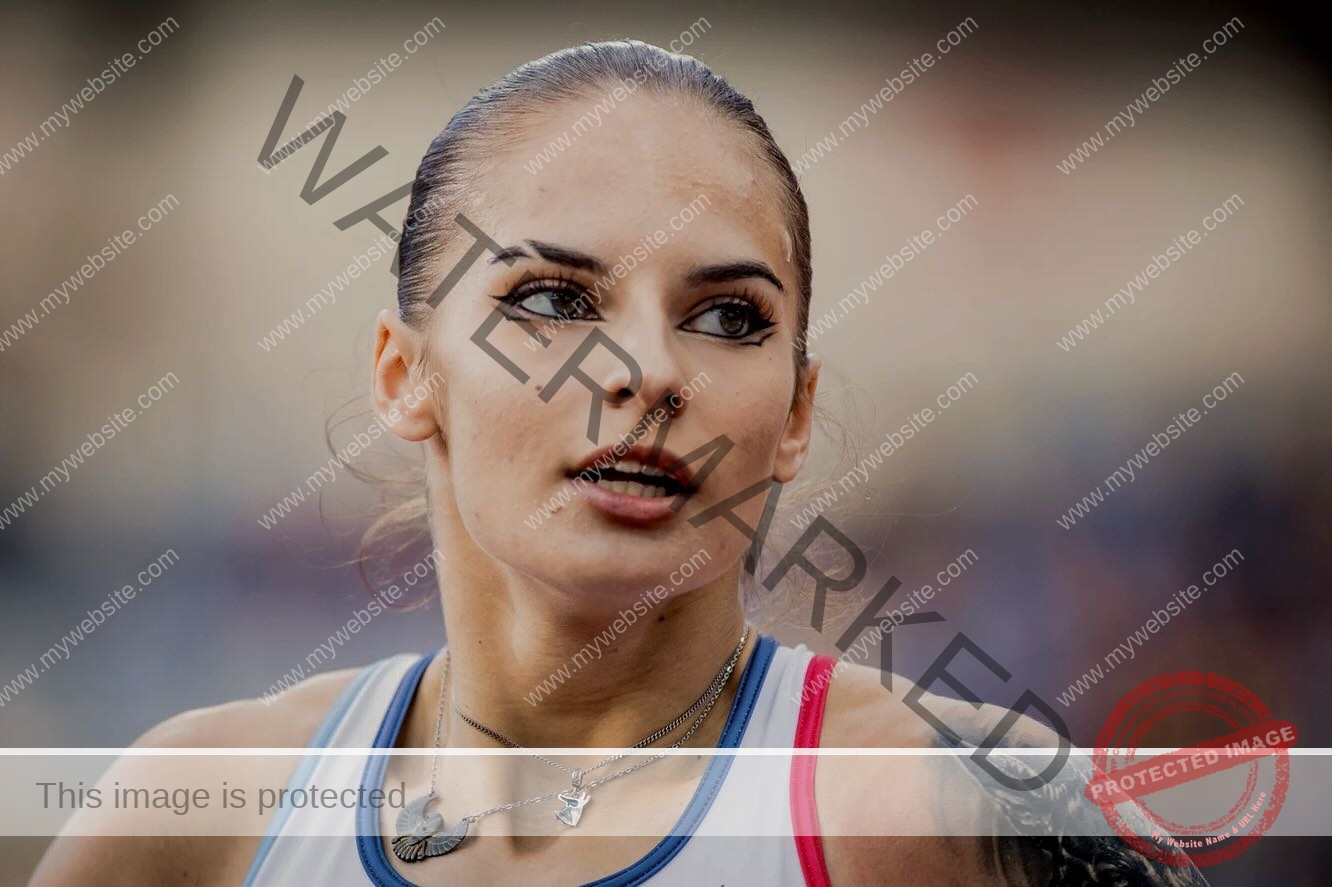
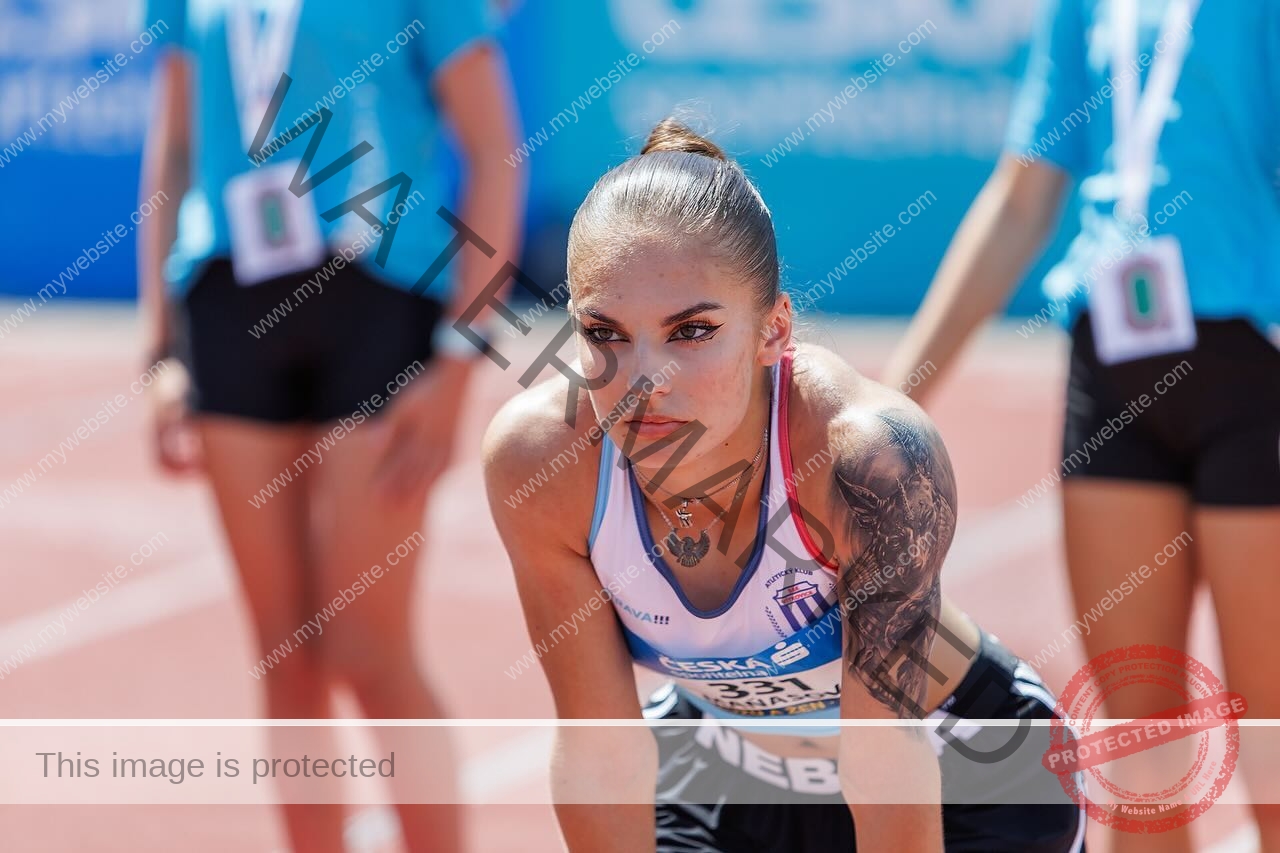
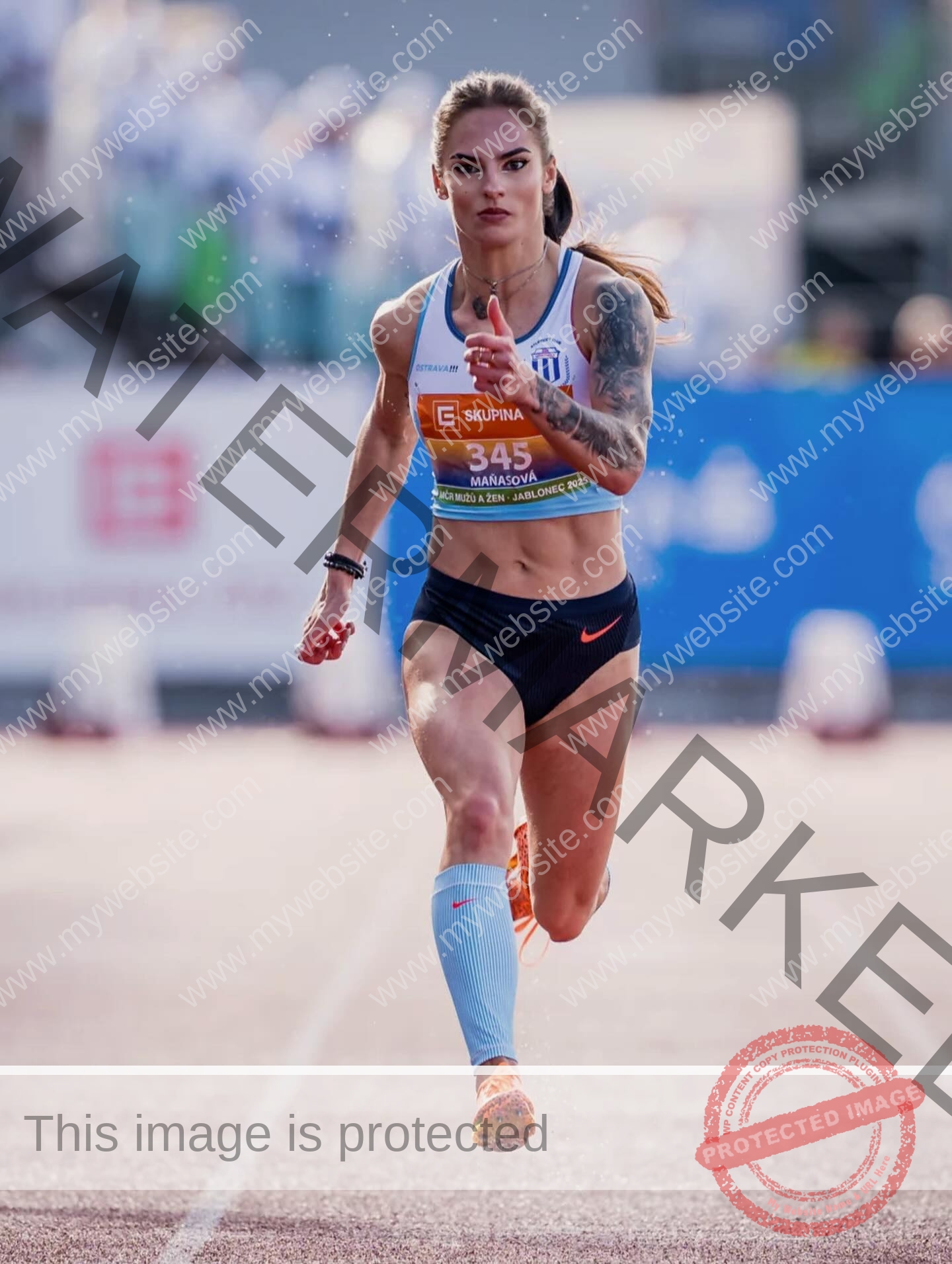
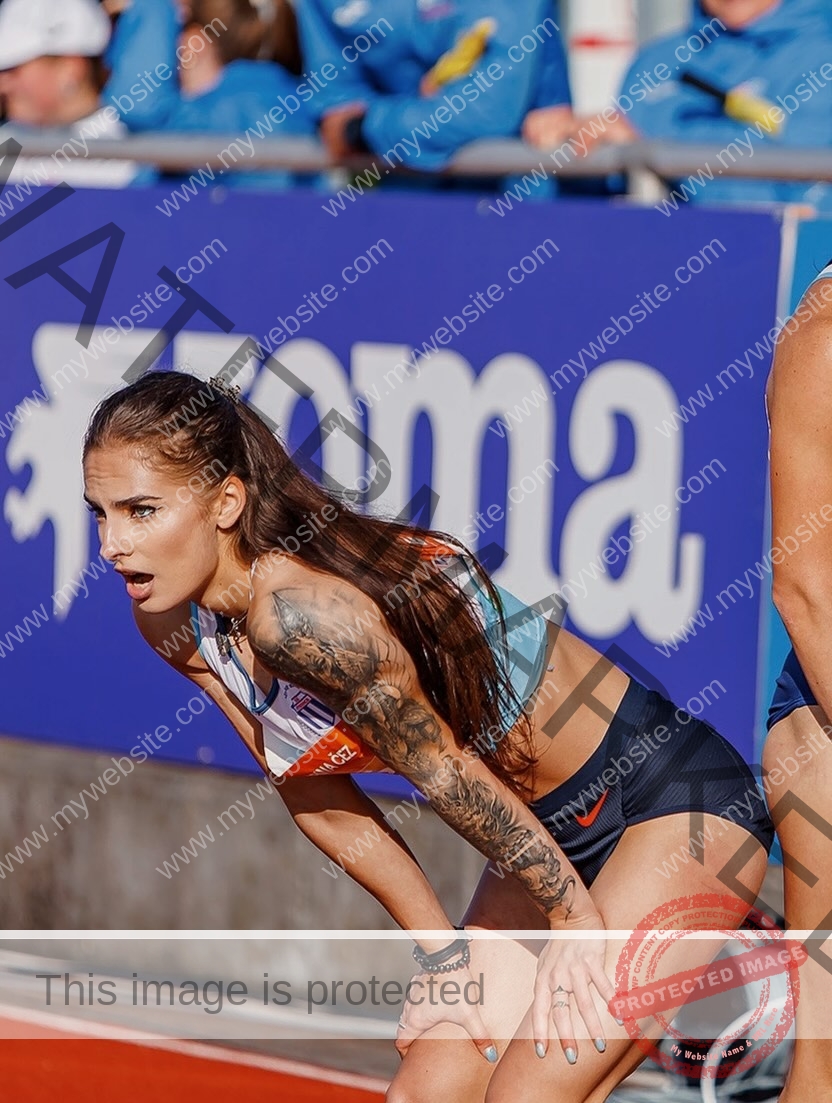
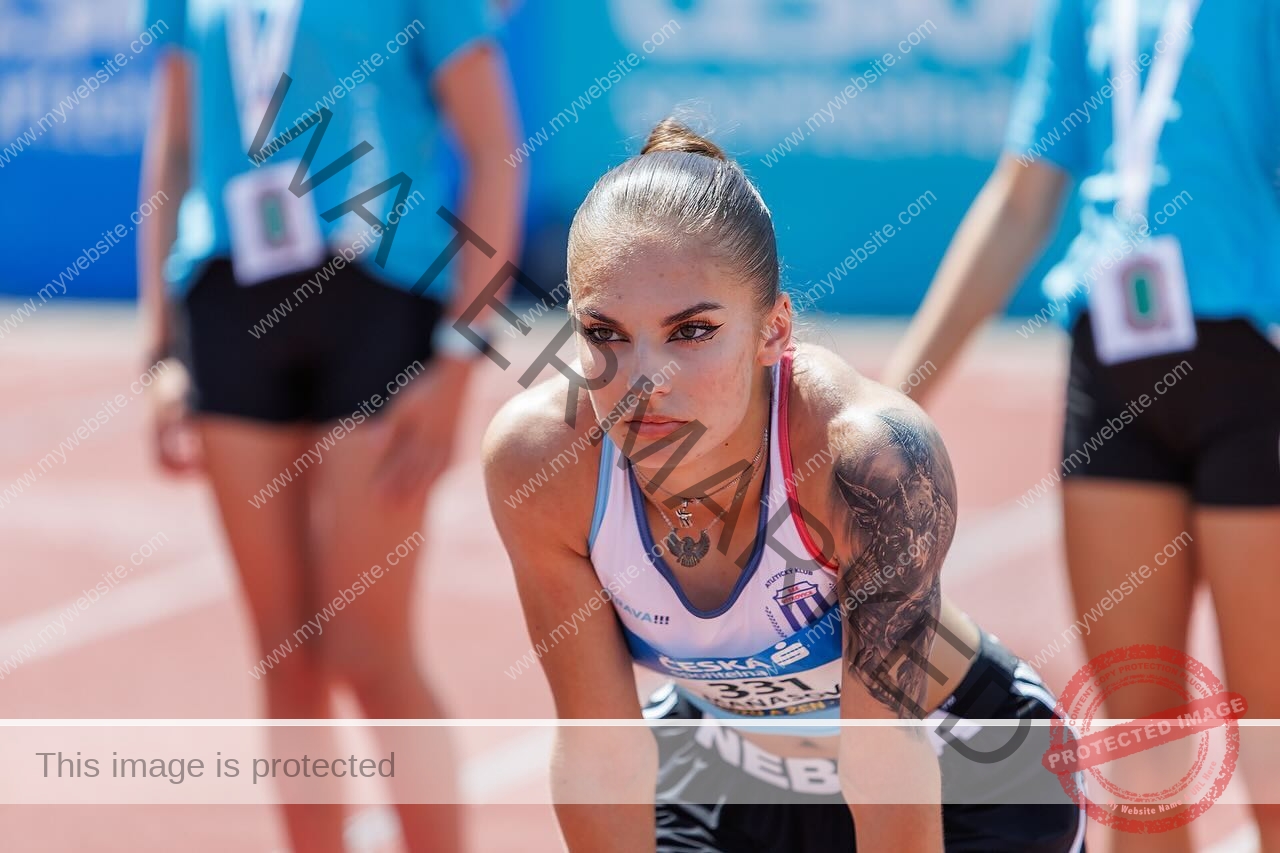
Tattoos have become a running narrative in her public story. Her left arm is extensively tattooed with Egyptian imagery — the dominant figure is Anubis, flanked by two other Egyptian gods near the upper arm. These were inspired by the Egyptian god necklaces she has worn since seventh grade: charms she considers so personally meaningful that she never competes without them. “They are my heart. Without them, I don’t compete,” she has said. The tattoos were a natural extension of that devotion — making permanent what was already integral.
On her left forearm, beneath the gods, she has a dragon. The Chinese zodiac places her birth year in the Year of the Goat, but Maňasová has her own interpretation. “Because I am a dragon when I get to the starting line,” she explained, laughing. “It is my thing.” On her right arm — still relatively sparse compared to the left — the Olympic rings occupy the most prominent spot, a monument to Paris 2024. “The smallest tattoo I have,” she noted, “but paradoxically the one that hurt the most.”
She has mentioned admiring the tattoo work of Polish sprinting rival Ewa Swoboda, with whom she has trained in Ostrava and whose body art she has compared notes on. (“She has a somewhat different style than me, but I’m glad we share that.”) She has also expressed admiration for the comprehensive tattooing of sprint world champion Marcell Jacobs. Her stated position on her own collection is characteristically practical: “I don’t want to be tattooed completely everywhere. I definitely don’t want my legs done. The motifs I wanted, I already have.”
Club, Coach, and the Vítkovice Environment
Maňasová competes for SSK Vítkovice, one of the more storied all-around athletics clubs in the Czech Republic. Based in the Vítkovice district of Ostrava, the club has produced multiple national champions and provides the training infrastructure — tracks, coaches, competition experience — that Maňasová has used as the launchpad for her international career.
The relationship with Ivo Pištěk remains central to everything. Pištěk, who positions himself and his methods as somewhat unconventional within the Czech system, has rebuilt Maňasová’s physical capacity from the ground up and instilled in her a belief that Czech sprinters are not inherently limited. “We are breaking Czech mentality,” she said after Bergen. “We have approached this a little differently, and we want to show that the idea that Czech sprinters can’t compete at the top is simply not true.”
She has also had a positive relationship with veteran SSK Vítkovice sprinter Zdeněk Stromšík, the club’s multiple national champion who has described Maňasová as his “successor” in the club’s sprint tradition. Stromšík, who retired from competition in February 2026, noted that Maňasová has occasionally sought his advice on starts — and that watching her dominance of Czech indoor sprinting had been one of the pleasures of his final seasons.
Personal Bests and Competitive Record
As of March 2026, Maňasová’s principal personal bests are:
- 60m (indoor): 7.05 seconds — Czech National Record (Ostrava, January 20, 2026)
- 100m: 11.11 seconds (Paris, August 2, 2024)
- 200m: 23.98 seconds
- 50m (indoor): 6.18 seconds — Czech National Record (Ostrava, February 3, 2026)
- 4×100m relay: 44.29 seconds (as part of the Czech national team)
On the World Athletics rankings, she currently holds the position of approximately #42 in the global women’s 100m rankings — a remarkable standing for a 22-year-old sprinter who was not even running sub-12 seconds at the start of 2022.
Her headline competitive results include:
- Gold — Women’s 100m, European Athletics U23 Championships, Bergen, 2025 (first Czech ever at this event)
- 8th — Women’s 60m final, European Athletics Indoor Championships, Apeldoorn, 2025
- Semifinalist — Women’s 100m, Paris Olympic Games, 2024 (first Czech to reach Olympic 100m SF in 76 years)
- Semifinalist — Women’s 100m, European Athletics Championships, Rome, 2024
- Competitor — Women’s 100m, World Athletics Championships, Tokyo, 2025
- Czech National Champion, 100m outdoor: 2024, 2025
- Czech National Champion, 60m indoor: 2023, 2024, 2025, 2026
- Czech National Record holder, 60m indoor: 7.05 seconds
Social Media
Maňasová maintains an active presence on Instagram under the handle @karolina_manasova and is also present on Threads under the same username. Her social channels offer a glimpse of life both on and off the track — training snippets, competition updates, and occasional personal content. Her profile is a useful resource for following her career in real time as it continues to evolve.
Looking Ahead
Karolína Maňasová turned 22 in November 2025. She remains eligible for under-23 competition. She holds national records that continue to fall. She has a coach who rebuilt her from scratch and a philosophy that rejects the idea that Czech athletics cannot produce world-class sprinters. She has a personal best two hundredths of a second away from a national record that has stood since Ronald Reagan’s first year in office.
The next targets are clear: the 2026 World Athletics Indoor Championships in Toruń, the 2026 European Athletics Championships, and beyond that, the 2028 Los Angeles Olympics — by which point she will still be only 24 years old. The arc of improvement over the last three years has been steep and shows no signs of flattening.
What makes Maňasová’s story compelling is not simply the results, impressive as they are. It is the context: the injuries, the doubt, the near-miss with giving up entirely, the complete reset with a coach who told her to start by jumping over a line — and the fact that from that foundation, in roughly three years, she has become the fastest Czech woman alive and one of Europe’s most promising sprinters. That is not a story about natural talent following its inevitable path. It is a story about what happens when an athlete refuses to accept the ceiling that others have decided is there.
Nový Jičín, the small hatmaking city in the Moravian-Silesian hills, has produced many things over the centuries. It may yet be best remembered as the birthplace of a sprinter who changed what Czech athletics thought was possible.
