













Akira Kobayashi: Gifu’s Long Jump Champion Chasing the Six-Meter Dream
By [Your Name] | Track & Field Profile
There is a particular kind of athlete who earns your attention not by dominating headlines but by doing the quiet, persistent work — showing up at the Japan Championships year after year, inching forward, refusing to plateau. Kobayashi Akira (小林 聖) is that athlete. A women’s long jumper from Gifu Prefecture, she has carved out one of the more compelling competitive trajectories in Japanese domestic athletics: a self-made competitor who went from university meet hopeful to six-consecutive national championships qualifier, Gifu Prefecture record holder, and one of the most consistent performers in the Chubu region’s corporate athletics scene.
Her story doesn’t begin with a famous coach or a storied powerhouse high school program. It begins in Gifu Prefecture, where a girl born in 1999 would eventually become one of the best long jumpers her region has ever produced.
Early Life and Background
Kobayashi Akira was born in 1999 in Gifu Prefecture, a landlocked region in central Japan’s Chubu area known for its mountain ranges, the historic Shirakawa-go village, and a quietly competitive athletic tradition. While Gifu does not carry the same athletics reputation as powerhouses like Osaka, Fukuoka, or Tokyo, it has produced a steady stream of determined competitors who make up in grit what they sometimes lack in institutional resources.
Details about Kobayashi’s earliest exposure to athletics remain limited in the public record — a characteristic she shares with many Japanese club and corporate athletes who only begin to accumulate public profiles when they reach the national competition level. What is known is that she made her way through the Japanese youth athletics structure with enough promise to earn entry into a competitive university program, a meaningful achievement in a country where university athletics is intensely structured and selective.
For high school, Kobayashi attended 駿河総合高等学校 (Suruga Sogo High School) in Shizuoka Prefecture — a geographic detail worth noting, as it suggests she may have left Gifu for her secondary education, likely following a school program with stronger athletics facilities or a coach whose philosophy matched her emerging talent as a horizontal jumper. Japanese high school athletics culture frequently sees athletes relocate across prefectural lines for the right developmental environment, and the move to Shizuoka — a prefecture with a robust athletics tradition, particularly in road running and field events — would have given her exposure to competitive meets in a larger, more resourced circuit.
University Career: Gifu Kyoritsu and the Making of a Record
After high school, Kobayashi returned to Gifu Prefecture to attend 岐阜協立大学 (Gifu Kyoritsu University), a smaller private institution that nonetheless fields a competitive track and field program. The choice was significant — rather than pursuing one of Japan’s elite athletics universities in Tokyo or Osaka, she opted to develop within the Chubu region, a decision that would define her trajectory.
Her early university results were promising. At the 2019 All-Japan University Track and Field Championships (全日本インカレ), she placed 11th with a jump of 5m82, a result that established her as a legitimate national-level competitor even as a younger athlete in the field. For a student at a mid-sized regional university to crack the top twelve at the national collegiate championships speaks to both her natural ability and her determination to compete at the highest available level.
Her junior year, 2020, brought her first taste of the Japan Championships. Selected for the nation’s premier annual meet — a significant milestone for any athlete, let alone one from a smaller university program — she placed 14th with 5m79. It wasn’t a flashy result, but the fact of qualifying mattered enormously: she had proven she belonged on the same runway as Japan’s elite.
Her final university season, 2021, was by any measure her breakout year. In May, she won the Tokai Inter-Collegiate Championships (東海インカレ) for the first time, establishing herself as the best long jumper in her regional collegiate conference. The momentum carried into a remarkable performance at a Gifu Kyoritsu University (GKU) open meet, where she leaped 6m22 with a +2.8 m/s wind — and, critically, followed it up with a legal mark of 6m16 at +1.9 m/s. That legal result was ratified as the Gifu Prefecture record, a distinction that placed her name in the annals of her home prefecture’s athletic history. She had become her region’s best-ever long jumper.
The 2021 university nationals also saw her reach 6m04 at the Student Individual Championships, marking the first time she officially cleared the six-meter barrier at a national meet. She finished fourth, a result that hinted at the top-eight finish that would come later in her career. At the All-Japan University Nationals (全日本インカレ) that autumn, she finished fourth with 5m93, a consistent reminder that her peak performances were approaching the podium tier.
Her Japan Championships appearance that June, while modest on paper (17th place, 5m70), was still notable — she had now qualified for the national meet as both a junior and a senior, demonstrating this was not a one-off achievement but a genuine pattern.
Kobayashi graduated from Gifu Kyoritsu University as its women’s long jump record holder — a title she had earned through the hard work of four competitive seasons.
Corporate Athletics: Smiley Angel and the Kyorindo Connection
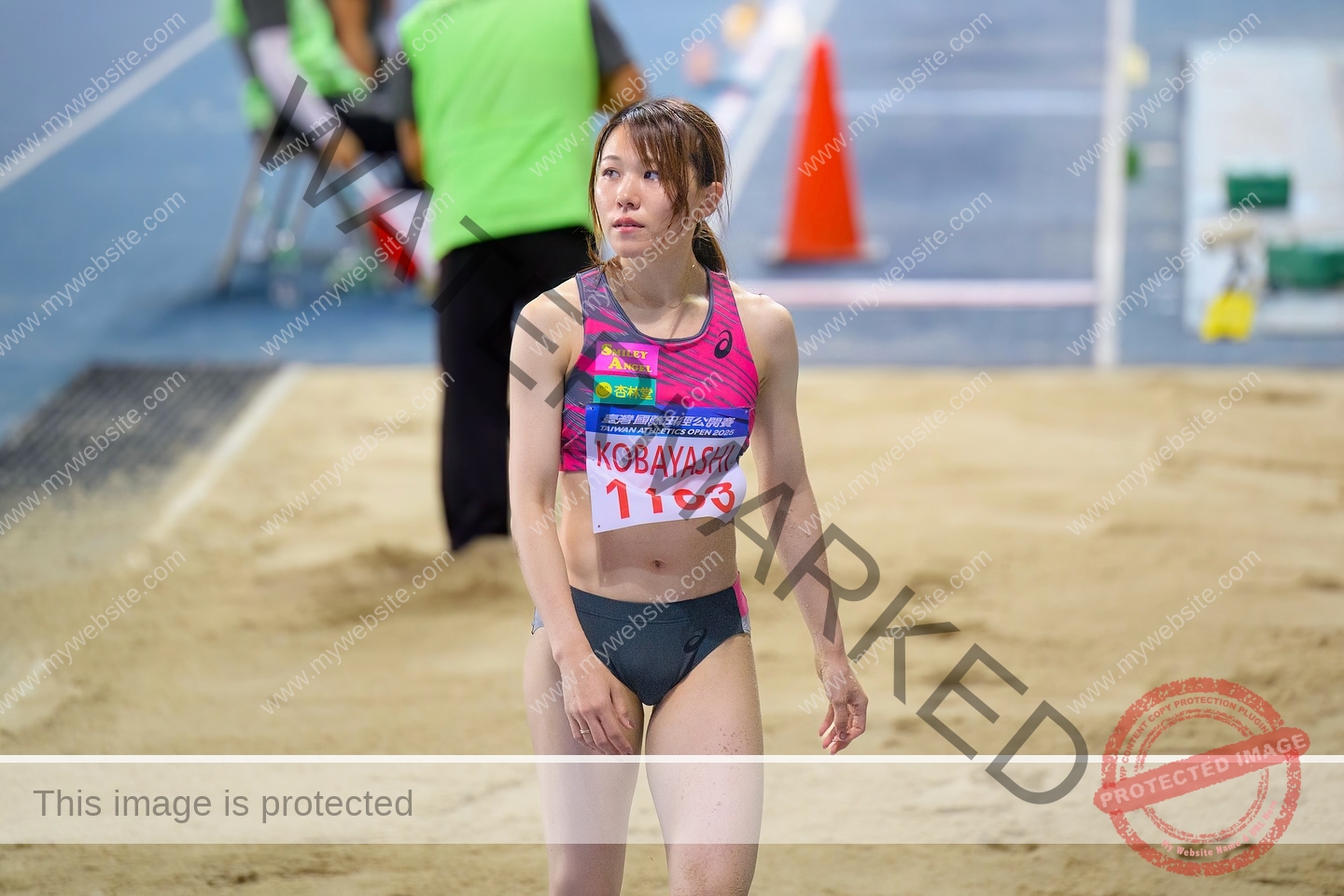
Upon graduating in 2022, Kobayashi joined the corporate athletics world through 杏林堂薬局 (Kyorindo Pharmacy), a major drugstore chain operating throughout the Shizuoka and surrounding Chubu regions. The team is called Smiley Angel — and it is something of an institution in regional Japanese corporate athletics.
Japan’s jitsugyodan (実業団) system, in which companies sponsor track and field athletes as part of corporate athletics teams, is one of the defining features of the country’s athletics ecosystem. Unlike many other countries where post-collegiate athletes must cobble together prize money and sponsor deals, Japan’s corporate teams provide athletes with employment, training facilities, coaching, and competition support. For Kobayashi, joining Smiley Angel meant she could continue competing at a high level while being embedded in a supportive institutional structure.
Smiley Angel has a distinctive identity in the Chubu athletics world. The team’s most prominent figure is 湯田友美 (Yuda Tomomi), a well-regarded middle-distance runner who serves as team representative and who has her own substantial following in Japanese athletics circles. The combination of competitive atmosphere, regional identity, and a team culture built around positivity made it a natural fit for Kobayashi’s personality — which, by all accounts from those who follow her social media, tends toward openness, warmth, and a forward-looking attitude regardless of results.
Her first year as a corporate athlete, 2022, saw her win the Chubu Corporate Athletics Championships (中部実業団陸上) in May with 5m80, establish herself as a competitive presence at the Shizuoka Prefecture Championships (6m11, +3.3 wind, in July), and return to the Japan Championships, where she placed 11th with 5m93. The progression was steady: from the mid-teens of the national meet in her university years toward the upper tier of Japan’s long jump field.
2023: The Breakthrough Year
The 2023 season represented Kobayashi’s arrival as a genuine national-level competitor rather than simply a consistent qualifier. In May, she successfully defended her Chubu Corporate Athletics title with 5m91, completing a back-to-back run in the regional corporate circuit. At the Shizuoka International Athletics Meet in May (布勢スプリント), she placed seventh with 6m01.
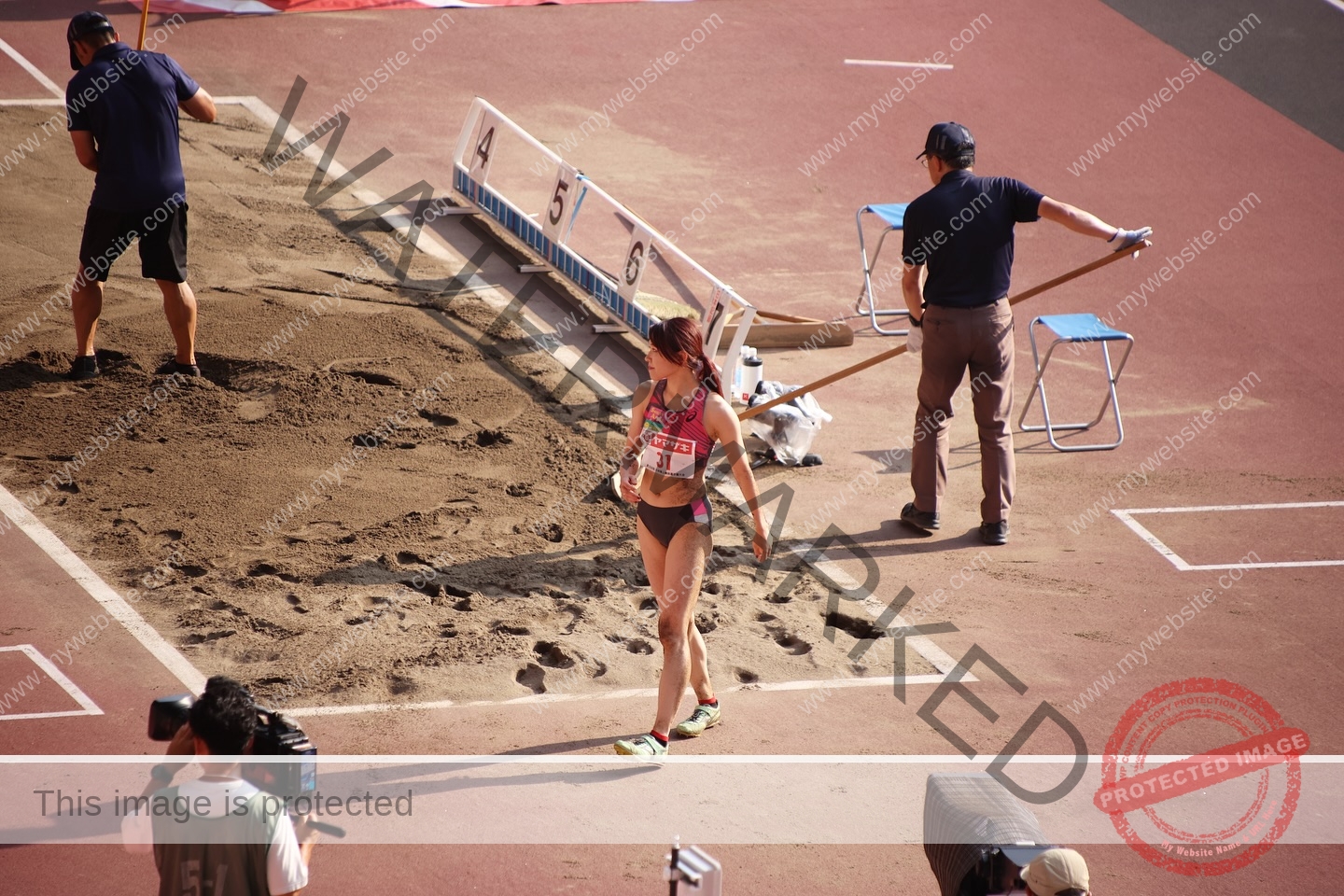
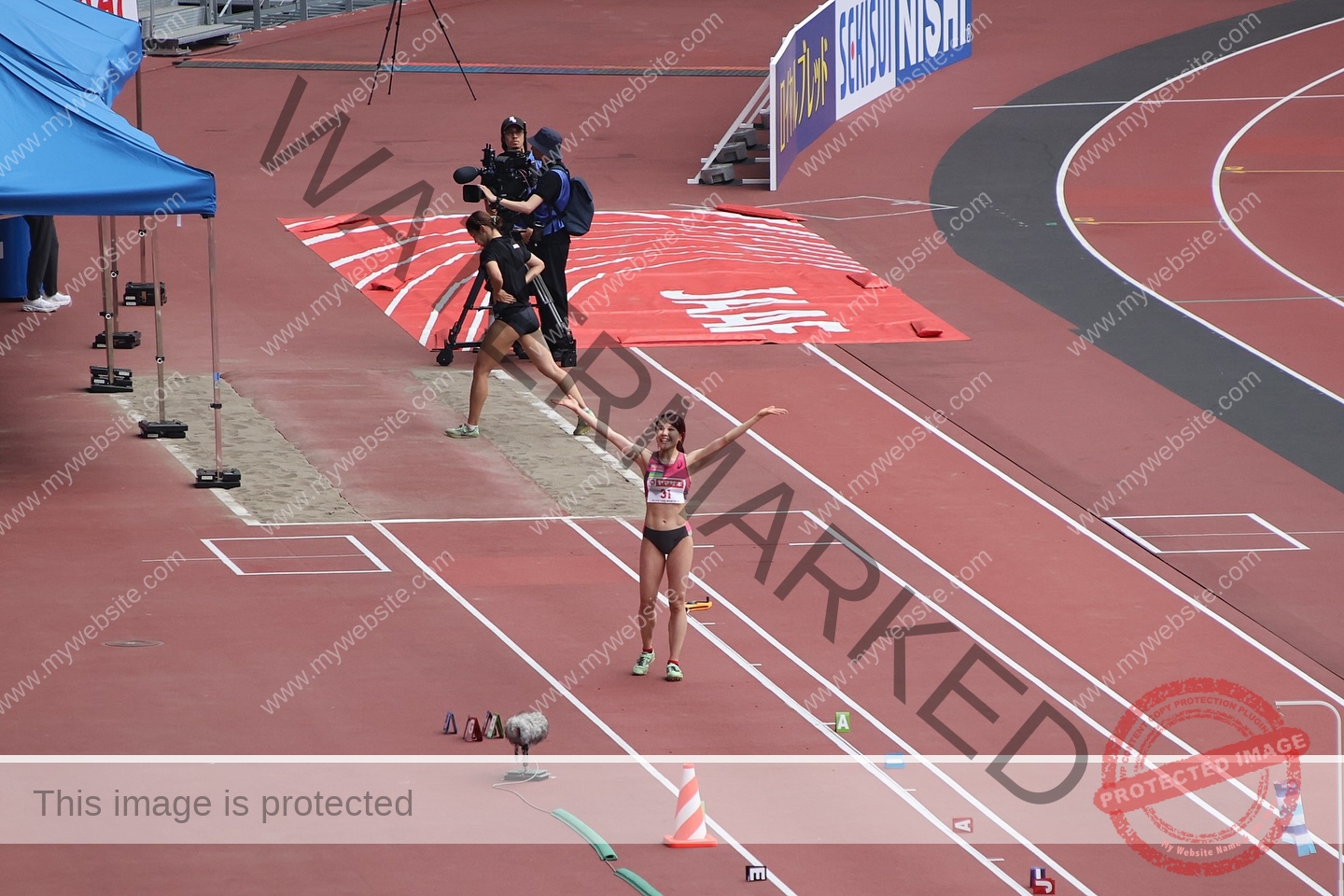
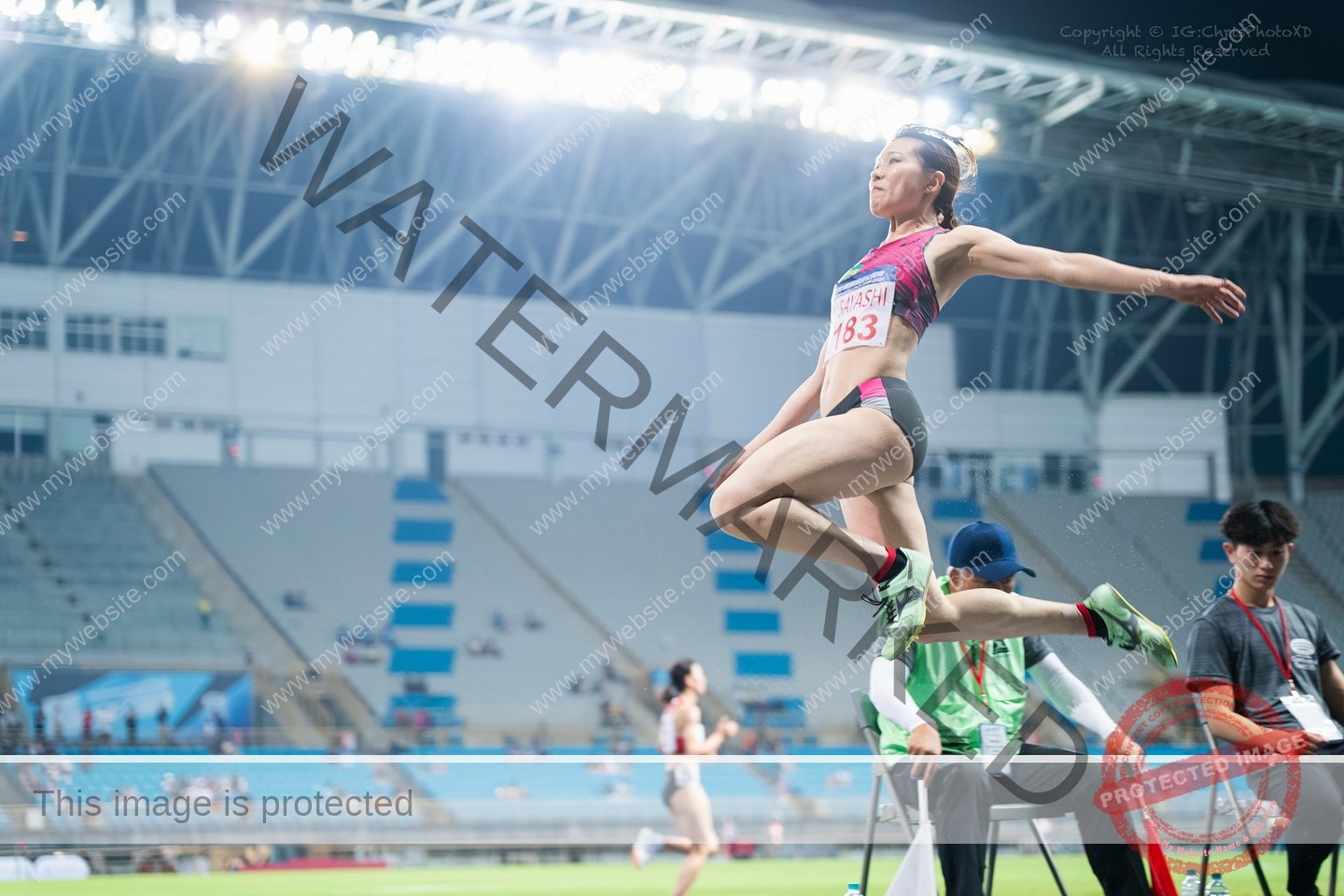
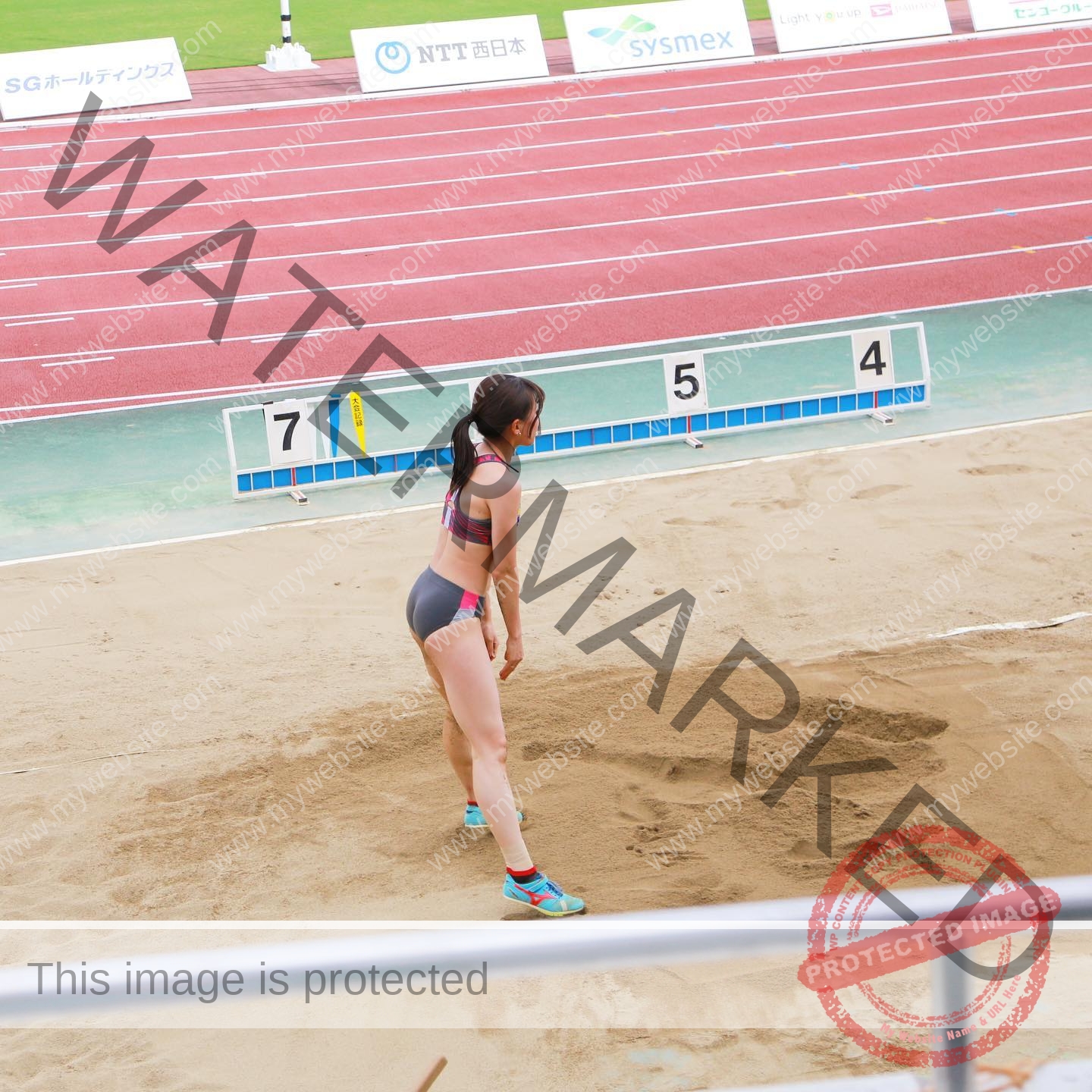
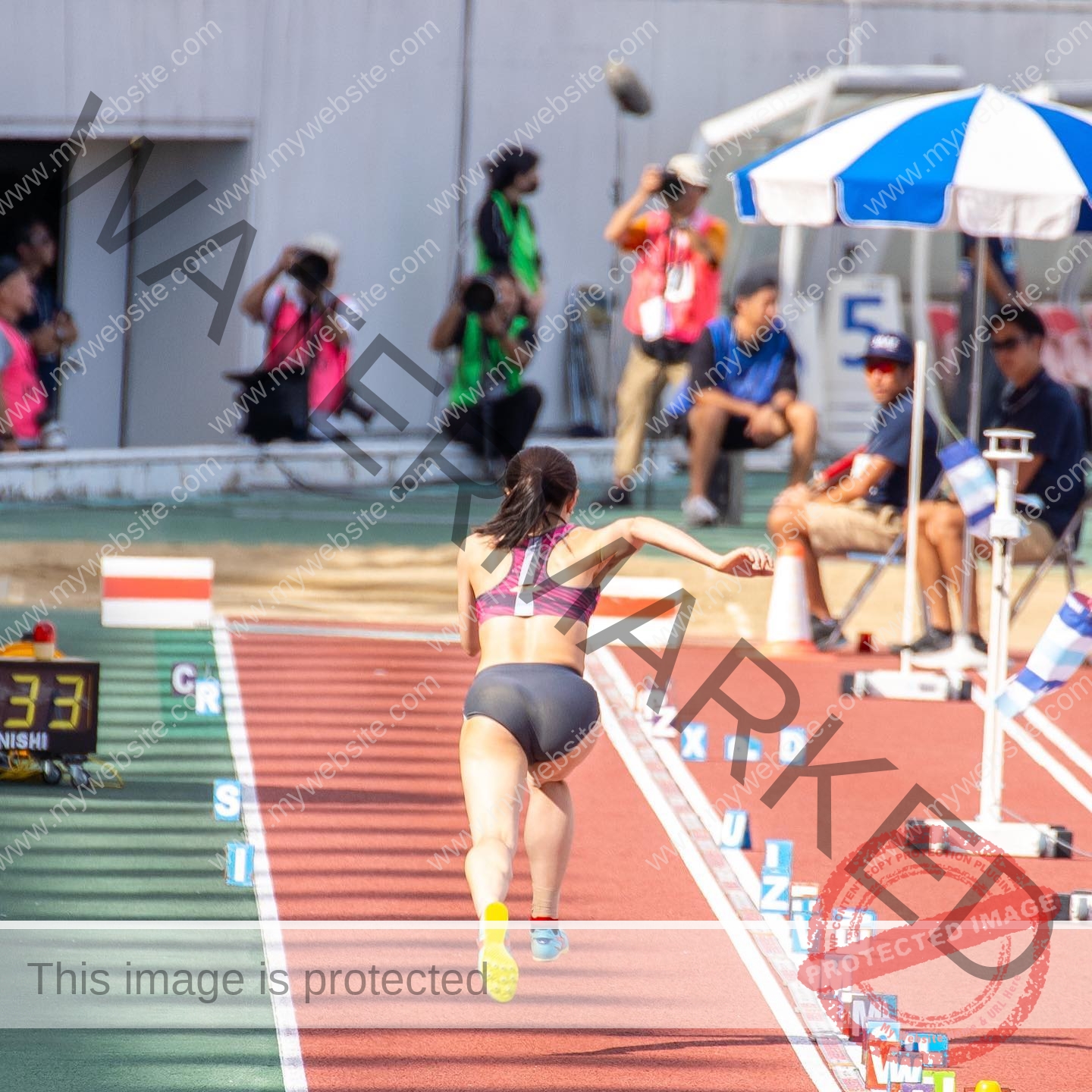
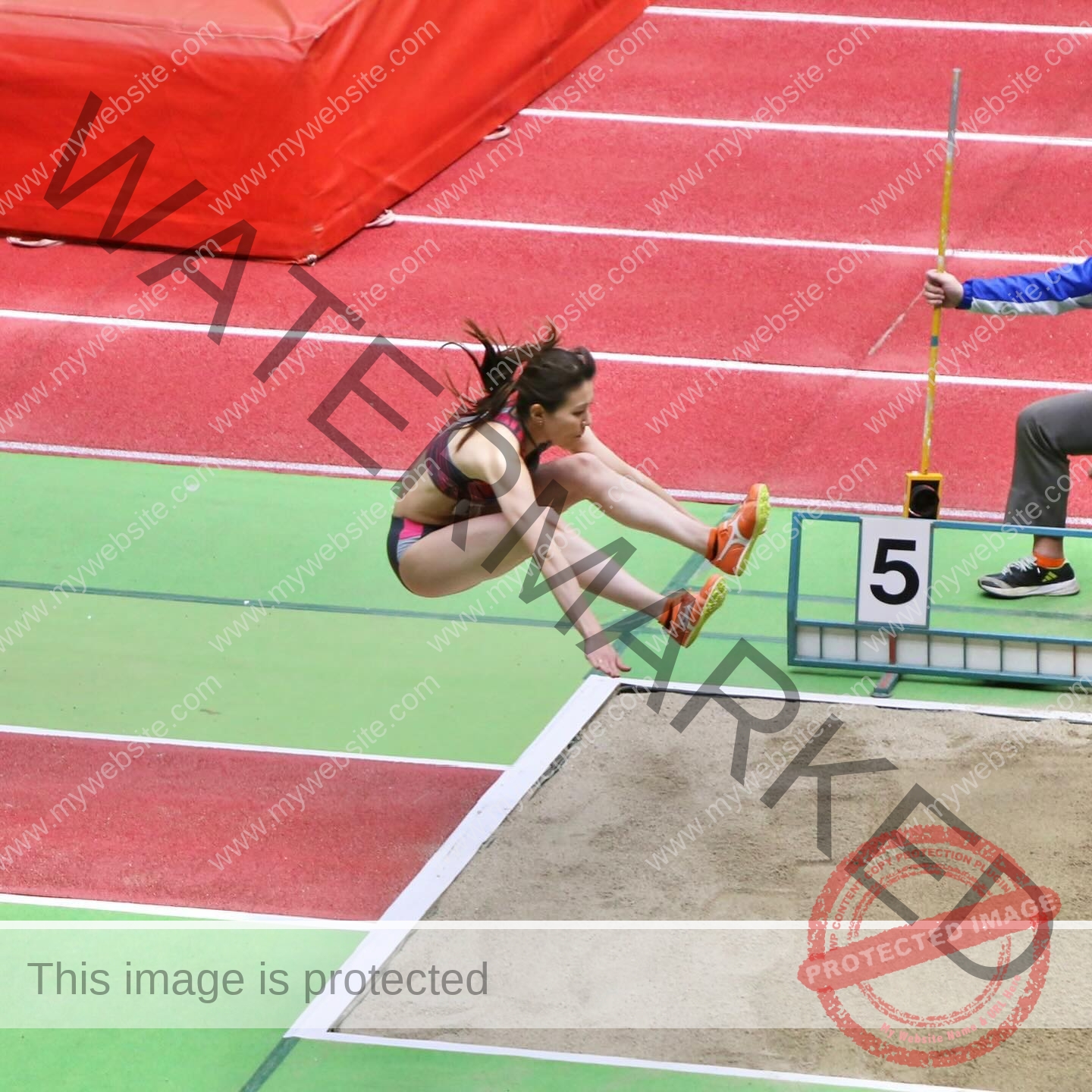
The true highlight came in June at the 107th Japan Championships, held in Osaka. Competing in her fourth straight national meet, Kobayashi finally crossed the threshold that had eluded her indoors and on the national stage: she cleared six meters and finished 8th, securing her first-ever Japan Championships top-eight placing. The crowd response — which observers noted included handclapping support from the stands — evidently moved her. It was a milestone that validated years of methodical improvement and the decision to continue competing at the highest level after university.
She also competed at the Fuse Sprint meet in June (布勢スプリント), placing seventh with 6m01, and at the Fuji Hokuroku World Trial in August, finishing ninth with 5m57.
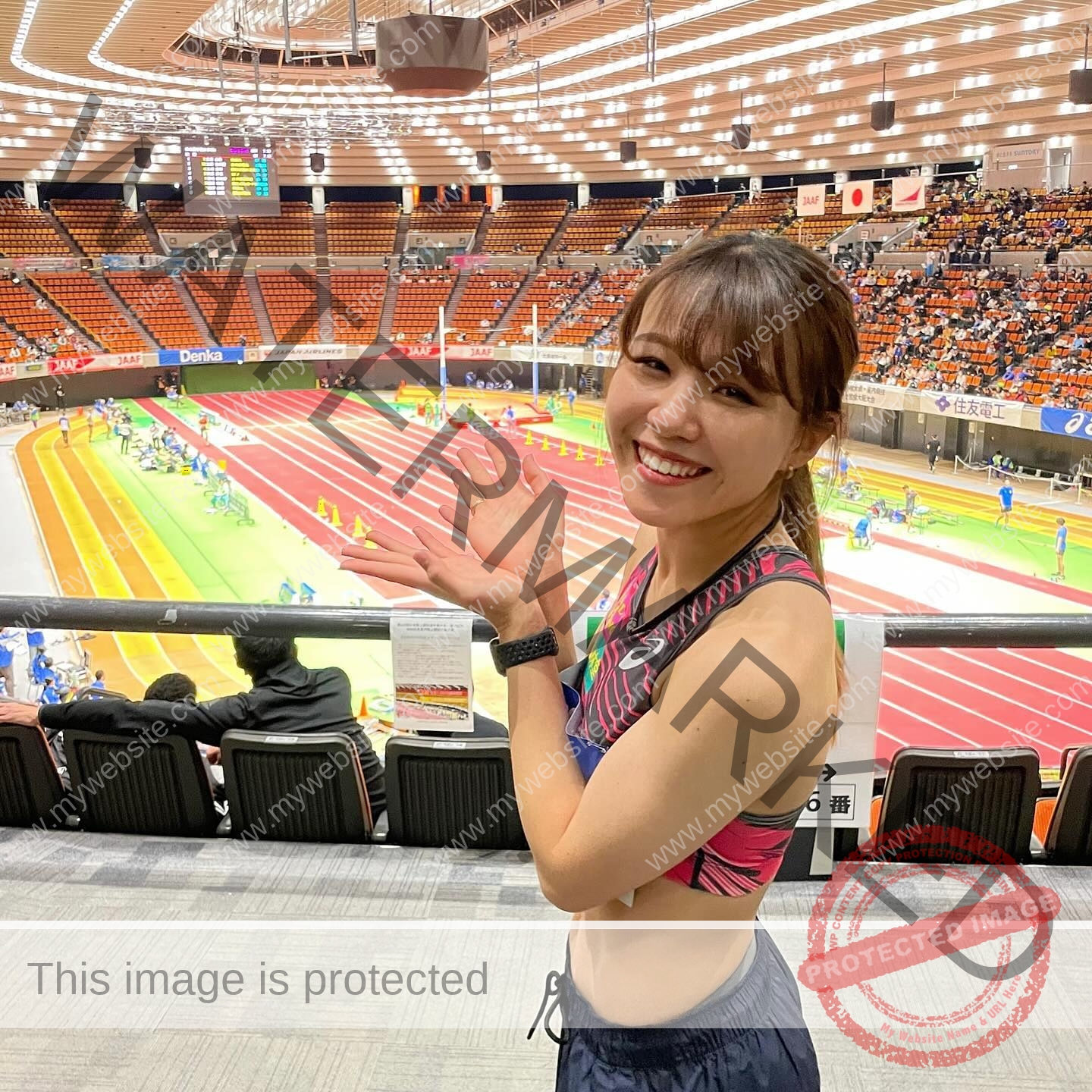
In February 2024, at the Japan Indoor Championships, she added another dimension to her national presence, finishing sixth with 5m90 — a result that confirmed her consistency across both outdoor and indoor seasons and extended her streak of top-ten finishes at major national competitions.
By this point, it was clear: Kobayashi Akira was not a temporary presence in the upper tier of Japanese women’s long jump. She was a fixture.
2024: Grand Prix Victory and National Podium Knocking
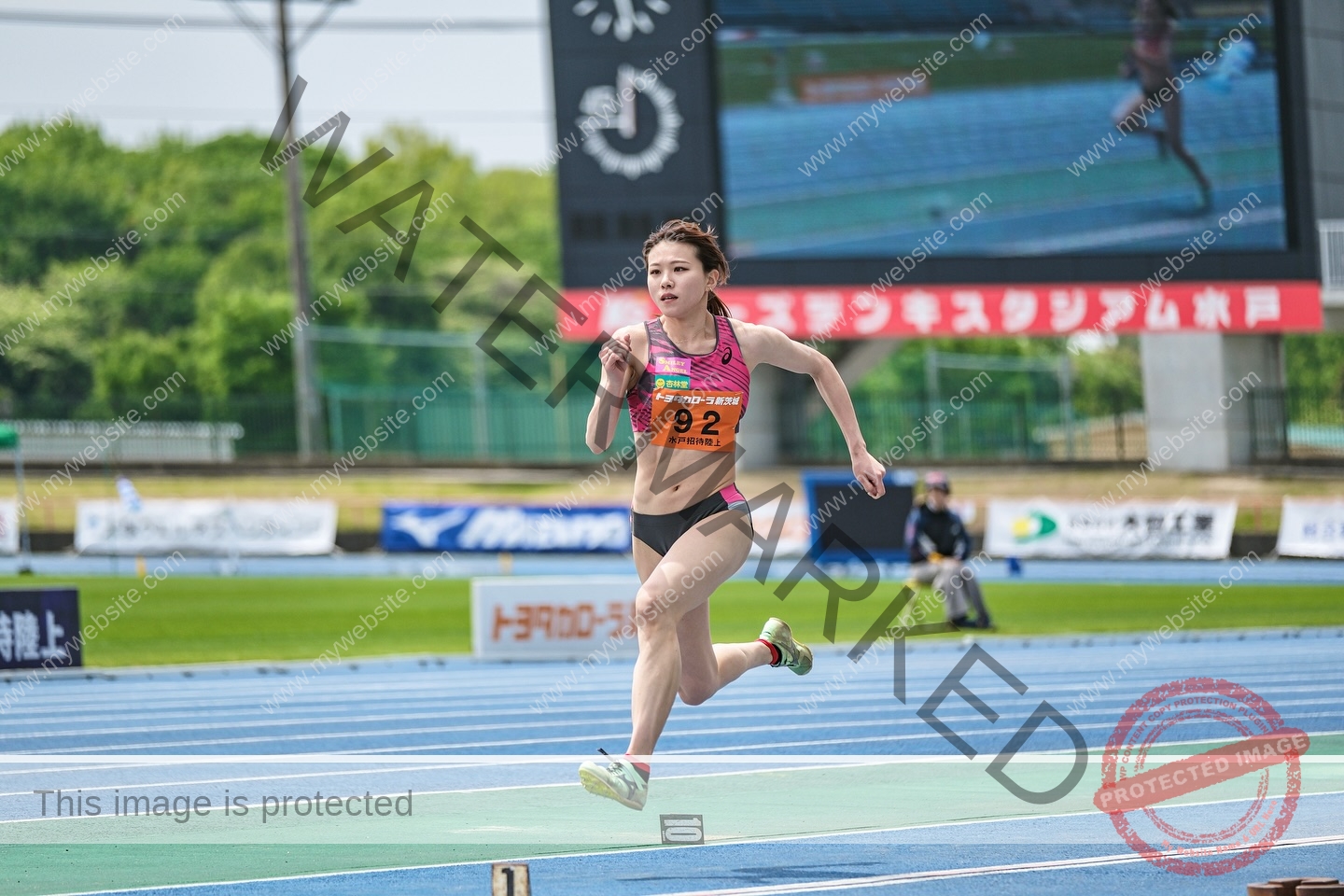
The 2024 season brought Kobayashi her most prominent single-meet result to date. In May, at the Mito Invitation Grand Prix (水戸招待陸上), part of the Japan Athletics Federation’s Grand Prix series — a national competition circuit featuring Japan’s top domestic and some international performers — she won the women’s long jump with a leap of 6m12 (+1.8). It was her first Grand Prix series victory, a meaningful step up from placing in GP fields to actually topping them. The Japan Athletics Federation highlighted the result in its official GP series coverage.
The Japan Championships in June that year saw her place sixth with 6m07, her best ever finish at the national meet. She was in the conversation for the top places and had an enthusiastic crowd response — an unusual distinction that became a kind of signature for her at the national level.
July brought the Shizuoka Prefecture Championships, which she won with 6m08 (+3.2 wind), adding another regional title to her collection. August’s Fuji Hokuroku World Trial saw a more modest result (4th, 5m95), and October’s National Sports Festival in Saga, where she was competing in a return from injury, saw her finish 17th with 5m65.
The injury context for that October result is worth noting: Kobayashi’s profile page explicitly identifies the Saga National Games result as a “return from injury” performance, which means the second half of 2024 was affected by a physical setback. That she qualified for and competed in the National Sports Festival despite working through an injury is consistent with the pattern observers have noted in her career — she competes through adversity rather than withdrawing from it.
2025: A New Personal Best and Six Straight Nationals
The 2025 season has already produced Kobayashi’s most exciting result since her Gifu Prefecture record in 2021. In April, at the 丸亀陸上カーニバル (Marugame Athletics Carnival) in Kagawa Prefecture, she leaped 6m24 with a +2.0 m/s wind. While the wind reading places it just at the legal limit (and the rikujyo.com tracking noted it in results without the legal mark annotation), it represented the farthest she has jumped in competition since her university days and suggested that, at 25-26 years old, she may still be approaching her career peak.
At the July Japan Championships — her sixth consecutive national qualifying appearance — she placed 8th with 5m93 at the National Stadium in Tokyo, a result that on paper looks similar to 2023 but comes with the distinction of having been posted on one of Japanese athletics’ most iconic stages, in the context of the World Athletics Championships selection competition. The women’s long jump national title went to 髙良彩花 (Takara Ayaka) of JAL with 6m48, a result that reflects how deep Japanese women’s long jump has become — and the challenge that awaits Kobayashi as she seeks to break into the medals tier.
Six consecutive Japan Championships appearances is, by itself, a notable achievement. In Japan’s highly competitive athletics environment, the national championships in long jump typically draws a field that requires clearing a qualifying standard or posting a competitive seed time, meaning that simply showing up year after year at the top national meet reflects a sustained level of performance that most club and corporate athletes never reach.
Athletic Profile and Personal Bests
Kobayashi is a technically oriented long jumper whose consistency has been one of her hallmarks. Her career progression in legal marks reflects a steady upward curve:
| Year | Notable Mark | Context |
|---|---|---|
| 2019 | 5m82 | All-Japan University Championships, 11th |
| 2020 | 5m79 | Japan Championships, 14th (debut) |
| 2021 | 6m16 | GKU meet — Gifu Prefecture Record (PB, legal) |
| 2021 | 6m04 | Student Individual Championships, 4th |
| 2022 | 5m93 | Japan Championships, 11th |
| 2023 | 6m08 | Japan Championships, 8th (first top-8 finish) |
| 2024 | 6m12 | Mito Grand Prix — first GP win |
| 2024 | 6m07 | Japan Championships, 6th |
| 2025 | 6m24 | Marugame Carnival (+2.0 wind) |
| 2025 | 5m93 | Japan Championships, 8th |
Her official legal personal best remains 6m16, set at the GKU Open Meet in May 2021, which also stands as the current Gifu Prefecture women’s long jump record. Her 2025 performance of 6m24 at Marugame, if posted under legal wind conditions, would represent a significant new personal best; conditions at spring carnival meets in Japan can be variable, and her continued trajectory suggests she has the physical capacity to challenge or surpass that mark under legal conditions.
Regional Dominance and the Chubu Circuit
Beyond the national stage, Kobayashi has been a consistent force in Chubu regional athletics. She has won the Chubu Corporate Athletics Championships multiple times, including back-to-back titles in 2022 and 2023, establishing herself as the dominant women’s long jumper in one of Japan’s most competitive regional corporate circuits.
Her Grand Prix series participation has also been notable. The JAAF’s GP series is Japan’s primary domestic elite competition circuit, featuring meets across the country with standardized technical requirements and points-based rankings. Kobayashi’s name appeared on the GP series ranking in both 2023 and 2024, with the Mito Grand Prix win in 2024 representing her most significant result in that series to date. The fact that she earns Grand Prix entry at all — rather than being restricted to lower-tier domestic meets — reflects her standing as a legitimately national-level competitor.
Social Media and Public Presence
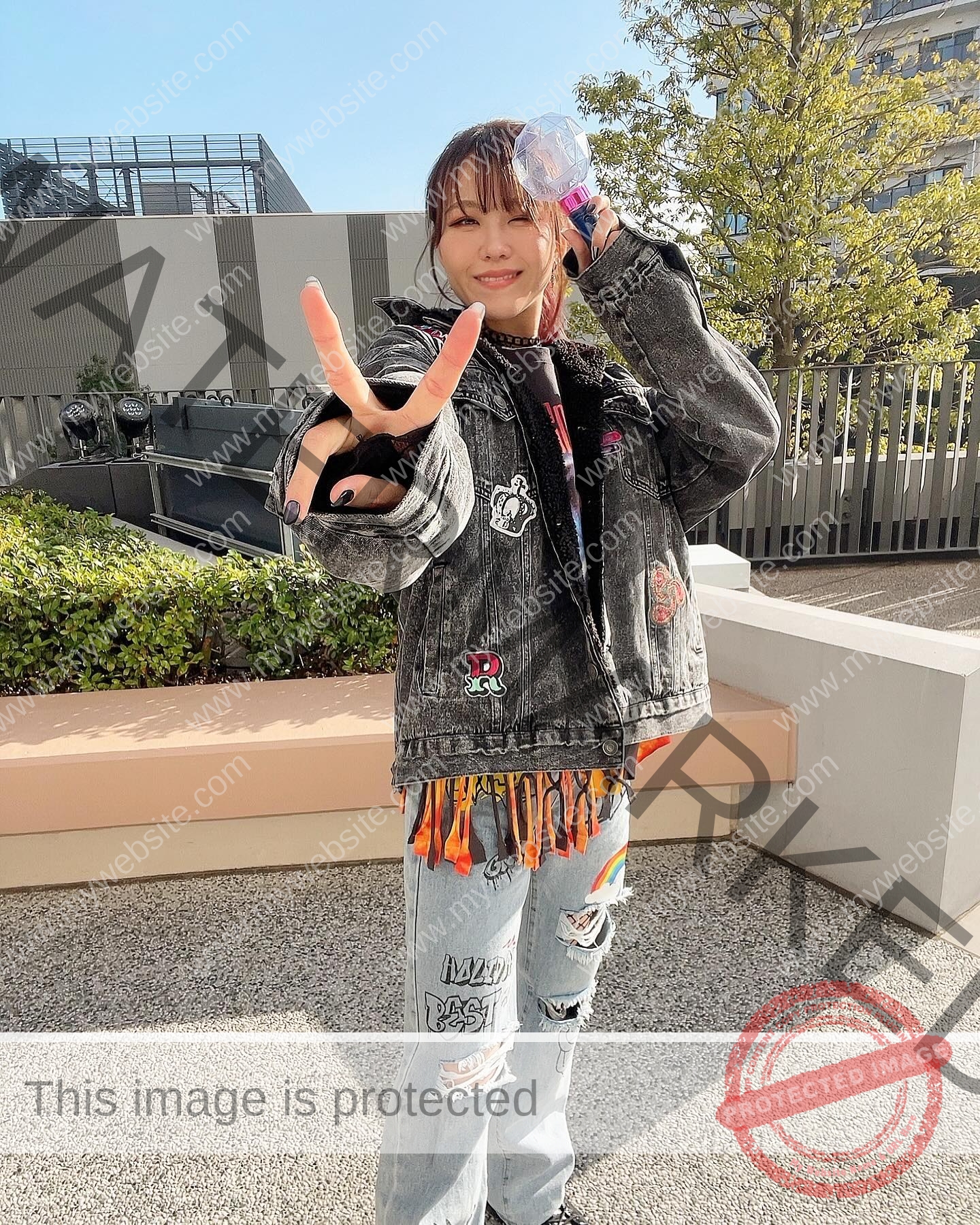
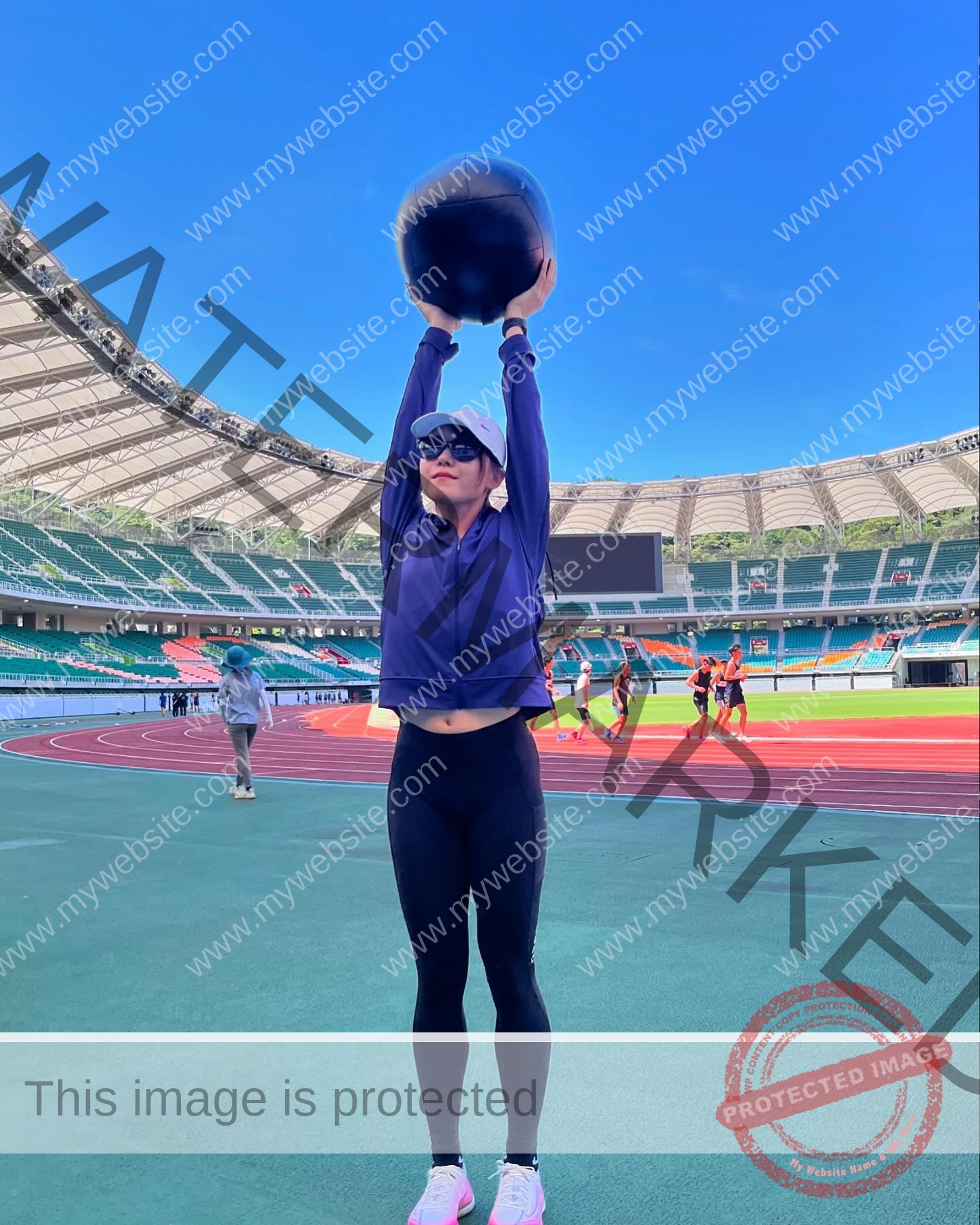
Kobayashi has cultivated a genuine and engaging presence on Instagram under the handle @_akira.0918, where she has accumulated nearly 8,000 followers — a meaningful number for a domestic Japanese club athlete without international-circuit exposure. Her bio succinctly identifies her focus: “long jumper,” “athlete,” and, notably, an open call to potential sponsors: “seeking sponsors to support my competitive activities.”
Her Instagram content blends competition results and photos with personal photography that observers have described as having a creative, model-quality aesthetic. She photographs with genuine expressive range, and her posts about competitions capture both the tension of qualification — the pressure of needing to post a mark good enough to earn a Japan Championships spot — and the joy of breakthrough performances.
The authenticity of her social media presence has been noted by multiple Japanese athletics communities. Rather than presenting a manufactured or overly polished image, she shares the real emotional experience of being a competing athlete: the nerves before a qualifying meet, the satisfaction of a good jump, the determination after a disappointing result. It is an approach that has resonated with followers who appreciate the access to what athletic pursuit actually feels like at the elite domestic level in Japan.
Her team, Smiley Angel, also maintains an official Instagram presence at @smileyangel.kyorindo, where team activities, meet results, and athlete profiles are shared.
Team and Sponsors
Kobayashi competes for Smiley Angel, the corporate athletics team sponsored by 杏林堂薬局 (Kyorindo Pharmacy). Kyorindo Pharmacy operates a network of drugstores primarily in Shizuoka Prefecture and the broader Chubu region, and its athletics sponsorship through Smiley Angel represents a commitment to supporting competitive track and field at the corporate level.
The team is affiliated with the Chubu Regional Corporate Athletics Federation and competes regularly in the Chubu Corporate Athletics Championships and various JAAF-sanctioned meets throughout the region. The team’s culture, as reflected in its name, emphasizes a positive and supportive environment — qualities that seem to suit Kobayashi’s personality and competitive approach.
As noted on her Instagram, she is actively seeking additional sponsorship — a reality for many Japanese corporate athletes whose base team support, while meaningful, may not fully cover the costs of elite-level training, travel to distant meets, and specialized equipment. That transparency about her sponsorship needs is itself a kind of professional statement: she is serious about continuing to compete and develop at the highest level she can reach.
The Six-Meter World and What Comes Next
In women’s long jump, six meters is a significant threshold. The Japan national record stands at an extraordinary 6m97 (Hata Sumisuzu, 2023), and the upper tier of Japanese women’s long jump regularly posts marks in the 6m40–6m70 range. Kobayashi, with her legitimate peak near 6m16–6m24, is currently competitive in the national meet but remains outside the range of athletes who contend for the Japanese international team.
What she has accomplished within her trajectory, however, is worth appreciating on its own terms. She is the Gifu Prefecture record holder. She is a six-time Japan Championships qualifier. She has won national Grand Prix series events. She has done all of this representing a mid-sized regional university and a regional corporate team, without the institutional support networks that Japan’s elite athletics programs provide.
Now in her fourth season as a corporate athlete — still in her mid-20s, an age at which many horizontal jumpers are entering their best competitive years — there is genuine reason to believe she has more left to give. Her 6m24 at Marugame in the spring of 2025 was her best jump in four years, a signal that the injury setbacks of late 2024 have not diminished her peak capacity. If she can combine the explosive form she showed that day with legal wind conditions at a major meet, a new personal best and deeper national championship finals are well within reach.
Gifu Prefecture is watching. So is the long jump community across Japan. Kobayashi Akira has earned that attention — one methodical, determined jump at a time.
Career Highlights Summary
- Born: 1999, Gifu Prefecture, Japan
- Event: Women’s Long Jump
- High School: 駿河総合高等学校 (Suruga Sogo High School), Shizuoka Prefecture
- University: 岐阜協立大学 (Gifu Kyoritsu University) — university record holder in long jump
- Club/Corporate Team: Smiley Angel (杏林堂薬局 / Kyorindo Pharmacy)
- Personal Best (legal): 6m16 — set May 2021, GKU Open Meet
- Gifu Prefecture Record: 6m16 (current holder)
- Japan Championships: Six consecutive appearances (2020–2025); best finish 6th (2024)
- Grand Prix Series: Winner, Women’s Long Jump, Mito Invitation 2024 (6m12)
- Chubu Corporate Athletics Championships: Multiple-time champion including 2022 and 2023
- Instagram: @_akira.0918
Profile current through the 2025 competitive season.
